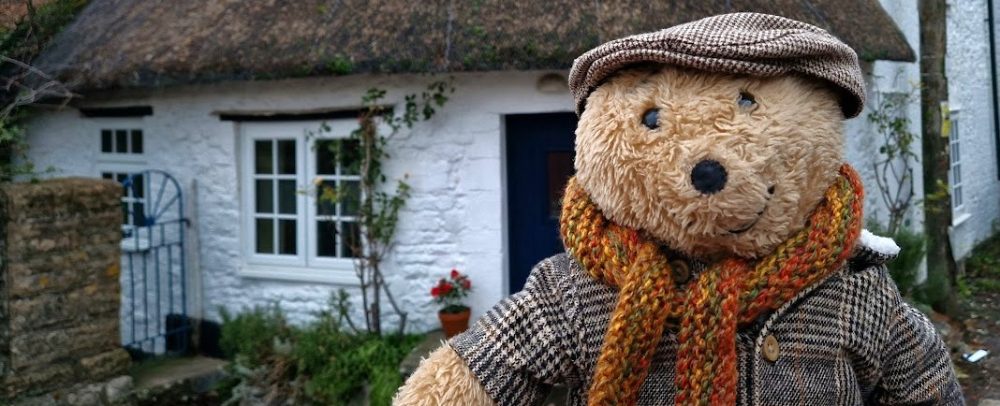
Before we set off to visit the lighthouse I sat for a while and looked across the water to France. The camera didn’t pick up the French coastline very well but I could see it, just 21 miles away.

After a walk along the top of the White Cliffs of Dover I headed back to visit South Foreland Lighthouse.

Cows were travelling along the path in the opposite direction

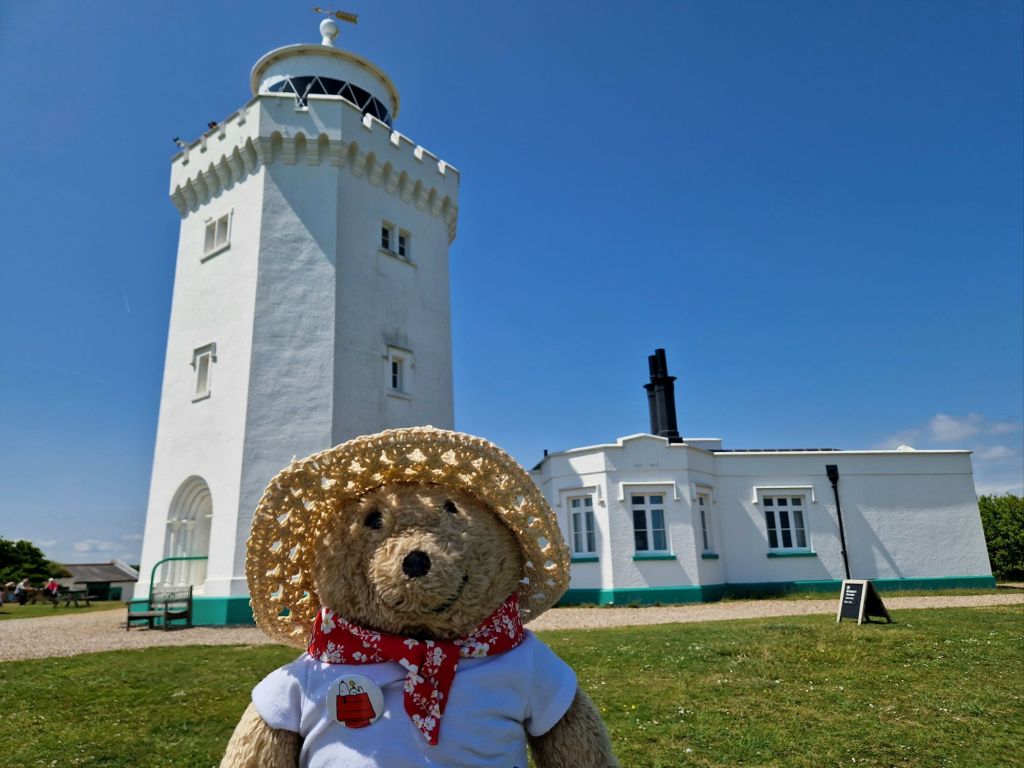
I could see the lighthouse in the distance. There has been a lighthouse of one sort or another at South Foreland since the 13th Century.

Between Dover and Ramsgate there is an area underneath the sea called The Goodwin Sands, but also known as the Great Ship Swallower. The 10 miles of sandbanks hidden under the sea are constantly shifting around and a great danger to any ships that enter the area. The lighthouse hasn’t been used since the 1980s as now ships have much improved navigation systems which keep them away from the Goodwin Sands.

It was a beautiful sunny day but I did think I might need to remove my hat in the lighthouse just in case it was windy at the top.
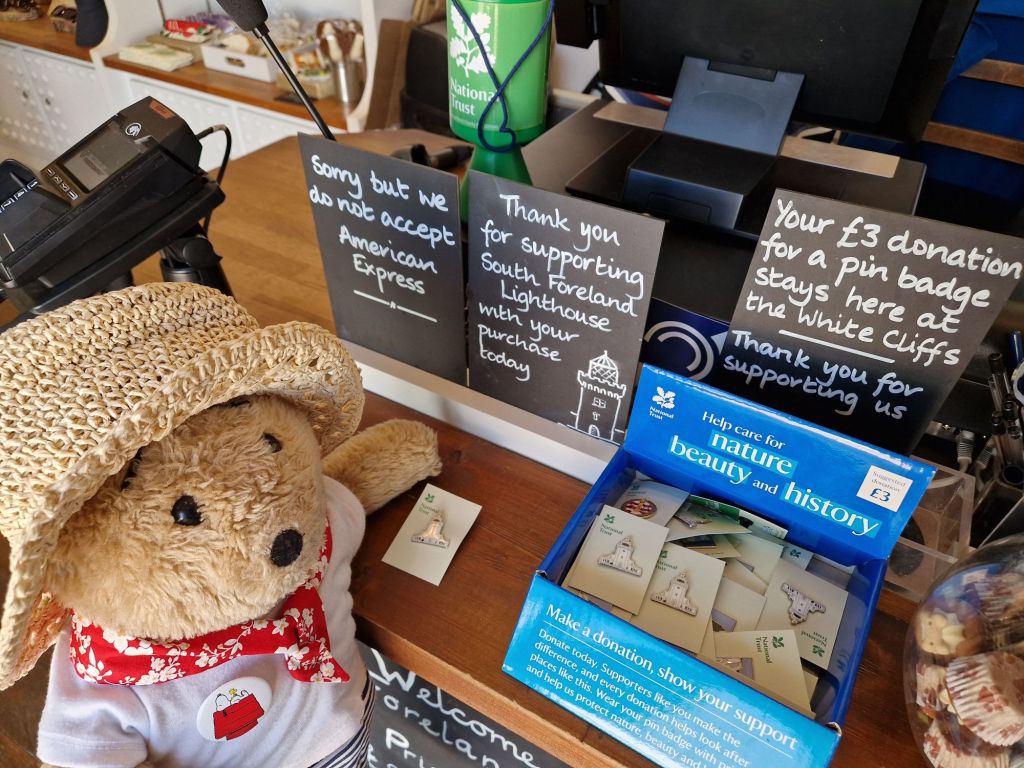
Tours have to be booked at the reception desk in the shop, where I also bought a little lighthouse pin badge as a souvenir.
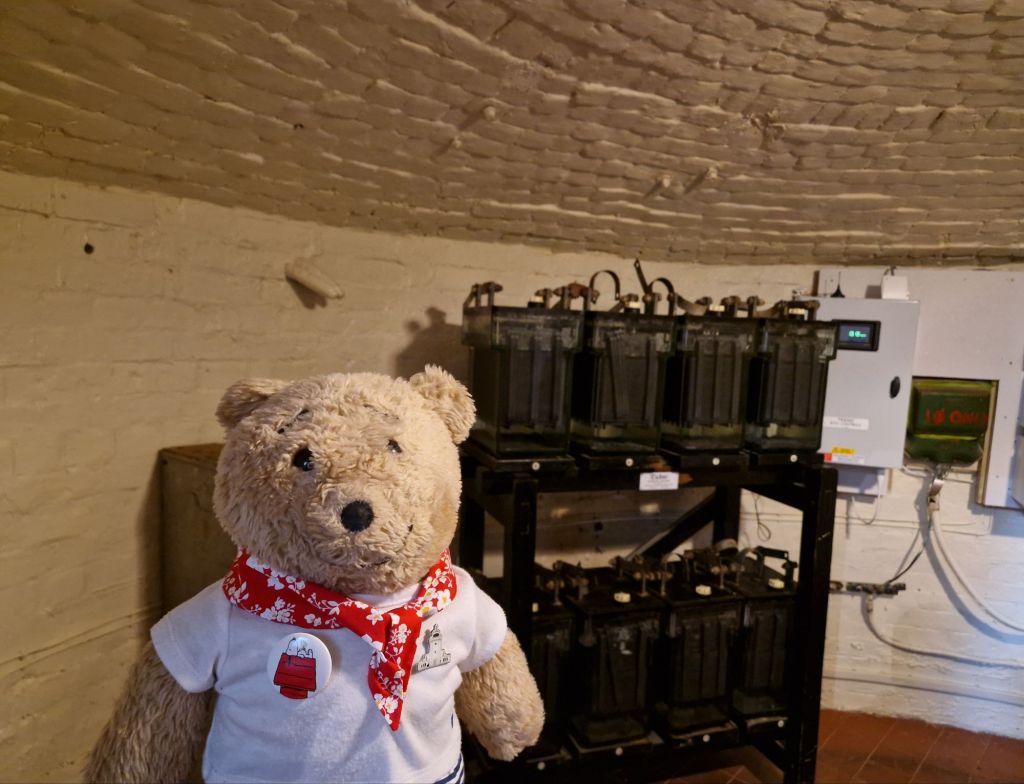
A National Trust volunteer guide met us at the door and then took us down to the basement of the lighthouse to start the tour. She told us many interesting facts. The curved roof was built by filling in the whole building with sand, making it a dome shape then laying the bricks on the top. Once finished all of the sand was removed through the door. The batteries that you can see were a few of many that were used as a back up in the case of a power cut, though the lighthouse was originally lit using oil lamps.
I went up some stairs to the first floor..
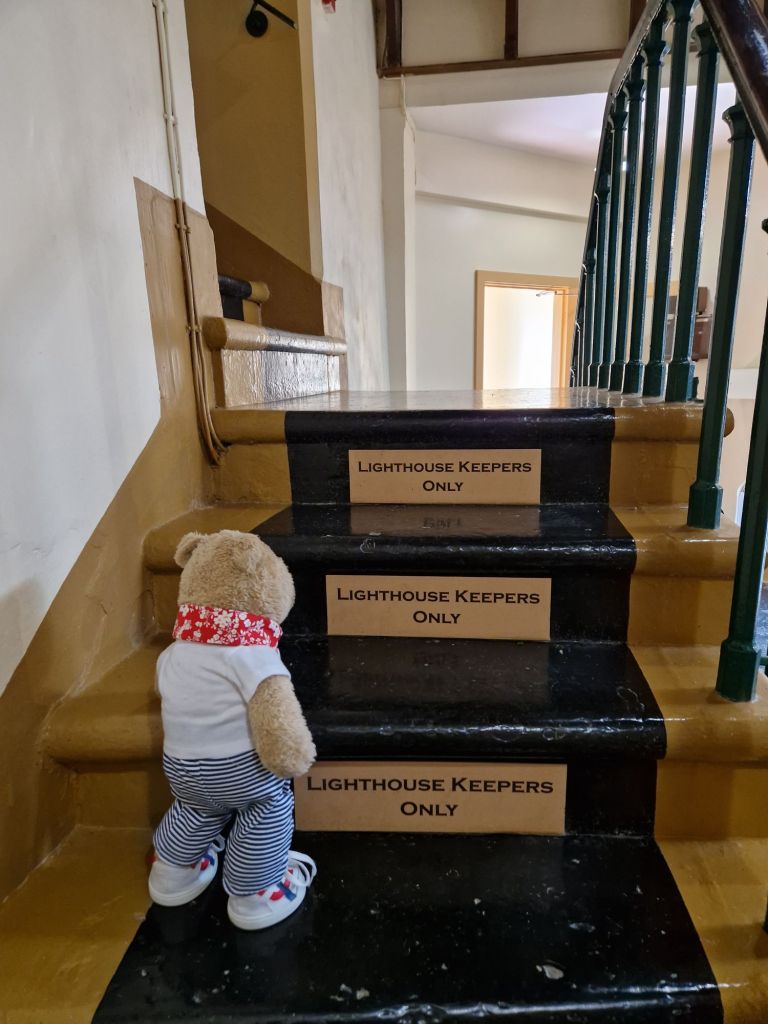
Here I am inside the chamber containing the weights that controlled the timing of the lighthouse flashes. It was one of the lighthouse keeper’s jobs to check that the light flashes were correctly callibrated. Each lighthouse had a specific sequence of flashes so that mariners would know where they were.

This specially curved sideboard came from another lighthouse but is of the type that would have been at South Foreland. The oil lights on the top are examples of oil lights used in various lighthouses. The oil used was whale oil (which was rather sad for whales).

I continued up the stairs to the next level….
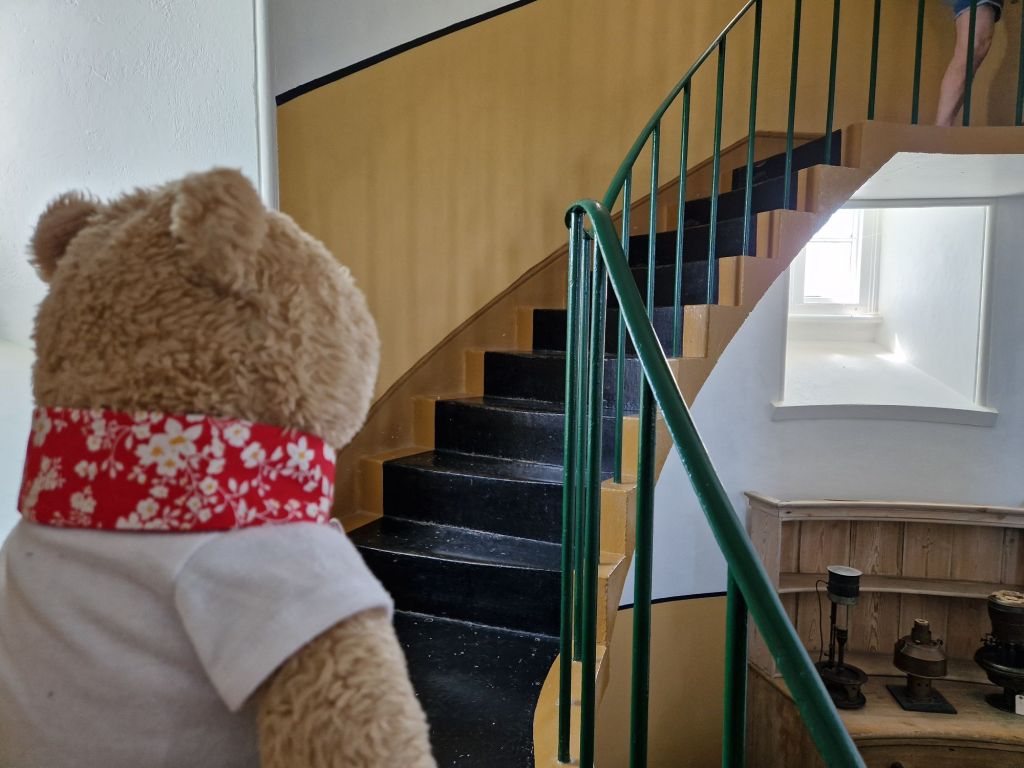
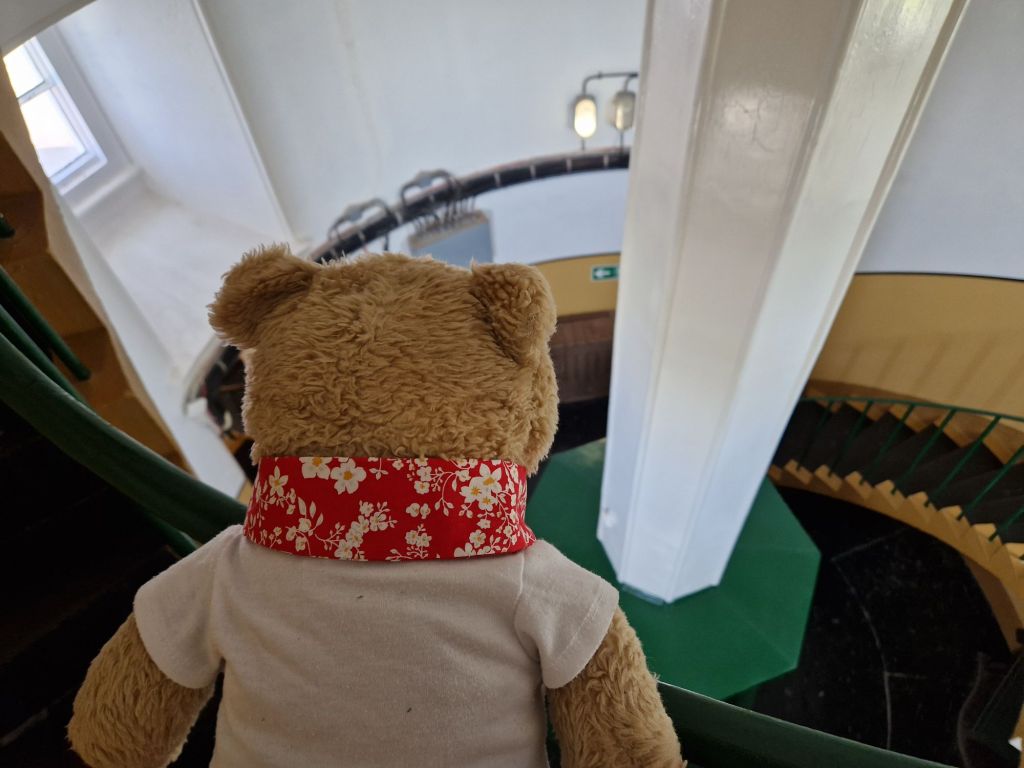
I sat at the light house keeper’s desk for a little while and looked out at the sea. He would have had a very big responsibility on his shoulders.

Here I am with the winding handle for the weights that were used to turn the lense around. Lighthouse keepers had to wind the weights back up to the top every two hours through the night in order to keep the lights flashing. T

I climbed further up a little ladder right to the top to have a look at the lense. South Foreland Lighthouse was the first one in the UK to have electric lights.
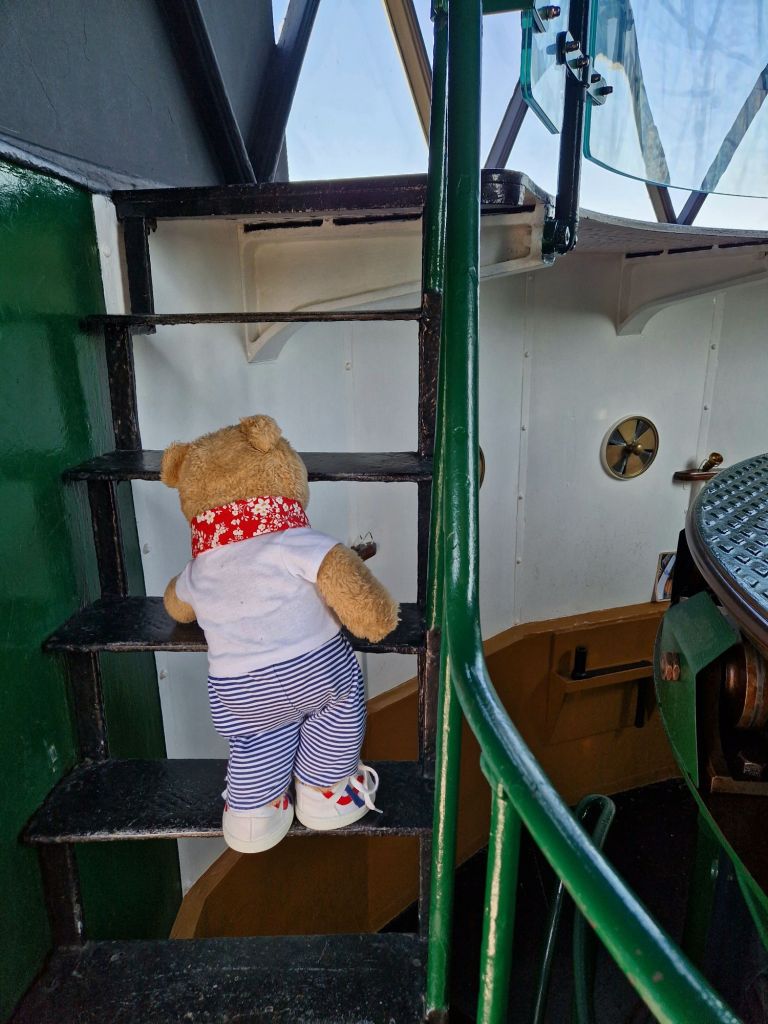
The scientist Michael Faraday spent lots of time at the South Foreland developing the electric lights which was subsequently installed in all the other lighthouses around the UK managed by Trinity House (The Lighthouse Authority).

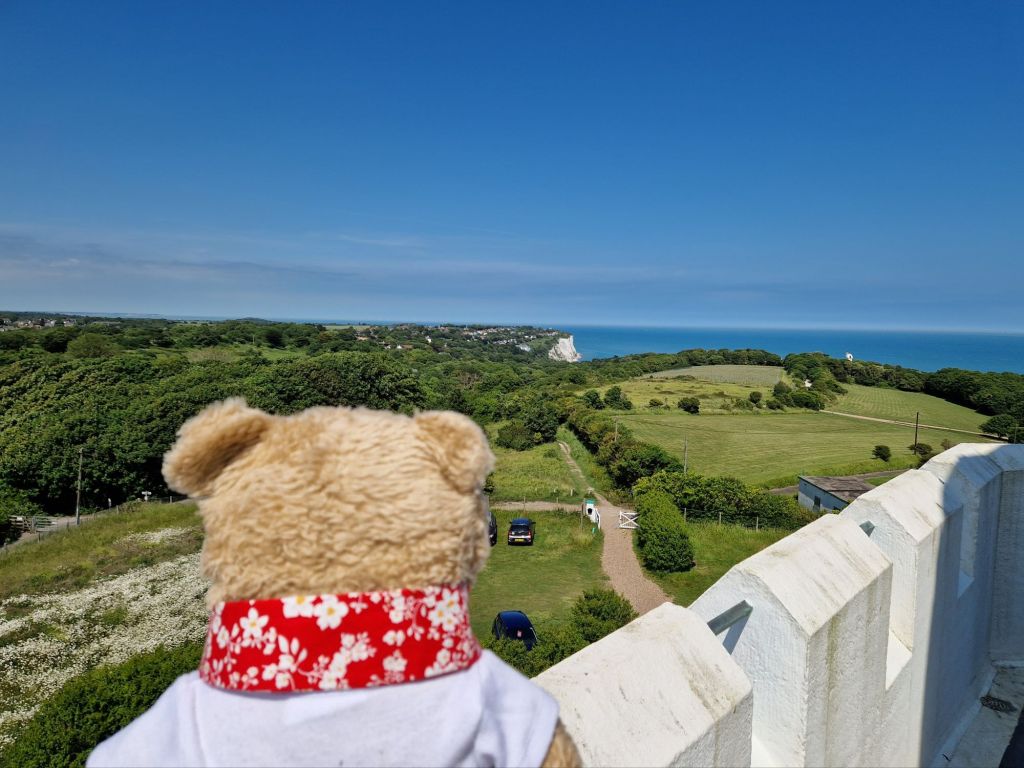
There was an amazing view from the windows at the top.

I decided to venture out on to the platform for an even better view…

The view was even better outside, especially as it was a clear day.

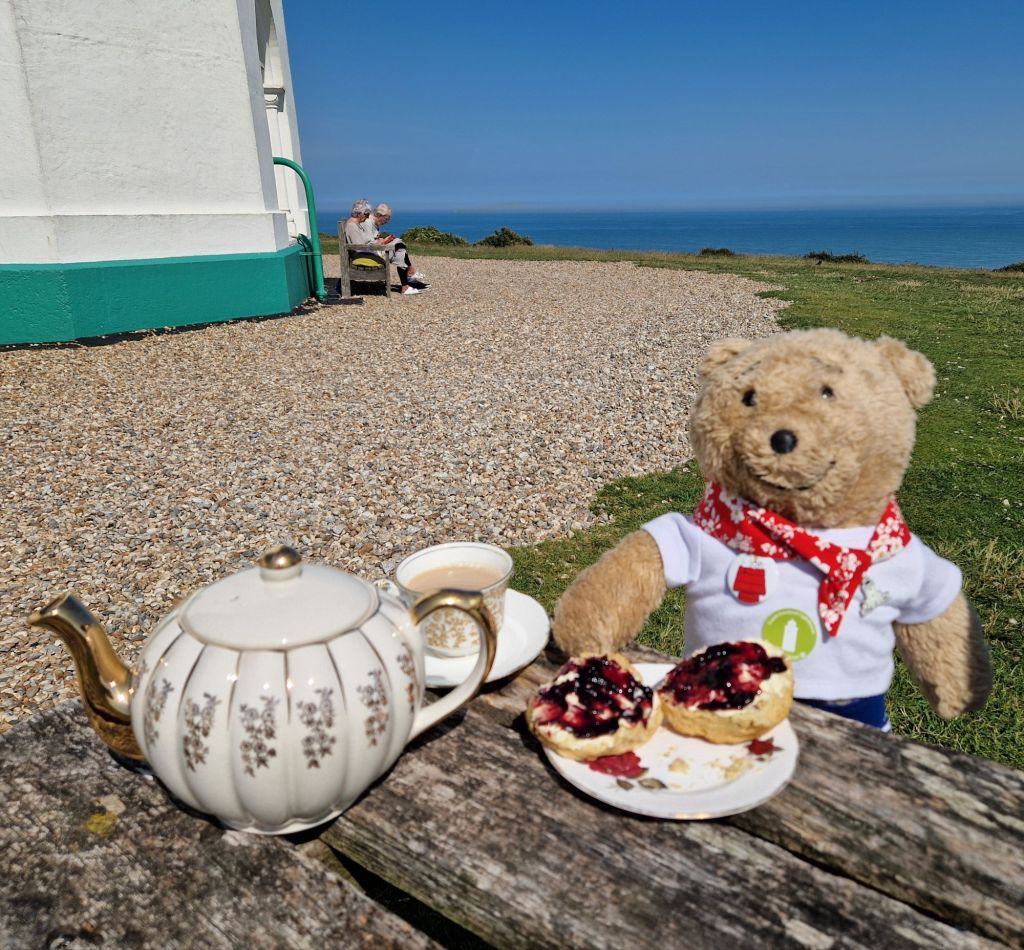
After coming back down the stairs we thanked the tour guide and went into Mrs Knott’s tearoom for some refreshments which we decided to enjoy outside. The tearoom next to the lighthouse was converted from one of the lighthouse keeper’s cottages and named after the Knott family who were keepers at the lighthouse for many years.
Do visit South Foreland Lighthouse if you are near Dover, it is very interesting. Be careful not to go to North Foreland Lighthouse by mistake, as we did first of all, as that one isn’t open to the public!
For more information see https://www.nationaltrust.org.uk/visit/kent/south-foreland-lighthouse
Horace the Alresford Bear 27/6/2025
 Horace the Alresford Bear