The humans took me along with them to find out about some Bristol history and visit the air raid shelter underneath The Corn Exchange in Central Bristol. My human’s father lived in Bristol in wartime and he was 14 when much of the area which is now Castle Park was destroyed in ‘The Blitz’ in 1940.

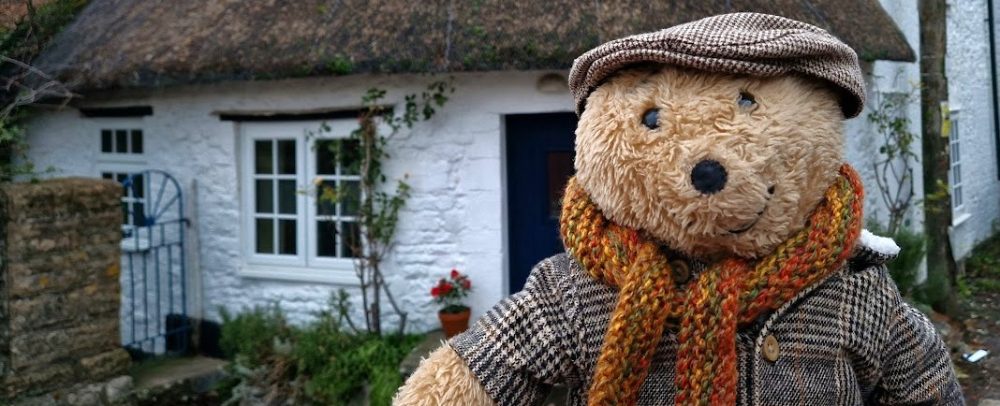
Before setting off to find the air raid shelter Duncan, the guide, told us some snippets of information about the history of Bristol. Here I am next to a ‘Nail’ which dates back to the 16th Century. There are four ‘nails’ outside the Corn Exchange, though they used to be next to All Saints Church until being moved to their current place in the 18th Century. The saying that humans sometimes use ‘pay on the nail’ comes from the time when traders did deals using cash on the ‘nails’.

There is a very interesting clock that has an extra hand on the front of the Corn Exchange. The guide explained that there were two minute hands, one showing Bristol time and the other showing London time, which is about 10 minutes earlier. The clock was necessary when people started travelling by train in order to make train timetables reliable. Nowadays everyone uses the same time, but if you are in Bristol and are late for something, as the guide suggested, an excuse could be that you were using Bristol time!

There was a little talk about a ghost to look out for, called Margaret, who is apparently a friendly ghost, then we set off to find the air raid shelter.

We had to go downstairs to the basement area of The Corn Exchange.
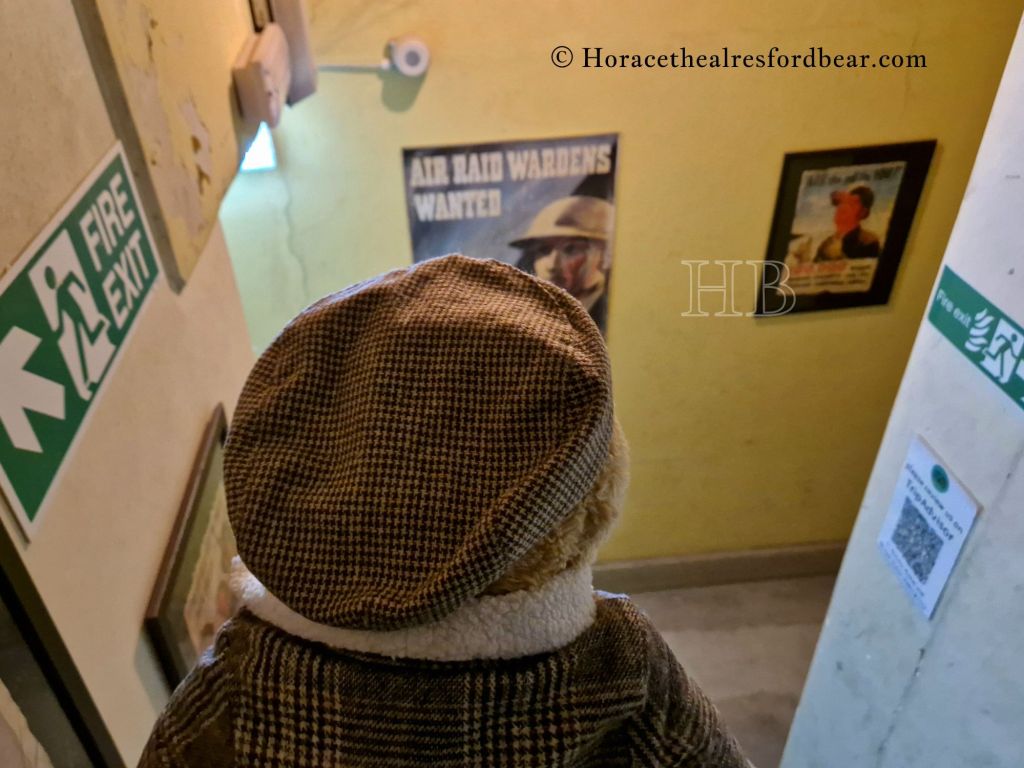
Nearly there….

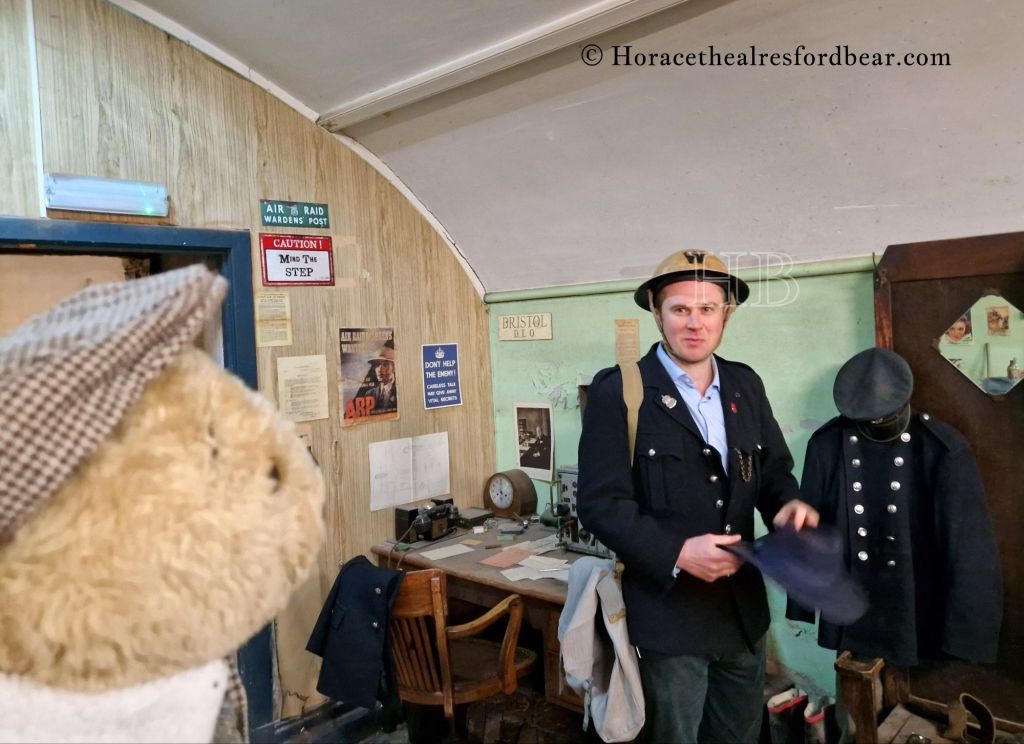
On entering a room that used to house a cafe for the city valuers, the guide changed into an ARP (Air raid precautions) Warden’s hard hat to take us into the air raid shelter.
The bears in the cots wouldn’t have been in the shelter originally but I guess children may well have brought teddy bears with them when they had to shelter.

The cuddly dig reminded me a bit of my human’s spotty dog (that doesn’t have spots anymore)

The posters on the wall are reproductions from the 1940’s that have been made to look old. The toilets were just areas with rows of buckets for 100 humans sheltering sometimes for hours, it must have been very scarey for the humans sheltering as bombs fell outside.

The guide, Duncan, put a record on a reproduction wind up record player then told us about Nipper the dog. Nipper was born in Bristol in 1894, and called Nipper because he ‘nipped’ at humans’ ankles. When Nipper’s owner died he was taken to Liverpool to be cared for by his owner’s brother, then later to Kingston-on-Thames where he is buried. Several years after his death his original owner’s brother painted the picture of him which went on to advertise HMV (His Master’s Voice).

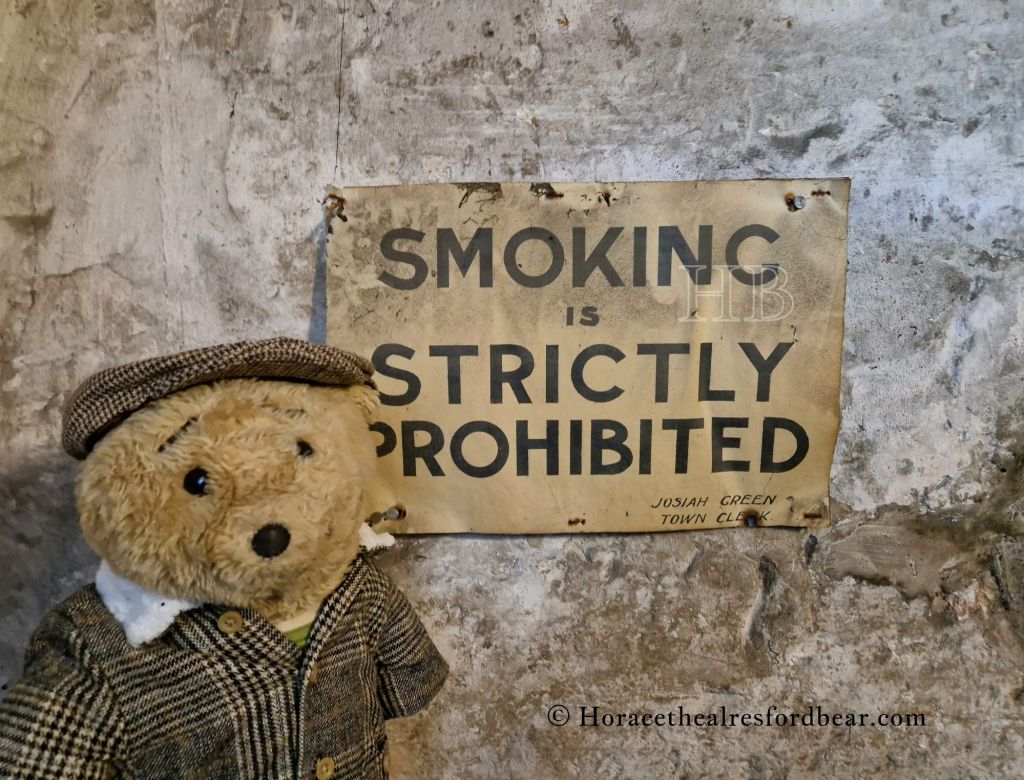
The ‘Smoking is strictly prohibited’ sign is an original sign from the 1940s.
The bike is from the 1940’s and may have been the sort used by ARP wardens.

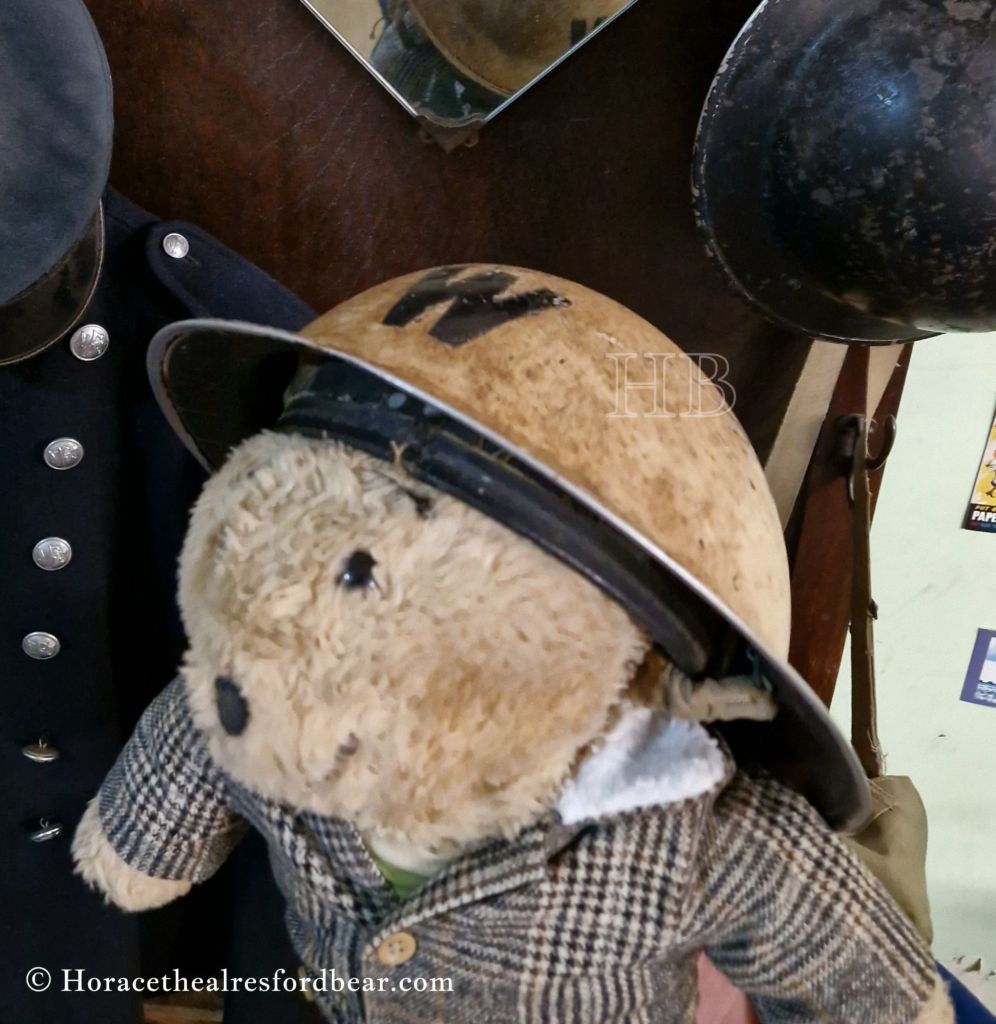
I tried on a helmet, but it wasn’t very comfortable for a bear!
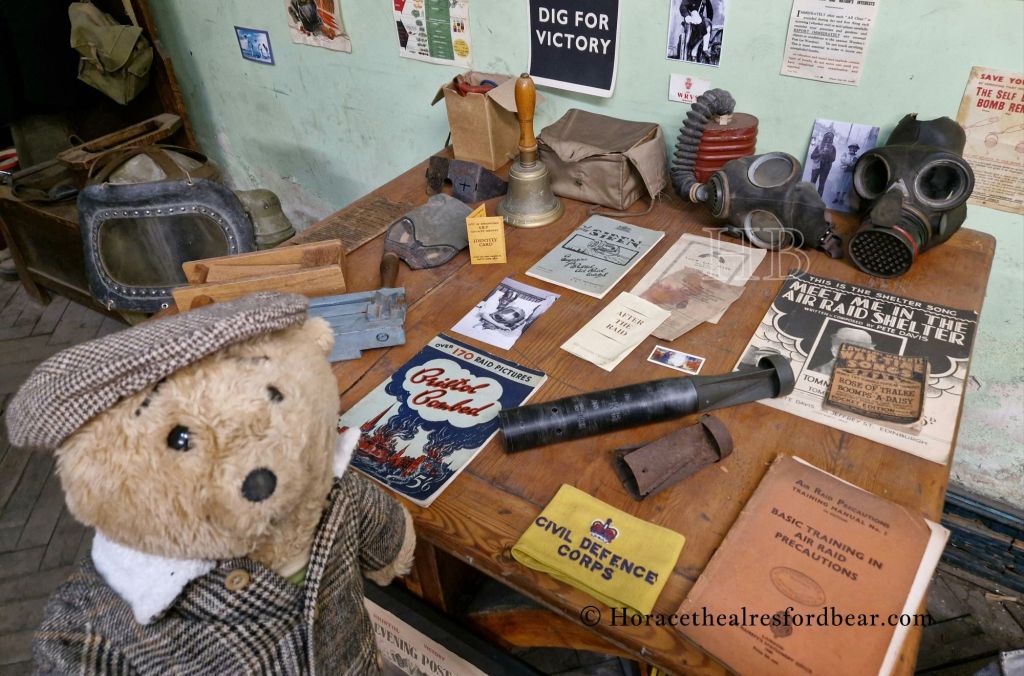
There are other interesting items in the shelter such as the gas masks that humans were issued just in case gas was dropped, which fortunately it wasn’t. The black long thing is an incendary bomb, thousands of these were dropped that caused buildings to catch on fire. It is sad that humans have wars.
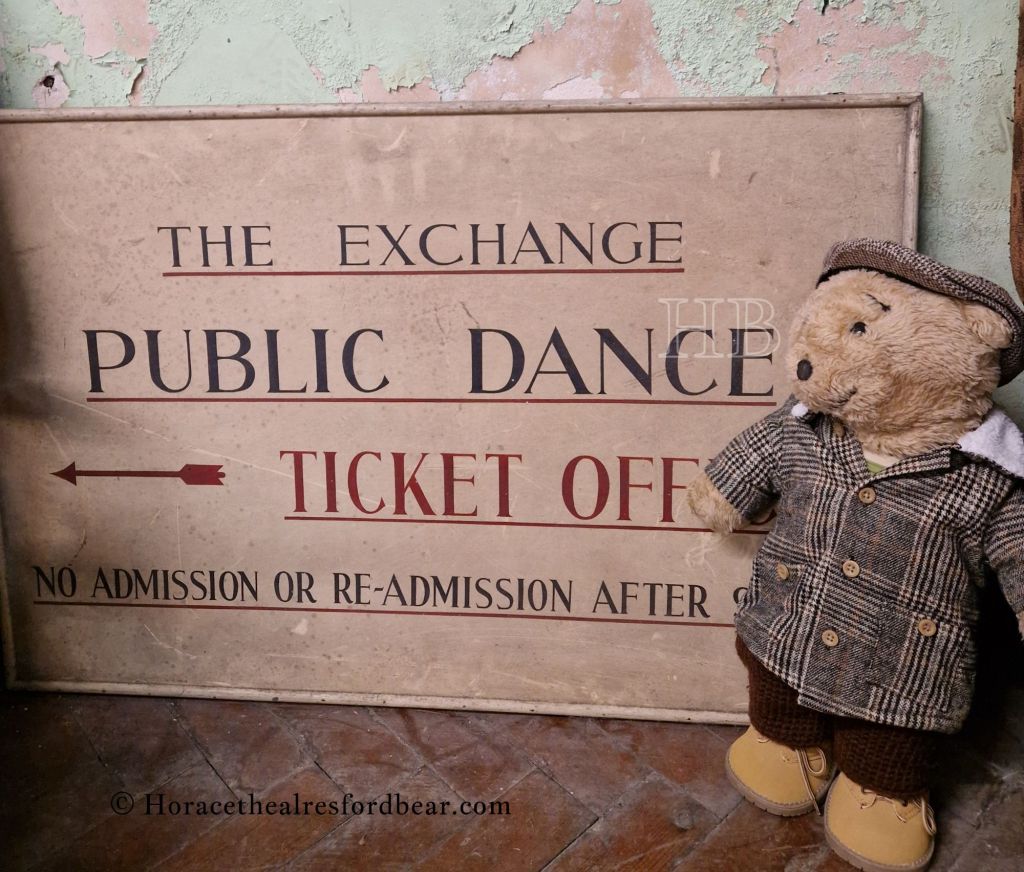
Dances used to happen in The Corn Exchange above the air raid shelter. My grand humans met at a ballroom dance there in 1954!
In the 1960’s rock and roll bands started playing there, including The Who, Pink Floyd and the Rolling Stones. I had a look at the diary of a young woman describing the gig by The Who.
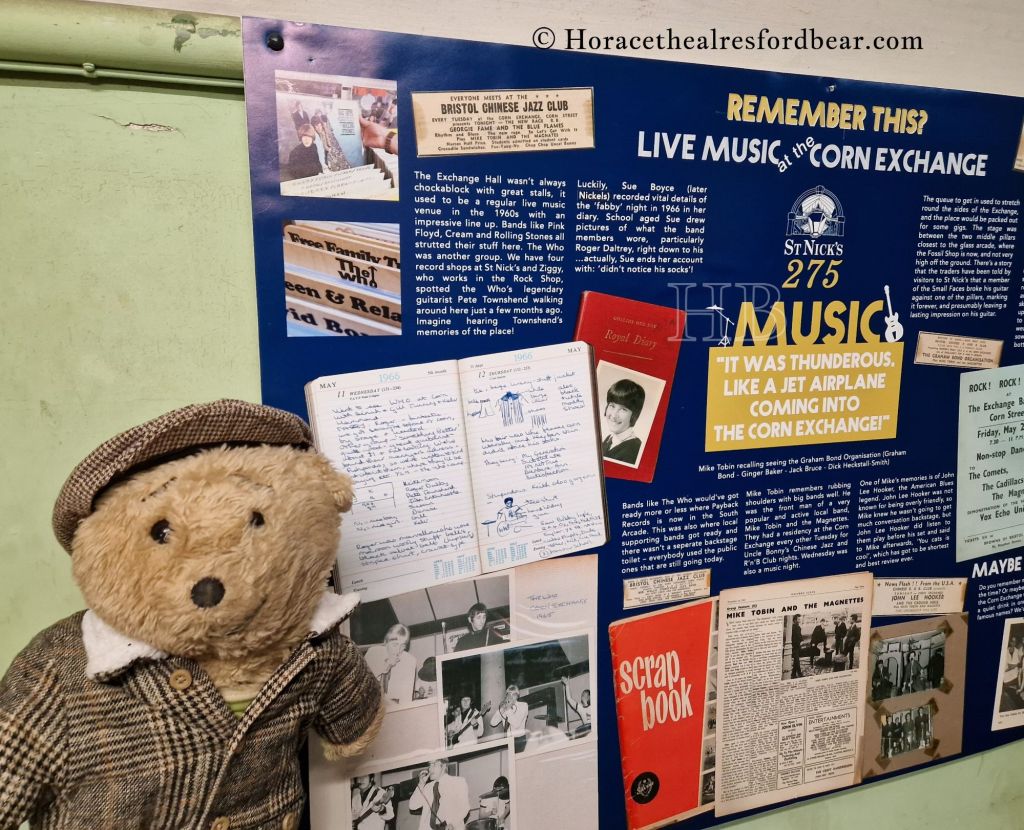
The Corn Exchange is now full of market stalls selling all sorts of things so sadly no bands play there anymore.
My blog is only a few snapshots of the tour. The guide told us lots us interesting facts about Bristol’s history and if you are in the area it is worth doing.

For more information see https://www.st-nickstours.com/
Horace the Alresford Bear 14/3/2025
 Horace the Alresford Bear
Fascinating outing Horace.
LikeLiked by 1 person