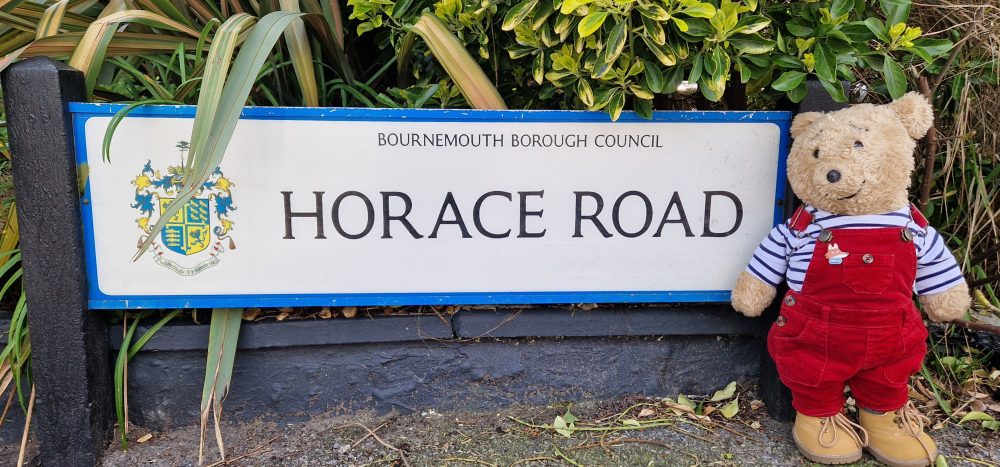
The Holy Island of Lindisfarne

The humans rented a National Trust cottage for a week to explore Lindisfarne and surrounding area. We spent quite a while sitting in the cottage window watching all the people visiting the island as our cottage was on the route to The Abbey and next door to Naitonal Trust shop.

We went out very early to see the Island before all the tourists arrived. Access to the island is restricted by the tides. The causeway to the island is covered in water twice a day and is only safe to cross when the tide is out. Here we are looking at Lindisfarne castle from the harbour.

Upturned boats are used by fishermen as huts.

This one was our favourite hut.

We walked across the meadow to get a better look at the castle which is perched high up on rock.

All the spring flowers were in bloom. This photo was taken from the Gertrude Jekyll Garden which is across the meadow from the castle.

The weather changed quite a lot while we were on the island. On the 2nd day it was very windy but that didn’t stop us going out to explore.

We found lots and lots of cairns built on the beach.

It seemed like a good idea for us to build cairns too, but it did take a while. Big pebbles are very heavy for small bears to move around

Finally we finished them.

On another day we went going back to the Gertrude Jekyll garden to take some more photographs for the blog.

Gates are sometimes a tad challenging to small bears.

There is a little shed in the corner of the garden full of gardening tools.

We enjoyed identifying some of the plants. The purple plant is Nepeta, sometimes known as catmint, there is some in our garden at home.

The sweet peas had a lovely perfume

After having a rest on the bench in the garden we set off to explore the Lime Kilns

Limestone was burned in the kilns to reduce it to lime which was used as fertilizer and in mortar and limewash for buildings. It was very hard work for the men that worked there around 150 years ago.

There were numerous kilns which would have been heated up using coal.

This is the bottom of one of the kilns.

The carts carrying the limestone were dragged up to the top to be dropped in by men to spare the horses the heat coming up from the kilns. The tops of the kilns are now all fenced in to stop people and other creatures falling down the holes.

We spent so long looking at the lime kilns the castle was closed when we got there! The humans had seen it one day while we were busy sitting in the window of the cottage and said the inside was worth seeing, so do go in if you are ever on the island.

We climbed up to the door just to make sure it really was closed,

The door was indeed shut, however it was a good place to have a rest after the climb.

Here we are having another rest after walking back down from the castle.

We managed to visit Lindisfarne Priory while it was still open. Some monastic bears were waiting for humans to adopt them in the English Heritage gift shop.

There isn’t actually very much left of the Priory. A very very long time ago, about 1400 years ago, a monk called Cuthbert lived here. When Cuthbert died he later became a Saint.

We spend a little while exploring the remains of the various rooms.

Apparently when the Priory was no longer in use the stone was taken to build the castle and local houses.

We could see The Castle from the Priory.

Lindisfarne is a great place to visit, but if you stay on the island as we did, you have to be mindful of the tides and plan outings off the island accordingly!

On this occasion we certainly weren’t going anywhere as the causeway was submerged.

The Ship Inn is one of the pubs on the island, and we very much enjoyed the fish and seafood stew that we had there one evening.

The evening before it was time to leave we went down to the harbour one last time.

We watched the sunset and listened to the sound of the seals singing.

Horace the Alresford Bear 2/7/2022

Cragside

On arriving at Cragside we did the Carriage Drive in the car, it is six miles long, The road winds around the hill past lots of tall trees and rhododendrons.

We stopped for a while to have a look at Nelly’s Moss Lake. William Armstrong created the lake in order to have water to provide hydropower electricity for his house and estate.

After parking the car we set off on foot, we didn’t know where to go first!

We were hungry (as usual) so started off with The Tea Rooms,

With tummies full we set off to explore. The big house was built into the rocks between 1869 and 1882. The house was equipped with all sorts of hydraulic machines including the lifts, and the lights all powered by hydroelectricity.

There is an iron bridge which spans the Debdon stream. We are standing on it in this photograph.

Here is the iron bridge photographed from below.

There are a few bridges in the woodland crossing the stream that runs down from the lake.

This bridge is on the way to the Power House which is at the bottom of a gorge, there were holes in the walls just the right size for bears to sit safely in for photographs.

It was quite a long way to the Power House.

We passed a big wheel which had been used as a water powered machine in farming.

We finally reached the Power House. Inside there was a turbine turning a dynamo that created the electricity for the house using water. Here we are looking at the dynamo.

It was quite a climb back up to the house to see the inside.

I had to stop and wait a little while for Nye who has shorter legs than me.

The food being prepared in the kitchen looked quite tasty, until the human pointed out that it was all plastic!

In the kitchen there was an absolutely huge pestle and mortar; initially we thought it was a washing dolly!

Down in the basement of the house there was an amazing spa, complete with a very deep plunge pool.

The shower was really impressive too. I was glad no one turned it on while I was stood under it though!

Upstairs we said ‘Hello’ to a one eared bear who was resting on a little bed.

In one area of the house there was a very interesting room showing Lord Armstrong’s experiments with electricity. This is the wine glass experiment.

Armstrong placed a cotton thread between two wine glasses filled with pure water. After applying a high voltage of electricity a watery connection formed, and after a while the thread pulled into one glass just leaving the a rope of water.

We had a wonderful time at Cragside, a really fascinating place to visit.

For more information see https://www.nationaltrust.org.uk/cragside

Horace the Alresford Bear 25/6/2022

Fountains Abbey & Studley Water Gardens

We have seen lots of photos of Fountains Abbey and were keen to get there to explore. As we walked down the path to it the ruined tower came into view.

We stopped for a rest and looked out through the meadow towards the Cellarium (I have used the guide leaflet to get the correct names, they aren’t word normally in a bear’s vocabulary)

The humans decided to do the walk along the water gardens before exploring the ruins. Here we are running through the meadow to join them.

Studley Water Gardens are really beautiful. They were created by John Aislabie in the early 18th Century nearly 300 years ago.

When we had got as far as The Temple of Deity we noticed some weird heads poking out of the water in the lake. The quickest way down to the water’s edge was to roly poly.

There were several statue heads in the water. This one had a garland of flowers around it.

Further along on our walk there was a canoe full of animal statues in the water. Having seen the heads in the water at first we thought that they were replicas of something that had always been there! However, it turned out that they were part of an art trail, Waterlogged, by an organisation called Henshaws. We enjoyed looking at them and thought they were quite quirky.

When bears find a tunnel exploration is necessary, so we made our way through this one.

We eventually emerged into the daylight.

The Serpentine Tunnel led to The Octagon House. Can you see us in the photo?

We went back down to the lakeside path until we reached the Fishing Tabernacle. Fishing used to take place from here, and below the building sluice gates that keep the water in the lakes are hidden.

Walking back towards the Abbey we discovered lots of animal sculptures floating on a raft, which was also part of the ‘Waterlogged’ art trail.

On arriving back at the Abbey we started to explore. The building of Fountains Abbey by monks commenced in 1132, so it has been there a very long time. We climbed up some steps leading from the ruins of The Warming Room.

We could see the Cellarium from the top.

One of the humans took a photo of us from the bottom.

On entering The Cellarium we were amazed by the wonderful ceiling structure.

Legs were getting a tad tired but we managed to find the energy to get to the prison.

We didn’t feel very comfortable in the Prison.

Before leaving we had a look inside The Tower, which like the rest of the Abbey doesn’t have a roof.

After making our way back up the hill we went in the shop. Instead of buying cake in the cafe we bought ourselves a little pine cone hedgehog each. The hedgehogs are made by a local wood carver, they will remind us of our lovely day spent at Fountains Abbey and Studley Water Gardens.

For more information see https://www.nationaltrust.org.uk/fountains-abbey-and-studley-royal-water-garden

Horace the Alresford Bear 22/6/2022

Exploring Shugborough

After walking a little while from the car park a very big house came into view.

The main house was closed on the day we visited, but ‘downstairs’ where the servants worked was open, the area of big houses that we find most interesting. There was a huge iron warming stove covered in lots of flat irons. Apparently it was originally used in a training school for maids.

We were amazed by the huge contraption that was used for wringing out wet clothes.

The copper boiler was huge; I was a bit worried that Nye might fall in.

A laundry maid’s life was very hard, they had to get up at 5am every day to fill the coppers with water using buckets.

The kitchens were very big too, with a huge collection of jelly moulds.

Being in the kitchen made us feel very hungry so we called into the Mansion tea room for a pasty lunch.

Here we are outside The Flight House.

Inside The Flight House there were beautiful stained glass windows.

The River Trent runs through the Estate. We stopped and watched the swans for a while.

Swans always look very serene on the the water.

This is the Chinese House. It is thought to be one of the oldest Chinese style houses built in the UK and dates back to 1746.

The bridge makes an excellent backdrop for a photo of two handsome bears!

Only staff and pigs were allowed through this gate, so I didn’t proceed and further.

The Tamworth pigs came outside to say Hello in pig language, the humans lifted us up so that we could see them.

We wondered why this cow only had one horn. She was expecting a calf soon and staying cool under the shade of the tree.

The dipping pond in the kitchen garden was dry. Gardeners would have used this to fill watering cans. Shugborough was only taken over by National Trust in 2016 and they are still in the process of restoring it.

There were beautiful flowers and vegetables available on the produce table. We thought about having some rhubarb, but being on holiday the humans had already organised our food.

When we got back to the car we sat and enjoyed a rhubarb yogurt each, eating them with rather strange bits of cutlery known as ‘sporks’.

Shugborough is a great place to visit with plenty to explore outside and inside, though we were only able to see the downstairs area as the house and Lichfield apartment are not open on Mondays and Tuesdays at the moment. Please check before you visit!

For more information see https://www.nationaltrust.org.uk/shugborough-estate

Horace the Alresford Bear 21/6/2022

Symonds Yat adventure

Today has been the hottest day of the year so far. The humans decided to take full advantage of the sunshine and have a day out at Symonds Yat. I was jolly pleased they took me along too. First thing I did when we arrived was to make a cup of tea for everyone.

Shortly after finishing our tea we set off upstream along the river Wye in our kayak.

After about half a mile we came across a swan with her cygnets.

After paddling for another ten minutes we paddled past lots of geese and their goslings.

It was great fun being on the river but after a while my tummy started rumbling for food. We went back downstream to our base where I cooked some sausages to make hotdogs.

Yum yum yum. Food always tastes better in the open air!

We decided to spend the afternoon walking along the downstream section of river. The humans wouldn’t take the kayak that way as there are rapids in that part of the river, and they only do calm water kayaking. In order to get to the other side of the river we had to use the ferry. I watched as the ferry man pulled the boat across using his hands holding onto a cable strung across the river.

It was quite a quick journey across to the other side.

We walked along the path for about one and a half miles before reaching a rope bridge that we could cross back again on. I stopped for a drink as was feeling thirsty in the heat.

We don’t have any photos of me toddling across the bridge as my human finds the bridge a bit wibbly wobbly and gets a bit scared crossing it. She was too busy holding the handrails to take photos! Though I did manage to get her to take my photo just before I walked across.

It was indeed rather wobbly especially when other humans were also walking over. Only 6 humans are allowed on it at a time. We walked back towards our base and I enjoyed looking at the scenery. There is a special trail marked out with poles over the rapids for humans that like to race kayaks through them

I squeezed through two tree trunks to see another view.

Sitting on top the tree trunk was more comfortable.

We will visit Symonds Yat again one day I am sure, it’s not too far from Bristol and is a good place to kayak, walk and cook sausages.

Horace the Alresford Bear 17/6/22