
We had to wait a little while in a queue to get special tickets in order to go into the ‘Very Victorian Christmas’ event happening inside the big house at Tyntesfield.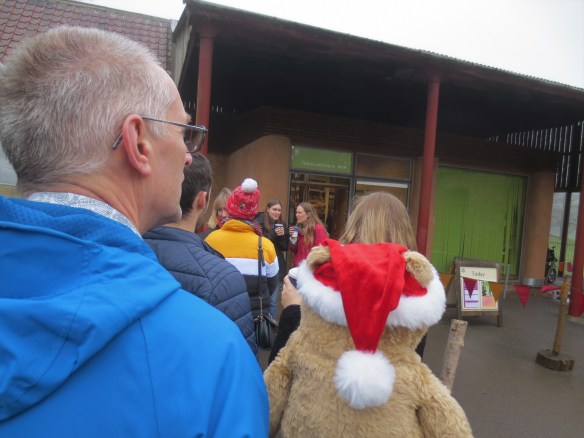 The weather was very damp and misty, which tends to mess up my fur a little. I posed for a selfie outside the splendid gothic mansion.
  The carriage rides looked like fun, but unfortunately were all booked up.
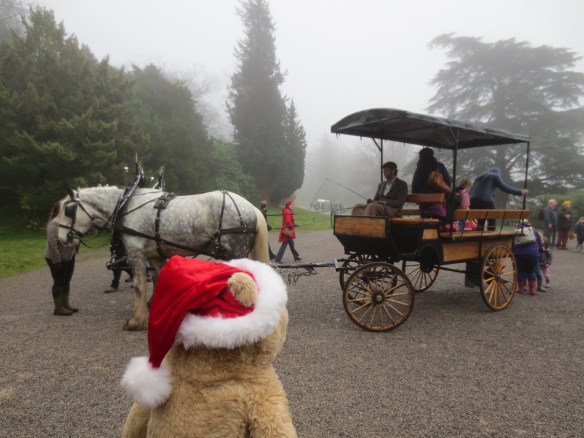 The driver did have room for a small bear up front, but I couldn’t leave my humans behind so climbed down again to be with them.
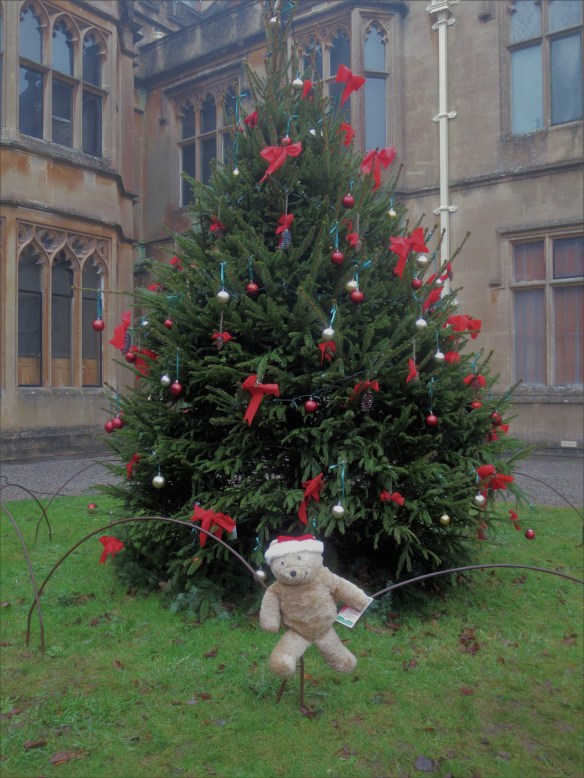
 Lots of the trees around the estate were decorated in red ribbons.
  There was another queue to get into the house, but we fortunately we didn’t have to wait long.
  In the entrance hall the footman explained ‘the rules of the house’ to me.
 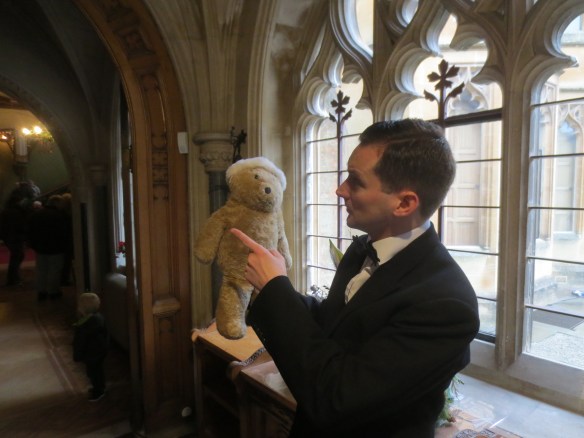 I had a chat with Mr Loxley next to a splendid Christmas tree.
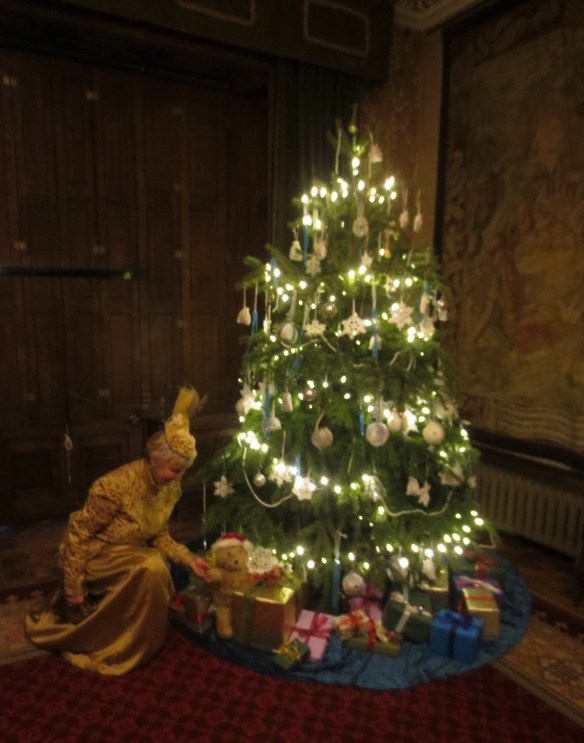
 In another room there was a Christmas tree festooned in crocheted decorations made by volunteers. It was very pretty. I had a chat to a lady who was an author, though I have forgotten her name (do message me if you know). Unfortunately the present that I had my eye on in the gold box wasn’t for me.
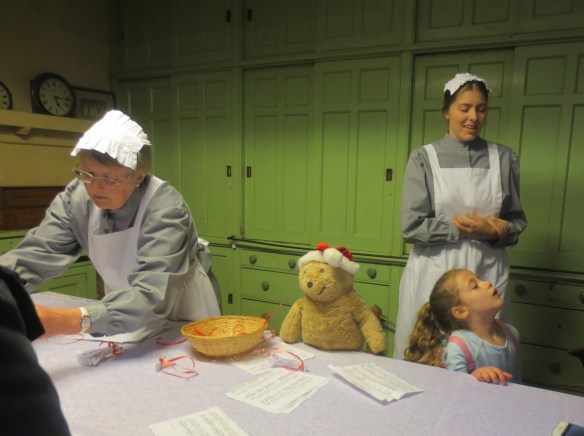
 Some house maids were helping children make jingly fan decorations.
  I was going to make one too but then heard someone start playing the piano in the room along the corridor. People were singing Christmas carols and being a bear that enjoys singing I stopped to join in.
 Mr & Mrs Gibbs, the owners of the house were dancing. (Unfortunately the photo is rather blurred, which might be because they were dancing very fast, or more likely my human needs a better camera).
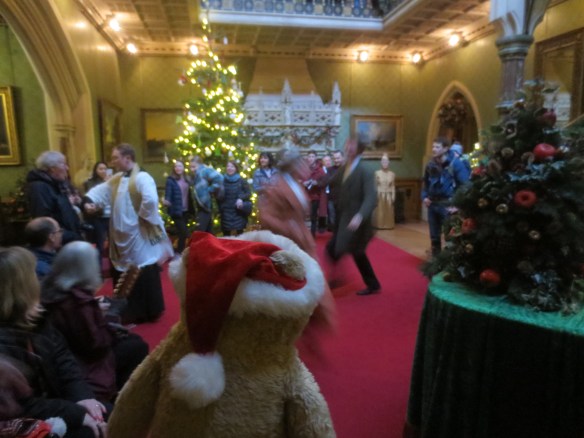 After the dancing had finished I had a good chat with Mr Gibbs.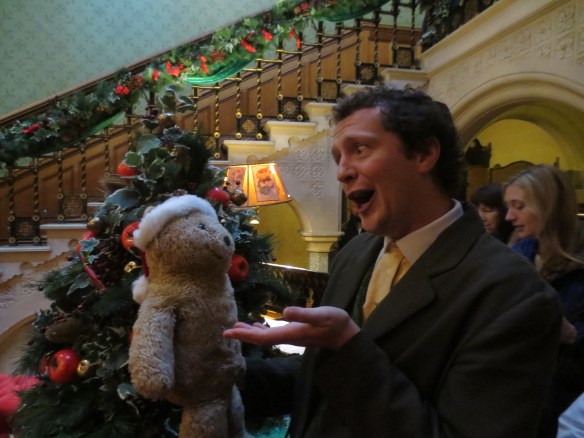
 There was a Christmas stocking filled with mysterious items in the children’s room.
  In another room someone was still busy wrapping presents.
 The Gibbs family had their own little church next to the house. The vicar read a little from his book to me but I must admit I was somewhat confused. I don’t think he was used to having conversations with bears.
 Before setting off back home some refreshments were required. Bears like hot chocolate especially with marshmallows and cream on the top!
 I have visited Tyntesfield a few times but have not been at Christmas time before. The experience made me feel very festive.
(Apologies for the poor quality of some of my photos; using a flash is not allowed inside NT properties as the light can damage old furnishings, and my human’s camera does not work well in low light. She is currently looking into getting a better camera)
A couple of years ago I blogged about Tyntesfield pumpkins & squashes: https://horacethealresfordbear.com/2016/01/05/pumpkins-squashes
For more information about Tyntesfield see: https://www.nationaltrust.org.uk/tyntesfield
Horace the Alresford Bear 23/12/18
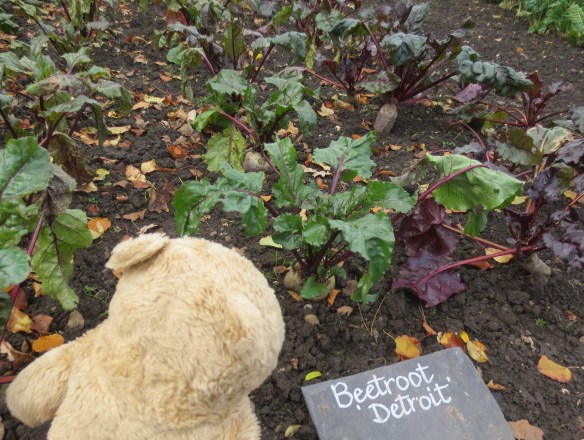
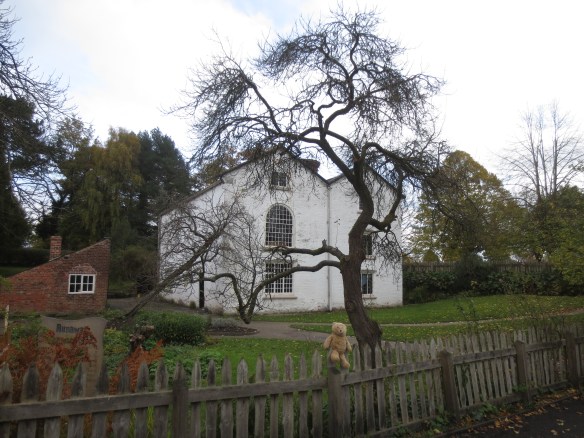 There is an allotment garden outside the house that used to be tended by the children after they completed their long shifts in the mill. Nowadays it is tended by National Trust volunteers; the beetroot looked very tasty.
 We joined a group of humans having a tour of the house. First stop was the school room. The children used to have lessons here on Sunday afternoons after going to church. Monday to Saturdays were spent working in the mill from 6am in the morning until 7pm in the evening. They must have been very tired.
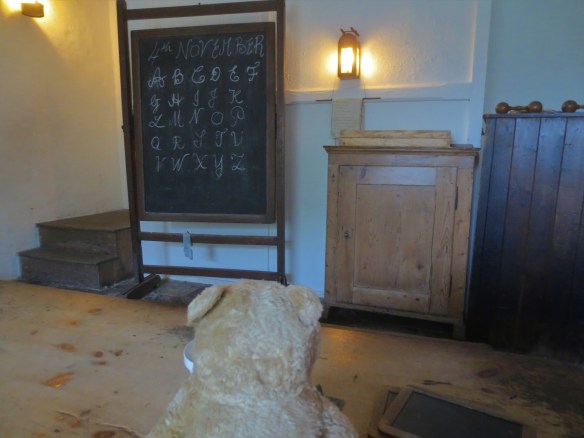 I tried my paw at writing on a slate with slate. It was a tad difficult.
 They started off learning to write letters by drawing them in a tray of sand. I didn’t try this as didn’t want to get sand stuck in my fur.
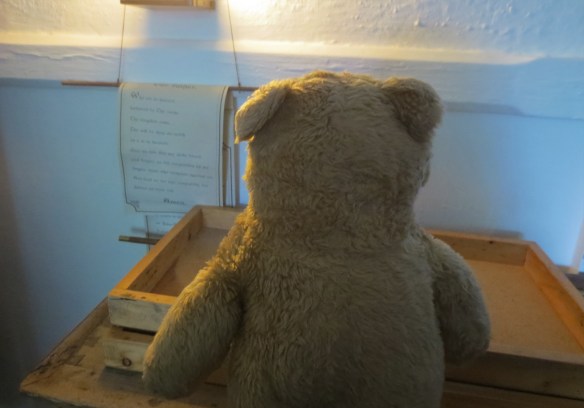 The lady doing the tour didn’t want to be held up by people taking photographs so we quickly followed the rest of the group upstairs to the dormitory where the children slept two to a bed. The beds were very small; poor people didn’t used to grow very tall then as they didn’t get enough nutritious food and had to work very hard.
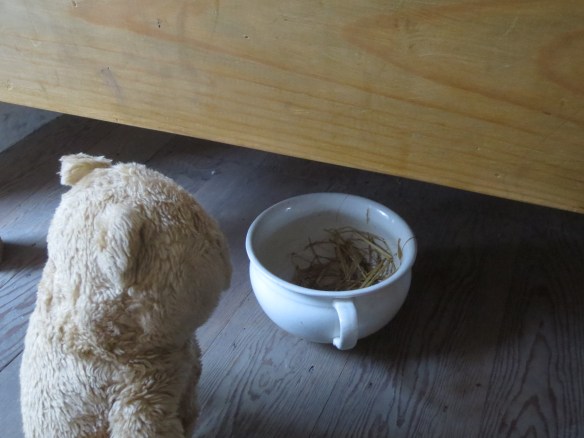
 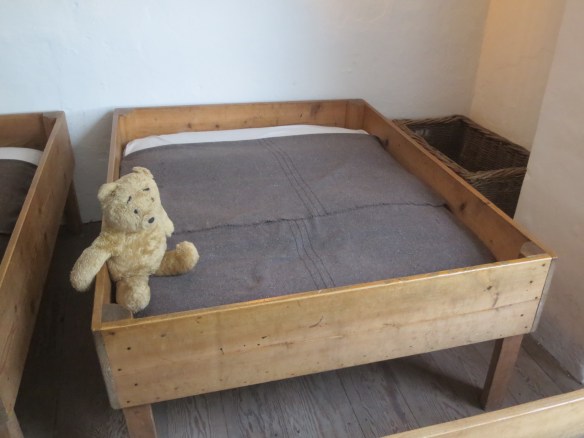 The children used to get to their dormitory by means of a ladder through a trap door and were shut in for the night. If they needed to do a wee or a poo they had to use a chamber pot and wipe their bottoms with some straw.
 Next we went into a room that would’ve been the boy’s dormitory but a table had been put there to show some of the remedies that the doctor would have used when the mill workers were ill. The leeches were used to draw out infected blood; they are still used today for some medical uses.
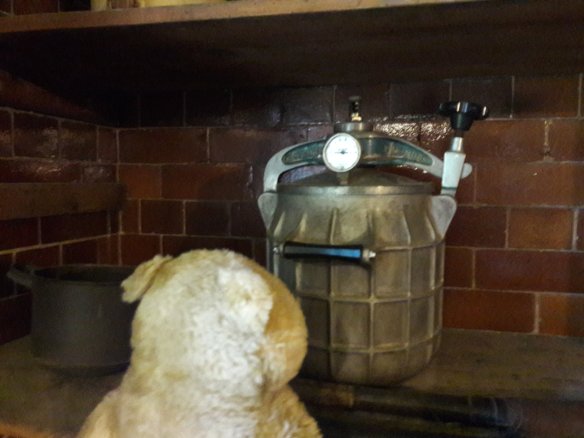
  This pot contains Brimstone and treacle. It was used for all sorts of ailments and made people go the toilet. I am glad I wasn’t around back then!
 Finally we went into the kitchen where a real fire was roaring. The guide told us all about the food that the apprentices ate, and that although they had a hard life it they had better conditions than some other mills.
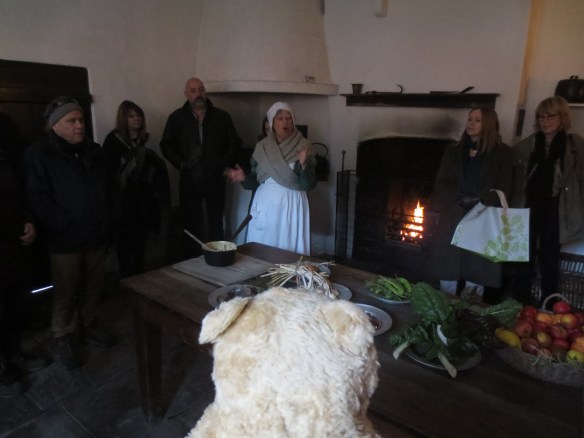 The porridge looked a bit thick. Apparently it was made deliberately like this as the children would have been taken some for breakfast while they were working. A dollop would have been given to them in their hand and straight after eating it they would have to get back to work.
 The water pump where the children would have been able to wash. It must have been very cold to use this in the winter.
 I didn’t feel inclined to try out the toilet.
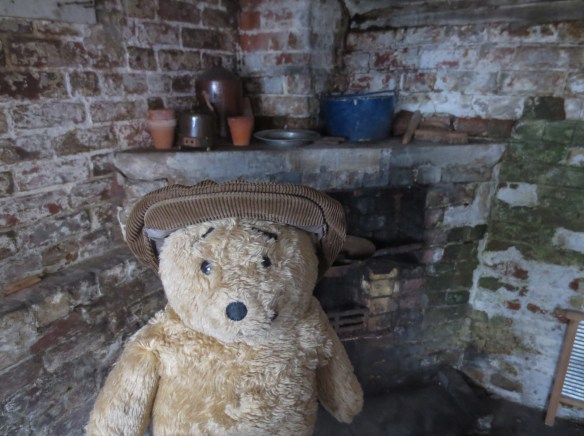
 I did however try on a hat from the dressing up clothes that you often find in National Trust properties for children. I think I look good in caps.
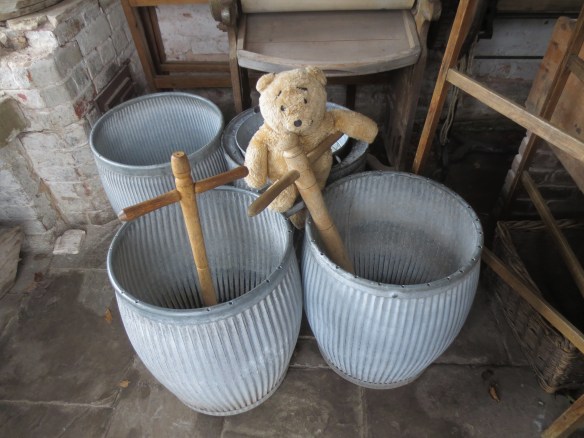
 The washing of clothes was carried out using ‘washing dollies’ which must have been very hard work. People didn’t change their clothes so often 200 hundred years ago. The mill children had 2 sets of clothes each and put fresh ones on each Sunday for church and wore them for the following week.
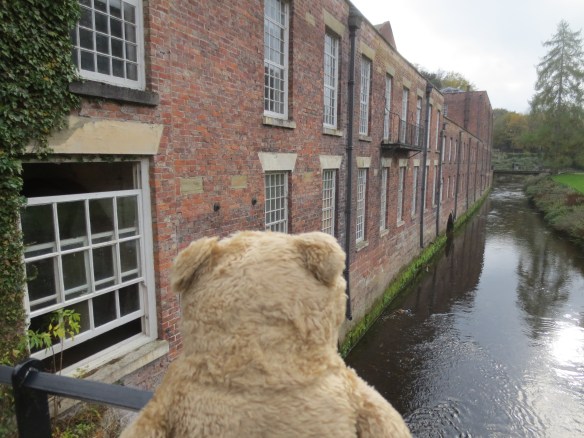
 A walk down from the Apprentices’ house took us to Quarry Bank Mill.
 Some of the trees were a splendid orange colour due to it being autumn.
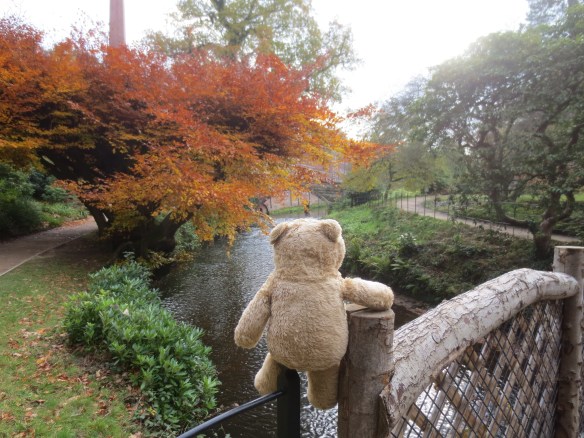 This is the stream that feeds the giant water wheel which is still working at over 200 years old.
 No visit to a National Trust property is complete without a stop for some cake. The Mill Café was so busy I had to sit upstairs in the overflow area, which is also a function room.
 With a full tummy it was time to look around the mill.
 The mill still has lots of the original machinery and is also a museum. This lady was demonstrating how cotton was turned into fabric before mass industrialisation. Here she is showing me how to ‘card’ the raw cotton and make it into fluffy cotton wool. This has to be done before raw cotton can be made into thread for weaving.
 Cotton has to be spun round and round to make a strong continuous thread. It can be done totally by hand but takes a very very long time, so the spinning wheel was invented.
 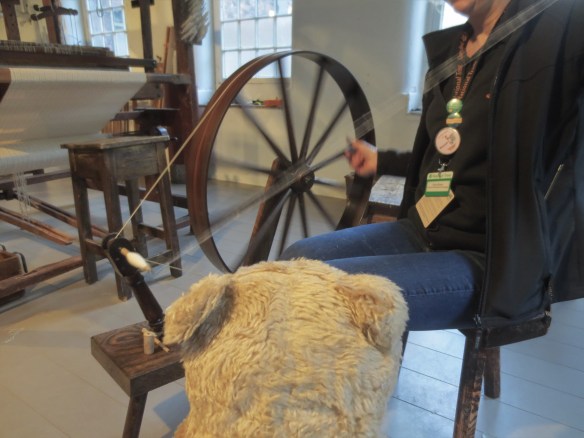 The spun cotton was then made into cloth using a pedal powered loom. The fabric could only be a wide as the operator’s arm pulling the shuttle across the fabric.
 Spinning was also made more efficient with the invention of the Spinning Jenny which was invented by James Hargreaves in 1764.
 In another big room weaving was being done by lots of big powered machines which were being driven by the power harnessed from a water wheel and also steam engines.
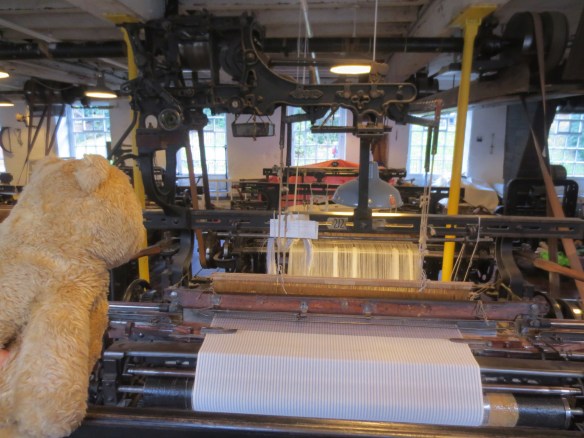 When the machines were running is was very very noisy. I was very grateful to this kind National Trust guide who me borrow some protective ear muffs.
  On another floor we found this giant carding machine that turns the cotton into cotton wool.
 The spinning was happening so quickly it looked as though all the reels were still.
 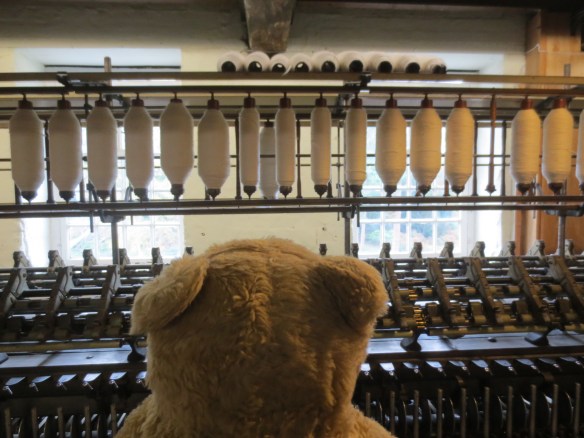 This bit of weaving equipment looked like something for bears to stay away from. The person setting up the weaving machine must certainly not be clumsy.
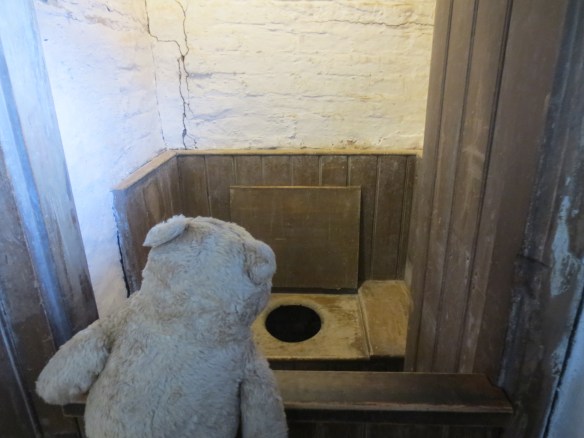
  Another toilet…
 There was an exhibition with boards with information about the lives of the workers and the working conditions. Apparently it was hot and humid as that was best for the cotton, and dusty, which wasn’t good for the workers’ lungs. I tried on a pair of Lancashire clogs that felt heavy and uncomfortable.
 The huge waterwheel was at first the main source of power in the mill.
 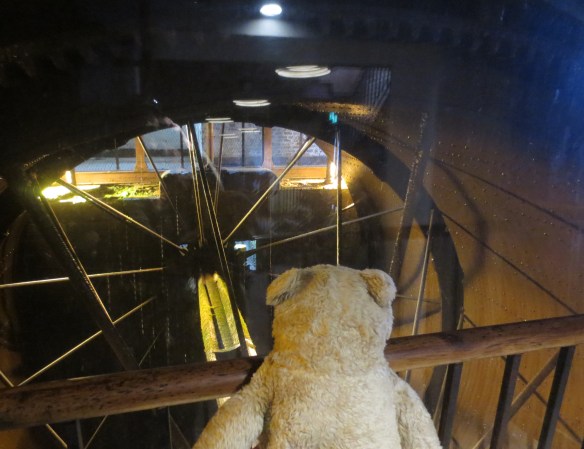 Later steam engines were also introduced to increase production.
 Here I am sat on a water wheel shaft which shows how big it is. We got ‘photo bombed’ by a little dog!
 We didn’t have time to visit the house where the mill owners lived but finished our visit with a refreshing walk through the woods where the Gregg’s children used to play, but I don’t think the children that worked in the mill would have had much time or energy left for playing.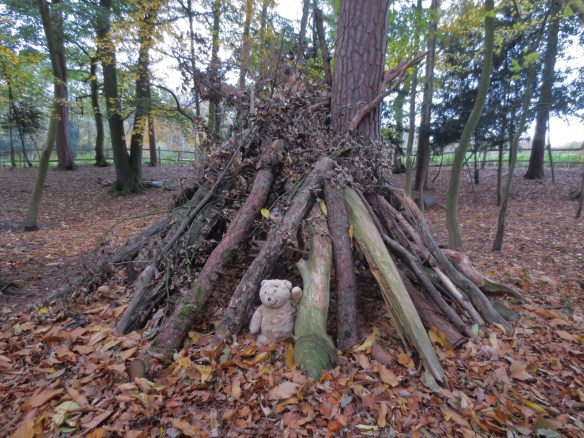
![thumbnail_20181027_154135[1]](https://horacethealresfordbear.com/wp-content/uploads/2018/10/thumbnail_20181027_1541351.jpg?w=584)
![thumbnail_20181027_172052[1]](https://horacethealresfordbear.com/wp-content/uploads/2018/10/thumbnail_20181027_1720521.jpg?w=584)
![thumbnail_20181027_165901[1]](https://horacethealresfordbear.com/wp-content/uploads/2018/10/thumbnail_20181027_1659011.jpg?w=584)
![thumbnail_20181027_170619[1]](https://horacethealresfordbear.com/wp-content/uploads/2018/10/thumbnail_20181027_1706191.jpg?w=584)
![thumbnail_20181027_214943[1]](https://horacethealresfordbear.com/wp-content/uploads/2018/10/thumbnail_20181027_2149431.jpg?w=584)
![thumbnail_20181028_094933[1]](https://horacethealresfordbear.com/wp-content/uploads/2018/10/thumbnail_20181028_0949331.jpg?w=584)
![thumbnail_20181028_113828[1]](https://horacethealresfordbear.com/wp-content/uploads/2018/10/thumbnail_20181028_1138281.jpg?w=584)
![thumbnail_20181028_122527[1]](https://horacethealresfordbear.com/wp-content/uploads/2018/10/thumbnail_20181028_1225271.jpg?w=584)
![thumbnail_20181028_122657[1]](https://horacethealresfordbear.com/wp-content/uploads/2018/10/thumbnail_20181028_1226571.jpg?w=584)
![thumbnail_20181028_133908[1]](https://horacethealresfordbear.com/wp-content/uploads/2018/10/thumbnail_20181028_1339081.jpg?w=584)
![thumbnail_20181028_140831[1]](https://horacethealresfordbear.com/wp-content/uploads/2018/10/thumbnail_20181028_1408311.jpg?w=584)
![thumbnail_20181028_144017[1]](https://horacethealresfordbear.com/wp-content/uploads/2018/10/thumbnail_20181028_1440171.jpg?w=584)
![thumbnail_20181027_160028[1]](https://horacethealresfordbear.com/wp-content/uploads/2018/10/thumbnail_20181027_1600281.jpg?w=584)
![thumbnail_20181028_151432[1]](https://horacethealresfordbear.com/wp-content/uploads/2018/10/thumbnail_20181028_1514321.jpg?w=584)
![thumbnail_20181028_151502[1]](https://horacethealresfordbear.com/wp-content/uploads/2018/10/thumbnail_20181028_1515021.jpg?w=584)
![thumbnail_20181028_164229[1]](https://horacethealresfordbear.com/wp-content/uploads/2018/10/thumbnail_20181028_1642291.jpg?w=584)
![thumbnail_20181028_191104[1]](https://horacethealresfordbear.com/wp-content/uploads/2018/10/thumbnail_20181028_1911041.jpg?w=584)
![thumbnail_20181029_000753[1]](https://horacethealresfordbear.com/wp-content/uploads/2018/10/thumbnail_20181029_0007531.jpg?w=584)
























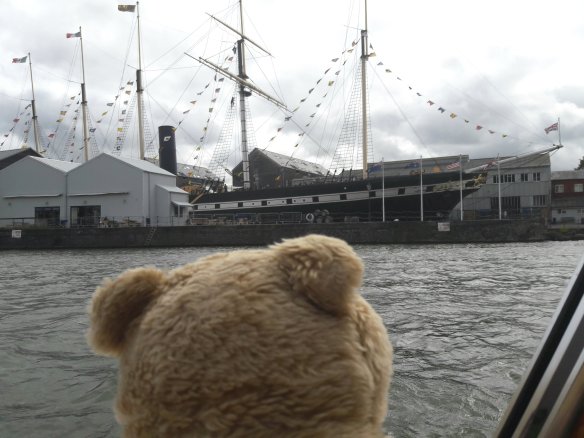
 The sign pointing to the gardens was a very good use of an old garden fork.
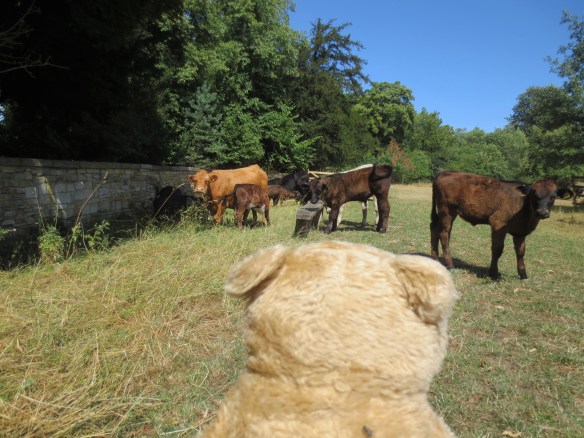
 The humans wanted a good walk for some exercise (they do like exercise!) so decided to walk around the outside of the estate first of all. We walked through a field of cows, and my human commented about how lovely it was to see the calves with their mothers.
 Further along I noticed a tall thin monument and climbed up on the fence for a better view. It was Lord Cobham’s Pillar.
 Further along we arrived at a building that was called ‘Fane of Pastoral Poetry’. My human explained that the building was a folly, which is an ornamental building with no practical purpose. At this point we stopped walking around the outside and went into the estate.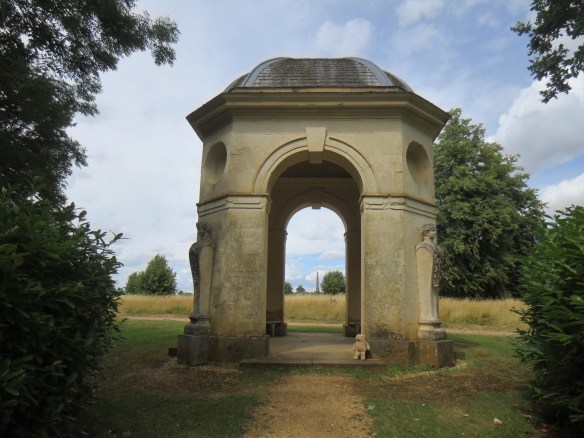
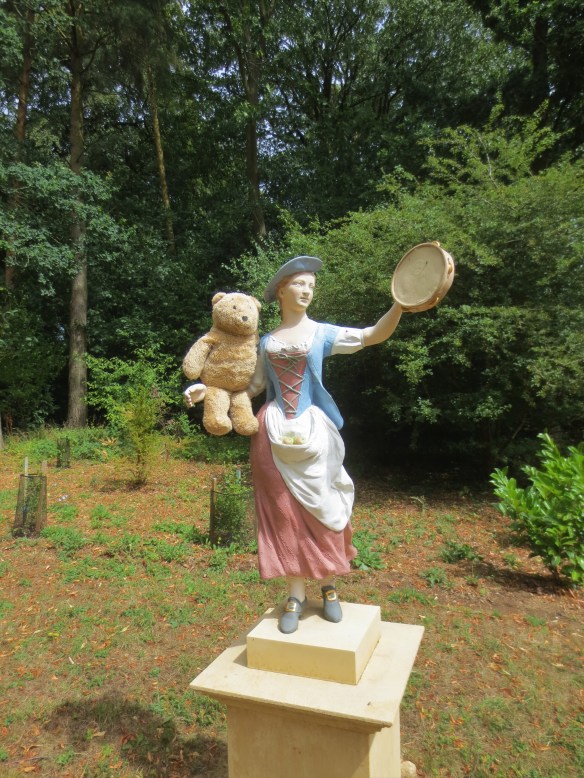 This is the Dancing Fawn in the middle of the circle.
 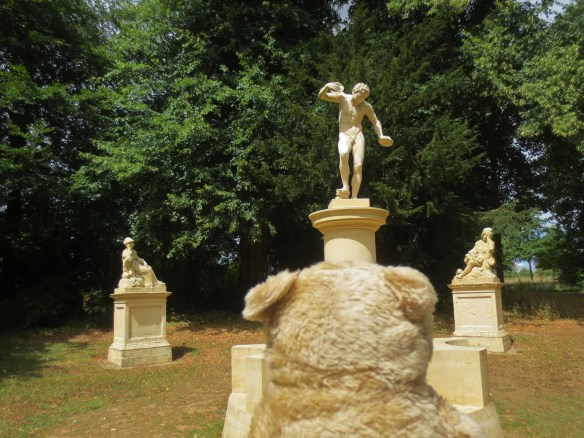 Further along we arrived at The Temple of Concord and Victory. I wondered what the people that used to live here did there.
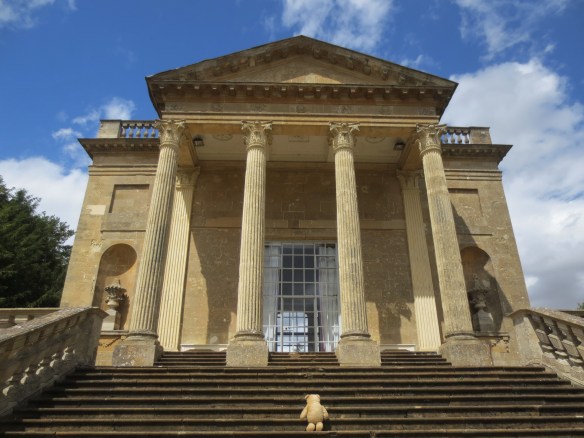
  After walking a further 270 metres (I know this because the National Trust map lists the distances between the follies), we arrived at The Queens Temple. It took me a fair while to climb up the steps as my little legs were starting to get very tired.
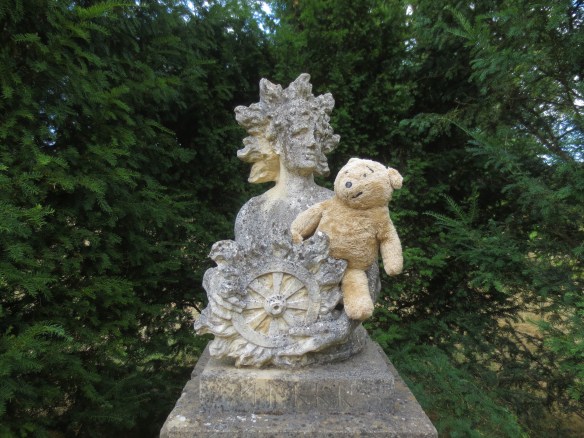
 My human decided to carry me for a while until we reached The Saxon Deities where she sat me down with ‘Sunday’ for a rest.
 I rather liked The Gothic Temple, which was surrounded by sheep.
 I went closer to get a better look; there was a wedding taking place inside. A splendid place to get married!
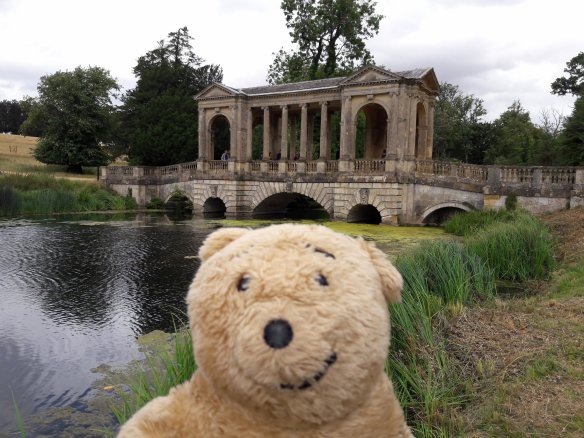
 My human picked me up again and tucked me under her arm as I was starting to walk very slowly. The estate really is very big and a few hours are needed to see everything. Here I am having a rest while looking at the view from The Palladian Bridge. I am quite difficult to spot as the bridge is quite big and I am small!
 Selfie of me on the Palladium Bridge.
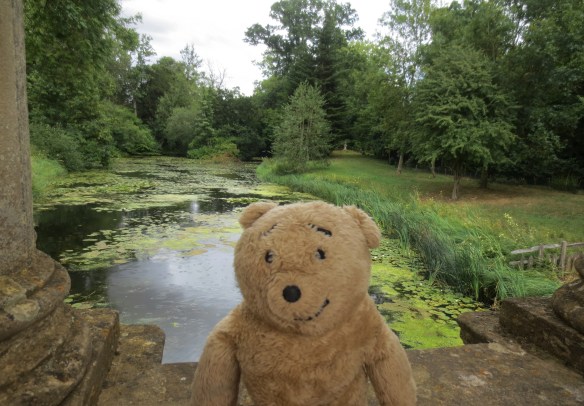 I rather liked the Palladium Bridge, so here is another selfie!
 The Chinese house gets wrapped up in the winter to protect it from the weather. w
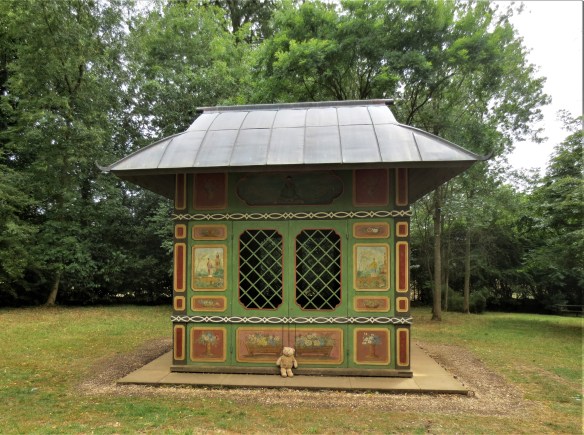 I had a look inside and nearly got stuck..
 My human took a photo of me from the opposite side. The paintings inside all looked very old and faded.
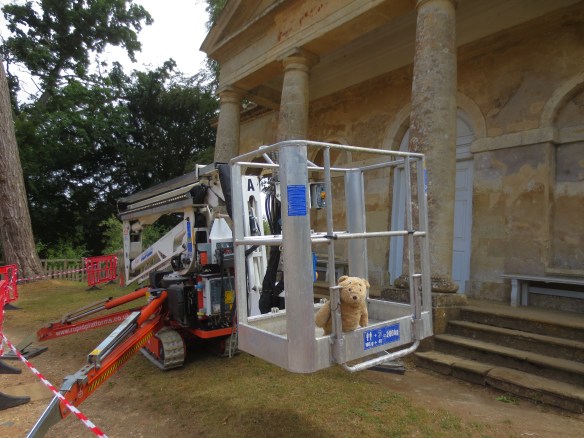
 There was some maintenance work going on at The Temple of Friendship. I tried out the lift as I don’t weigh more than 200kg.
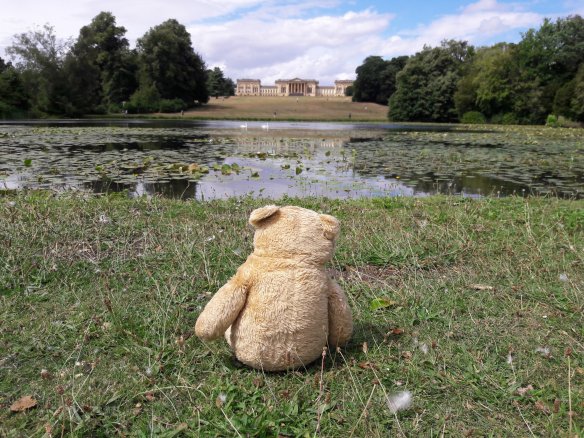
 The water lilies and swans on the Octagon Lake made me feel very tranquil. Stowe House is now a school for the children of rich people.
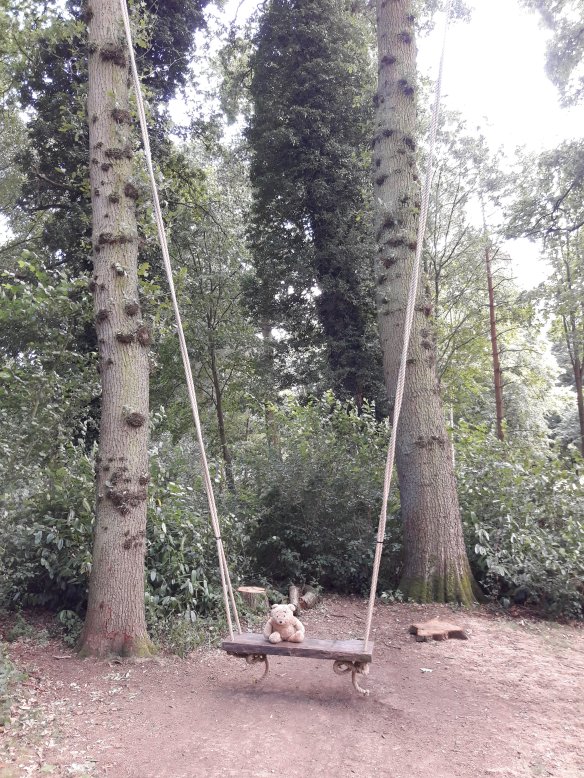
 In the woods we found a swing big enough for at least four bears; it was such a shame that some of my relatives weren’t with me.
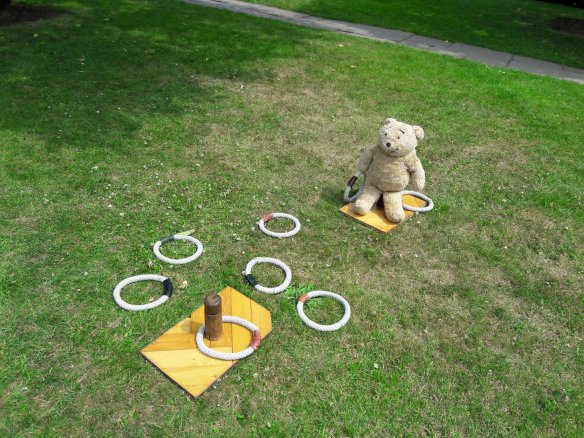
 I also enjoyed a game of skittles.
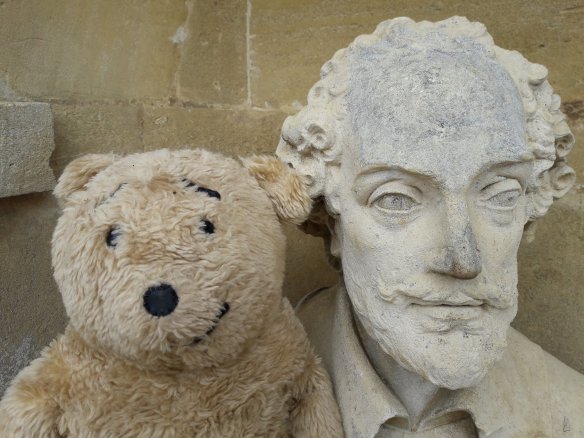
 After crossing the lake to get a bit closer I paused for a selfie with Shakespeare.
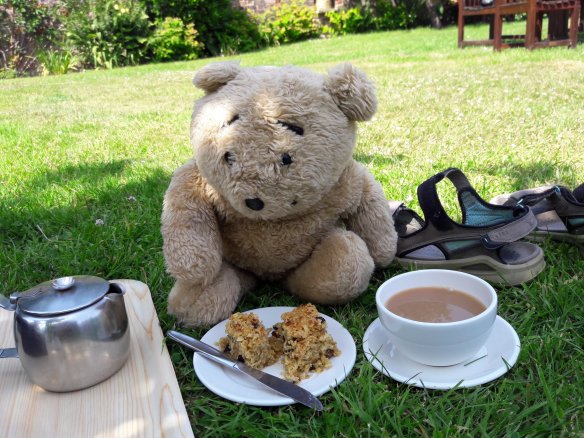
 My human’s legs were tired too so at this point it was decided it was time to visit the tea rooms. Yum yum yum…..

































 Horace the Alresford Bear