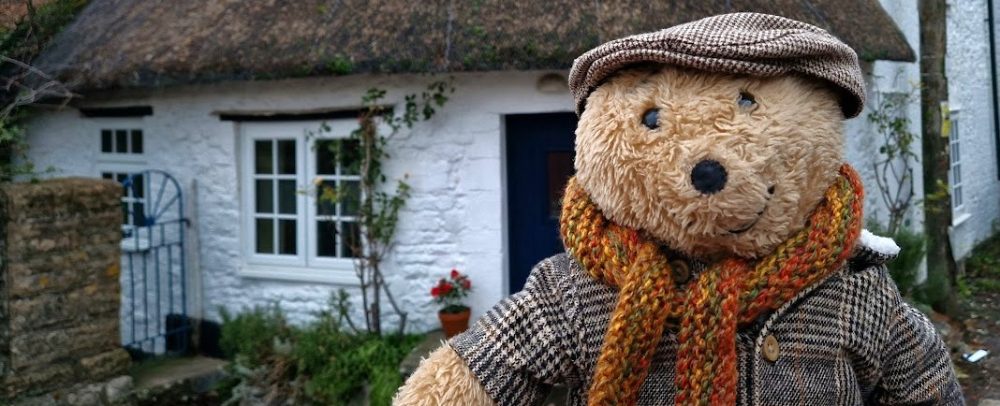
I love to dance, walk and ride bikes. I also enjoy shopping for clothes in in charity shops, though on one occasion I bought a teddy bear called Horace instead!
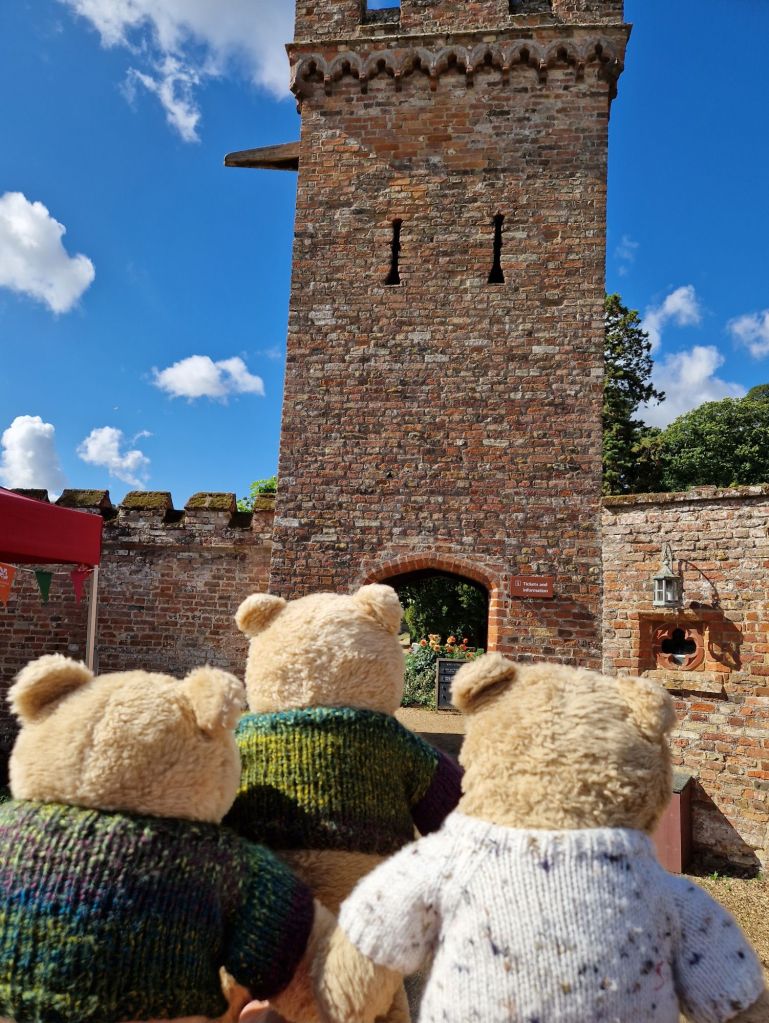
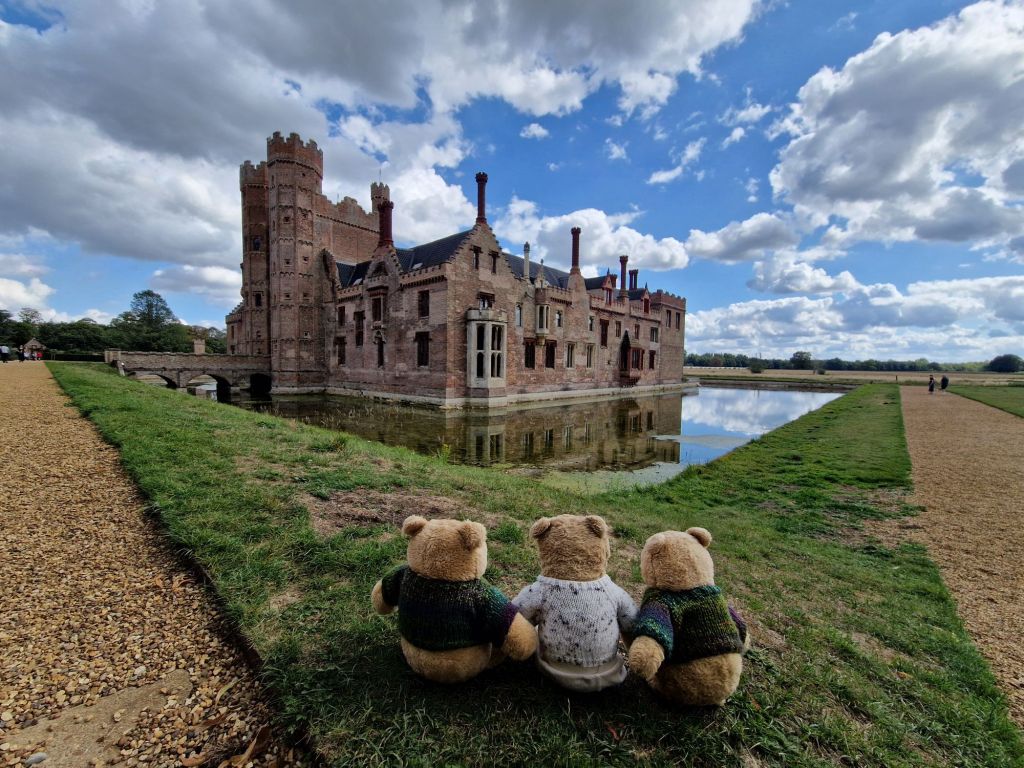
Oxburgh Hall was built in 1482 by Sir Edmund Bedingfield so it is over 800 years old!
We walked through the kitchen garden on our way to the big house.
Oxburgh Hall was given to The National Trust by the Bedingfield family in 1952 following the threat of demolition as it had fallen into disrepair.
A moat surrounds the whole of Oxburgh Hall so we went across a bridge to go inside.
There is a very precious glass goblet there which was made in 1750.
As I looked at the Jacobite glass I thought about how awful if would be if a human accidentally dropped it and broke it!
There were lots of books and bright patterned wallpaper in the library.
I found a wonderful little bear sized chair in a bedroom but bears aren’t allowed to sit on antique furniture!
We had a rest on a bench that humans and bears were allowed to sit on!
Oxburgh has a tapestry that was sewn by Mary Queen of Scots while she was imprisoned there between 1569 and 1585.
Maurice and Alf managed to climb up the stairs though their legs aren’t good at holding up their well stuffed bodies!
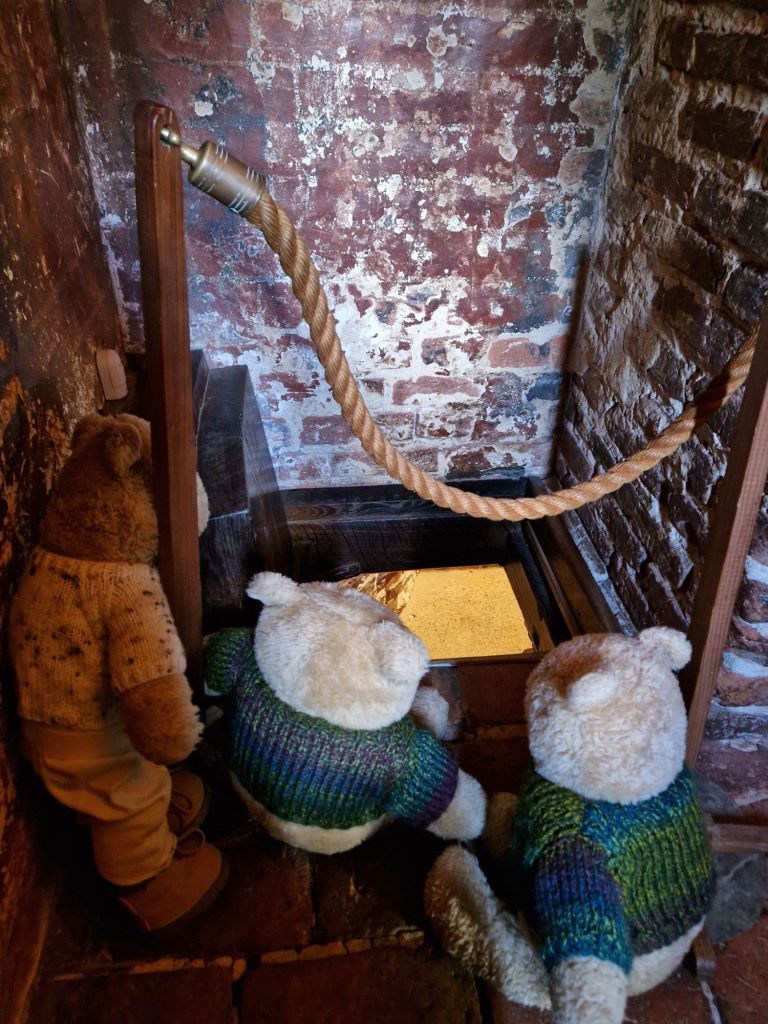
Upstairs we found a priest hole. During the reign of Elizabeth I the Catholic religion was not allowed. Catholic families with stately homes such as the Bedingfields built hiding places for Catholic priests to protect them. This hole was very well hidden with a stone slab above it.
We didn’t take many photos as the house is quite dark inside.
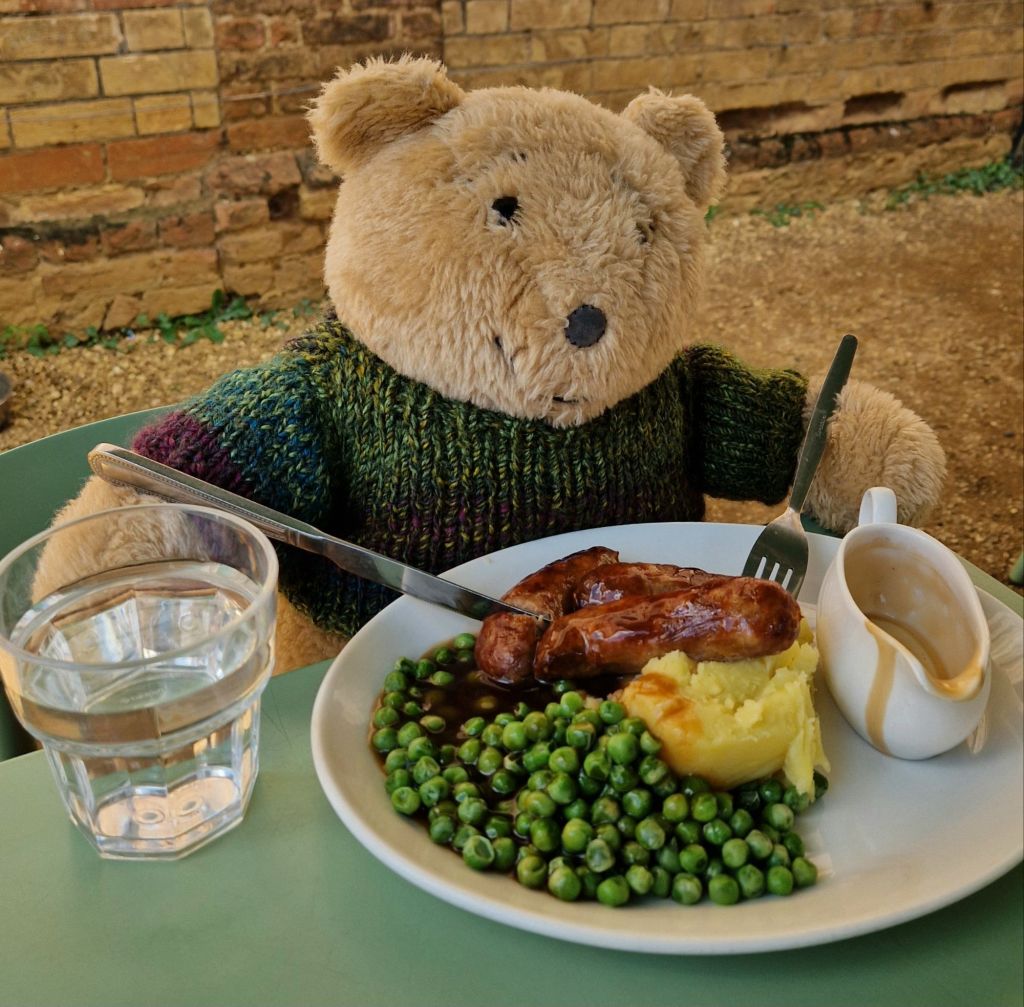
There is an excellent National Trust cafe at Oxburgh where we very much enjoyed lunch!
If you are in Norfolk do call in at Oxburgh; we found it all very interesting.
We travelled to Tattershall from our holiday accommodation by bicycle.
I locked up my helmet with the bikes as I didn’t want to wear it while exploring, then headed towards the castle.
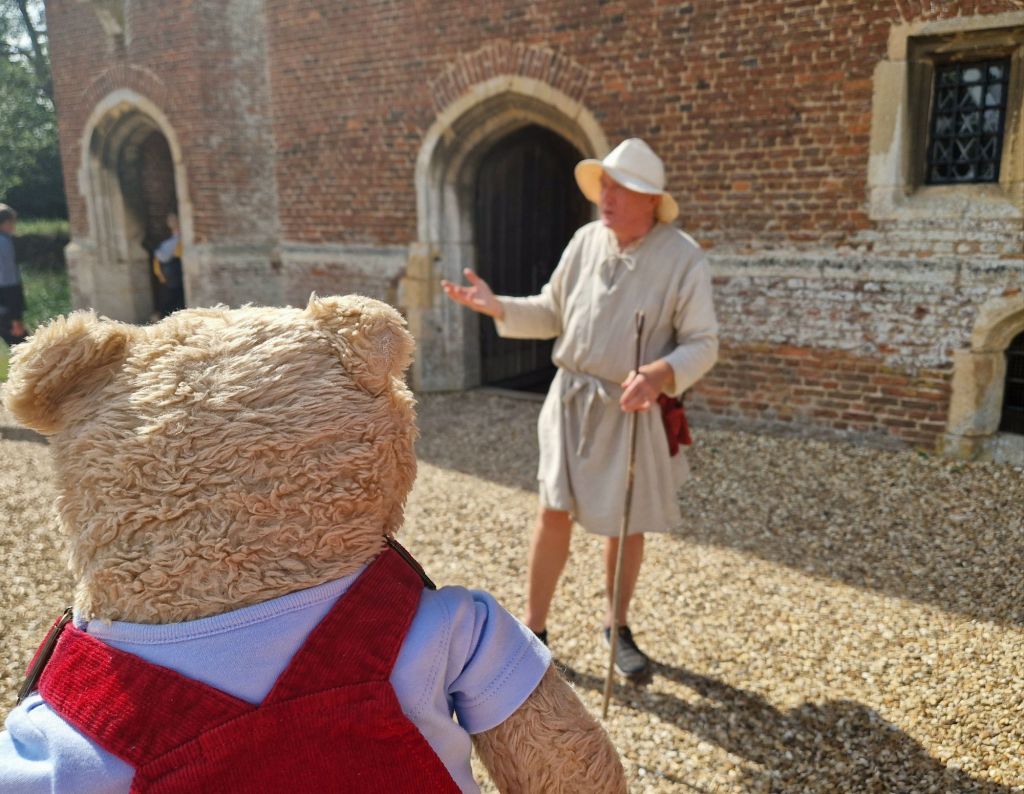
A human dressed as a 16th century peasant was doing tours so we decided to join him.
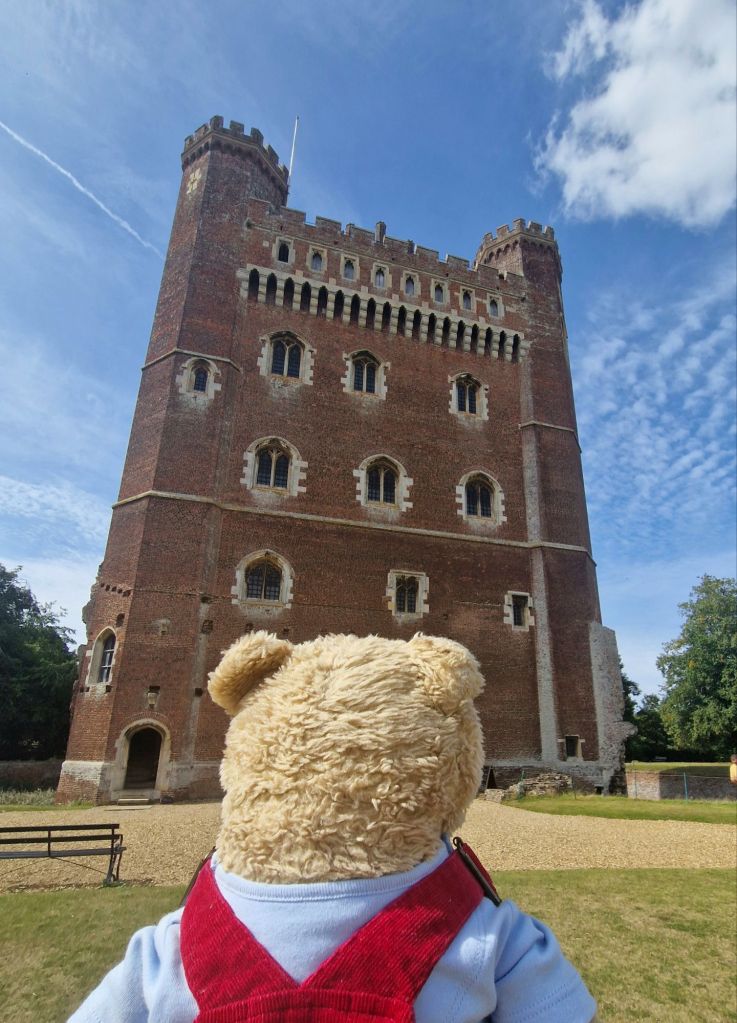
The first castle was built in 1231, but the castle that remains today was built by Ralph Cromwell between 1434 and 1447.
Cromwell had gained an important position in government as Lord Treasurer to King Henry V and wanted a grand castle to show off his status. He did this by commissioning one built of bricks made from clay, instead of the usual stone. Cromwell built it in the moat of the older castle as there wasn’t room in the middle. The older stone built castle was later destroyed during battles but the brick one has survived. Cannon balls could not bring down the 12ft thick brick walls.
We went down to the basement to start the tour
Beer was stored in the basement. The Lords had full strength beer to drink but it was watered down with 50% water added for the staff to drink. In those times children would have drunk the weak beer from a young age as the water wasn’t pure enough to drink.
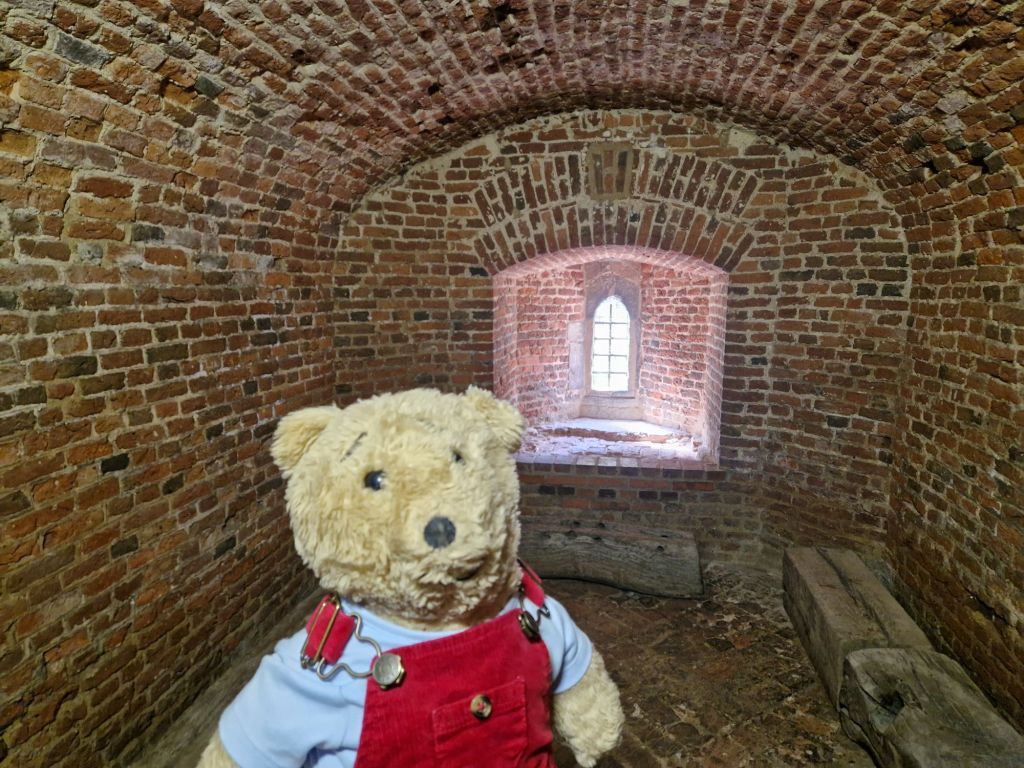
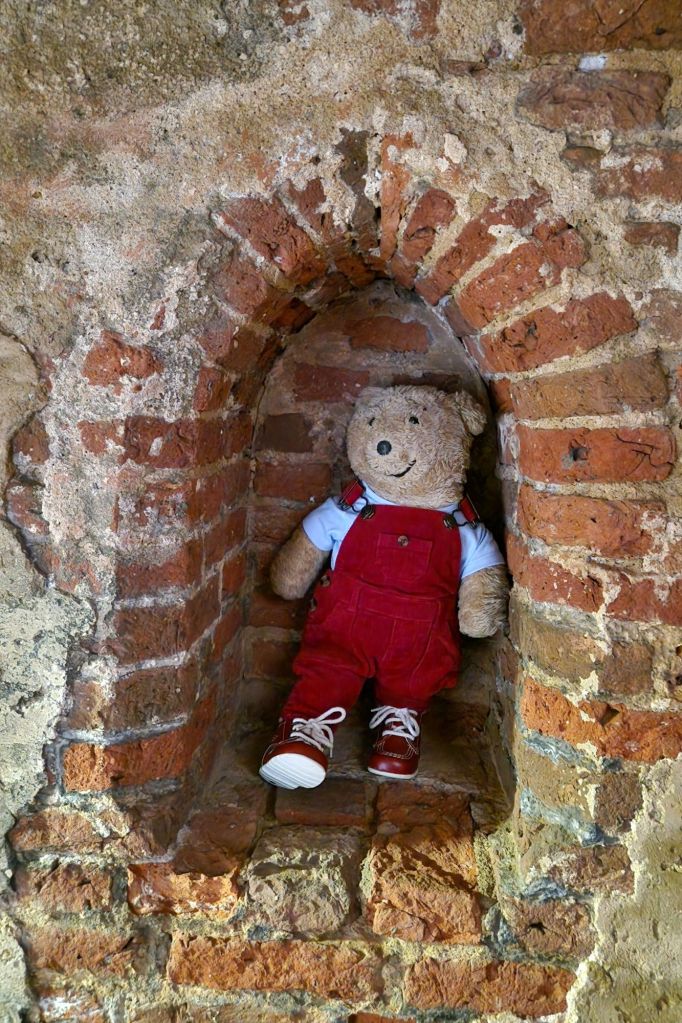
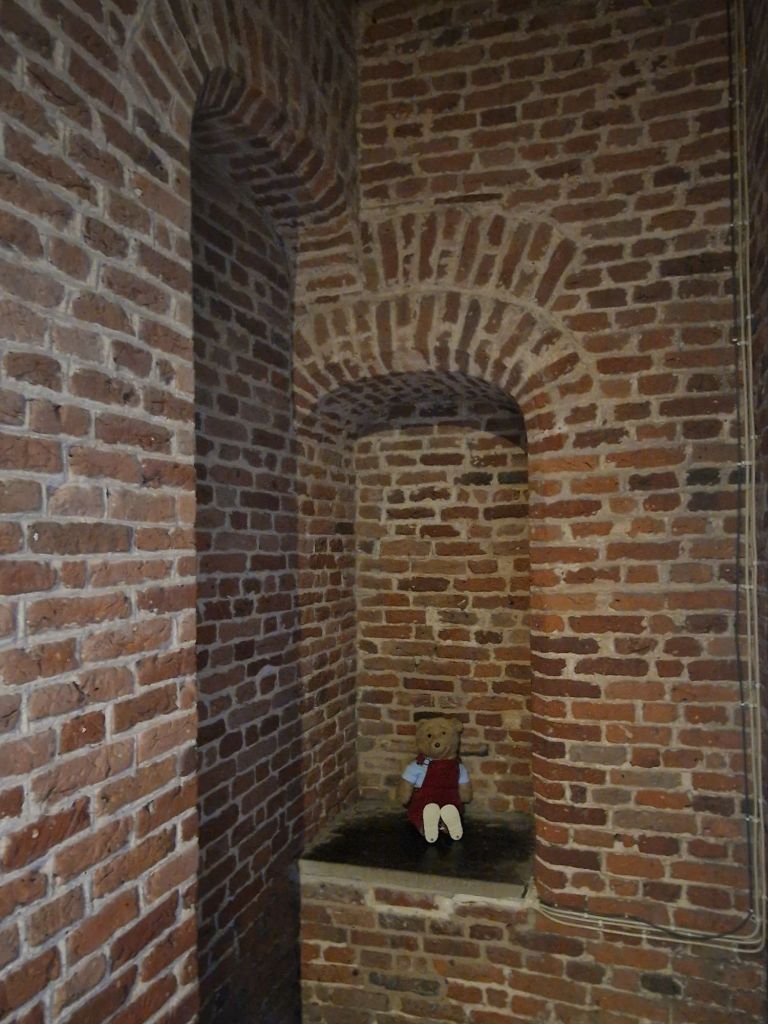
There were some little rooms at the side of the main basement hall. Small nooks in the walls would have had locking doors to store precious spices. Here I am in one!
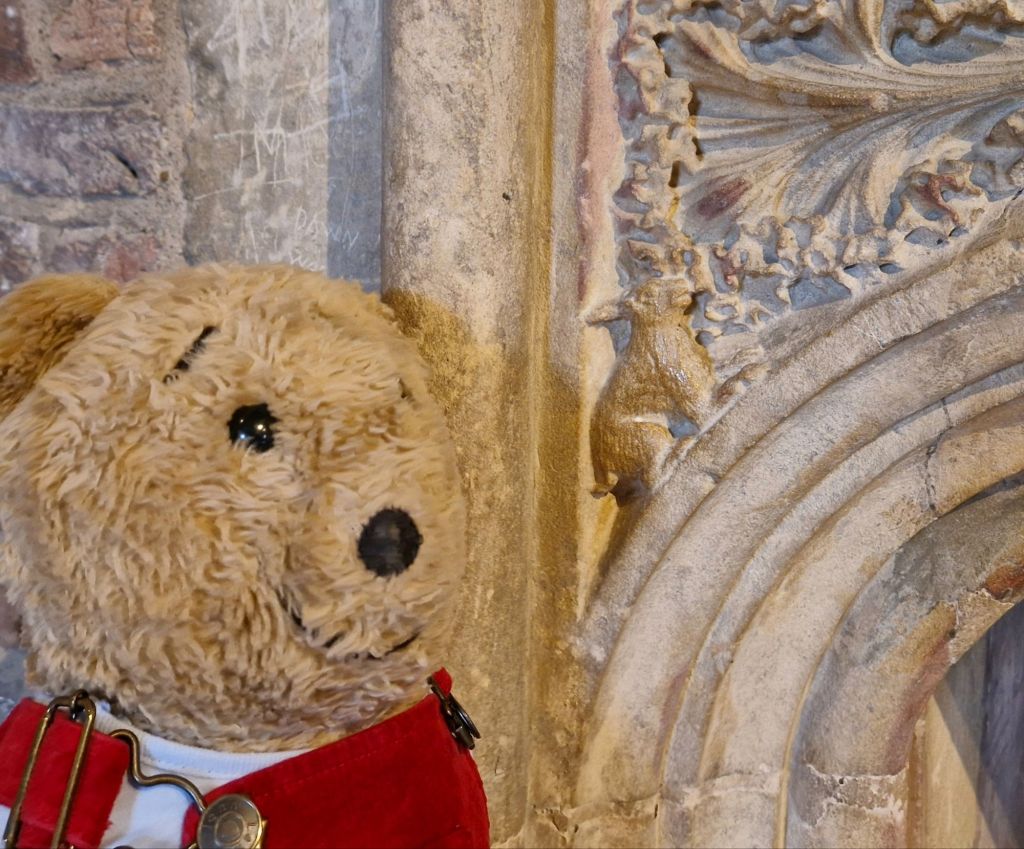
We went up a spiral staircase to the first floor which housed the great hall. Ralph Cromwell had a rabbit and a cabbage sculpted into the fireplace. R for rabbit & Ralph and C for cabbage & Cromwell.
We all went up more stairs to the next floor with the guide…
The hall on 2nd floor was known as The Audience Hall where meetings of noblemen would have been held. There would have been tapestries on the wall but not the ones here. These were put up by Lord Curzon who bought the castle in 1910 after it had been neglected for many years and he started to restore it.
There is a dovecote on the 2nd floor which was installed during a period in history when peasant farmers took over the building.
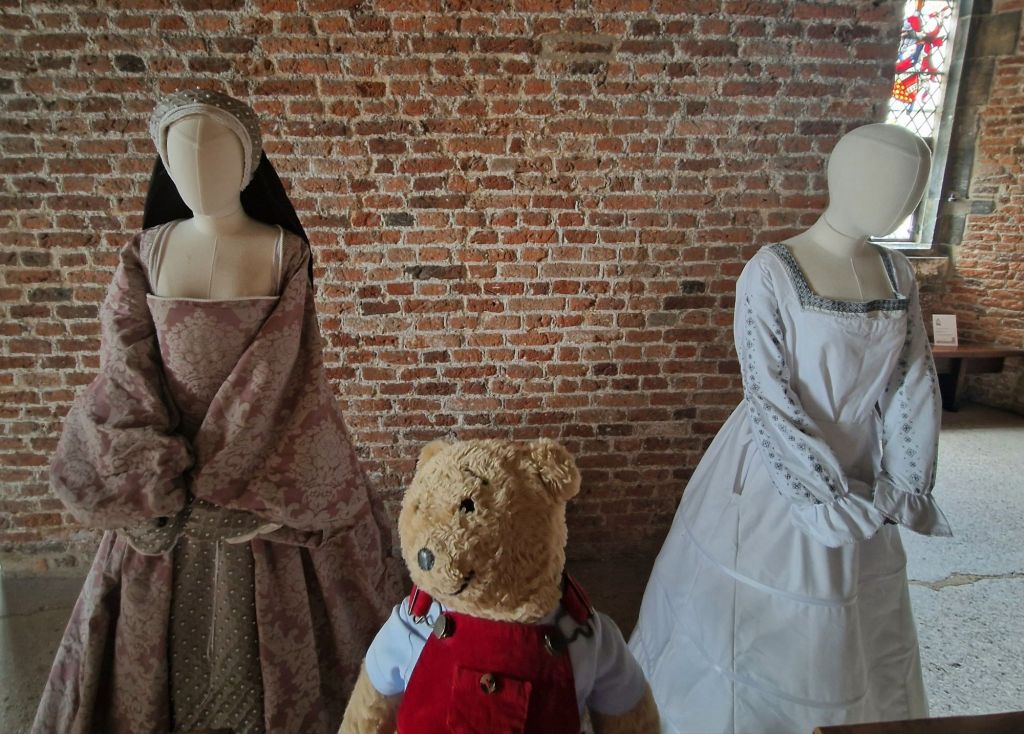
The models behind me are wearing the sort of clothes worn by wealthy Tudor women, the one in white is wearing petticoats that were worn underneath dresses.
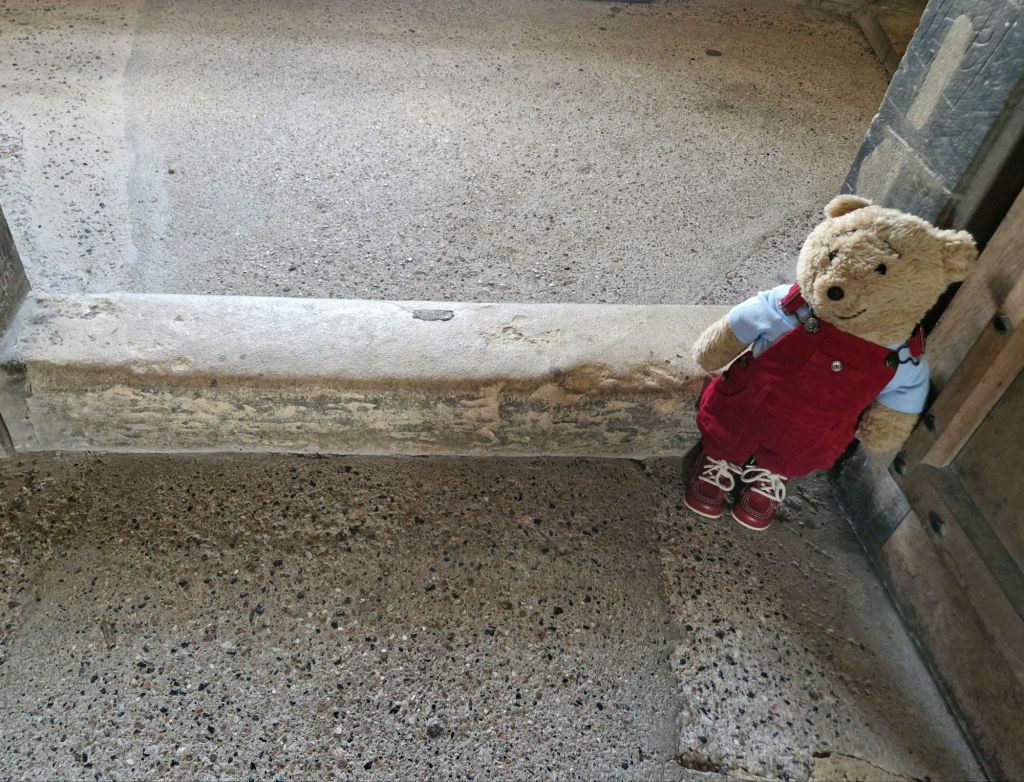
Hundreds of years ago the floors of rooms were covered in rush and straw commonly known as thresh. The raised step in doorways was there to hold the thresh and stop it coming out of the room. Hence the name ‘threshold strip’ that we use today.
The walls of Tattershall Castle are made of clay bricks that were produced by hand. The tour guide pointed out a brick with human finger prints in it. The clay bricks were removed from moulds by hand and occasionally the brick maker grasped them a bit too firmly and left finger marks in them.
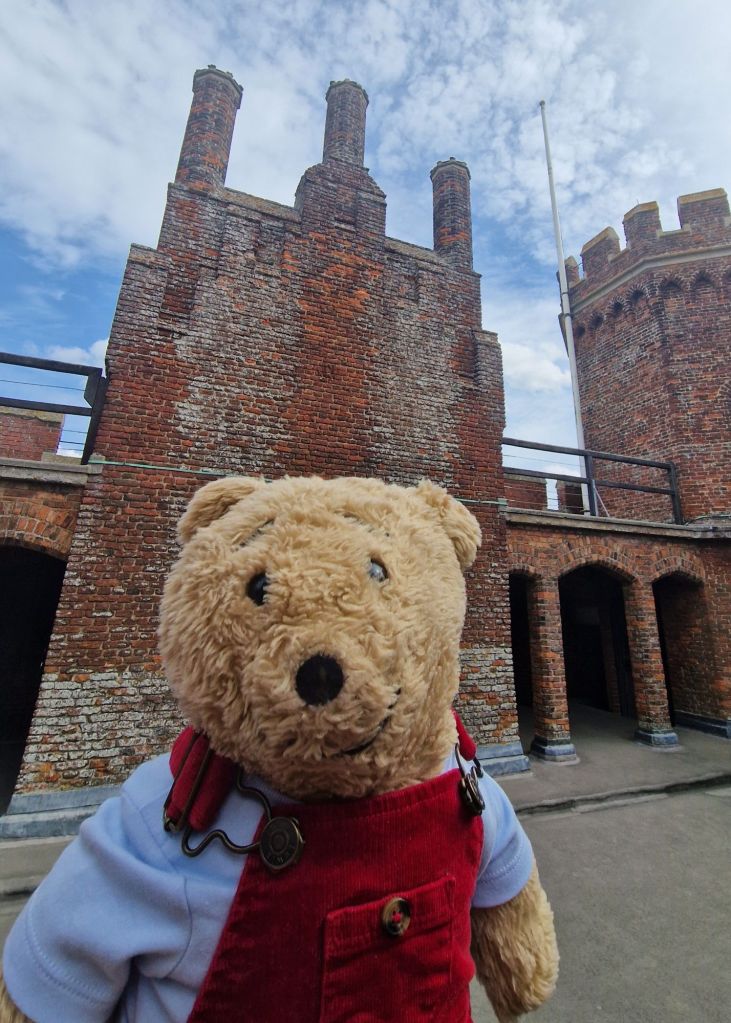
Up on the roof of the castle there are three big chimneys. Ralph Cromwell had them built this way to show everyone around that he was wealthy!
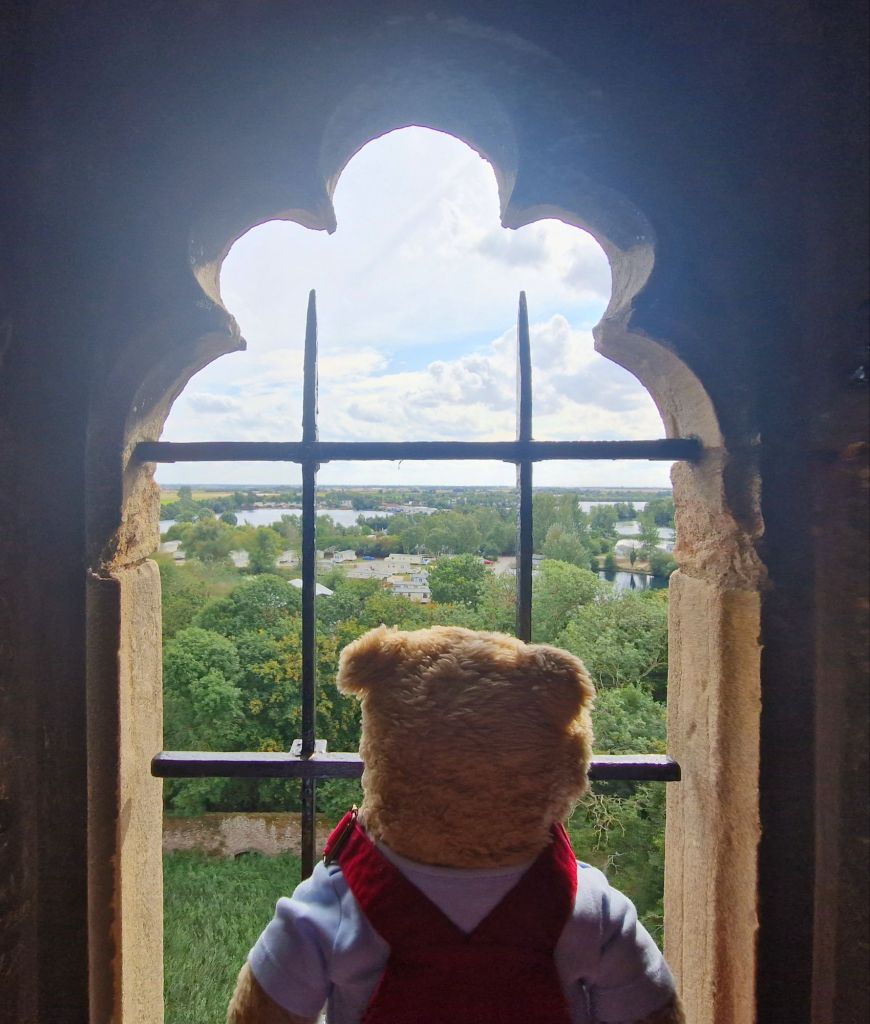
There are wonderful views of the flatlands of Lincolnshire all around.
The tour guide asked if I would like a photo with him. He told me that sometimes they have teddy bear picnics at Tattershall and have done teddy zip wire descents from the tower!
I climbed up to the walkway around the very top of the castle.
The appearance is rather like cloisters found in old abbeys.
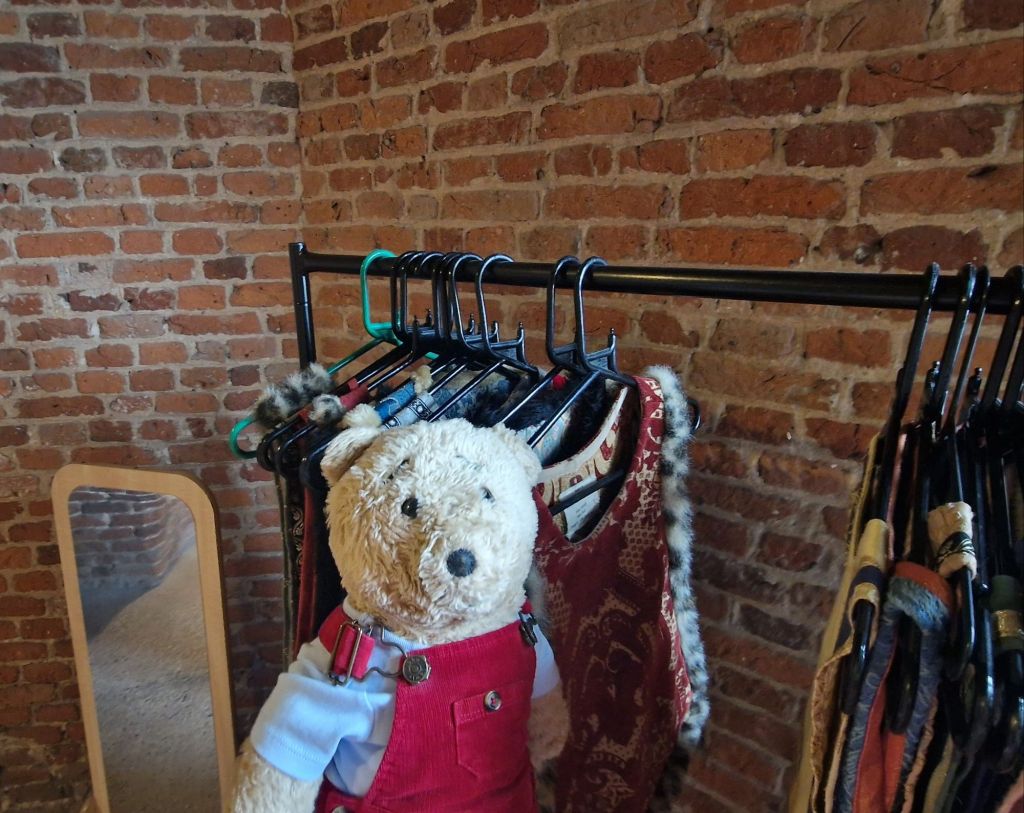
On my way back down to the bottom I found acroom with dress up clothes for small humans.
Here I am as Lors Horace of Tattershall!
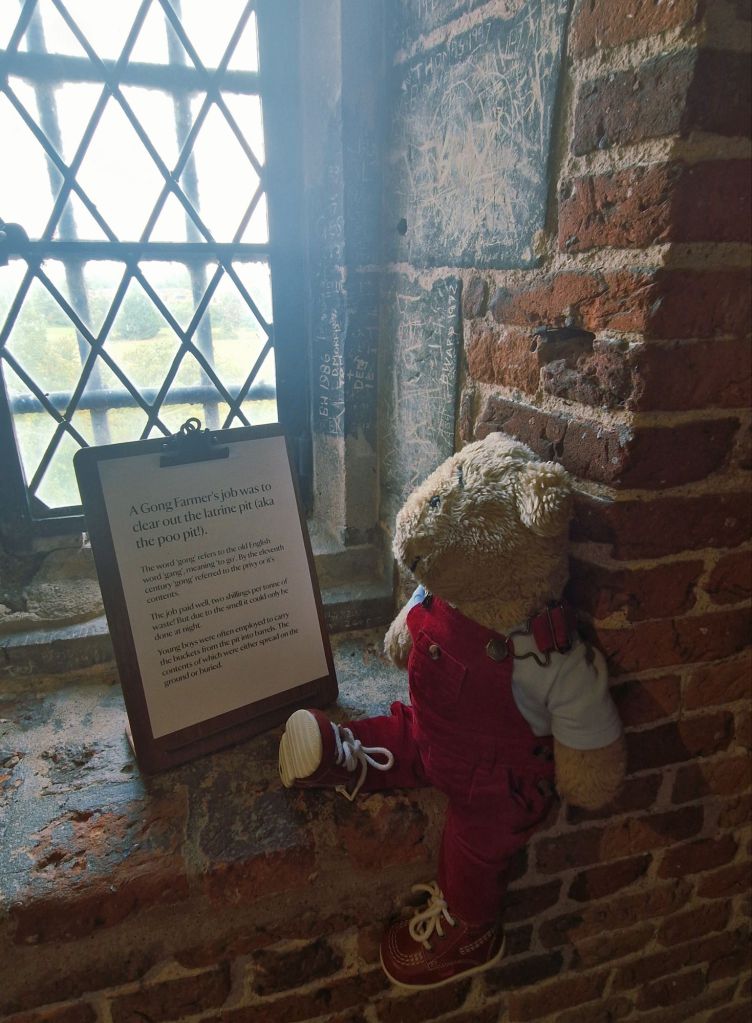
I sat and read the information about ‘Gong Farmers’ who were young boys employed to empty out latrine pits. They were only able to do it at night due to the smell.
The original toilet seat hole has been covered over but this was a loo.
In 1925 Tattershall Castle was bequeathed to the National Trust by Lord Curzon in his will.
It is a very interesting place with lots history. I do recommend a visit if you are in the area.
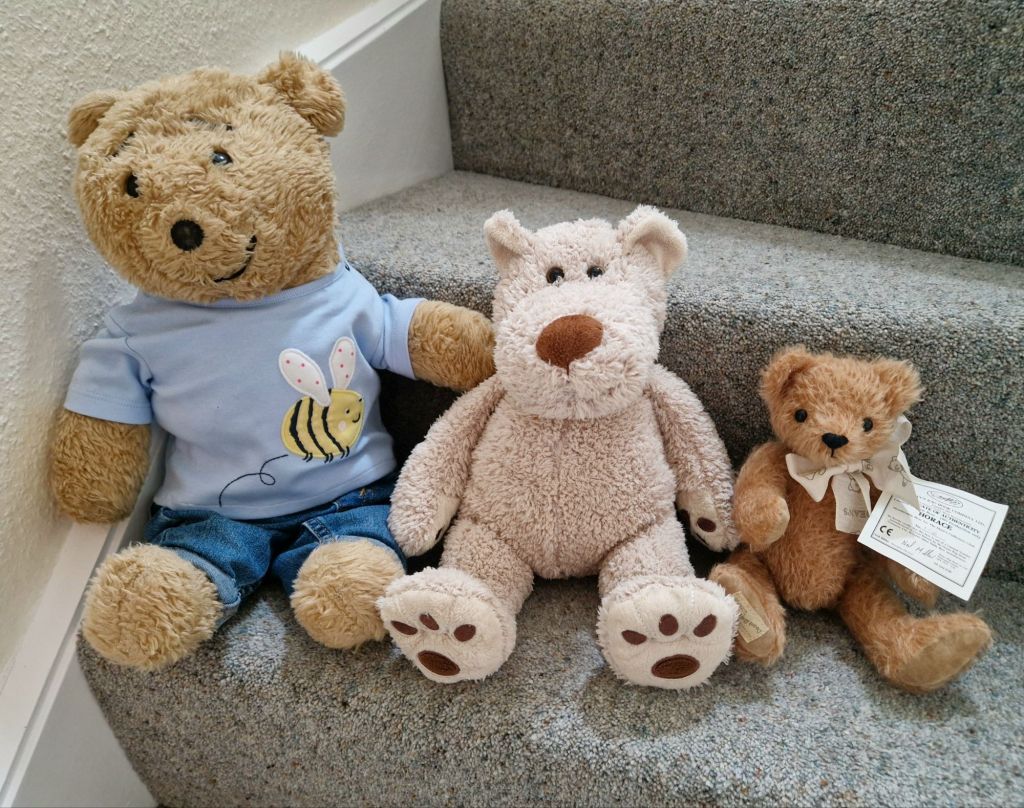
There is some confusion on the Internet about me and the sort of bear that I am. Some eBay sellers advertise bears like me as ‘Horace’ bears. I was not sold as a ‘Horace’ bear, my human named me Horace. I am a 1970’s Alresford Crafts Smiling Honey Bear.
Next to me in the photo is a W H Smith Horace Bear, and these bears were sold as ‘Horace’ Bears in the 1980s and were made in China.. Actually he is a really nice chap and worth rescuing if you see one in a charity shop.
Just to confuse things next to Horace is another Horace! This one was made by The Dean’s Rag Book Company in Pontypridd, Wales in 1997. He is a limited edition bear. This Horace has mohair fur and is fully jointed; another lovely little bear.
Google AI is very confused as if you search for information about a WH Smith Horace you will get information stating that Alresford Crafts made them which is not true and an indication not to rely on AI for anything.
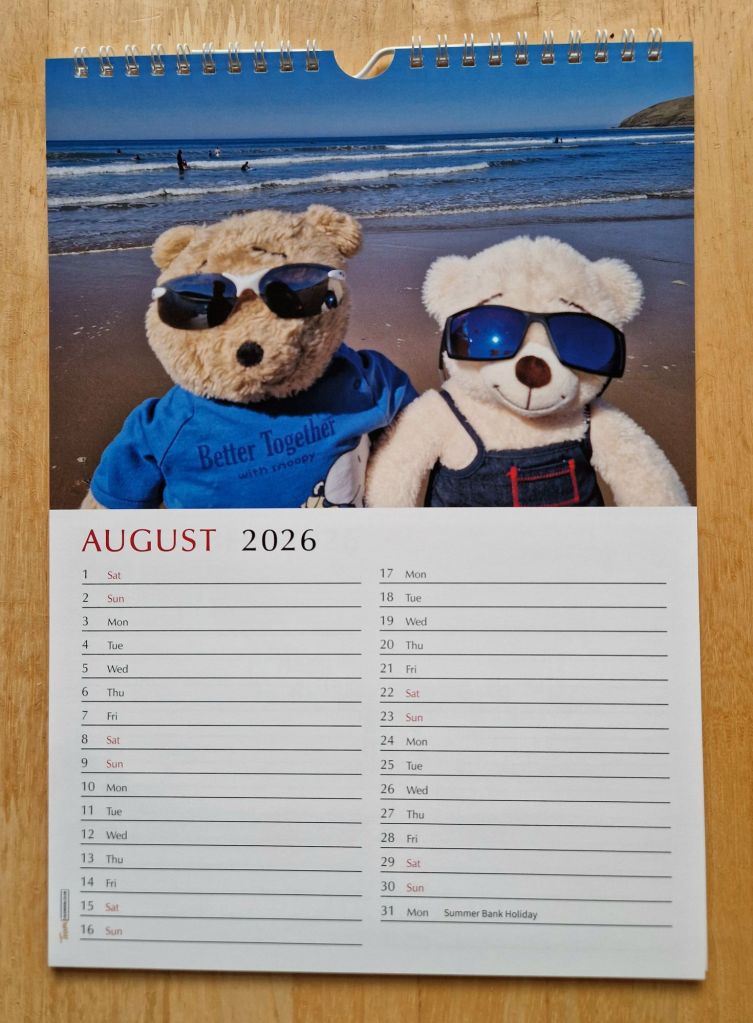
Just a short blog to tell you all about my calendar, which you may have seen already if you also follow me on Facebook.
My 2026 calendar is available to buy (UK only) on eBay. A PDF will be available for overseas followers sometime in the autumn.
It features 12 delightful photos of me and I have had excellent feedback for all of the 200 copies sold so far. Buyers have commented on the excellent photography, the cuteness of the images and the quality of the printing and packaging.
10% of the sale price goes to RSPCA.
Here are a couple of pages:
These are being sold through eBay in order to simplify the process.
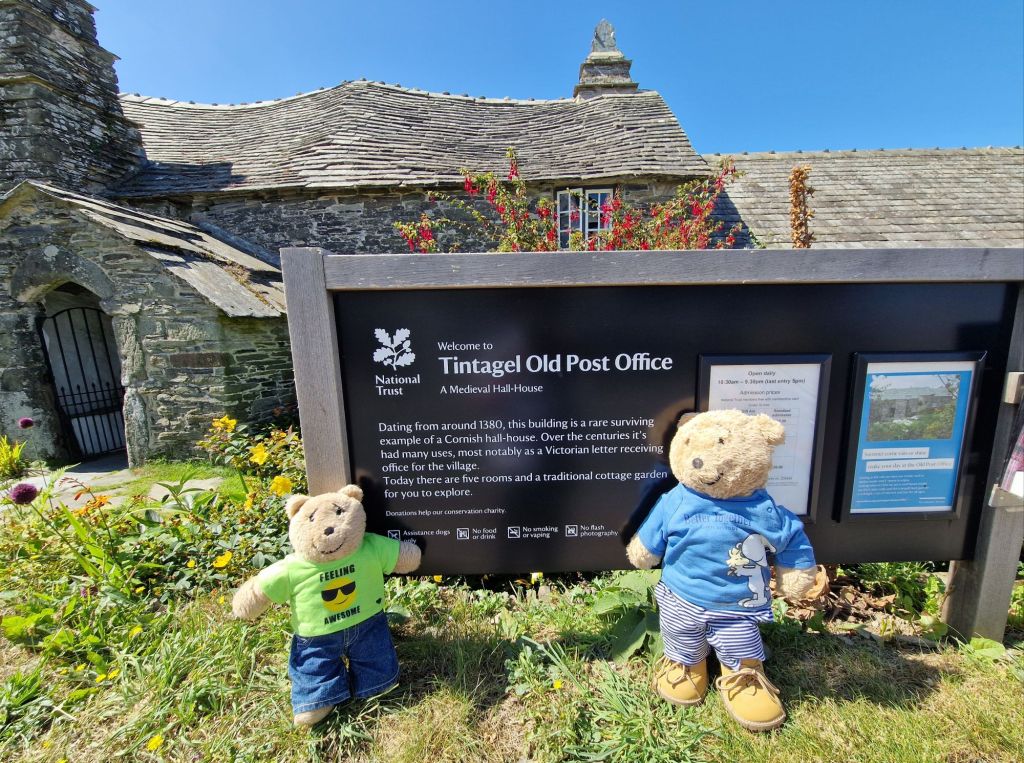
It was a very hot day in July when we visited Tintagel Old Post Office
The building dates back to 1380, a very long time ago. Originally it just had one storey and one end would have been a barn for animals. It has undergone many changes over the years and became a Post Office in the 1870’s.
It was cool inside the building and gave us some respite from the hot sun outside. The dining table was laid with pewter plates and mugs.
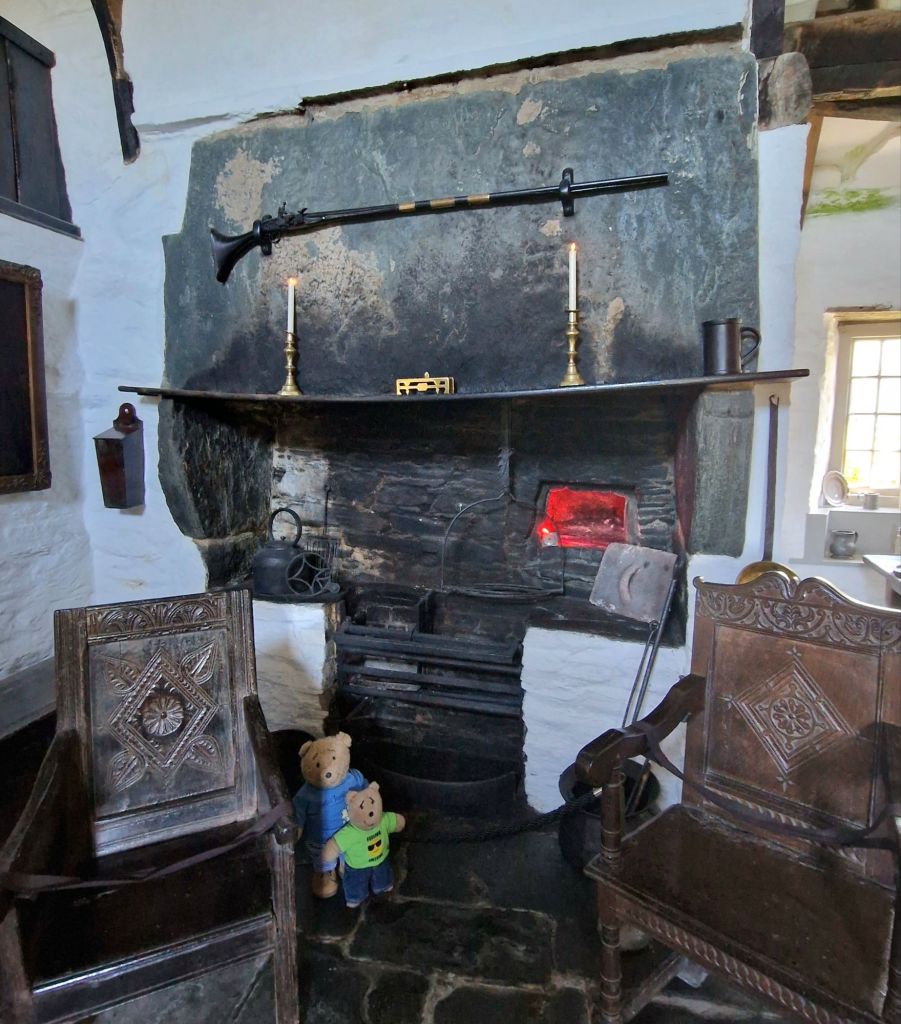
This is the range where meals would have been cooked
We went up the first staircase (there are 2 separate staircases)
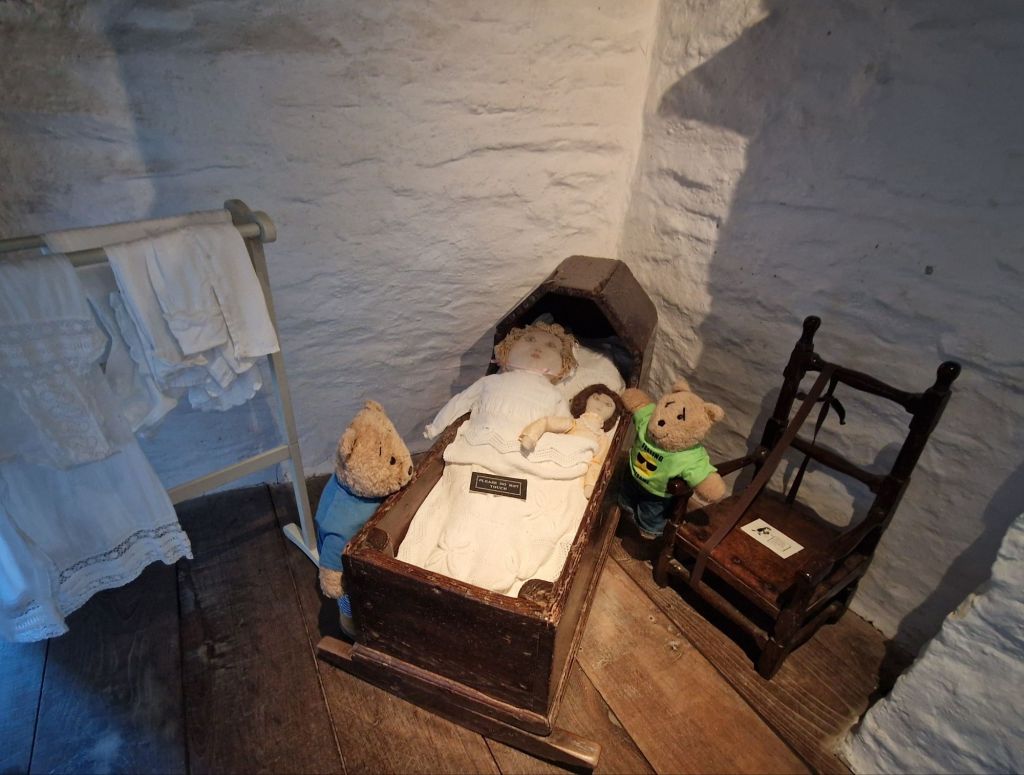
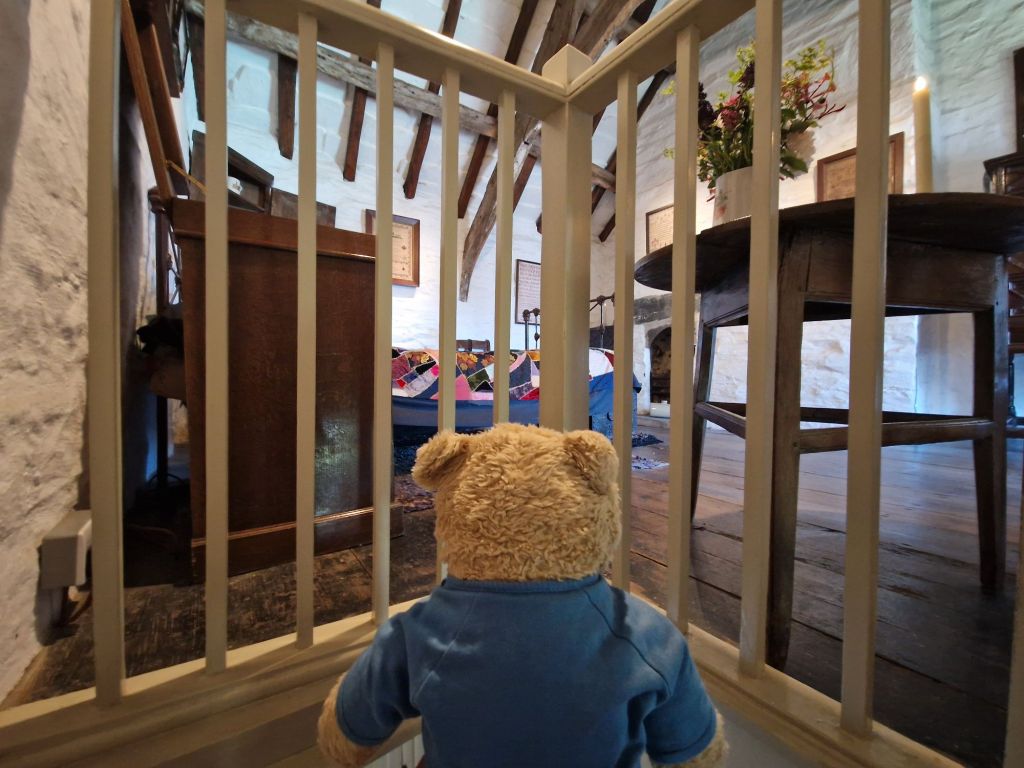
We found a bedroom set up as it would have been 150 years ago
We climbed up and had a look out of the window.
Back downstairs we found the sitting room and sat on the rag rug. Therug had been made in recent years but was of the type that would have been found in cottages 150 years ago.
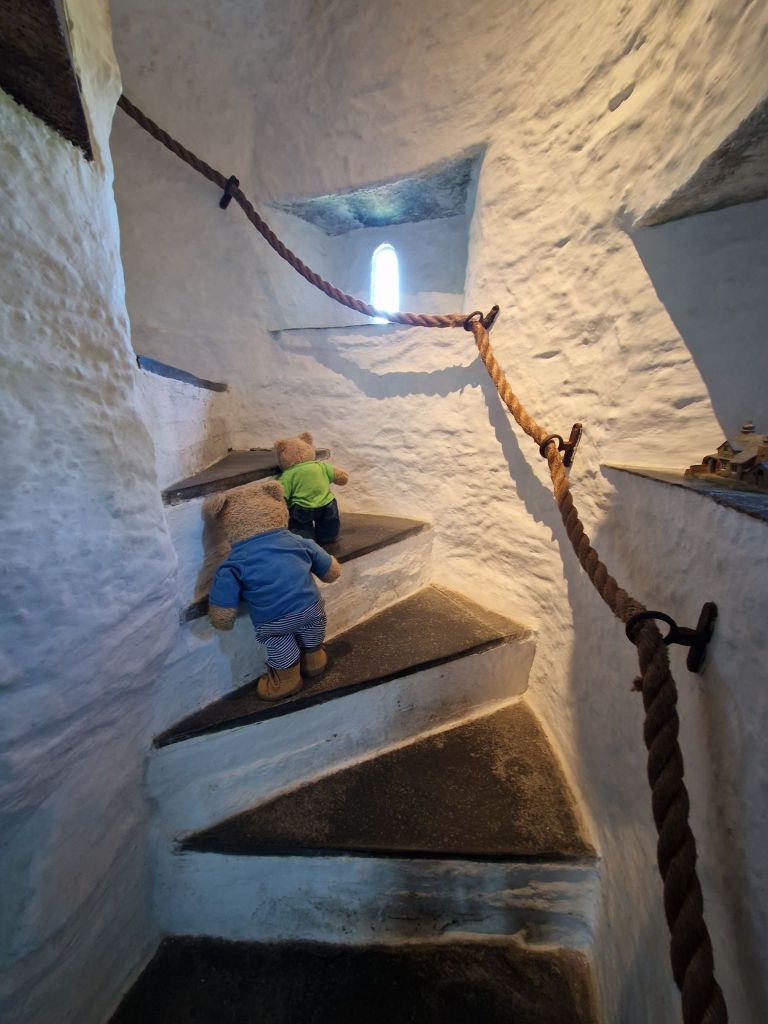
There was another set of stairs going up next to the sitting room which were quite challenging for small bears to climb.
The stairs led to a sleeping platform where unmarried women and girls would have slept. The saying ‘left on the shelf’ (which referred to unmarried older women in past times) refers to the sleeping platform that they used to sleep on and were unable to leave!
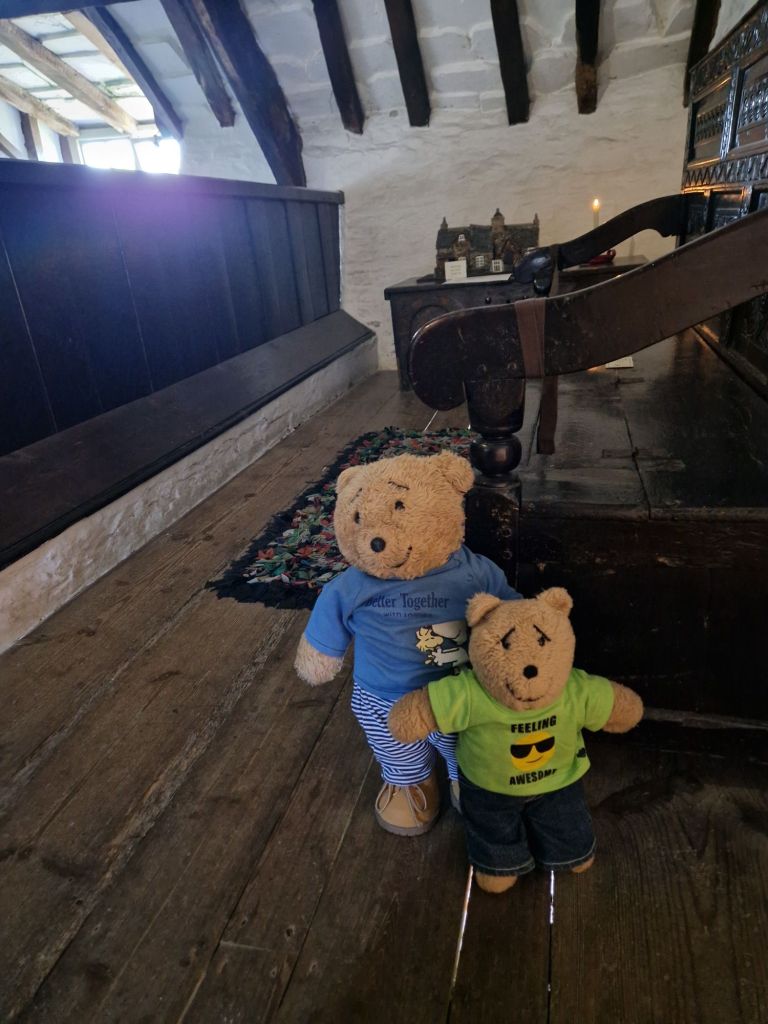
Here we are on the platform – it wasn’t very big.
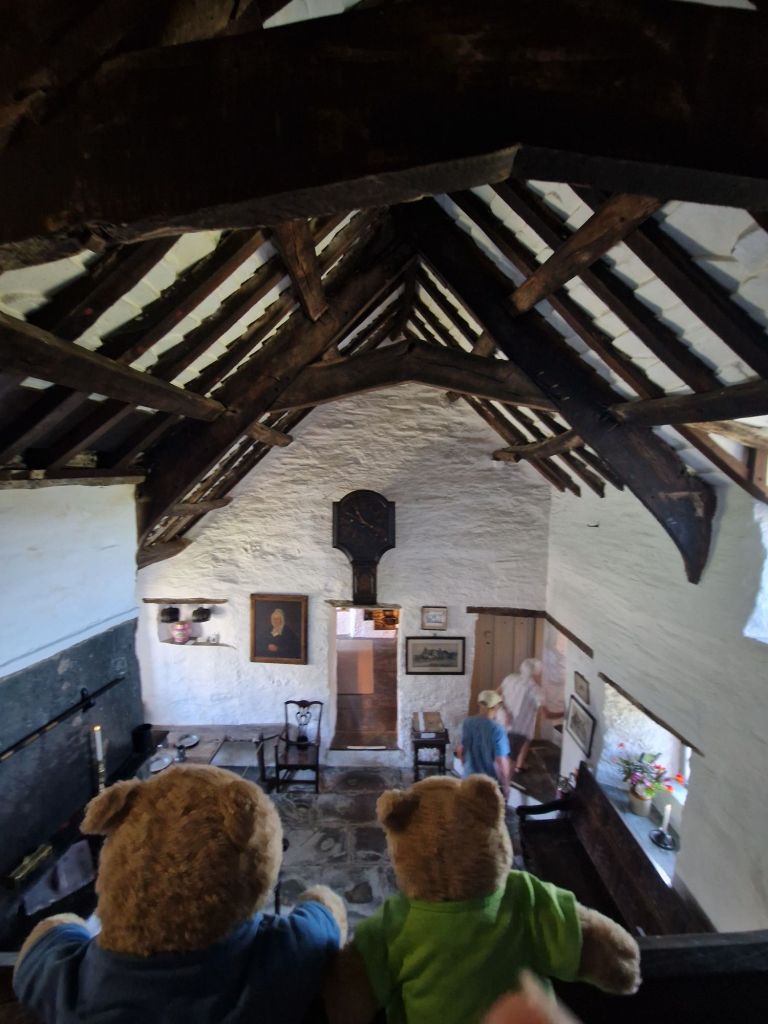
We looked down from the platform at the room below and noticed the old clock above the door and the exposed roof beams.
On the other side of the sleeping platform there is a another bedroom
We thought it all looked very cosy. The walls of the cottage are a metre think so it is well insulated against both hot and cold weather.
After going back downstairs we went out into the garden where there is a well.
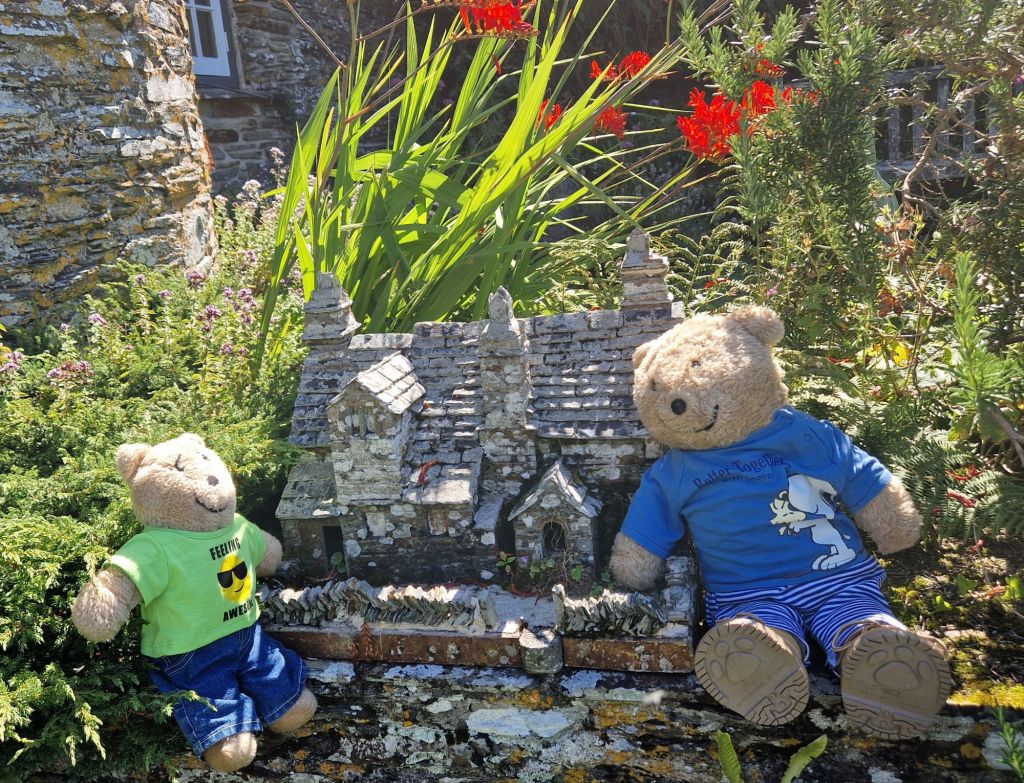
We found a minature version of The Old Post Office!
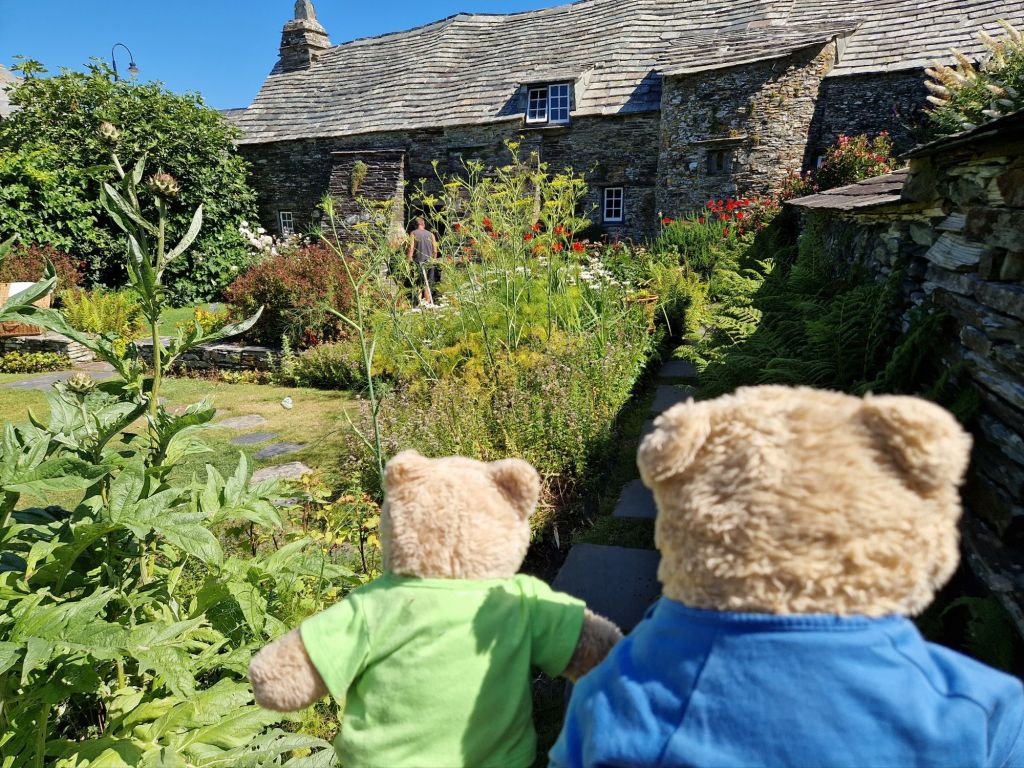
The garden is very pretty and very ‘cottage garden’ in style. It is also a good place to escape from the many tourists who visit Tintagel.
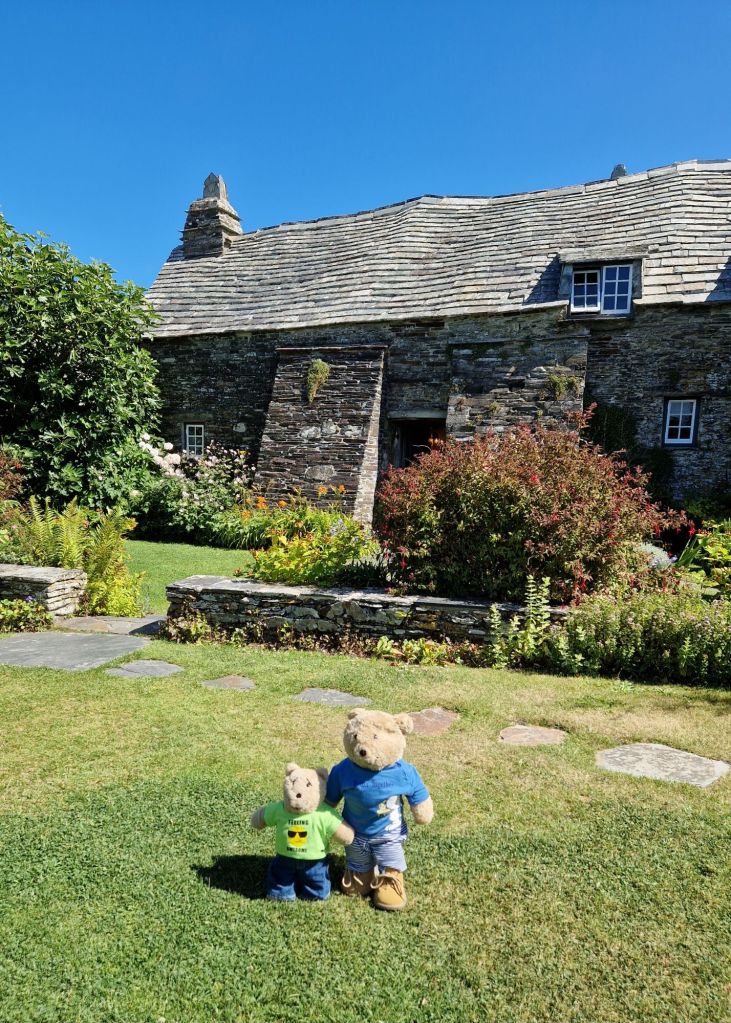
The wiggly roof on The Old Post Office is covered in Cornish slate.
It is only a small garden so we were soon back at the well again!
The Post Box is still in use and a postman collected some letters while we were there.
Before leaving we watched an interesting animated video showing how the use of the building had changed over the last 900 years. At one time it nearly got demolished! I am glad it didn’t as it really is a delightful place.
Do pop in for a visit if you are in the Tintagel area, the Post Office is only small but very interesting.
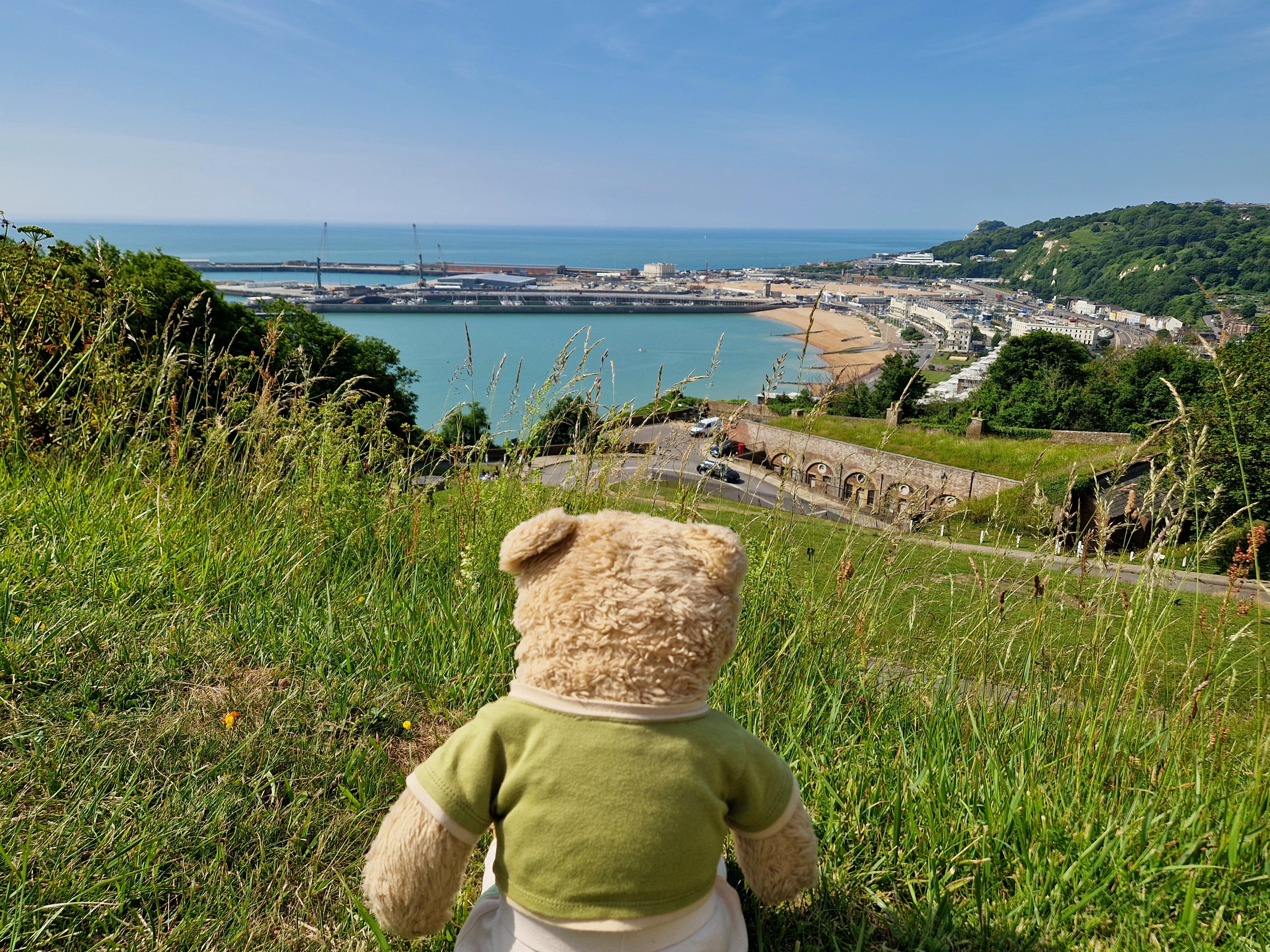
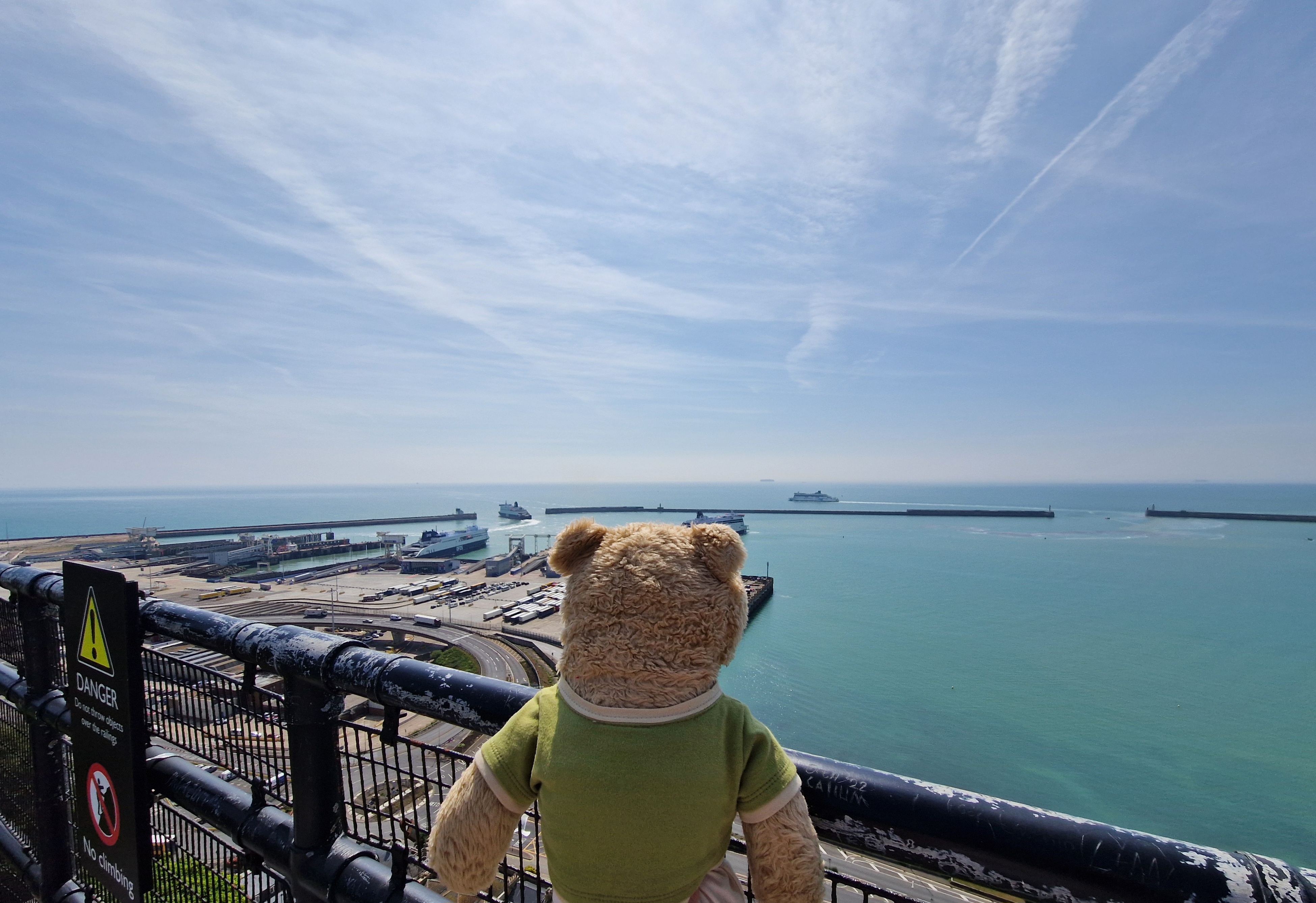
The first thing I did on arriving at Dover Castle was to sit and have a look at the view of Dover. Dover Castle is quite big and there is lots to see, so shortly after I set off to explore.
The history of Dover Castle goes back to iron age times, it is thought that some of the huge banks and ditches were created over 2000 years ago. I started my tour at a more recent building; The Fire Command Post and Signal Station, which dates back to 1904, the concrete platform above it was added in 1941 during the 2nd world war to protect it from aerial attack.
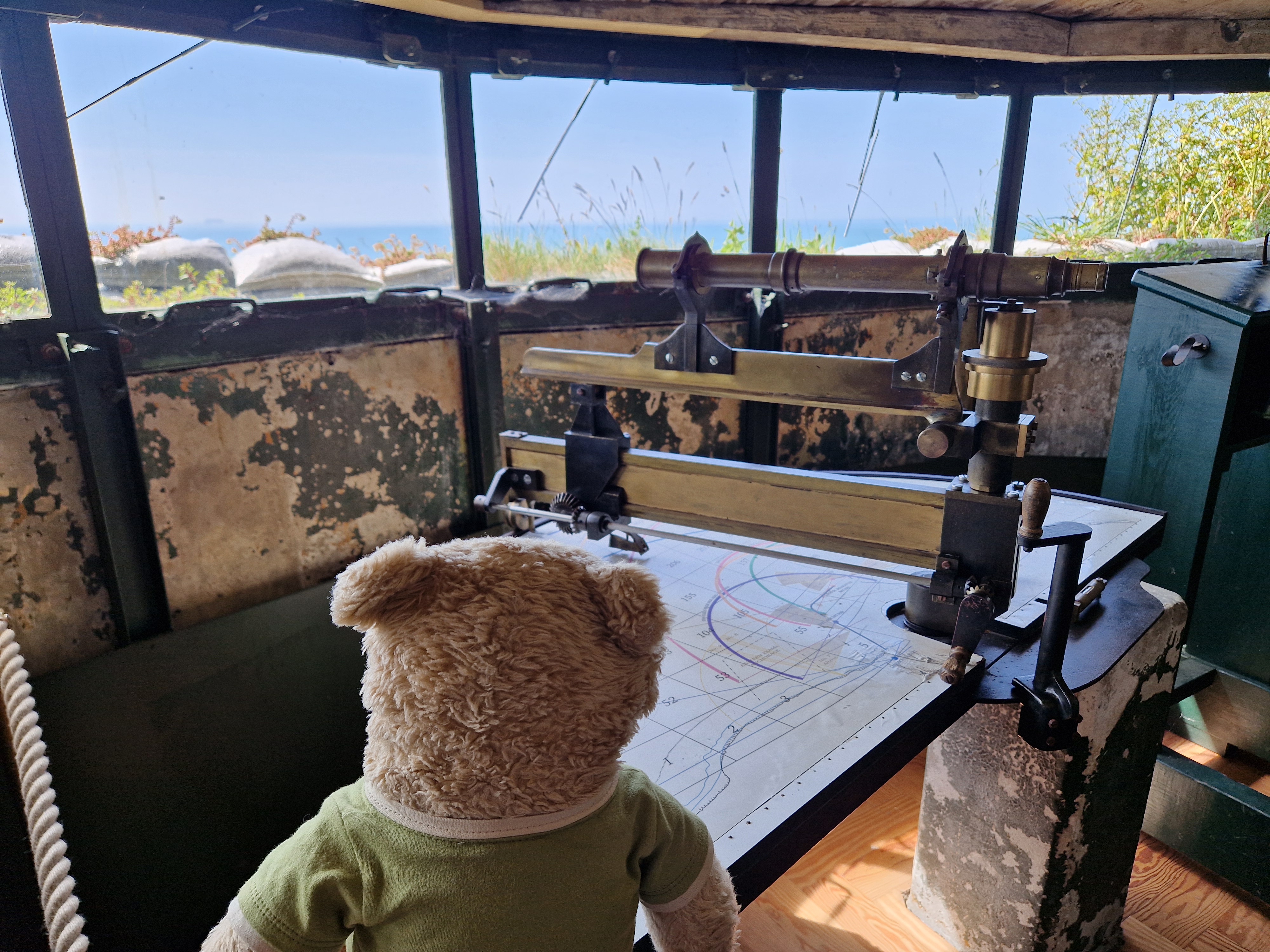
Inside the Fire Command Post and Signal Station I was able to look out to see through binoculars It was from here that the 2nd World War Dunkirk evacuation was co-ordinated.
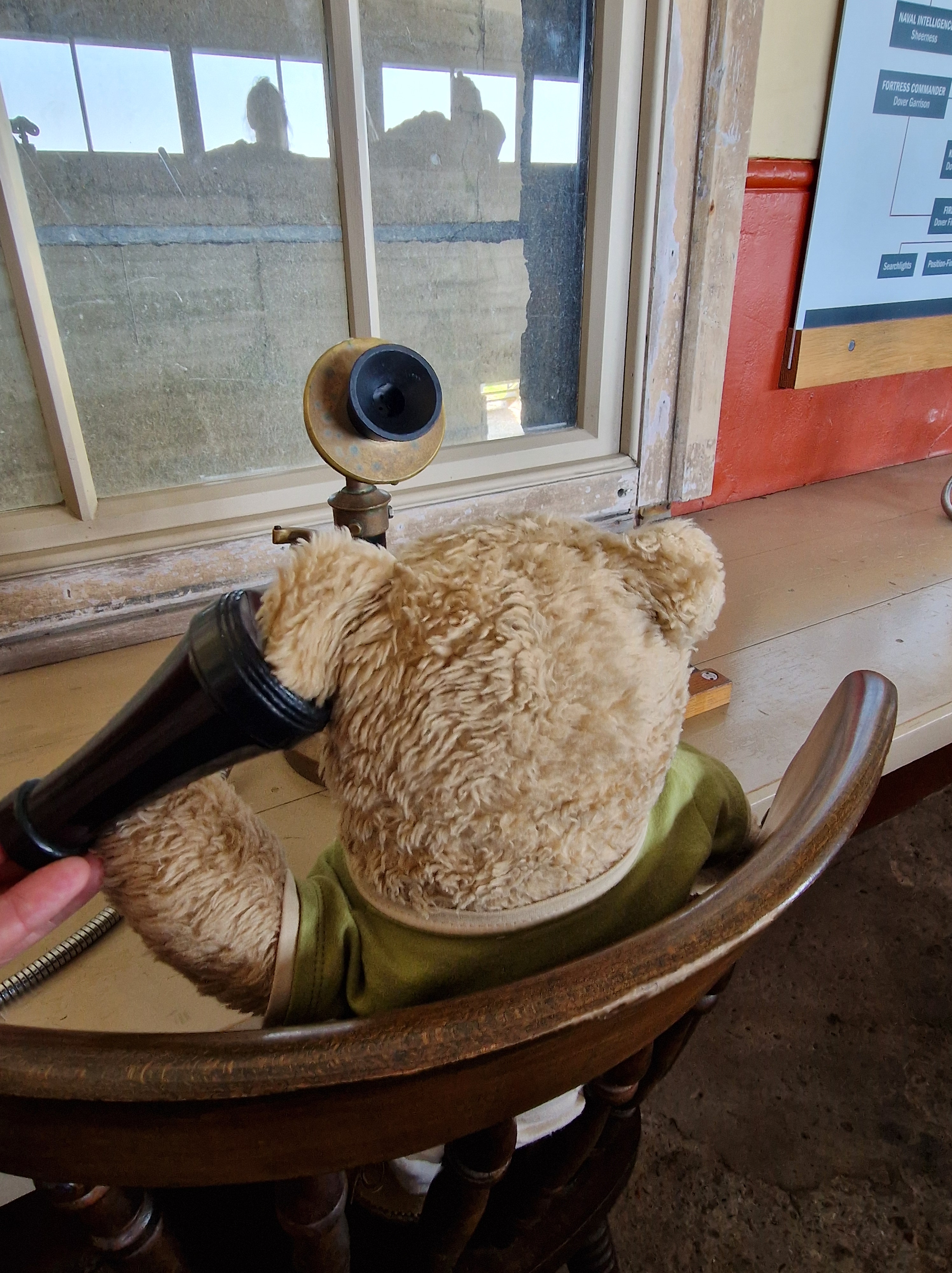
I listened to the recorded messaged on the telephone for a while.
Morse code was used to send messages, which consisted of sequences of ‘dots’ and ‘dashs’ to represent letters of the alphabet that were sent using radio waves.
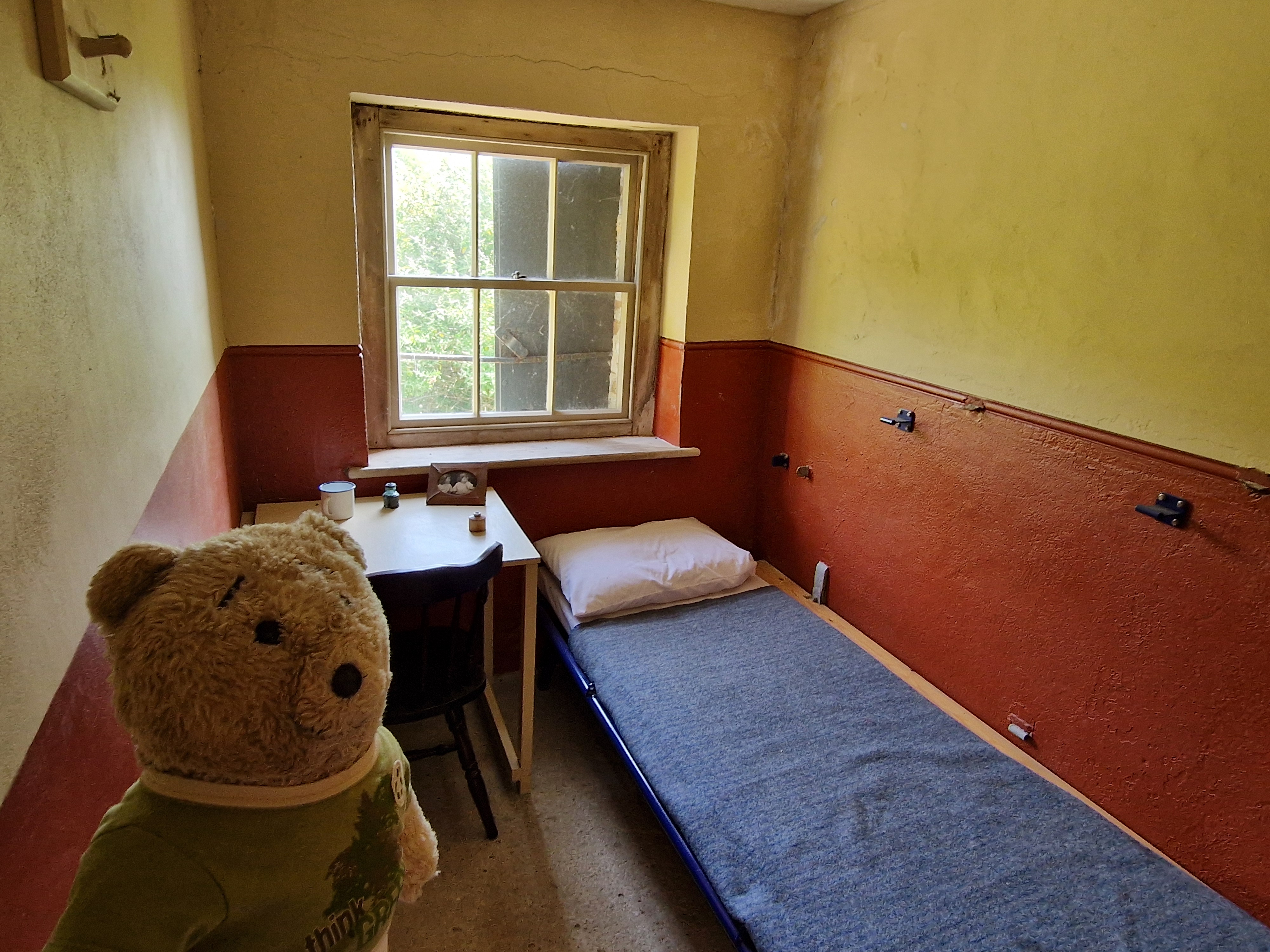
This was the telegraph operator’s bedroom.
I looked at the range finding equipment used for commanding the gun batteries facing the English Channel.
The bowl of porridge that was stuck to the table had gone rather hard!
There was an excellent view of the Port of Dover from the platform above the command centre.
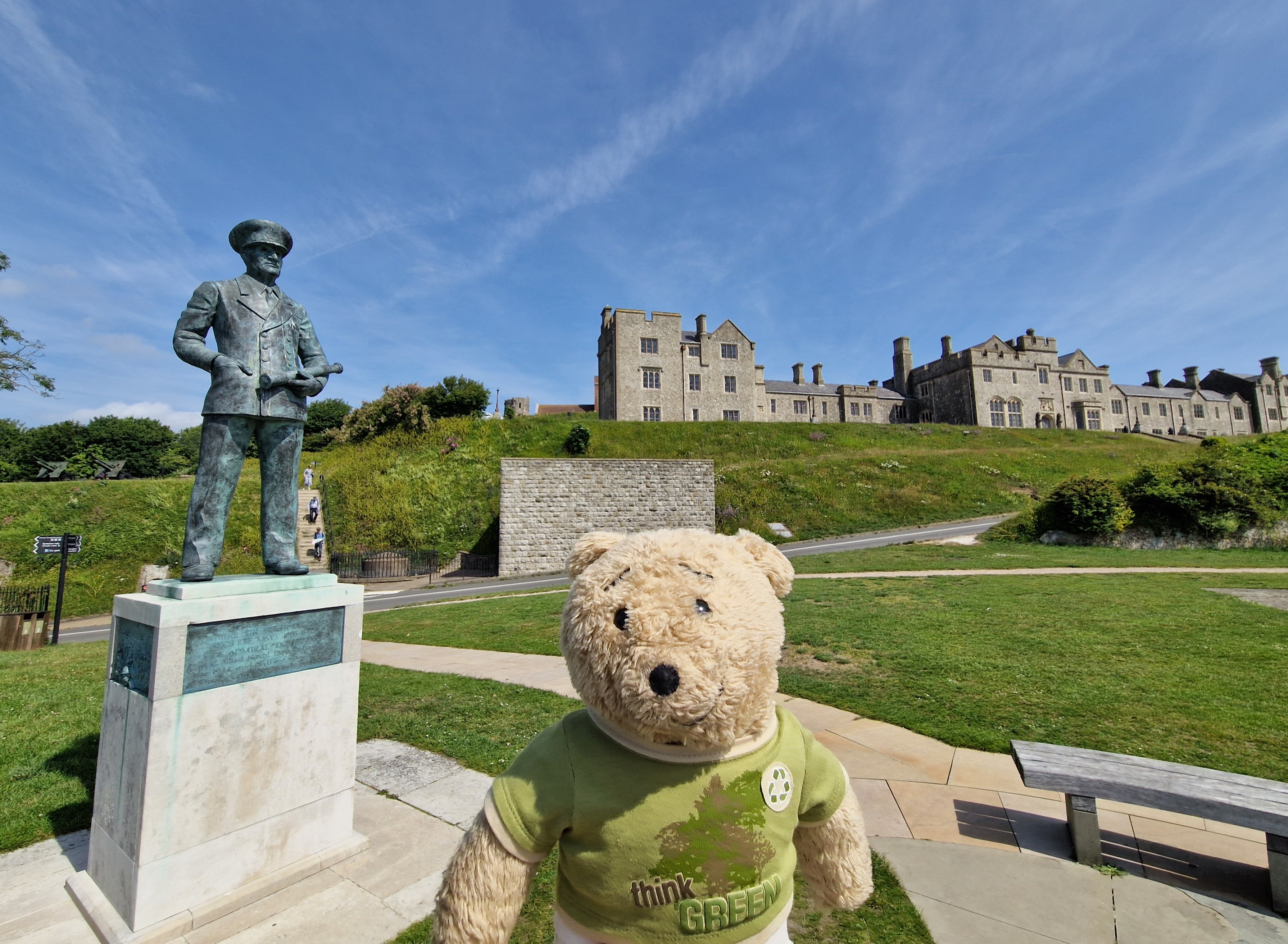
Here I am stood in front of a statue of Admiral Ramsey, who organised the evacuation of Dunkirk in 1940 when thousands of British soldiers became stranded on the beach at the start of the 2nd World War. The buildings behind me were 18th Century Officer’s Barracks (not open to public).
Next we had a tour of the some of the tunnels that are underneath the cliffs that overlook the English Channel. These tunnels were created in the 18th Century to defend England against the French in the Napoleonic wars. They were brought into use again and extended into a bomb proof centre for defending the coast.
Unfortunately no photography was allowed in the tunnels. They were very interesting, a complete network of tunnels and rooms all set within the cliffs of Dover. We also had a tour of the underground hospital where servicemen received medical treatment. I was on my way out in the photo below!
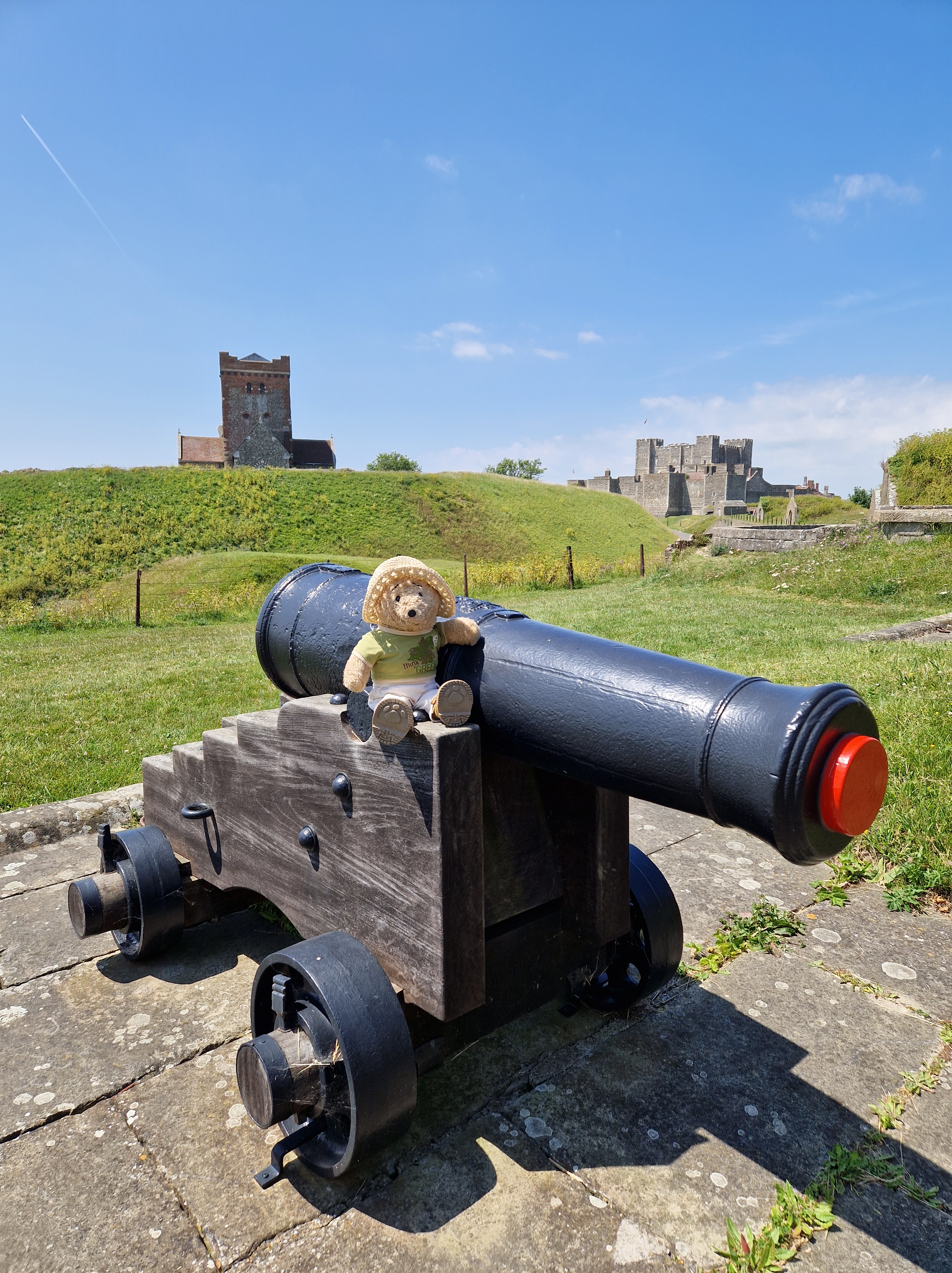
Back outside in the sunshine we wandered around the castle walls for a while where there are cannons facing the sea.
There was also an anti-aircraft gun that would have been used in 2nd World War.
Fitzwilliam Gate was built after the Great Siege of 1216 when the North Gate was damaged and got blocked up. It is named after a 13th Century Knight Adam Fitzwilliam who provided guard service for the castle.
It was all quite a lot for a small bear to take in, so much history has happened at Dover Castle. I sat for a little while and wondered, teddy bears had not even been invented when these walls were built.
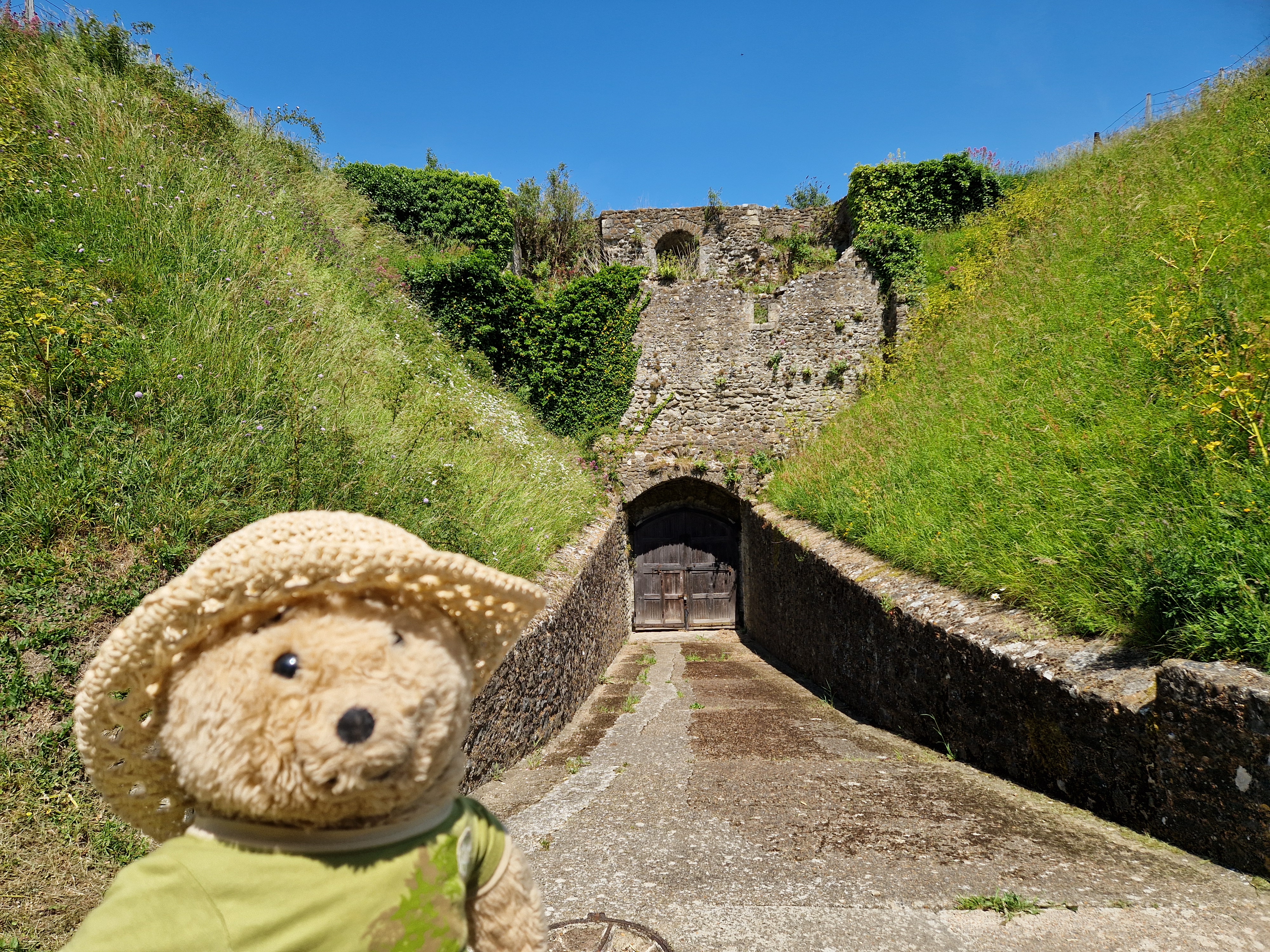
The weather was getting quite warm and it was relief to find some more tunnels to explore away from the heat of the sun. The Spur Tunnels are set underneath a huge mound of earth and were built in the 13th Century after the Great Siege in order to provide defence for the Castle.
I had to go down lots of steps to access the tunnels…
It was quite a long way walking through the tunnels..
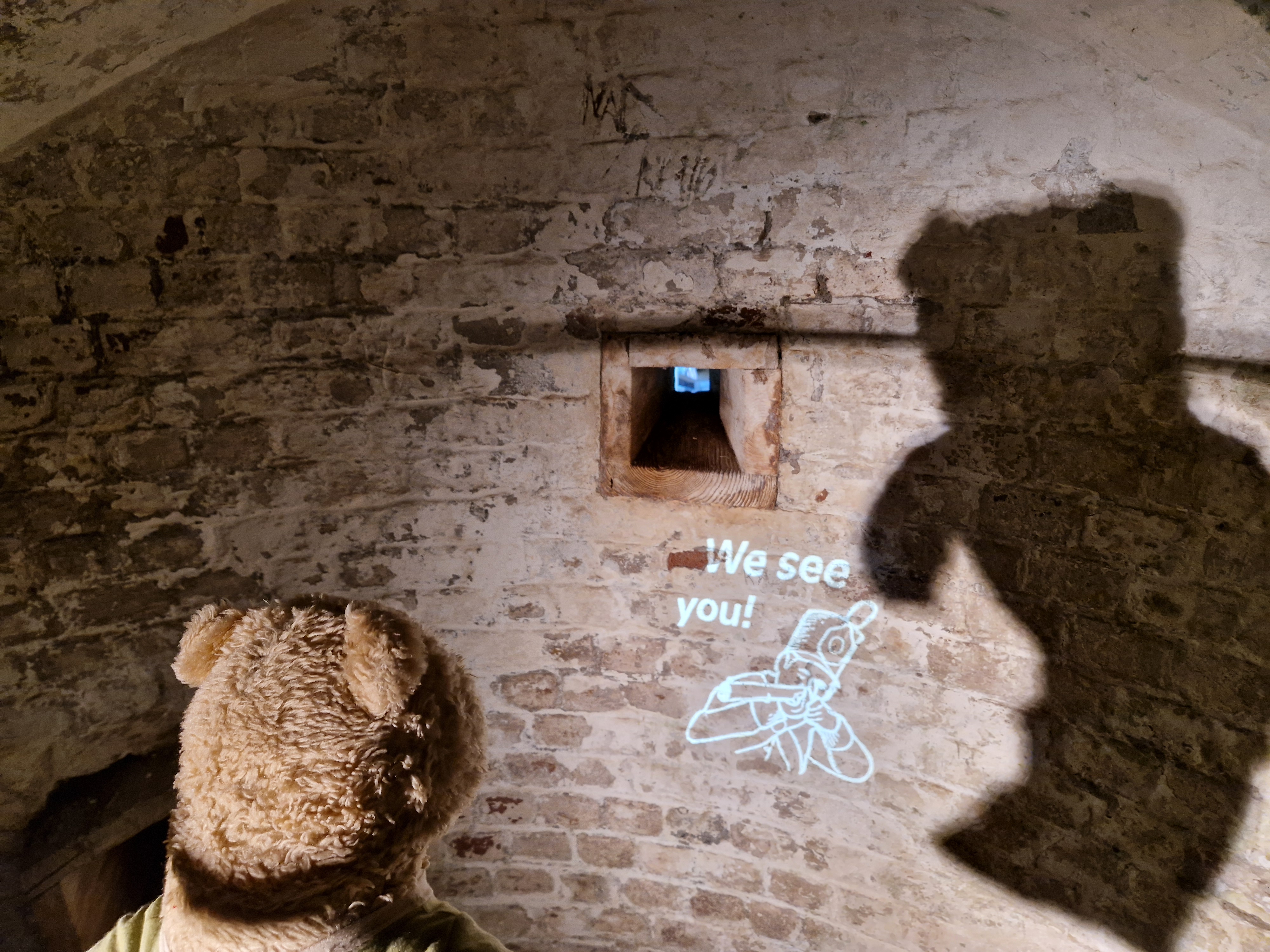
Eventually I arrived at the end, where I climbed up the steps to have a look through the holes in the wall.
I could see another tunnel and other castle visitors walking through it! This was a spy hole.
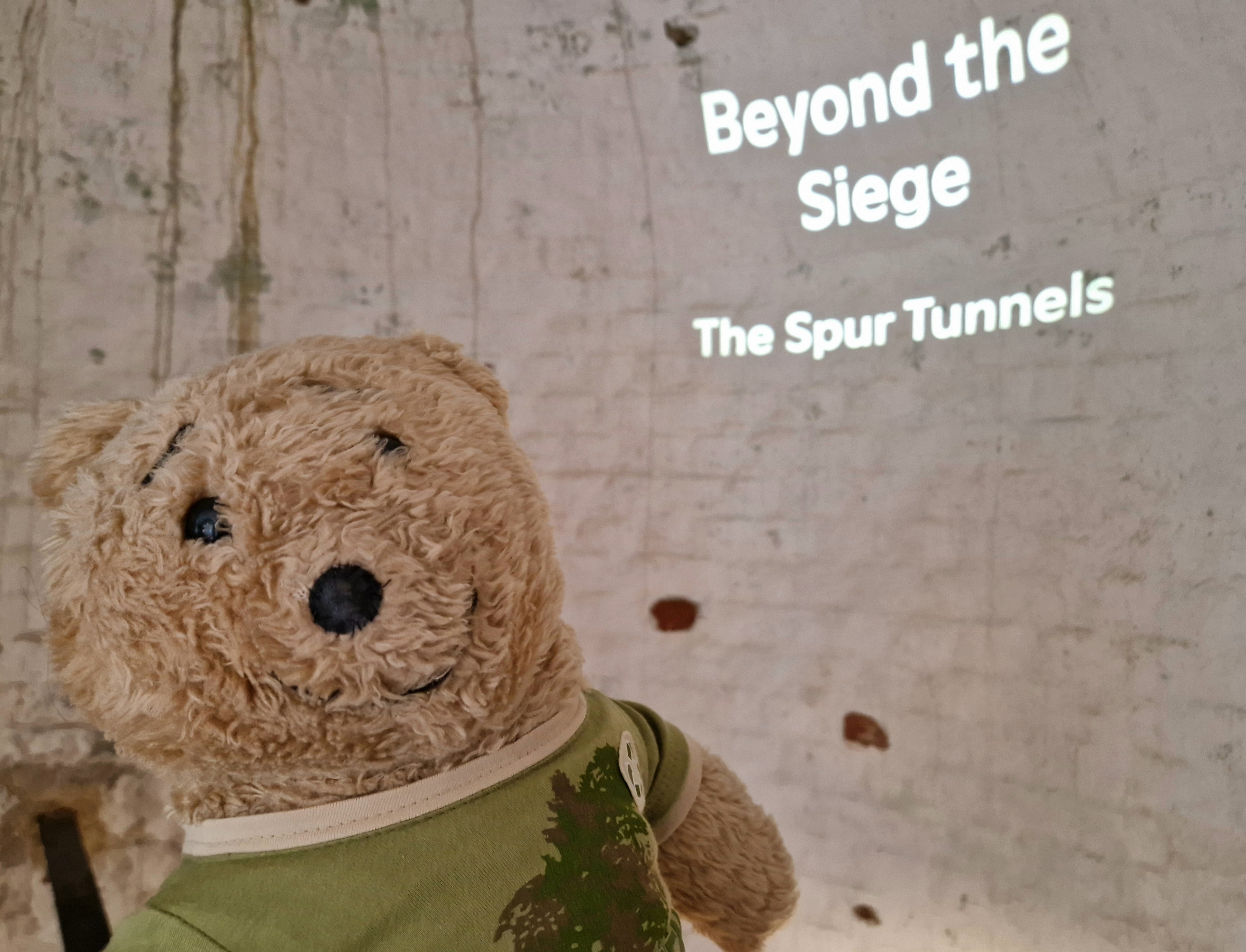
We went down some steps to a lower level (the writing was projected onto the wall).
….and there was the other side of the spy hole!
There were a series of doors in the tunnels that could be operated remotely using cables and pulleys. If intruders were spotted entering the castle they could be trapped in the tunnel by lowering the doors.
These were the devices used to shut one of the doors.
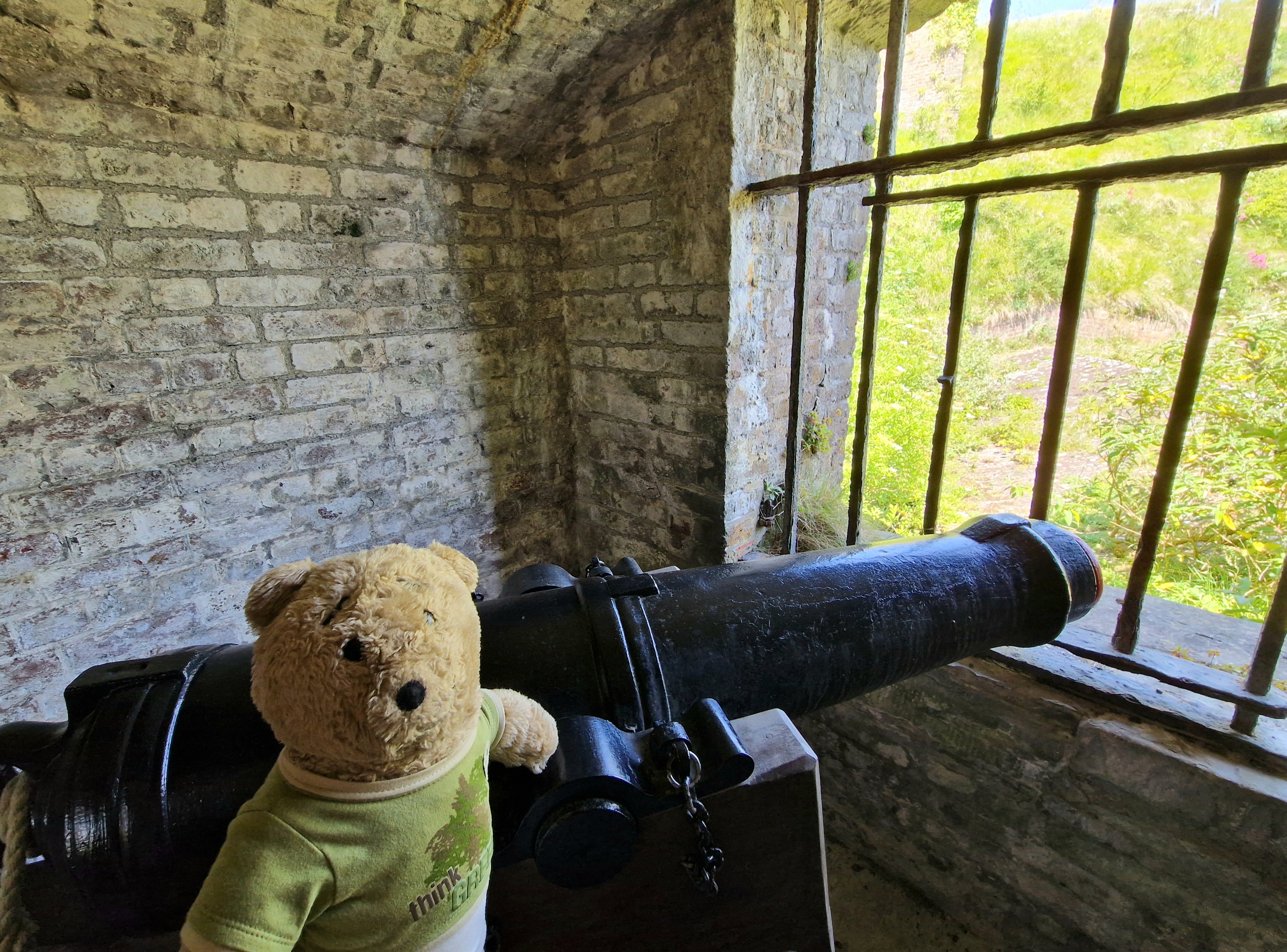
The short cannons known as carronades (after the Carron Ironworks in Scotland where they were made) could fire cannonballs at a short distance.
I was feeling quite tired after leaving the spur tunnels but there was still lots to see.
The guide suggested we should walk to a viewing point to get a good photo of the castle, which we did!
Then it was back up the road through Constable’s Gate to get back into the castle grounds.
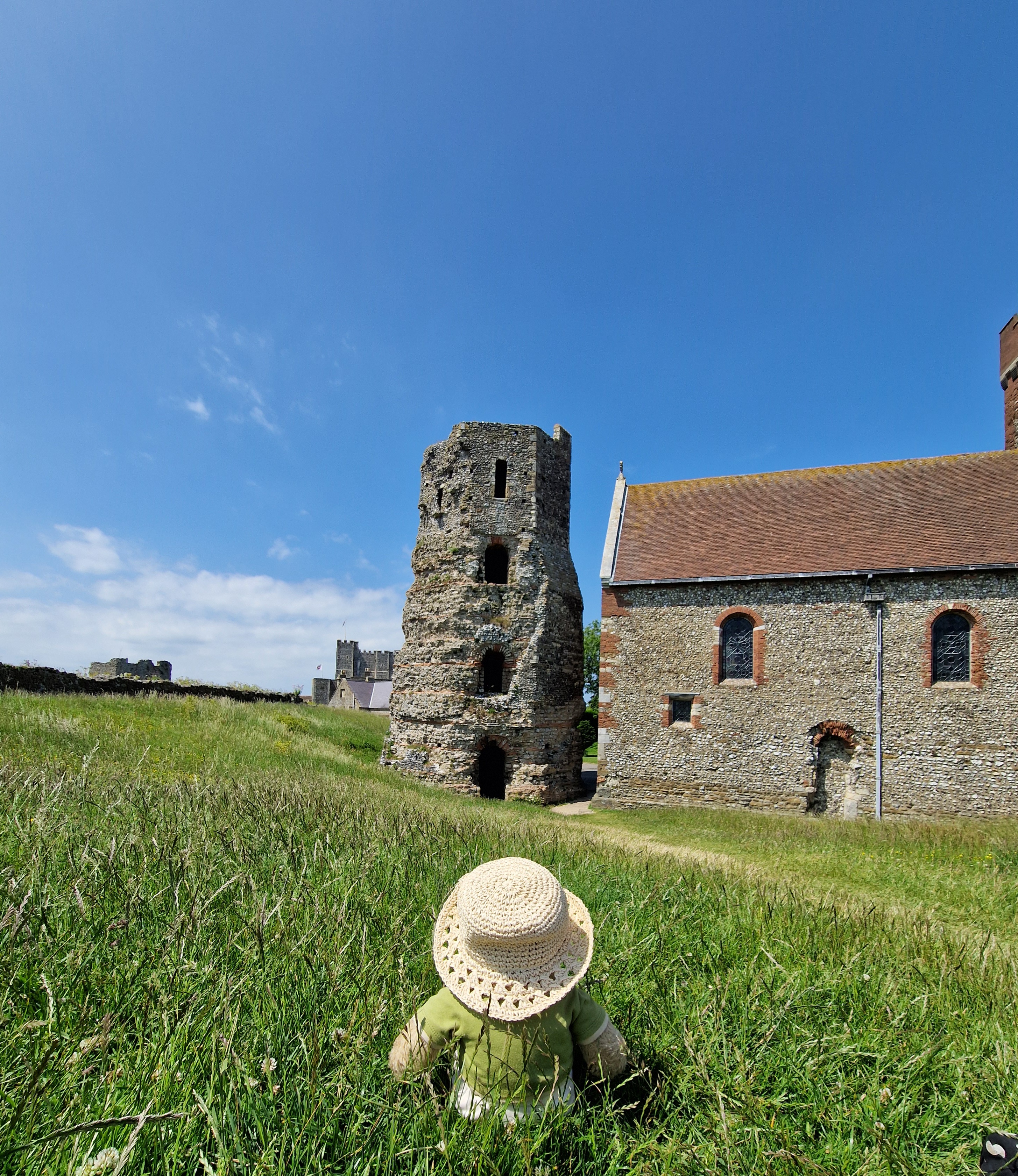
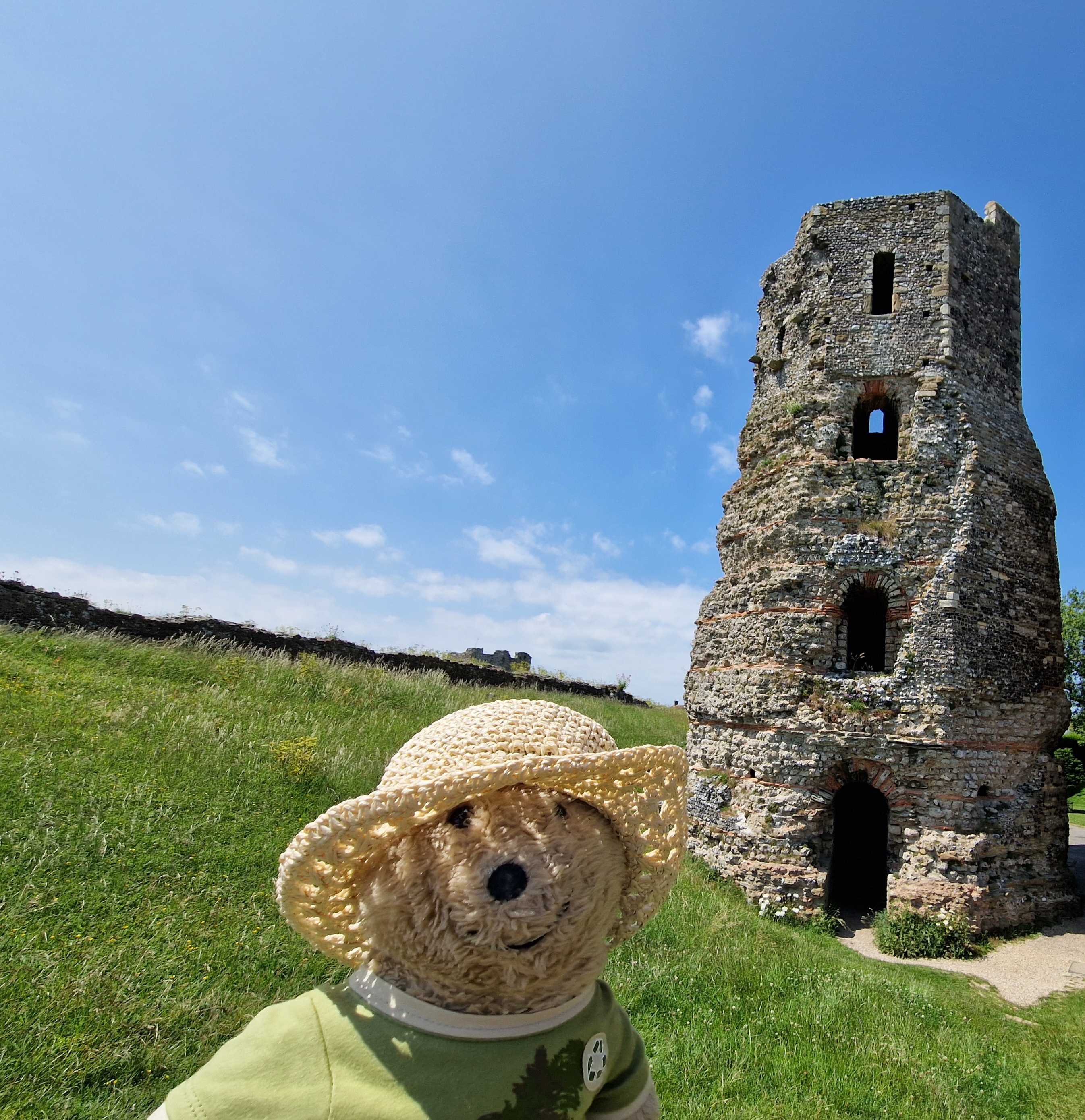
We headed towards the Roman Lighthouse which is right next door to the Saxon Church. I sat for a while and tried to imaging it with a fire burning at the top warning ships 2000 years ago…
Lots has happened to the lighthouse since the Romans built it including a bit extra on the top when it was used as a church bell tower in the 14th Century. If buildings could talk the lighthouse would have so much to say about what it has seen over the years.
Last on the list of sightseeing was The Great Tower, the building of which was overseen by King Henry II.
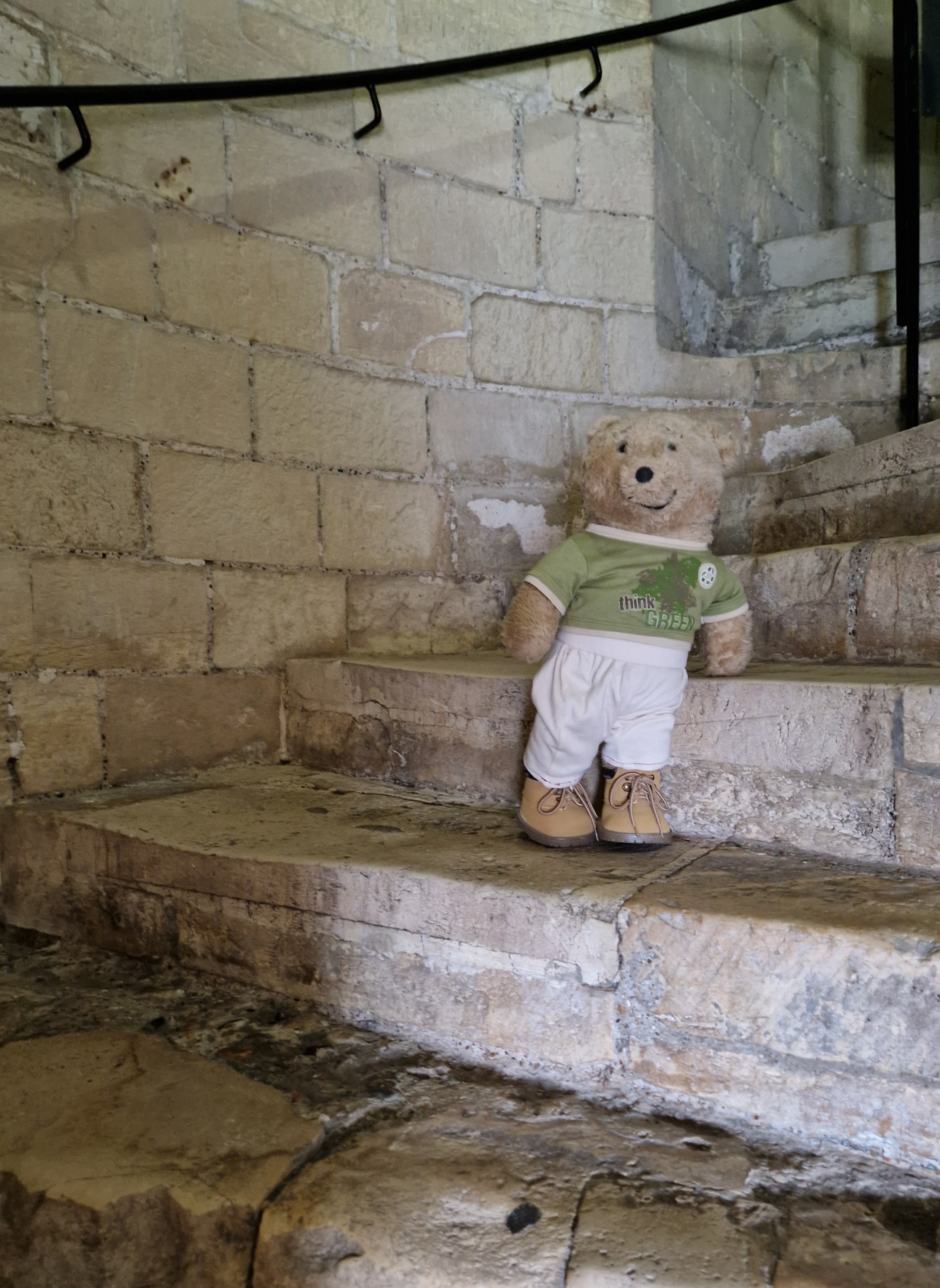
There were many steps to climb to reach The Great Hall.
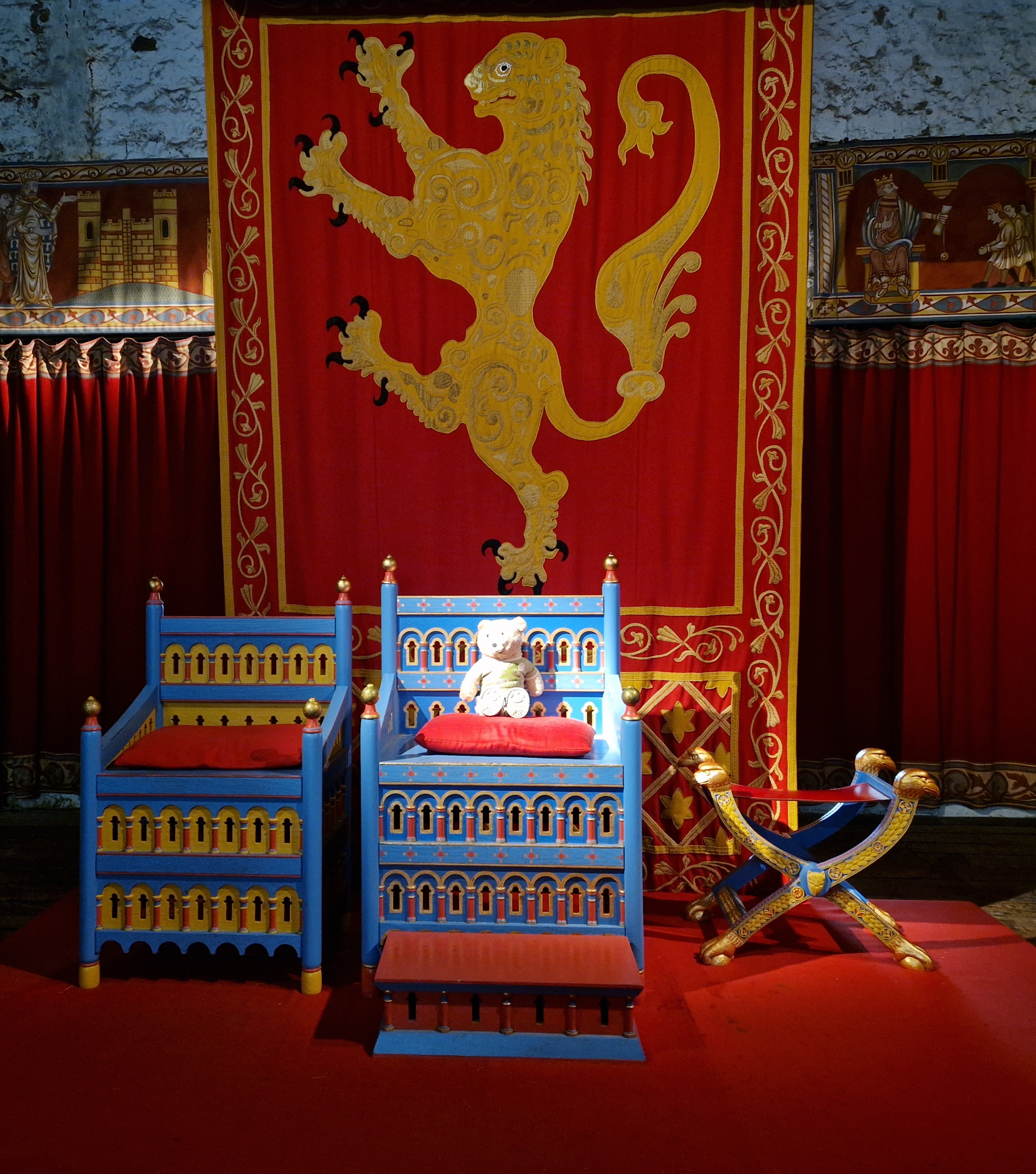
A few years ago English Heritage dressed the inside of The Great Tower to look as it may have done in medieval times when Henry II was on the throne. As the throne is reproduction and not an antique I was allowed to sit on it.
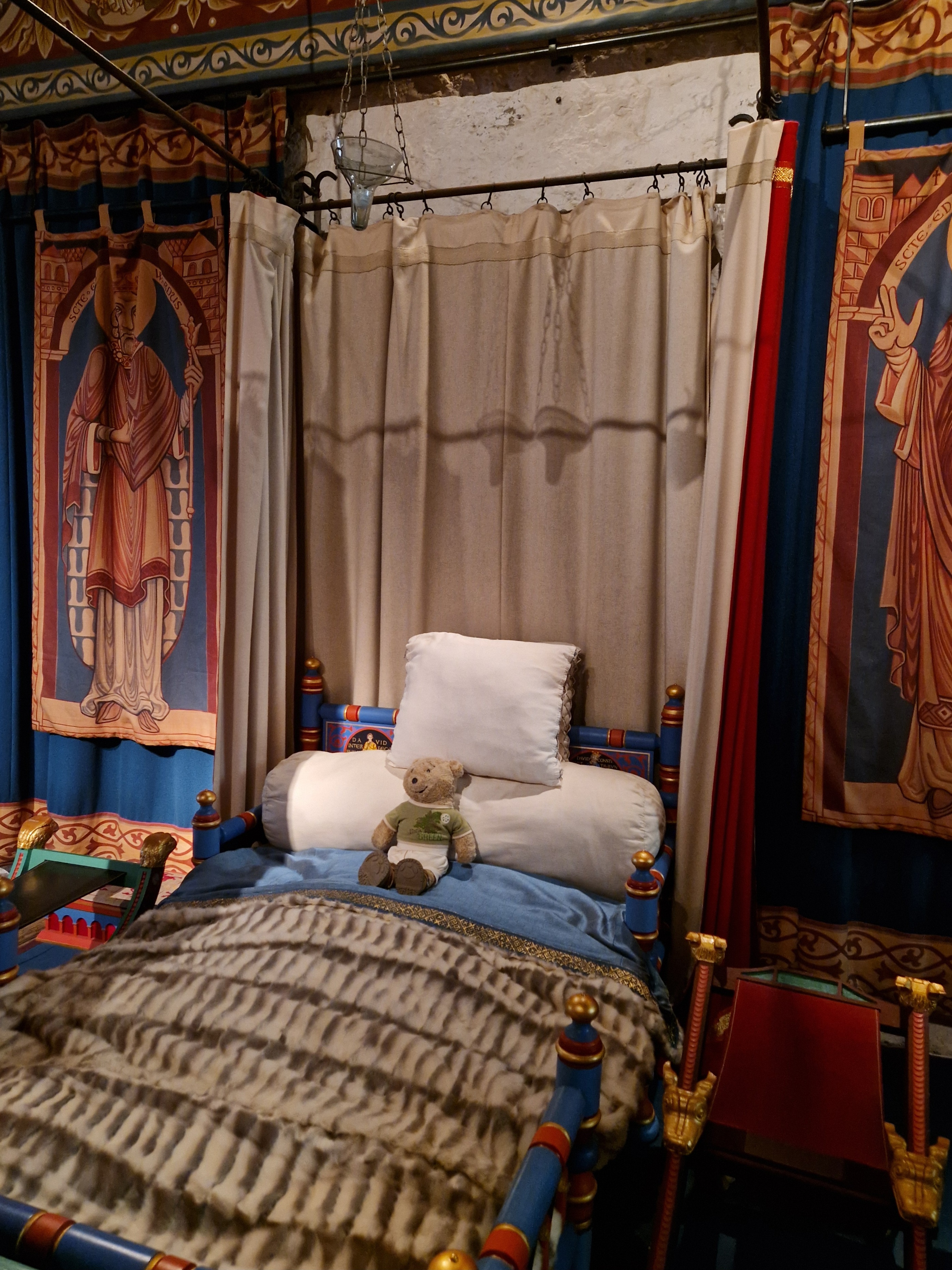
800 years ago having rich colours in the decorations signified wealth and power. The King may have had a bed rather like this one. The room guide sat me on the bed for the photograph (humans aren’t allowed to sit on it). We had a chat and as well as being very knowledgeable about the castle he was also a teddy bear collector.
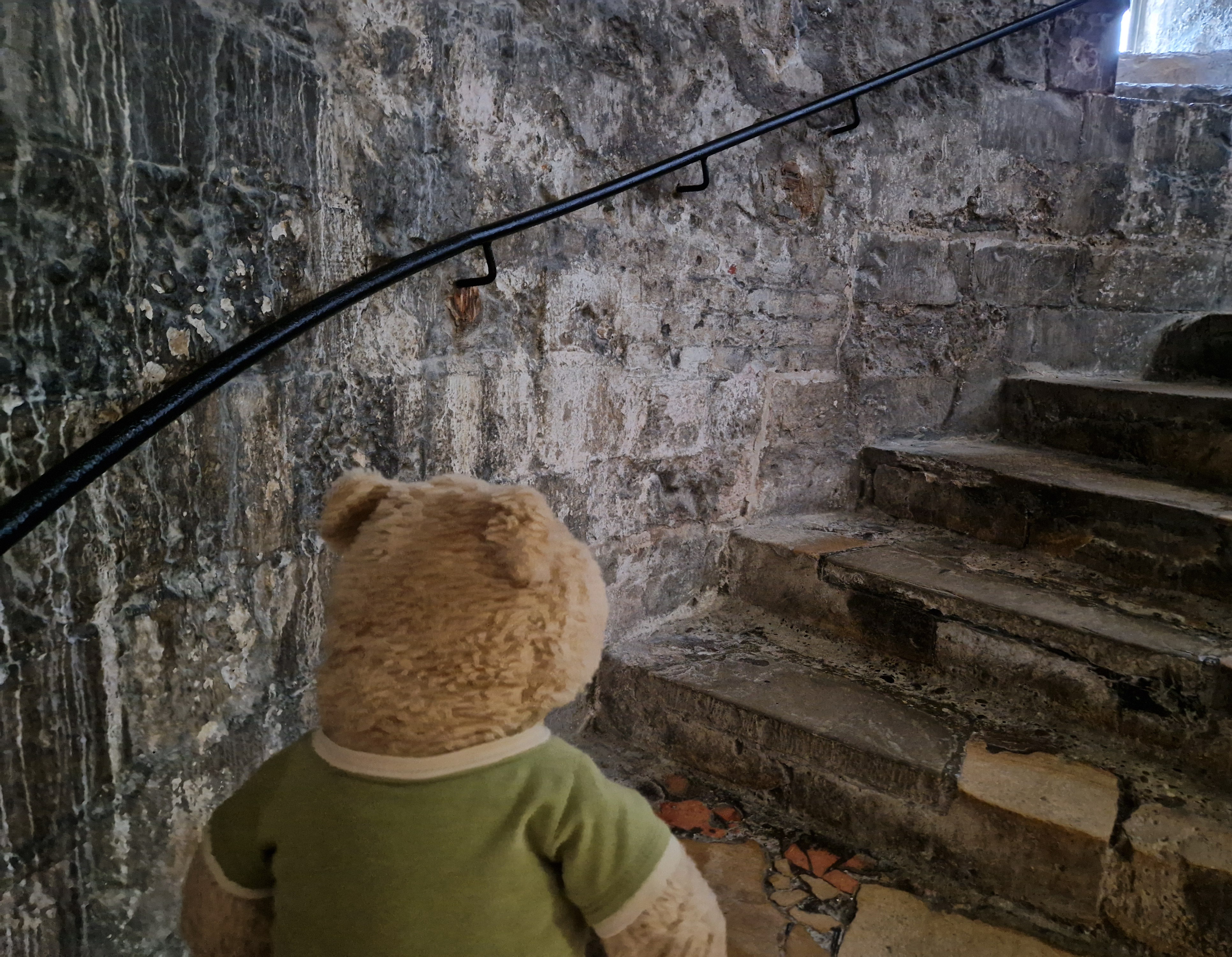
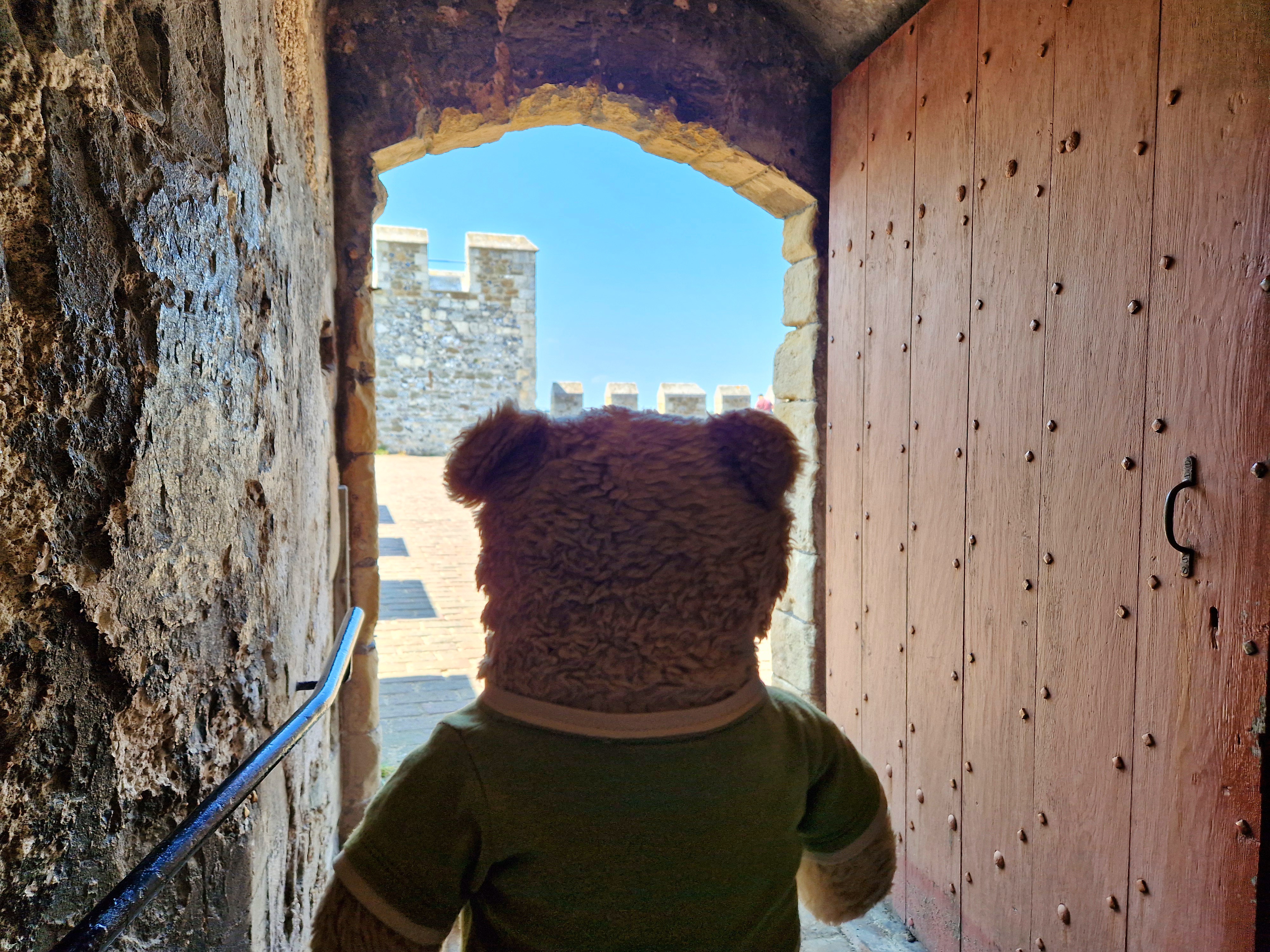
I went on up the many stairs to the roof.
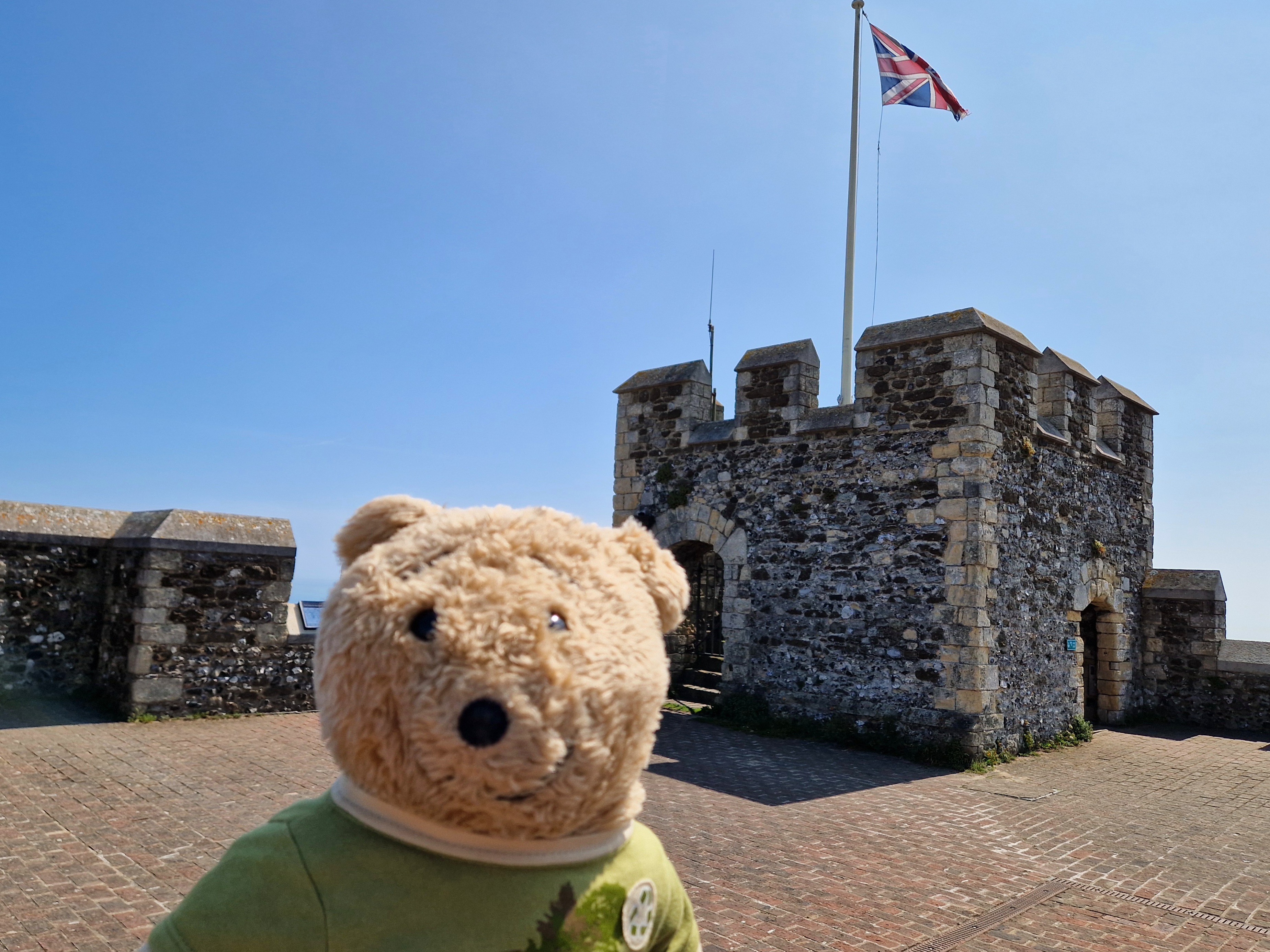
The roof has been altered numerous times in the last 1200 years.
There is an amazing view from all sides, here I am looking out to sea over the Saxon Church and Roman lighthouse.
I was starting to feel quite hungry so made my way downstairs towards the kitchens.
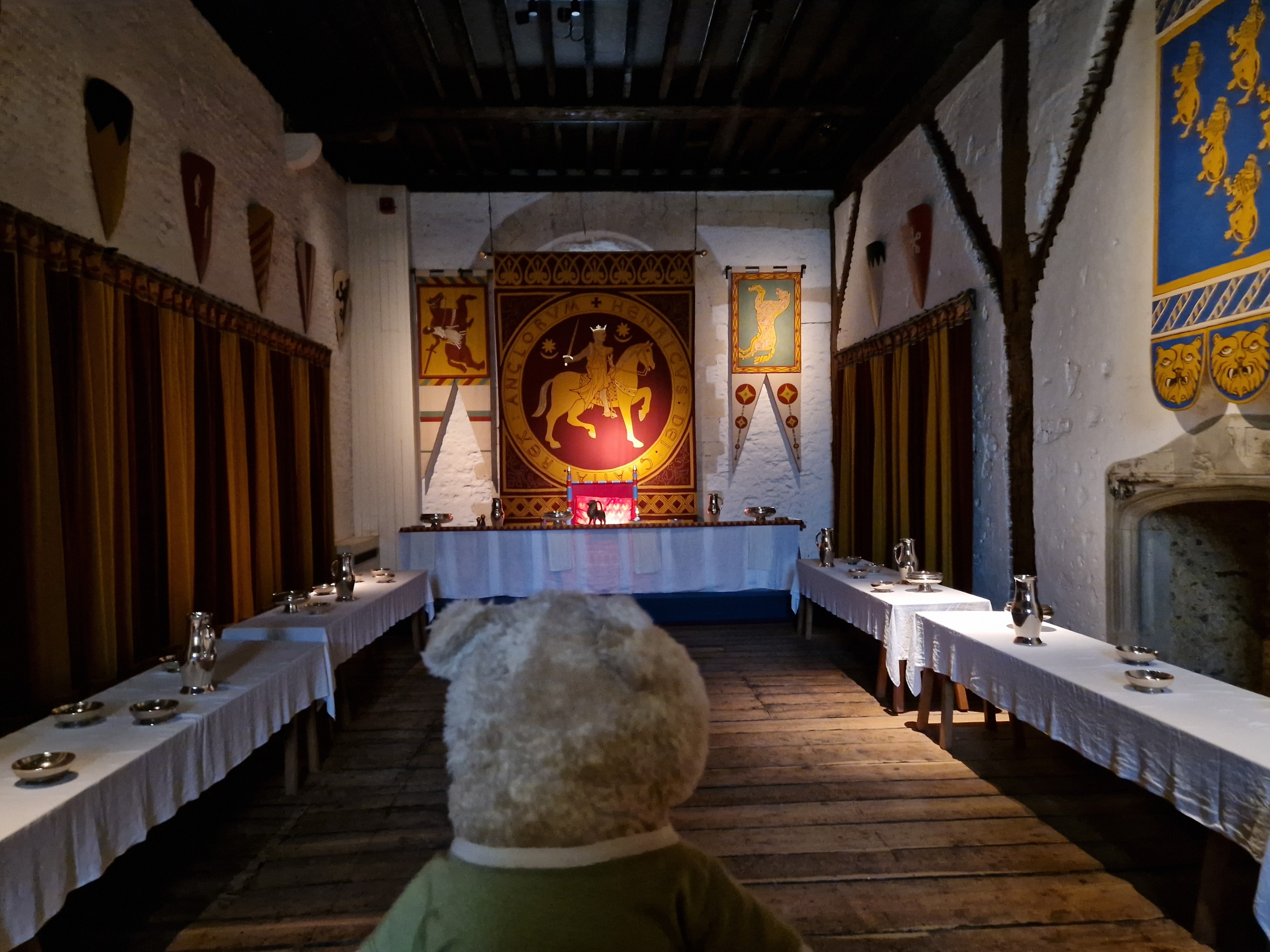
Another big hall, with tables laid ready for the king to have supper with guests.
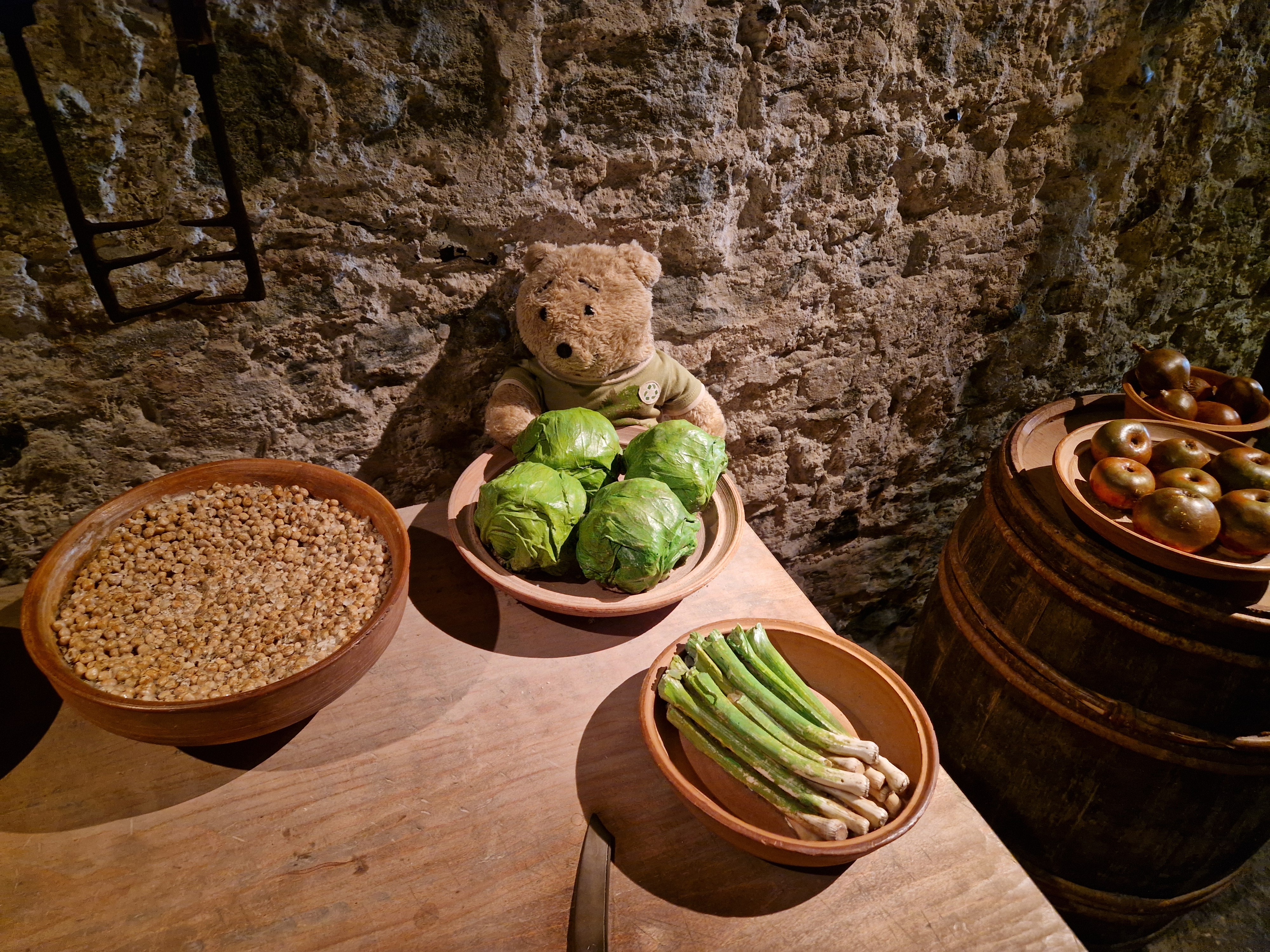
English Heritage have made the ground floor look like a medieval kitchen as they believe it was probably used this way.
I was quite relieved that the large join of ham was plastic!
I think this is where laundry took place unless huge stews were made in pots like this!
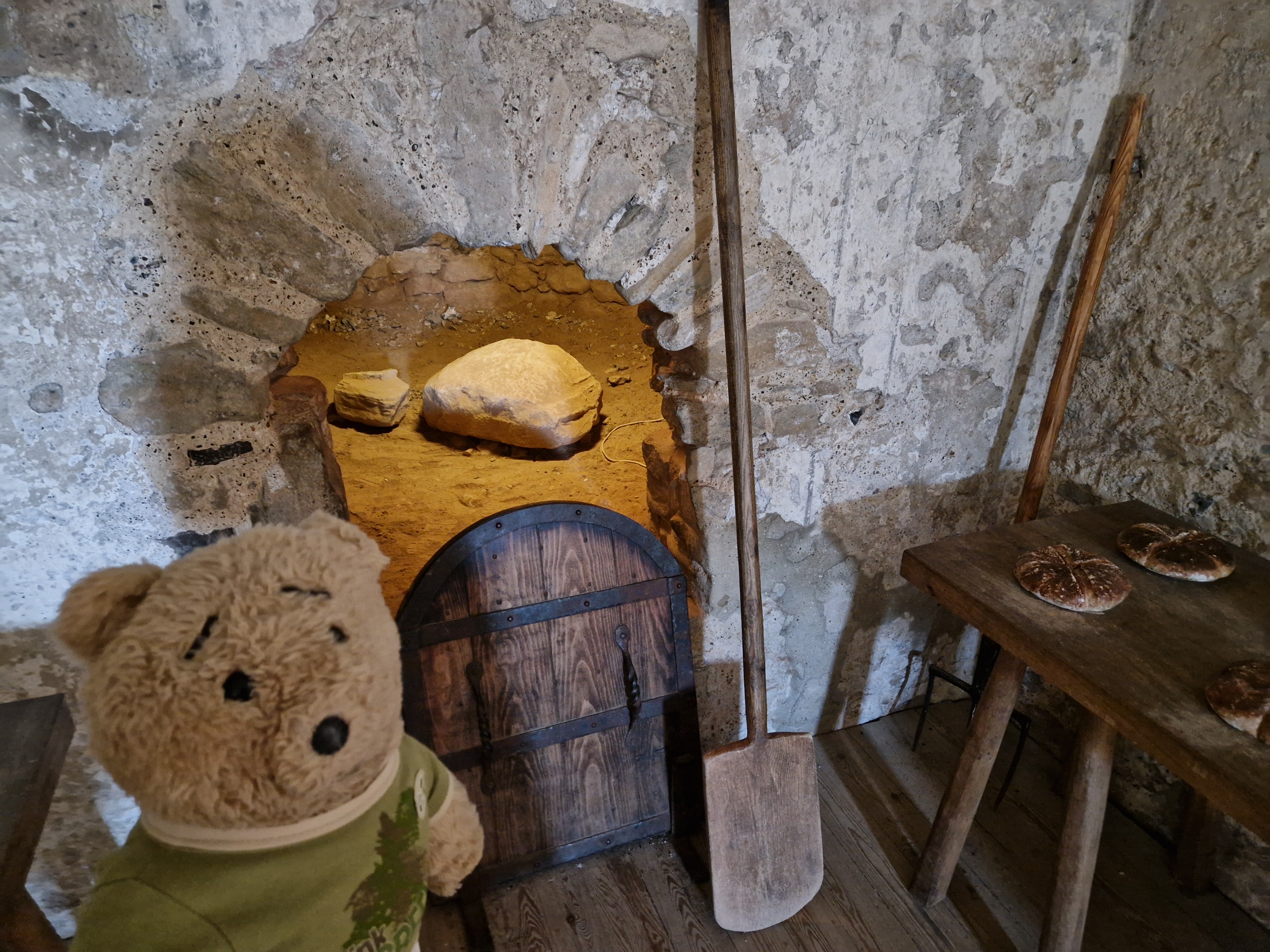
The existence of a large bread oven suggested to historians that this area was very likely used for cooking.
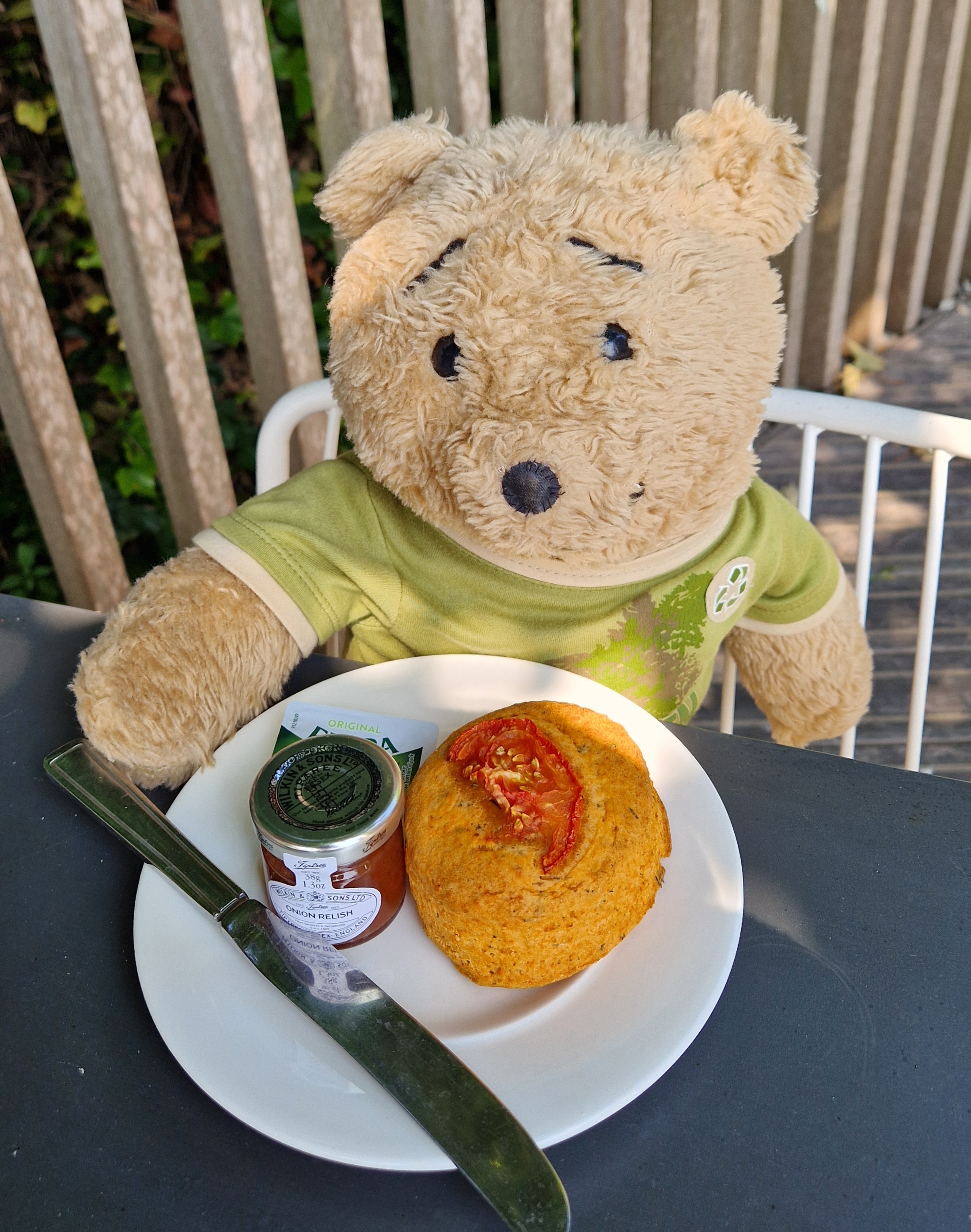
After looking at all that food, even though artificial, I was feeling rather hungry. We made our way to the NAAFI restaurant to get a snack. I very much enjoyed the savoury tomato scone with onion chutney.
When we returned to our holiday accomodation I was quite tired, but before retiring to bed I had a good look at the guide book.
All in all it was a grand day out, with lots to see and learn with a tasty scone at the end. Do visit Dover Castle if you are in the area. It was free for us to go in as we are members of CADW, the Welsh version of English Heritage.
Before we set off to visit the lighthouse I sat for a while and looked across the water to France. The camera didn’t pick up the French coastline very well but I could see it, just 21 miles away.
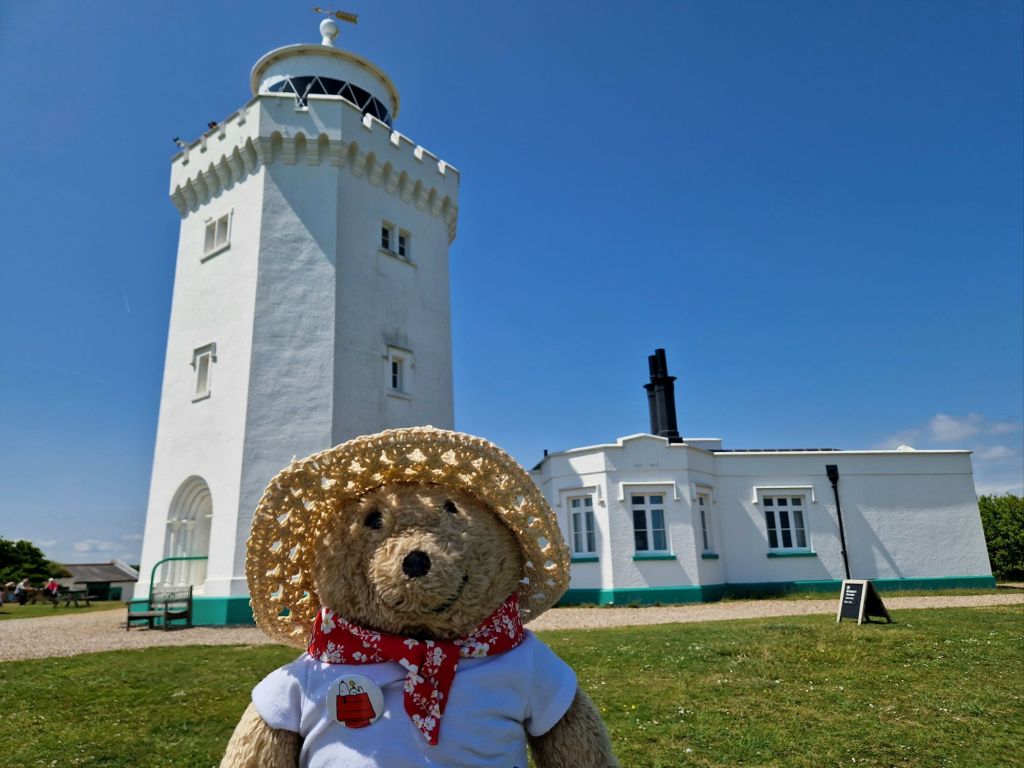
After a walk along the top of the White Cliffs of Dover I headed back to visit South Foreland Lighthouse.
Cows were travelling along the path in the opposite direction
I could see the lighthouse in the distance. There has been a lighthouse of one sort or another at South Foreland since the 13th Century.
Between Dover and Ramsgate there is an area underneath the sea called The Goodwin Sands, but also known as the Great Ship Swallower. The 10 miles of sandbanks hidden under the sea are constantly shifting around and a great danger to any ships that enter the area. The lighthouse hasn’t been used since the 1980s as now ships have much improved navigation systems which keep them away from the Goodwin Sands.
It was a beautiful sunny day but I did think I might need to remove my hat in the lighthouse just in case it was windy at the top.
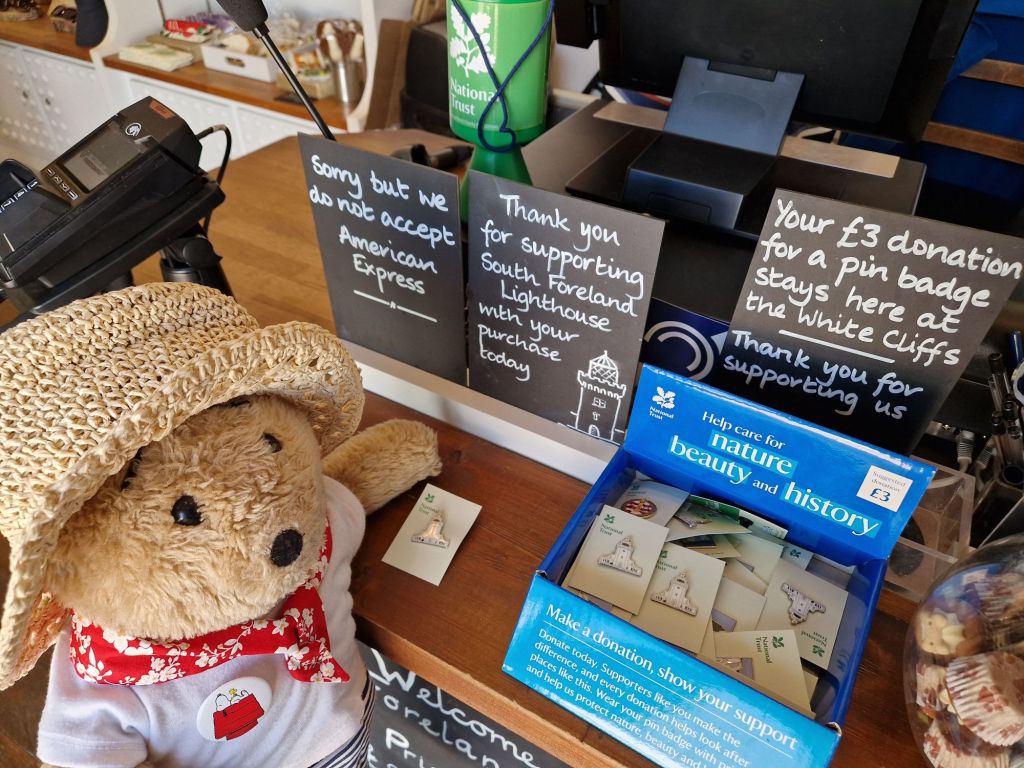
Tours have to be booked at the reception desk in the shop, where I also bought a little lighthouse pin badge as a souvenir.
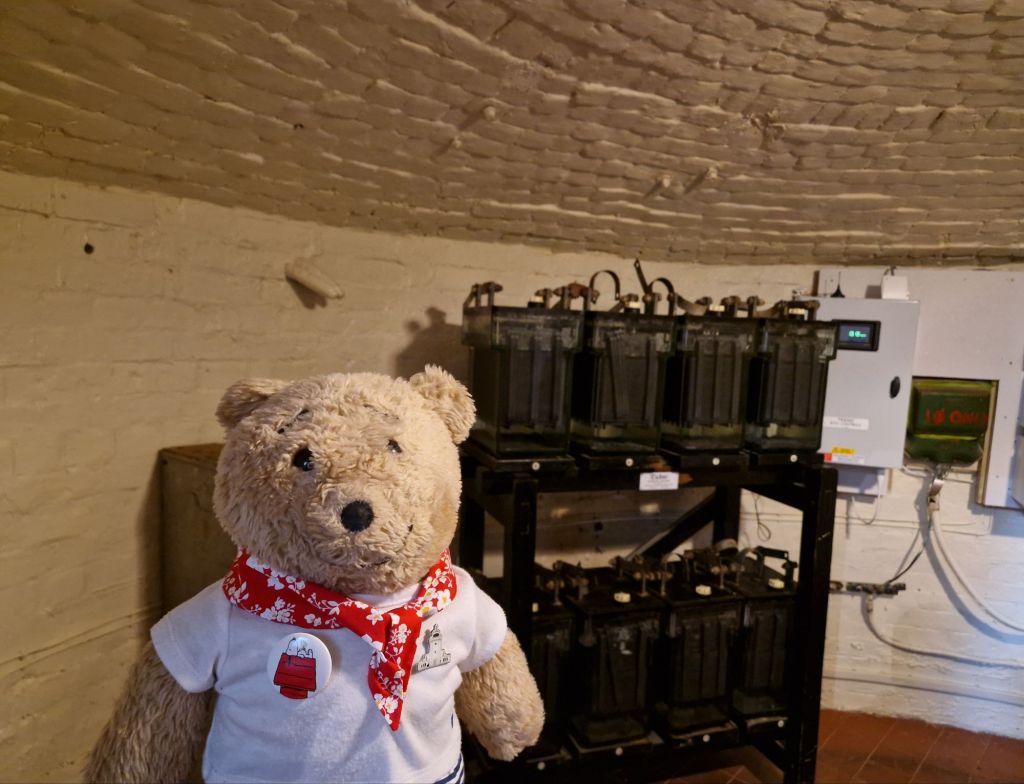
A National Trust volunteer guide met us at the door and then took us down to the basement of the lighthouse to start the tour. She told us many interesting facts. The curved roof was built by filling in the whole building with sand, making it a dome shape then laying the bricks on the top. Once finished all of the sand was removed through the door. The batteries that you can see were a few of many that were used as a back up in the case of a power cut, though the lighthouse was originally lit using oil lamps.
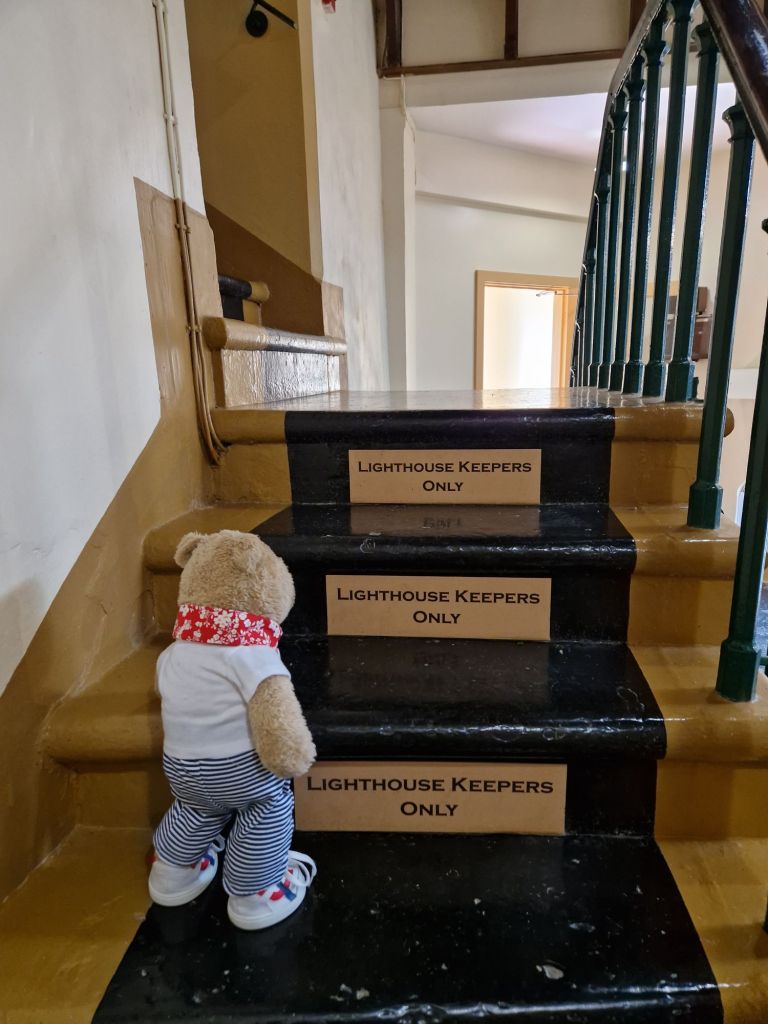
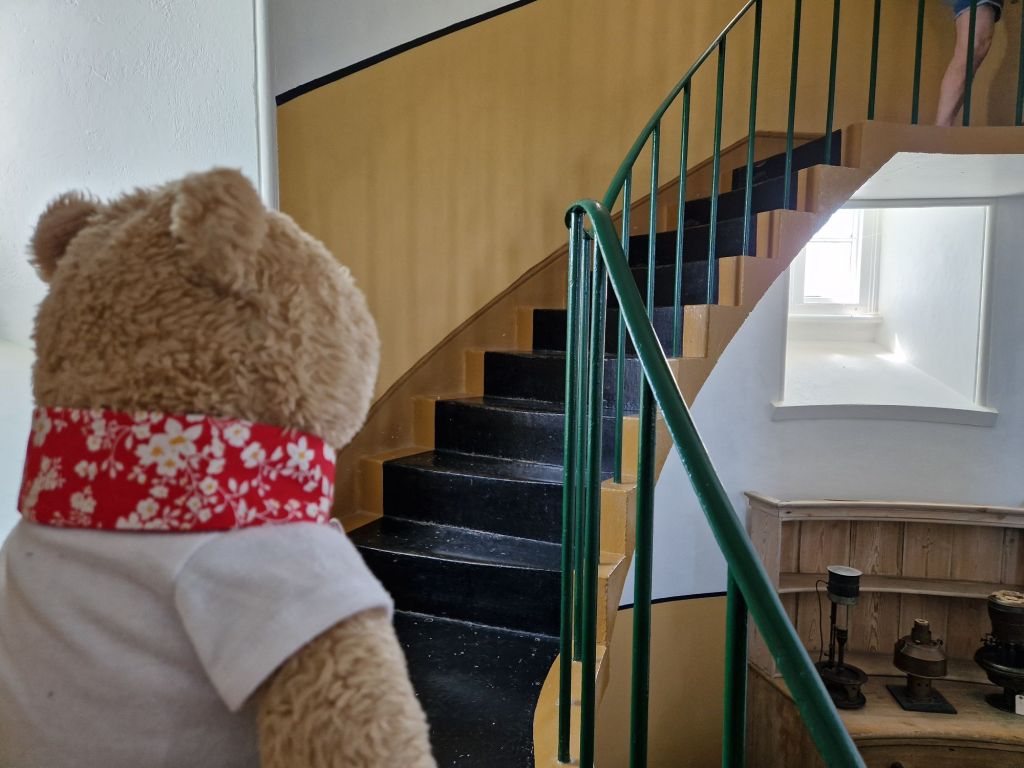
I went up some stairs to the first floor..
Here I am inside the chamber containing the weights that controlled the timing of the lighthouse flashes. It was one of the lighthouse keeper’s jobs to check that the light flashes were correctly callibrated. Each lighthouse had a specific sequence of flashes so that mariners would know where they were.
This specially curved sideboard came from another lighthouse but is of the type that would have been at South Foreland. The oil lights on the top are examples of oil lights used in various lighthouses. The oil used was whale oil (which was rather sad for whales).
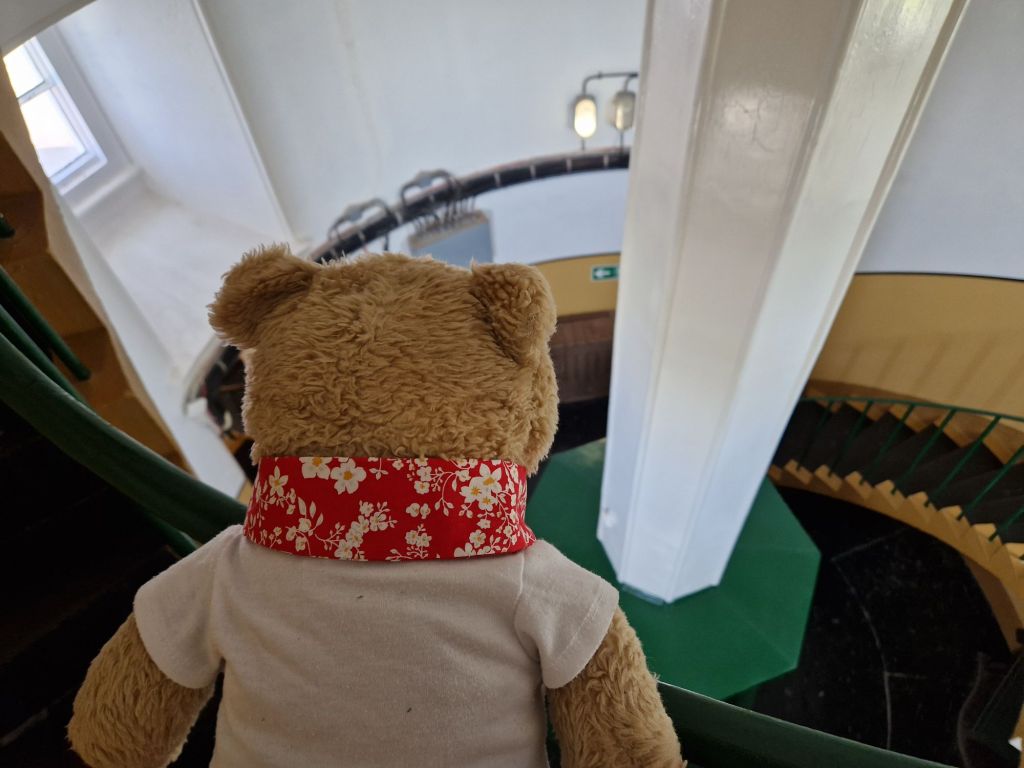
I continued up the stairs to the next level….
I sat at the light house keeper’s desk for a little while and looked out at the sea. He would have had a very big responsibility on his shoulders.
Here I am with the winding handle for the weights that were used to turn the lense around. Lighthouse keepers had to wind the weights back up to the top every two hours through the night in order to keep the lights flashing. T
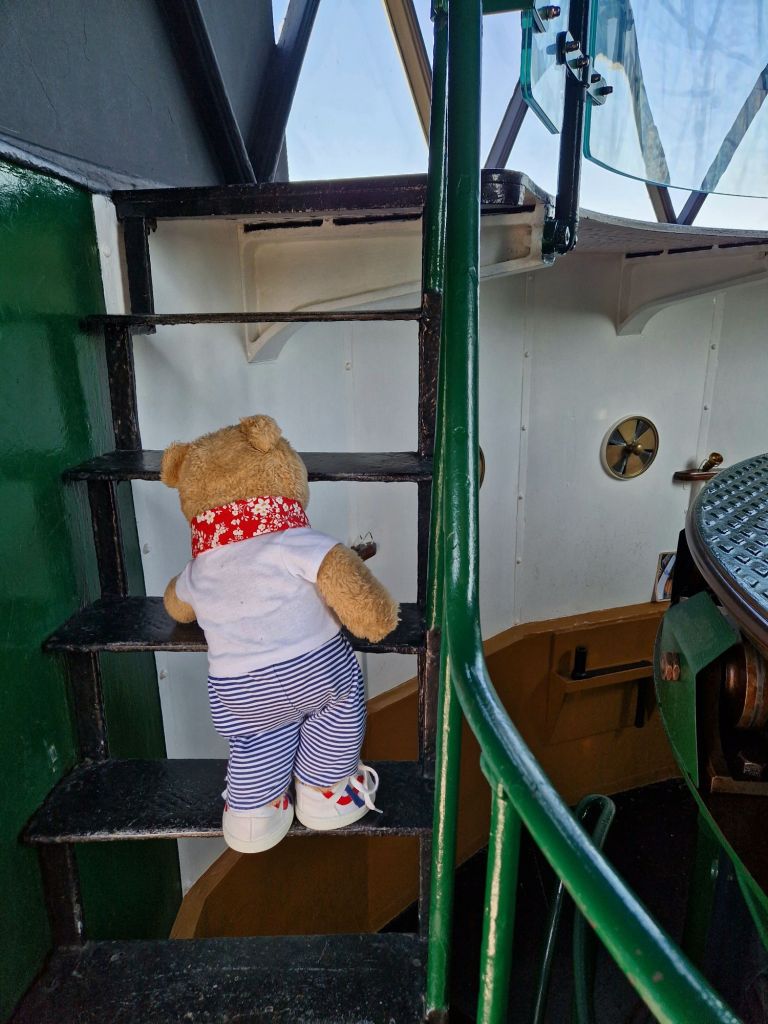
I climbed further up a little ladder right to the top to have a look at the lense. South Foreland Lighthouse was the first one in the UK to have electric lights.
The scientist Michael Faraday spent lots of time at the South Foreland developing the electric lights which was subsequently installed in all the other lighthouses around the UK managed by Trinity House (The Lighthouse Authority).
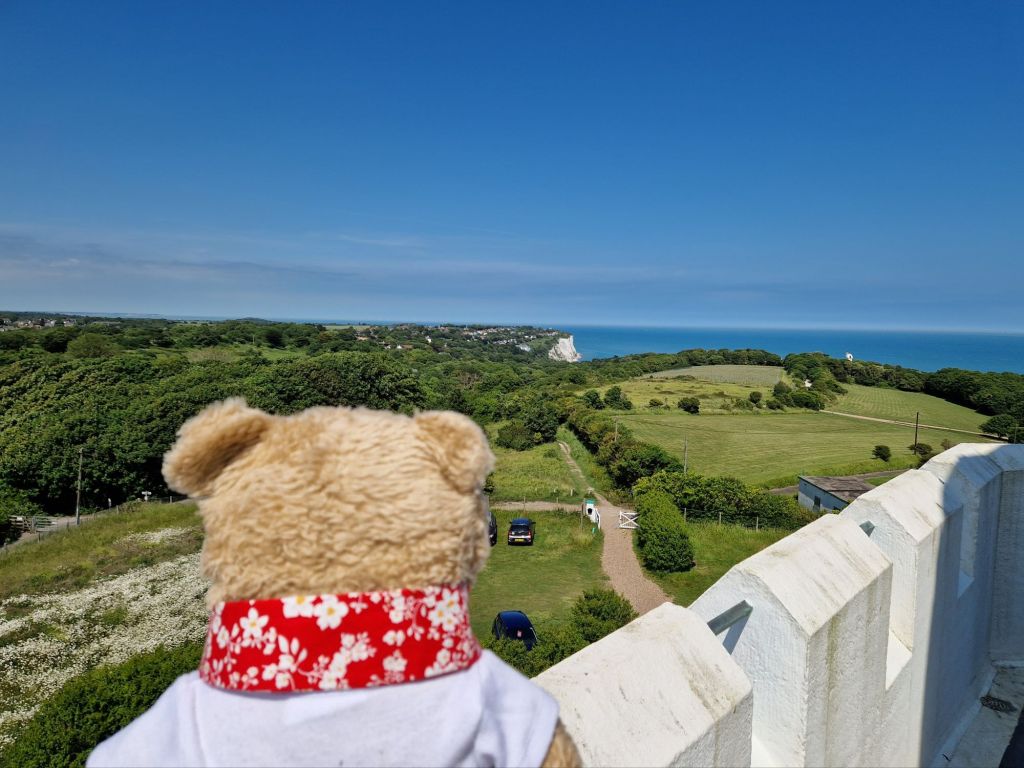
There was an amazing view from the windows at the top.
I decided to venture out on to the platform for an even better view…
The view was even better outside, especially as it was a clear day.
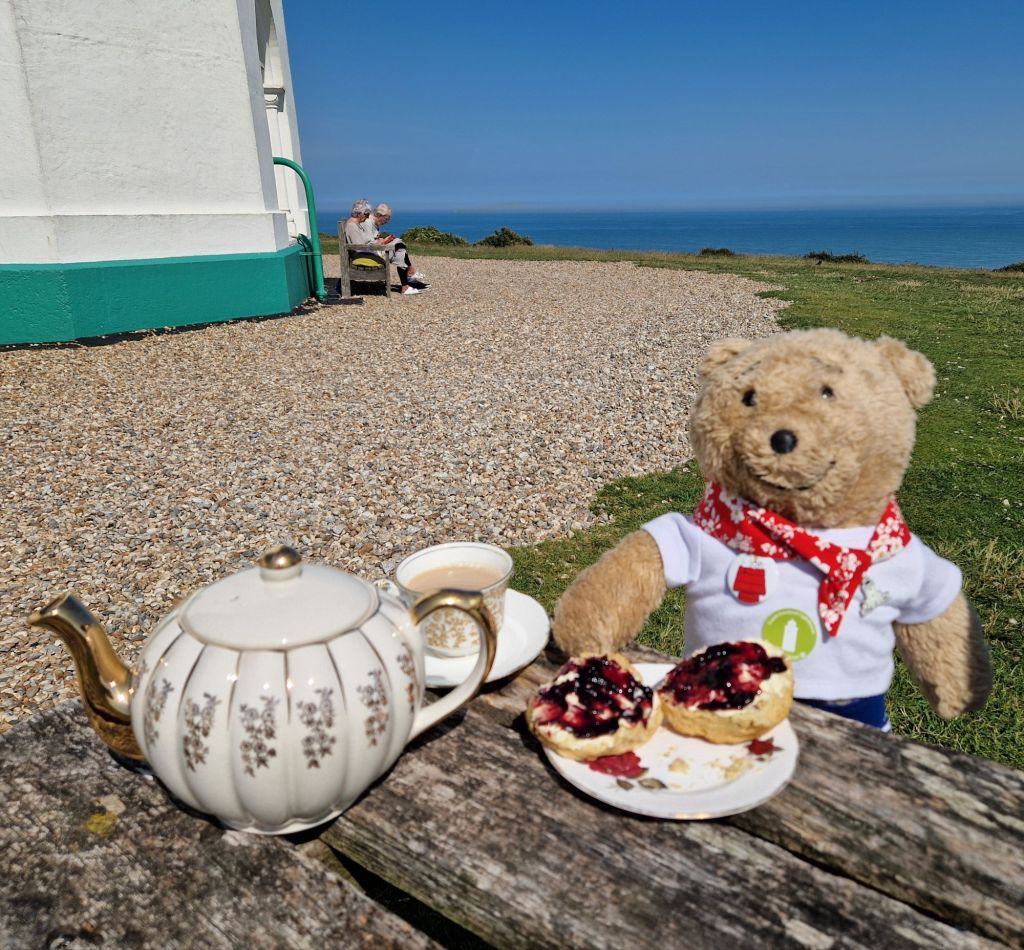
After coming back down the stairs we thanked the tour guide and went into Mrs Knott’s tearoom for some refreshments which we decided to enjoy outside. The tearoom next to the lighthouse was converted from one of the lighthouse keeper’s cottages and named after the Knott family who were keepers at the lighthouse for many years.
Do visit South Foreland Lighthouse if you are near Dover, it is very interesting. Be careful not to go to North Foreland Lighthouse by mistake, as we did first of all, as that one isn’t open to the public!
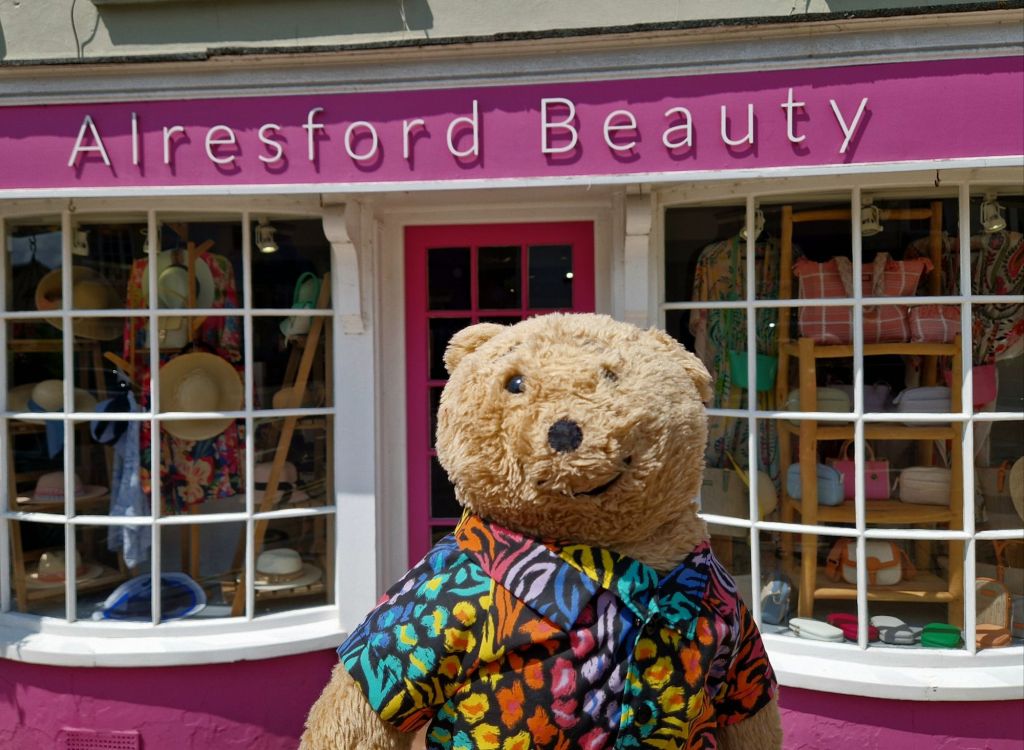
Alresford in Hampshire is the town where I began my life. I was made by Alresford Crafts in the Town Mill back in the 1970s. I can’t remember much about those days but I always enjoy visiting. We were on our way to Canterbury for a holiday and decided to stop at Alresford on the way. I was very hungry when we arrived so the first stop was for lunch at Tiffin Tea Room.
Alresford is famous for growing watercress. In Spring each year they have a watercress festival, which oneday I would like to attend. I decided to have a cheese and watercress scone ploughman’s for my lunch which I very much enjoyed.
After lunch I set off on a nostalgic walk around town…
Here I am in front of The Station Mill, where many of my younger siblings were made. These days it is a health and fitness centre.
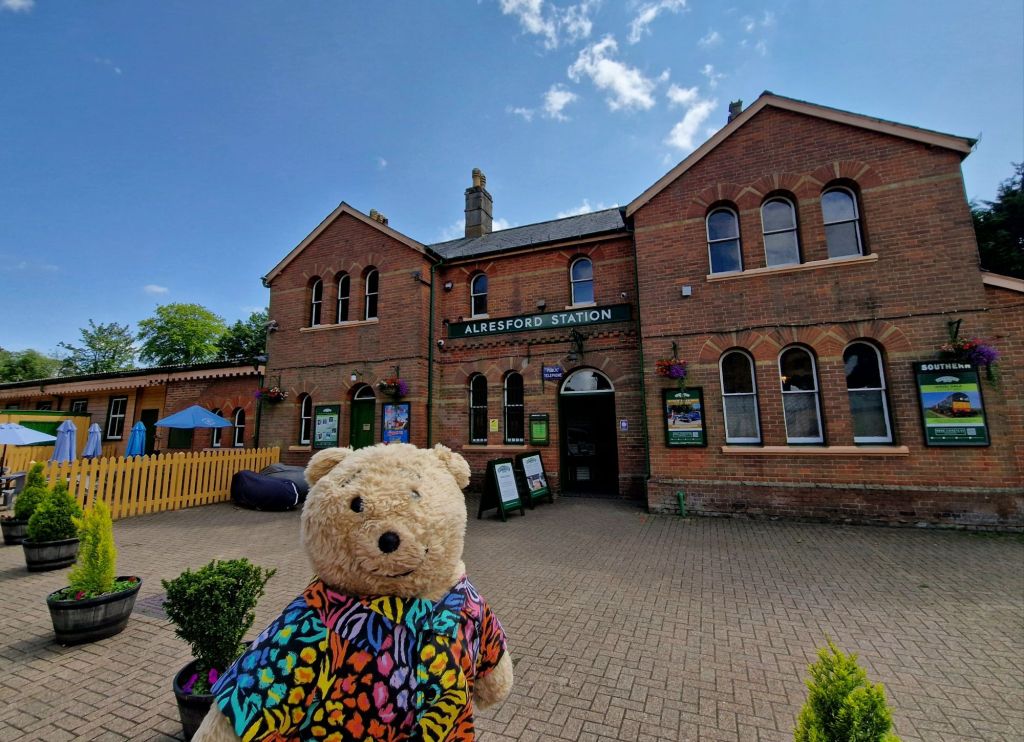
Next on the list was Alresford Station. I have very happy memories of travelling here on the Watercress Line steam train with Growler a few years ago.
I had a wander about on the platform hoping to maybe see a train, but there were none due to arrive.
I weighed myself on the scales!
In the gift shop I decided to buy a postcard featuring an engine like the one I travelled on back in 2016.
I was going to call in at the library but it was closed (I delivered a copy of my book to them when I visited in 2015)
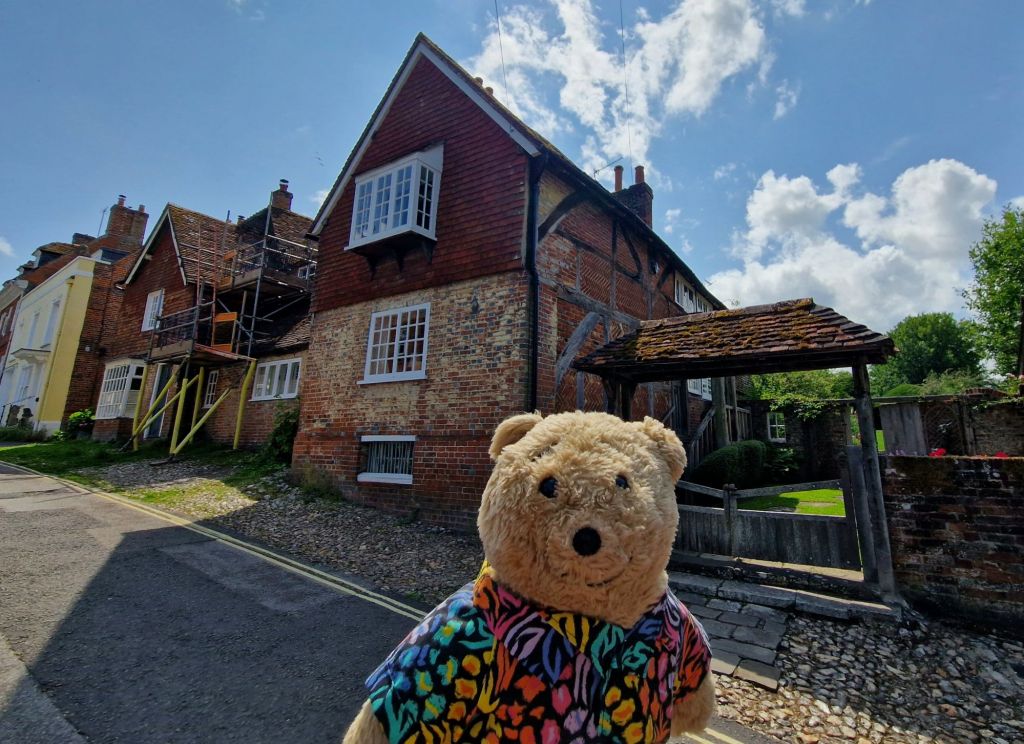
It was a beautiful sunny day to be wandering around very picturesque town. My next destination was The Town Mill, where many bears and other cuddly animals were made, including me, in the 1970s.
Enroute I passed a splendid vintage car.
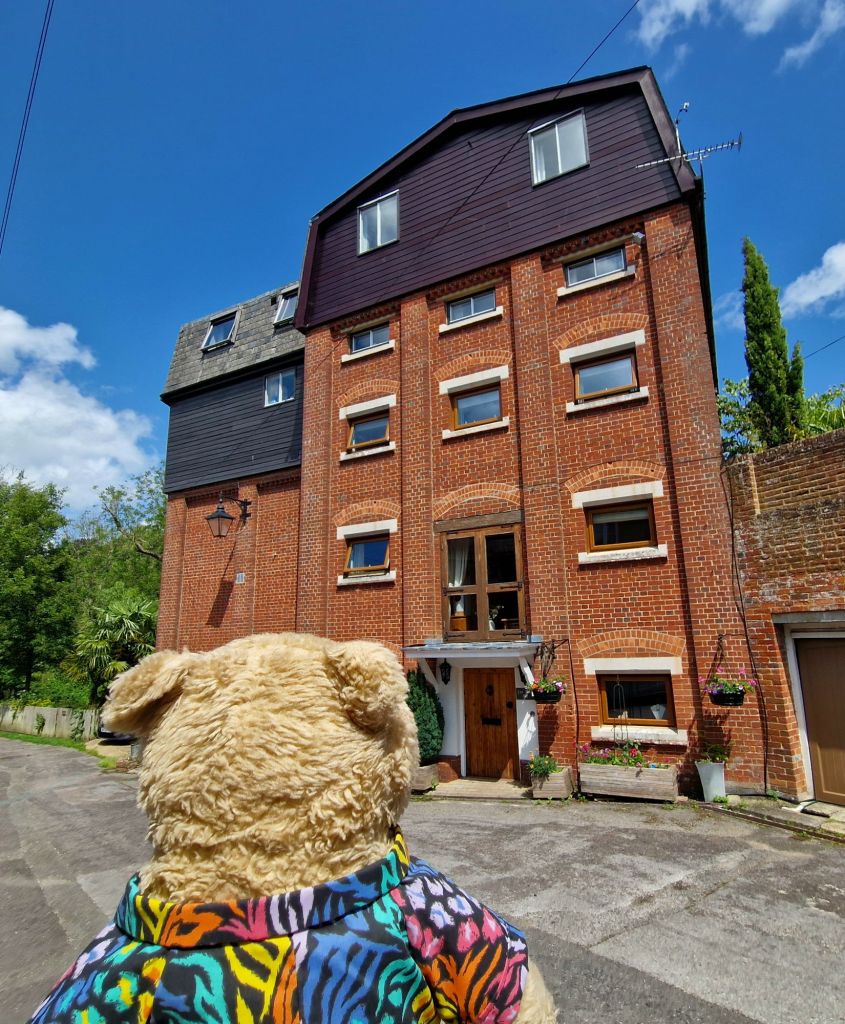
Finally I reached Alresford Town Mill, which is now an apartment block where humans live. It is in a nice place with a waterwheel and the River Arle running along behind it.
I stood outside the front door for a moment for a photo; it was about 50 years ago that I began my life there.
I walked down the road past the Mill feeling happy that I was made in such a lovely place.
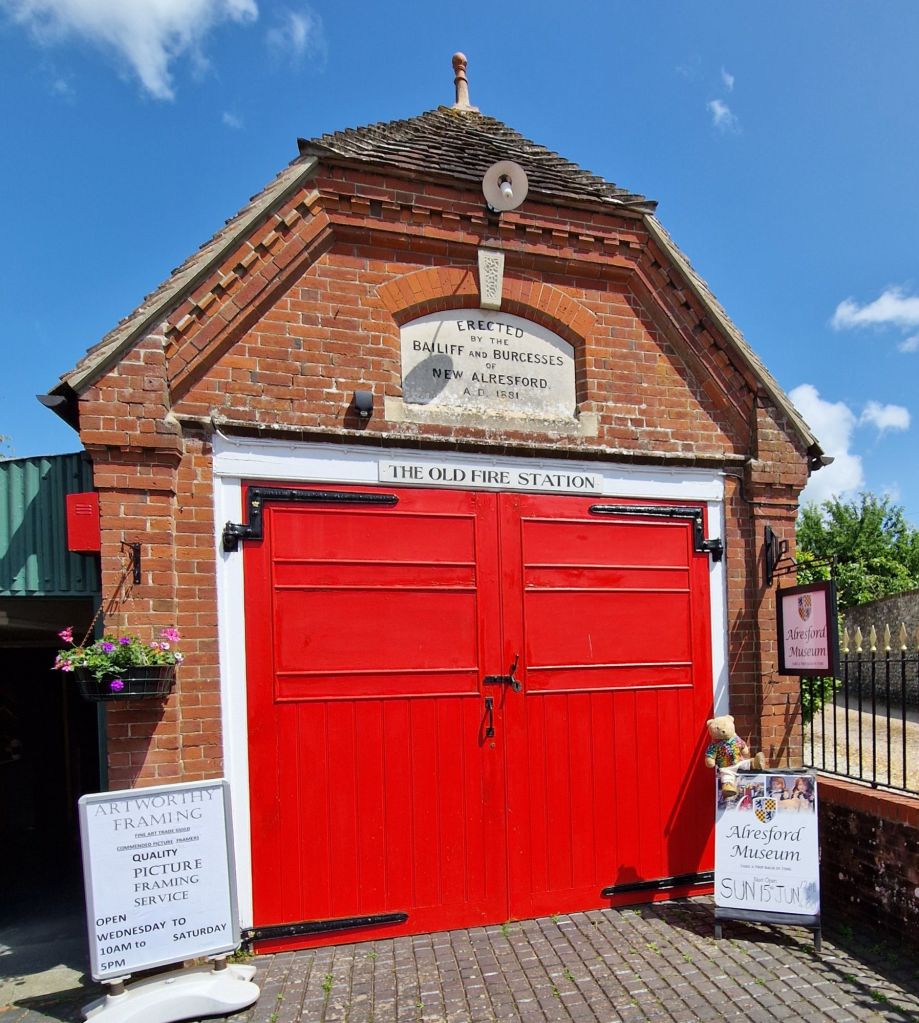
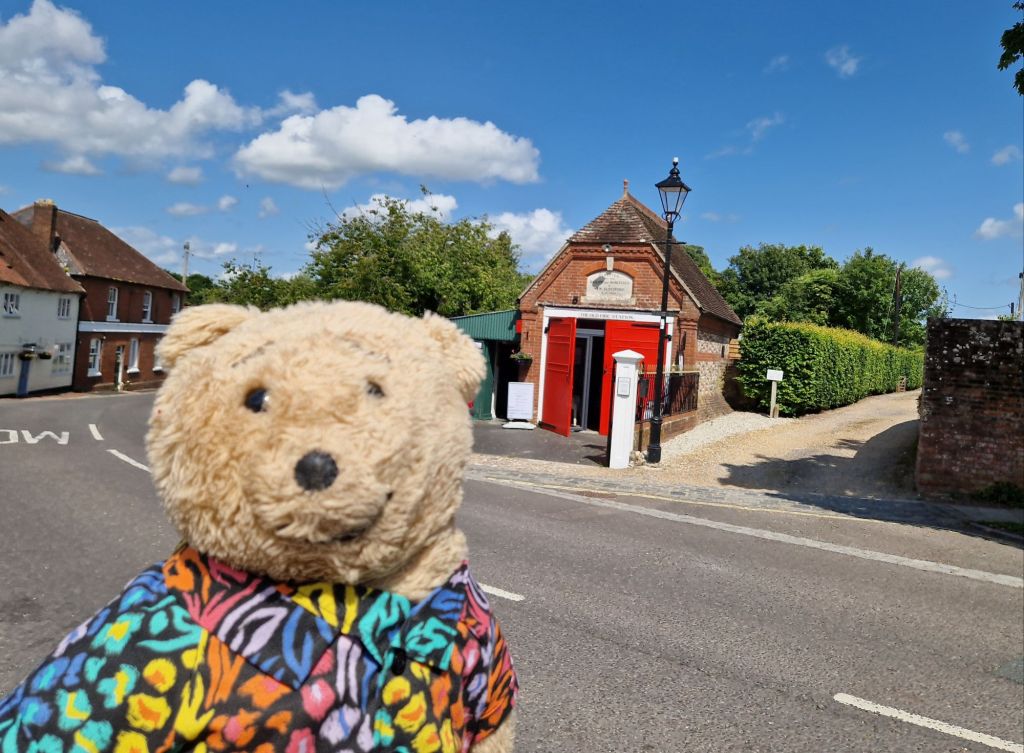
The Old Fire Station is now a museum.We didn’t expect to be able to go inside as it only opens occasionally and wasn’t officially open. While I was posing for a photograph outside my human started talking to a friendly chap who had just come out of the picture framing shop next door. He was a volunteer at the museum and very kindly offered to open it for me to see some of my relations that live inside and a splendid fire engine.
The Merryweather horse-drawn steam fire engine inside the museum was built in 1893. Fire engines like this were used up until the early 1920s.
Here I am wearing a fireman’s hat:
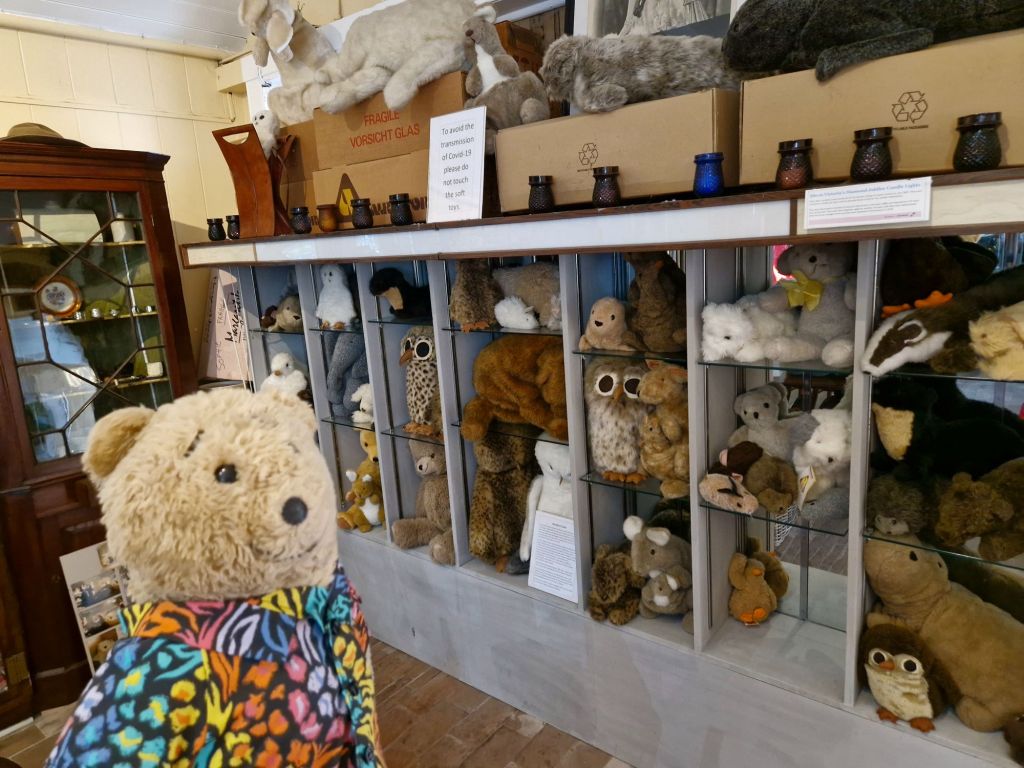
Many bears and other cuddly animals made by Alresford Crafts live in the museum.
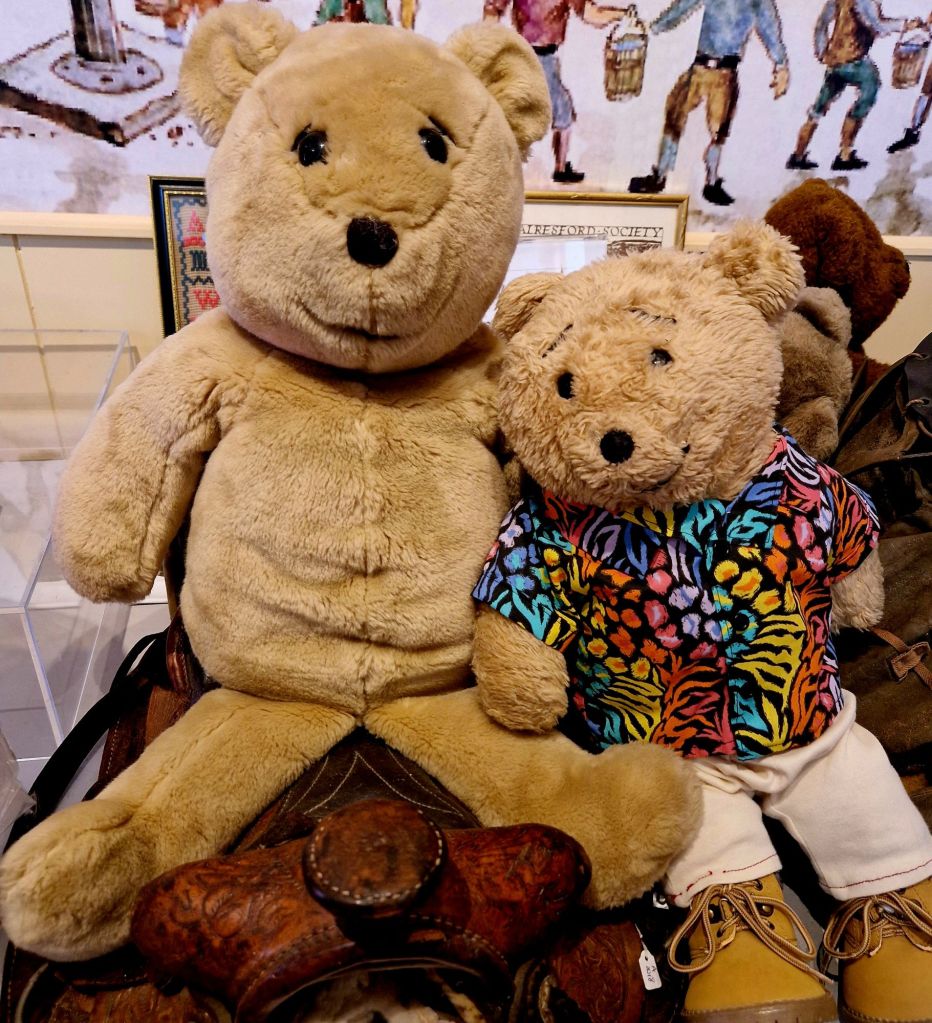
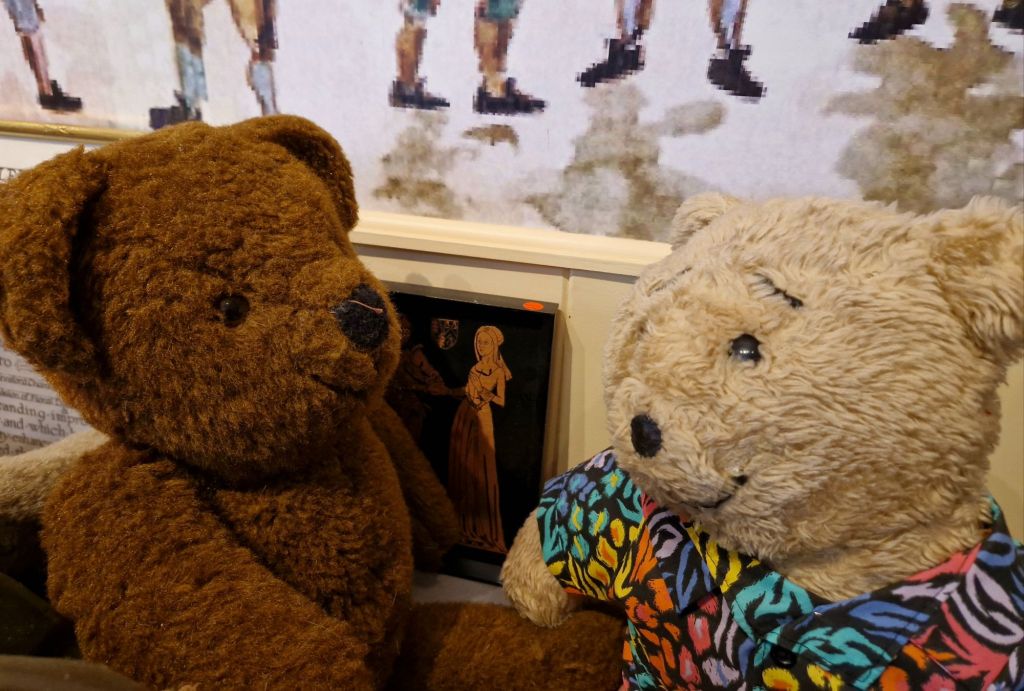
I was quite taken aback by the size of the resident Alresford Honey Bear. We both smiled at each other.
I explained to him about my adoption from a charity shop by Karen back in 2011, and my recent decision to wear clothes due to my fur beginning to wear out. He was a lovely chap.
A brown bear was very pleased to see me.
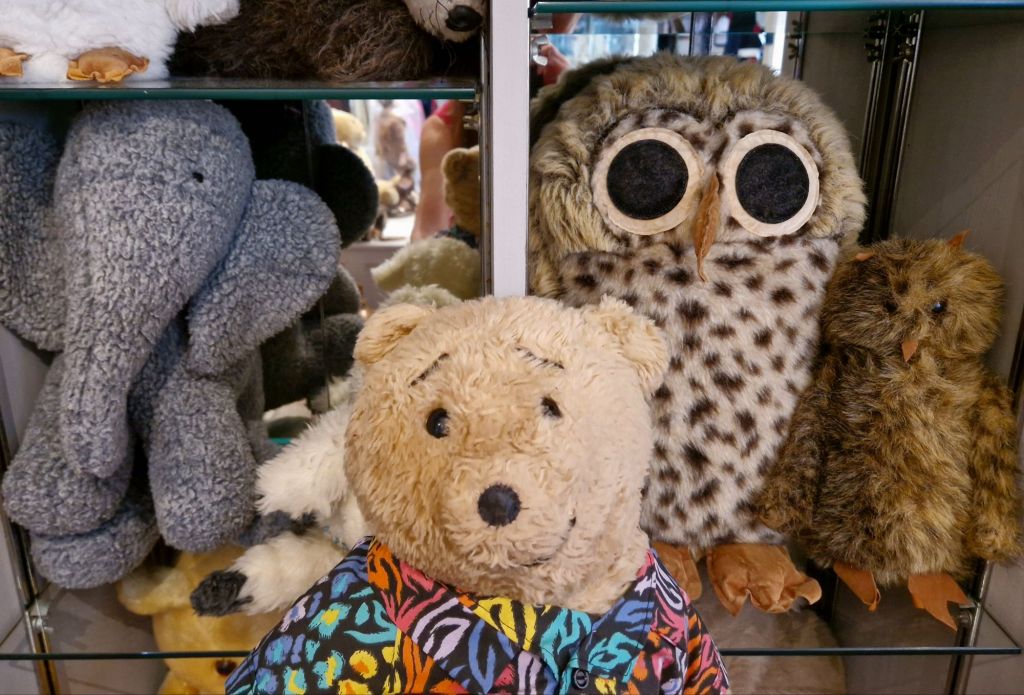
The owl behind me is just like the big one that lives in the corner of our dining room at home. There was even an elephant!
The Kangaroo had a little joey in her pouch and seemed friendly with another very fluffy owl.
The museum has some Alresford Crafts animals in a basket that they let children cuddle, which I thought was wonderful. The big rabbit was in the cuddle basket so I lifted her out for a cuddle.
I could have spent ages and ages saying hello to everyone; there are dolls too as Alresford Crafts also made collectable china dolls. We had to continue our journey as we had anothe 120 miles to travel to our holiday cottage
The humans bought me a special Alresford Museum fridge magnet as a souvenir.
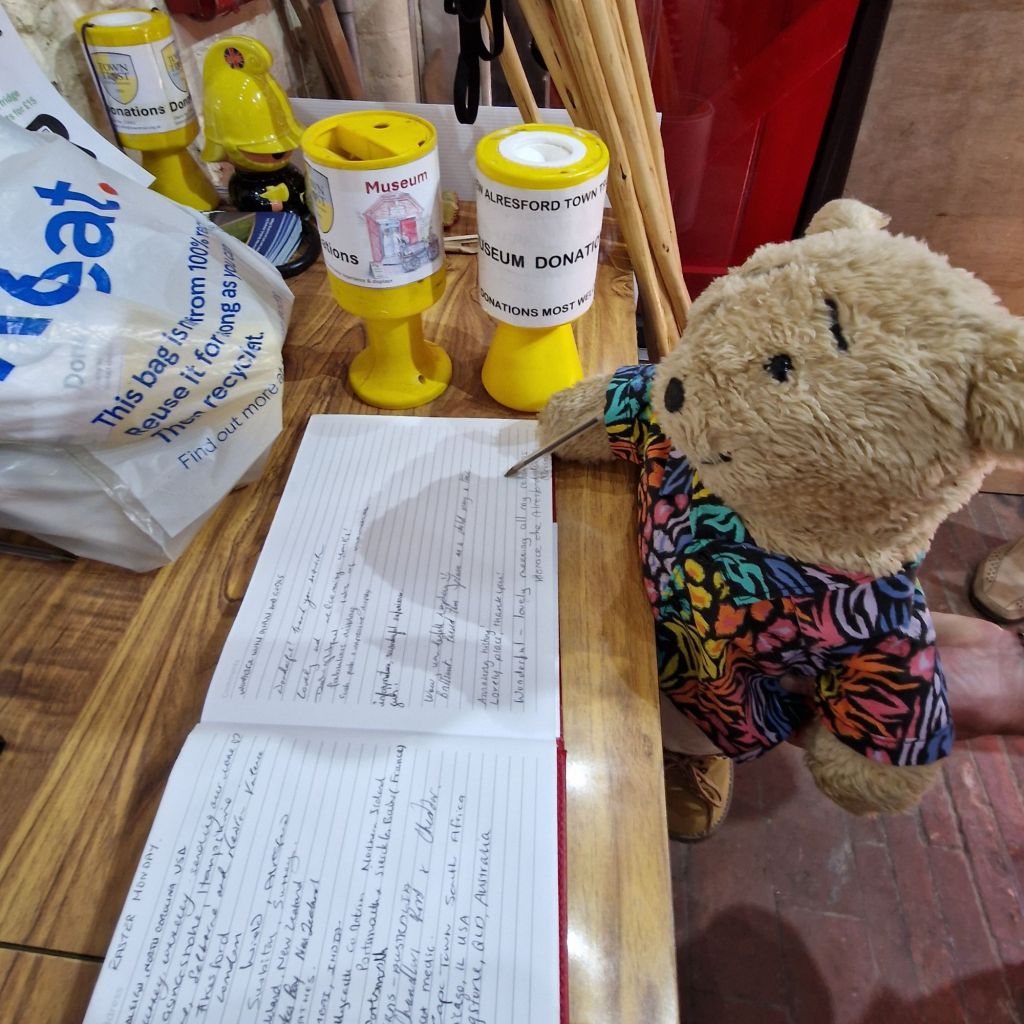
I signed the visitor’s book and we thanked the kind man who had opened up the museum just for me.
I walked back up the road feeling very happy.
We managed to fit in along the river to the 13th century Fulling Mill before continuing our journey east.
This was my 3rd visit to Alresford, everyone seemed pleased to see me and it made me feel very happy indeed.
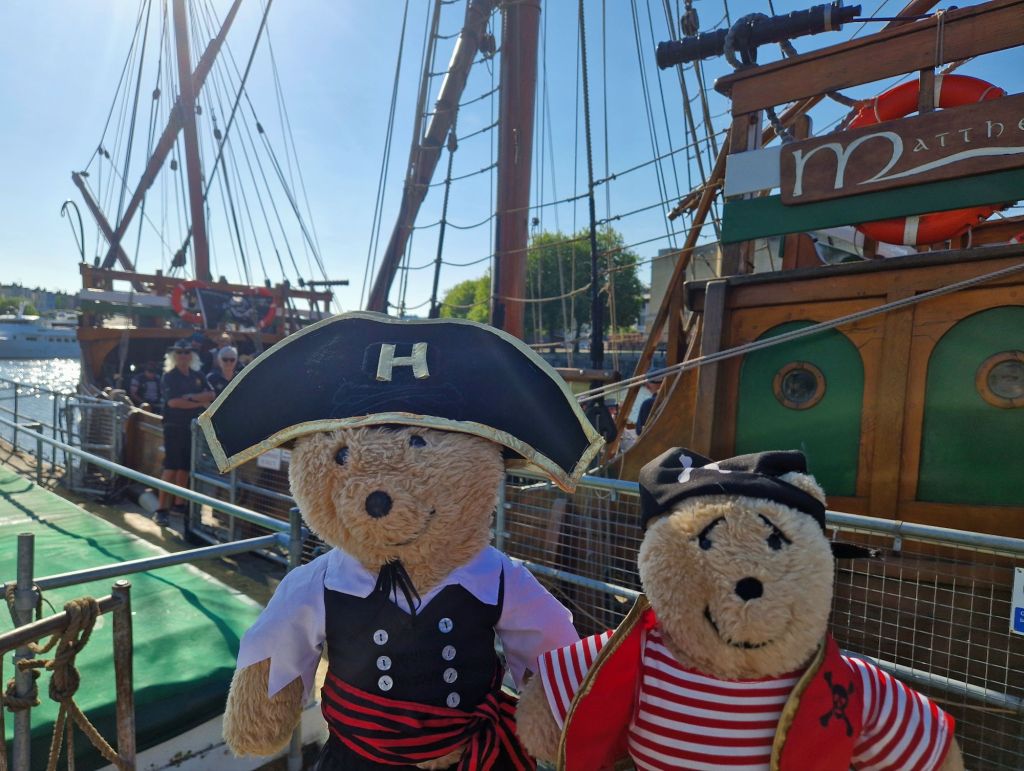
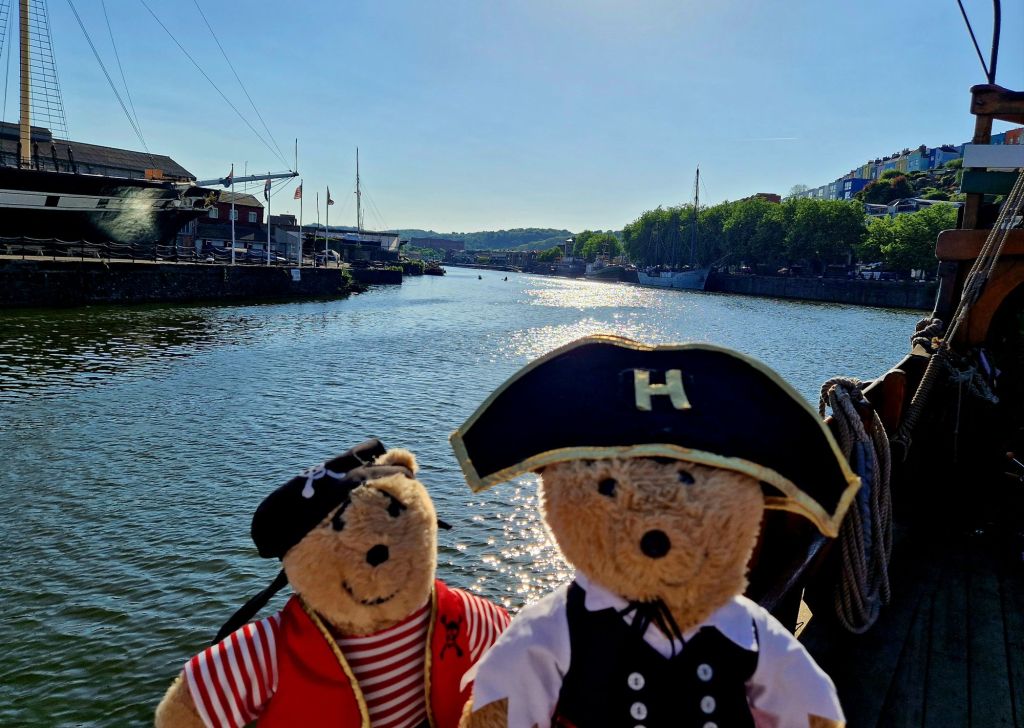
Our human sourced some wonderful outfits for us to wear on The Matthew for the cruise around Bristol Harbour with Piratitude.
When we boarded the band was busy doing a sound check.
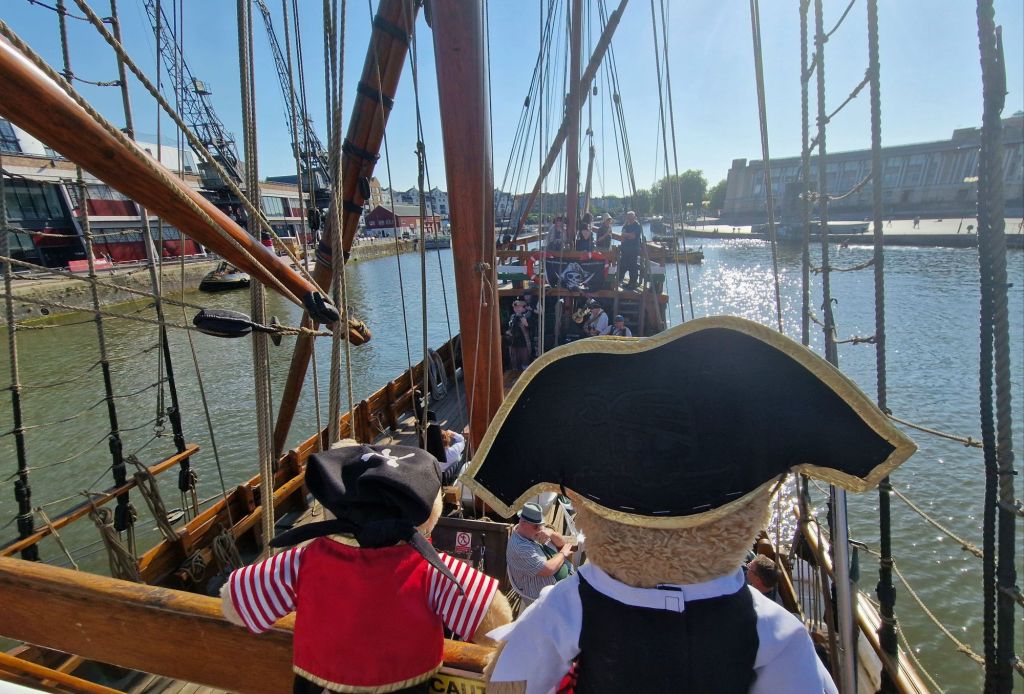
We had a look around the ship while my human took some photos. I have been on the Matthew before but it was Nye’s first time aboard.
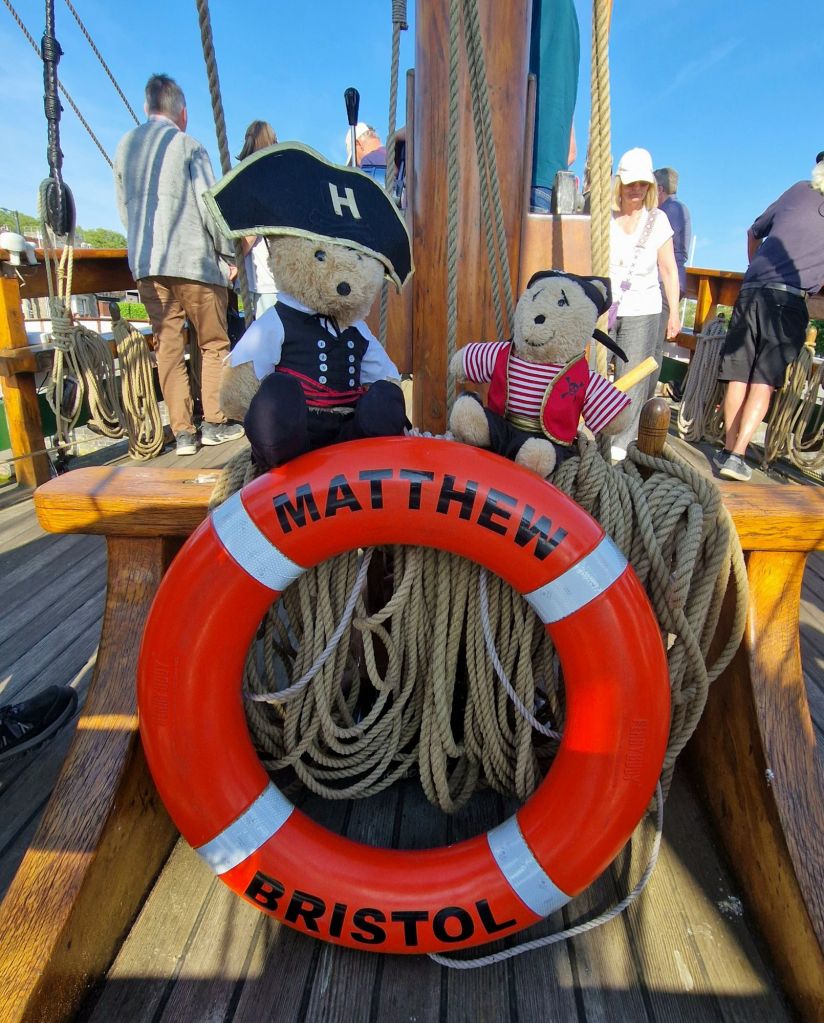
A crew member helped set us the photo of us with the lifebouy.
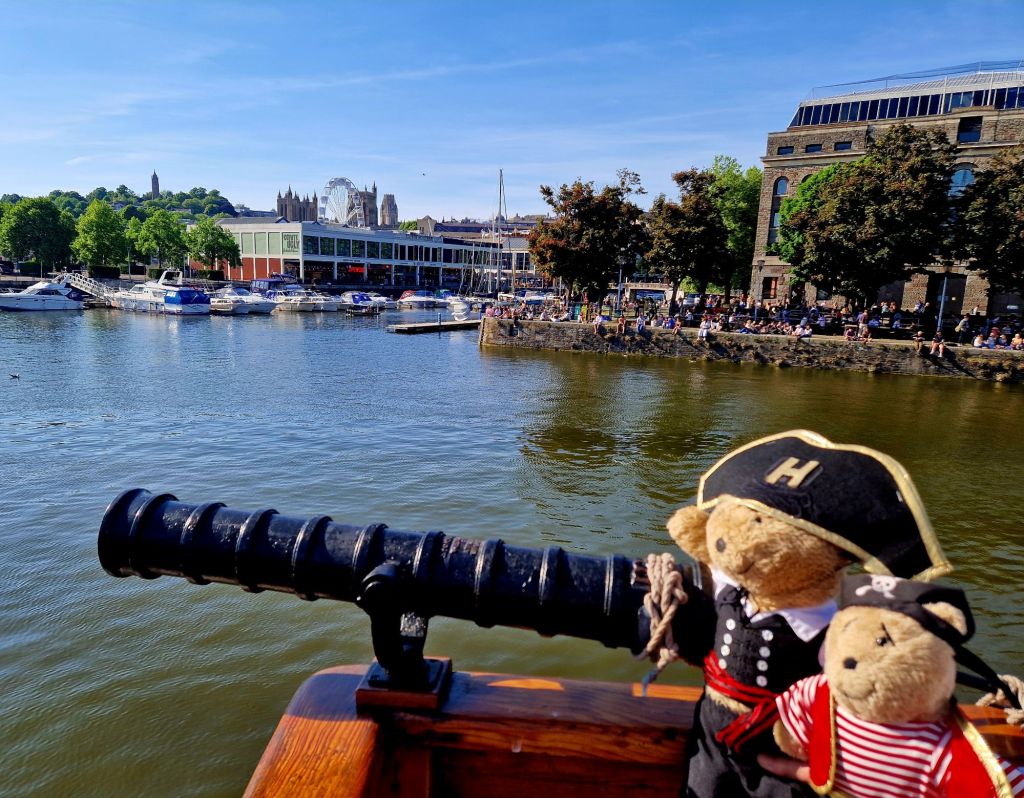
It was a wonderful sunny evening and we enjoyed listening to the band as we cruised around the harbour. The Matthew is a replica of the ship that John Cabot sailed to (and discovered) Newfoundland in 1497. The journey was made again on this vessel in 1997.
We had lots of fun as I pretended to be the Captain and Nye a shipmate.
We had to be very careful going up and down the wooden steps. The Matthew was using an engine to travel around the harbour, but when she travelled to Newfoundland she would have had sailed there using sails and the wind.
We passed by the SS Great Britain…
The band was great fun and I was jolly pleased that Nye also likes to join in with a big.
After about an hour the ship docked and fish and chips were delivered for all board.
We were happy to drink lemonade, we don’t need rum or alcohol to be merry!
My human took this great photo of us with the band members.
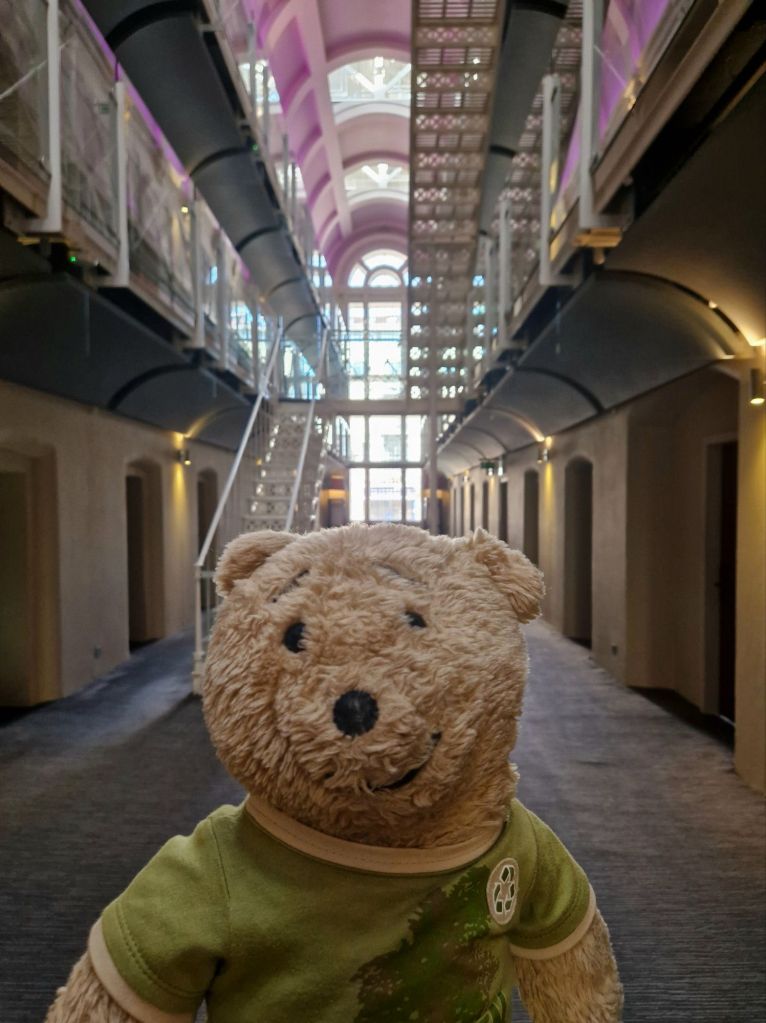
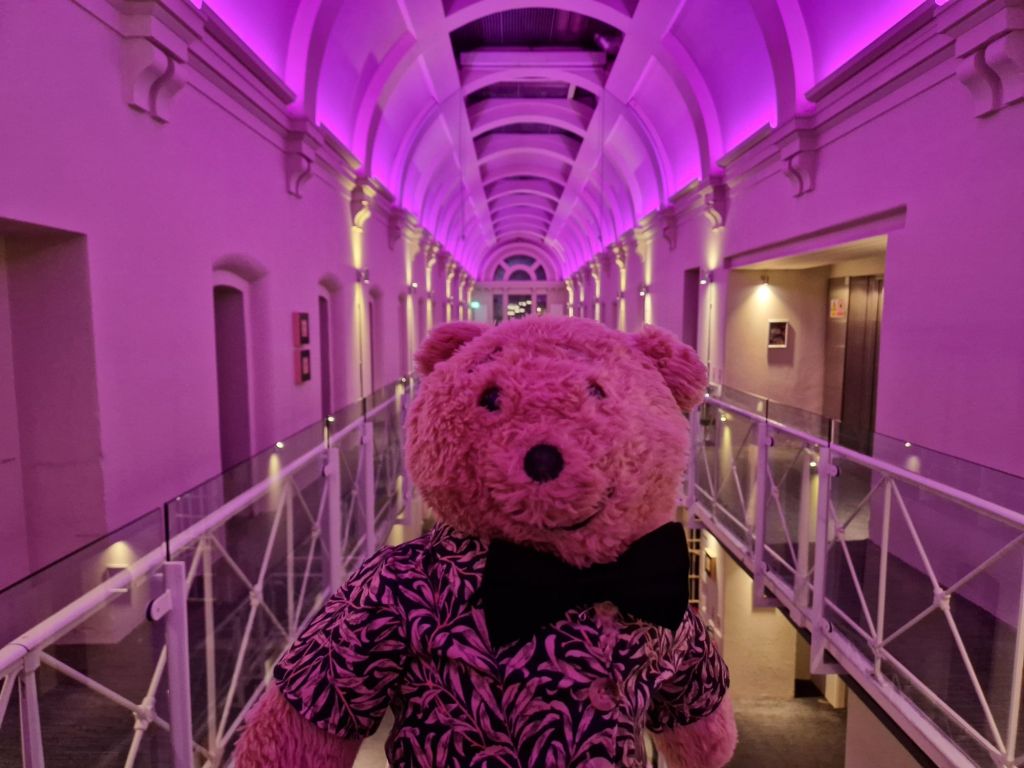
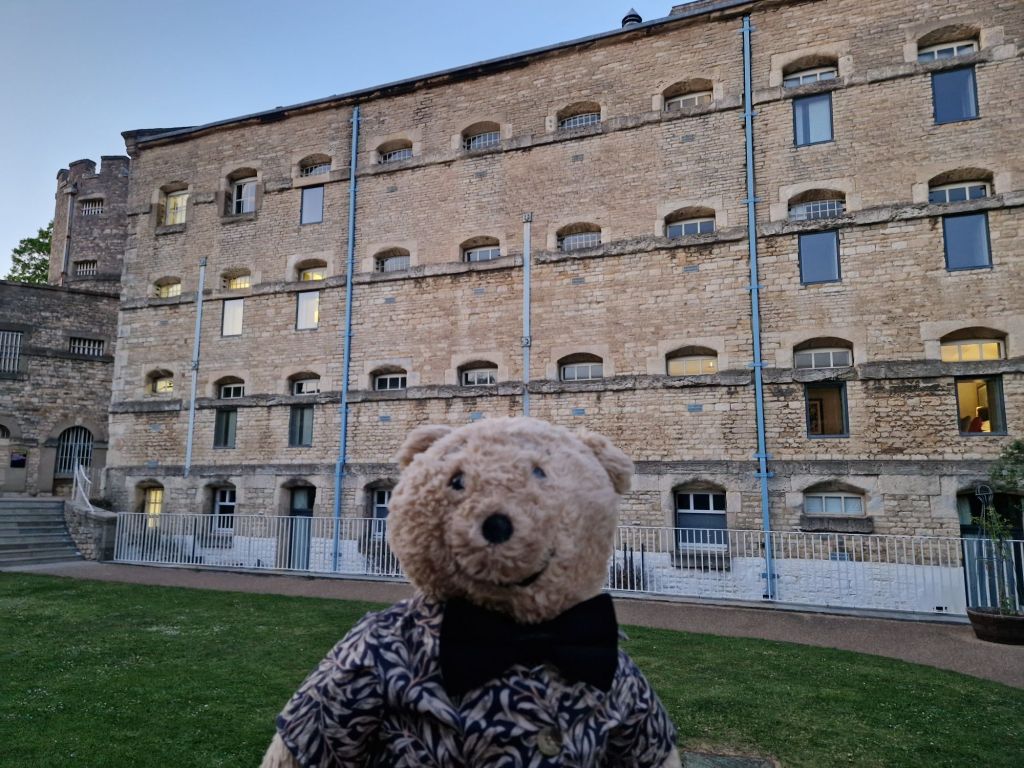
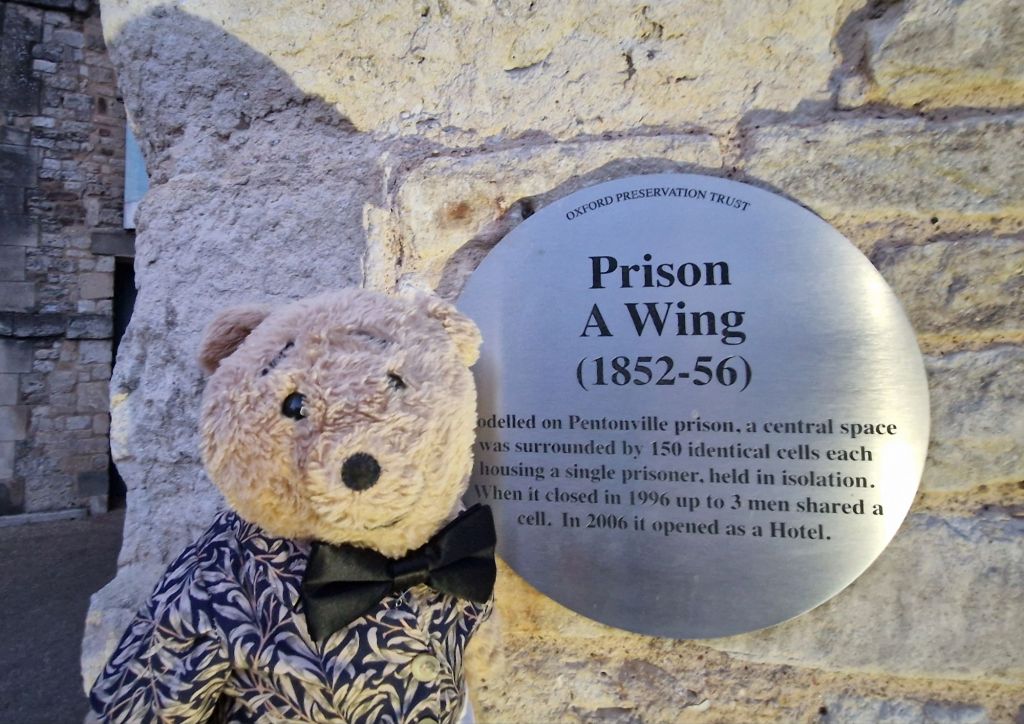
My human likes to stay in quirky holiday accommodation. We were only in Oxford for one night for the May Day celebrations, so she booked The Malmaison Hotel, which is a converted prison!
I have never been inside a real prison but it was very much like prisons I have seen in films.
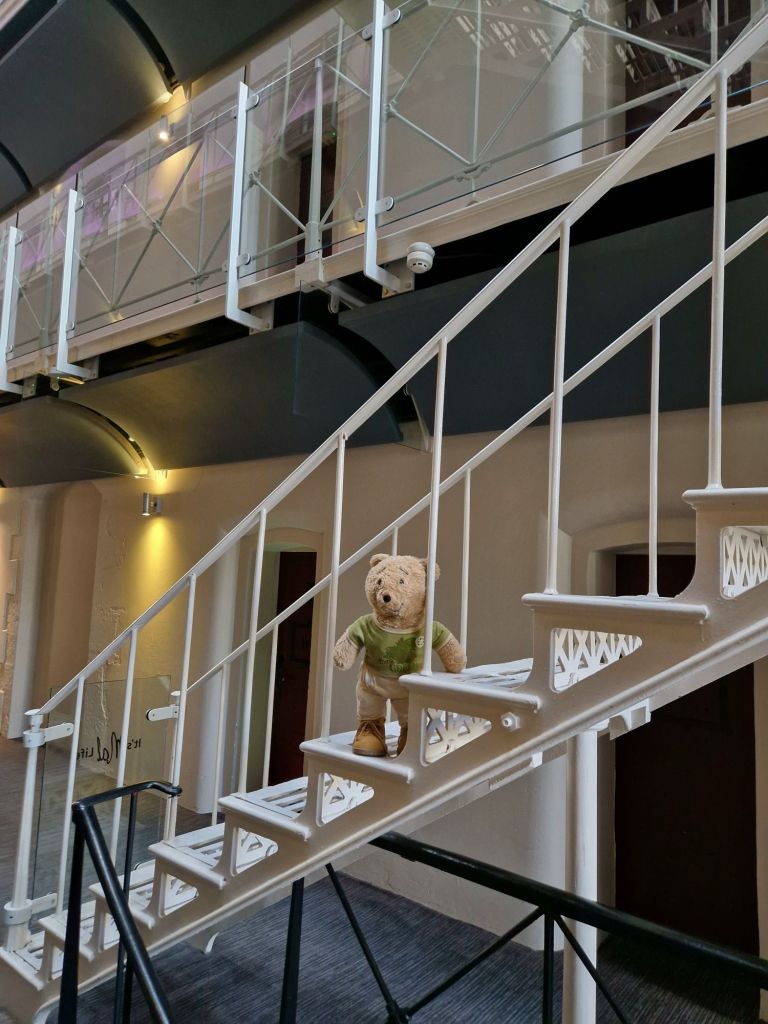
Humans aren’t allowed to use the stairs but I managed to climb a few for a photo.
There are various puns around the hotel, such as on the glass door at the bottom of the stairs ‘It’s Mal Life’.
Our room was on the top floor so we went up in the lift.
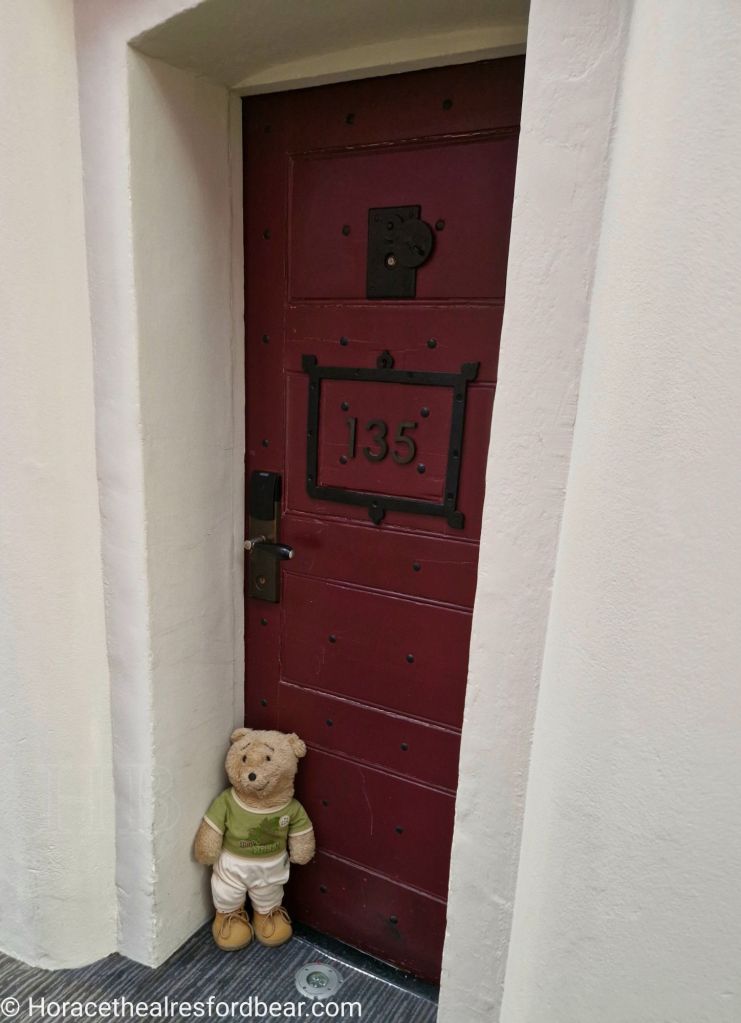
The cells still have prison doors on them.
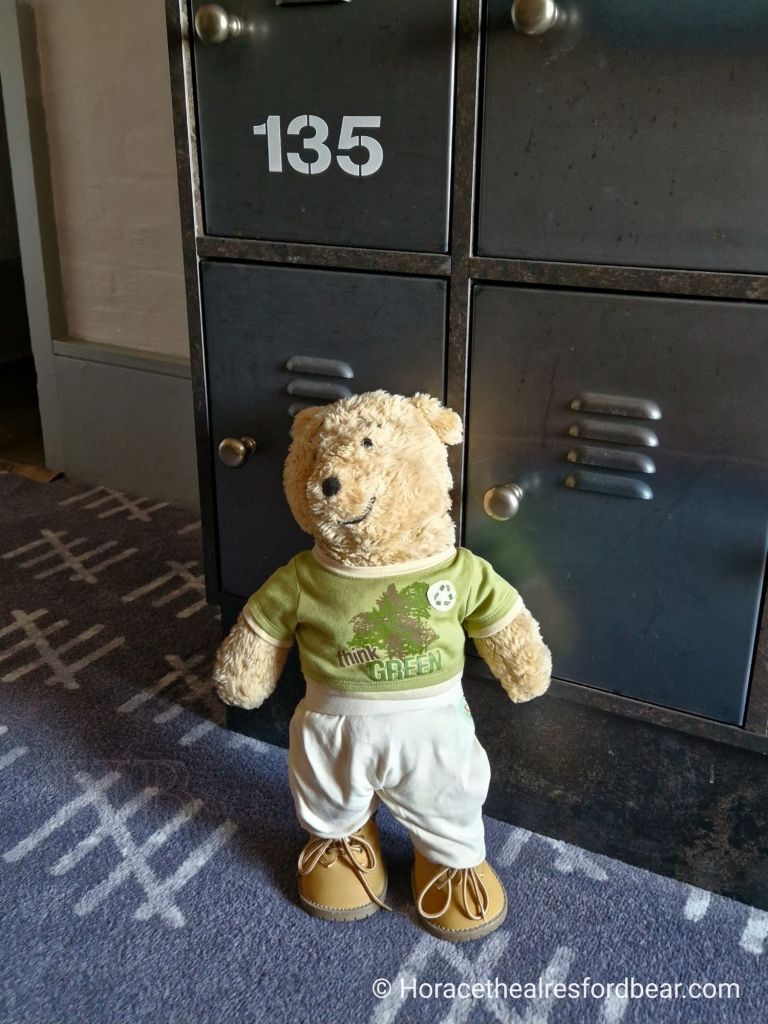
I put my few belongings in the locker.
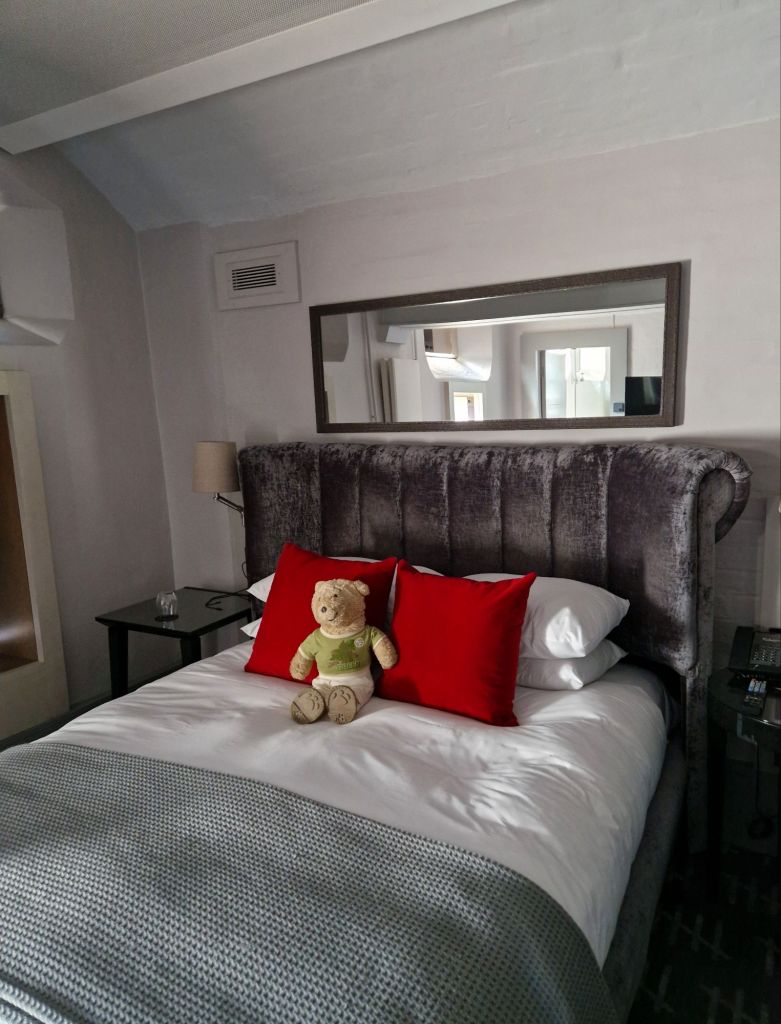
Then as always, I tried out the bed, which was very comfy.
There was a special machine for making small bear sized cups of coffee so I made myself a cup and ate one the chocolates.
It wasn’t long before if was time for dinner.
Off I went to the Brasserie.
I went outside on the way; our room was one on the top floor in the middle (behind me).
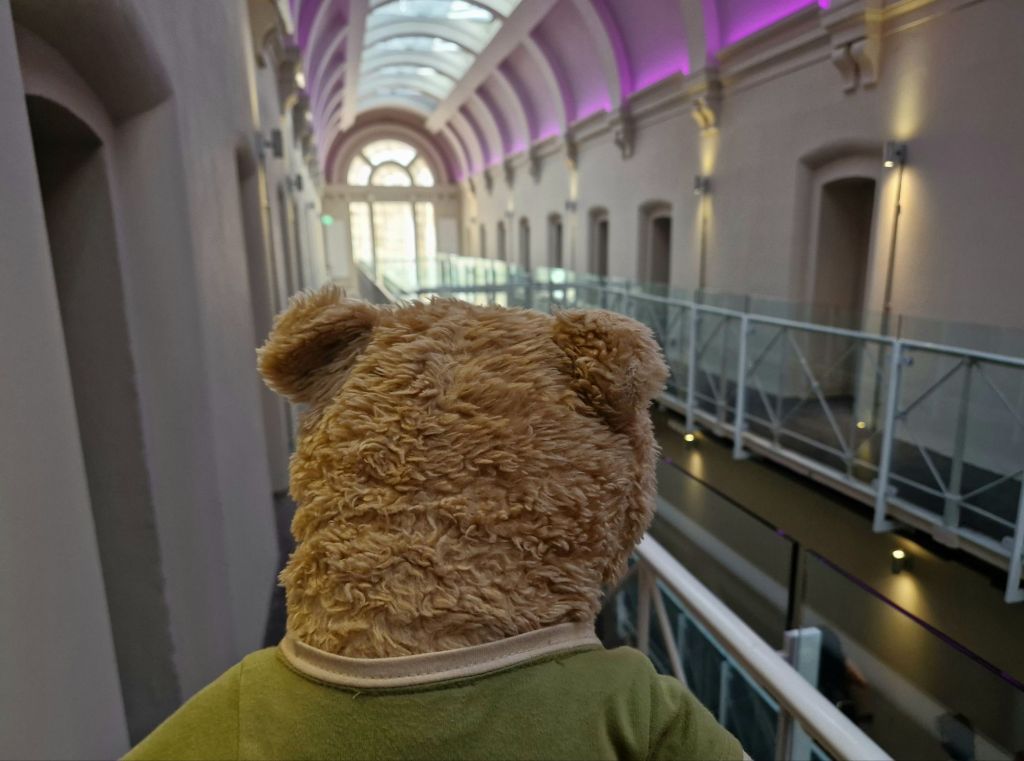
We were staying in A wing which was used as a prison until 1996. The prisoners had much smaller cells. Our room and bathroom was 3 cells knocked together.
Here I am looking at the sign about dinner when we first checked in.
Dinner was delicious, I had seasonal vegetable risotto.
For dessert I had crème brûlée, a very generous portion which was very yummy so I ate it all.
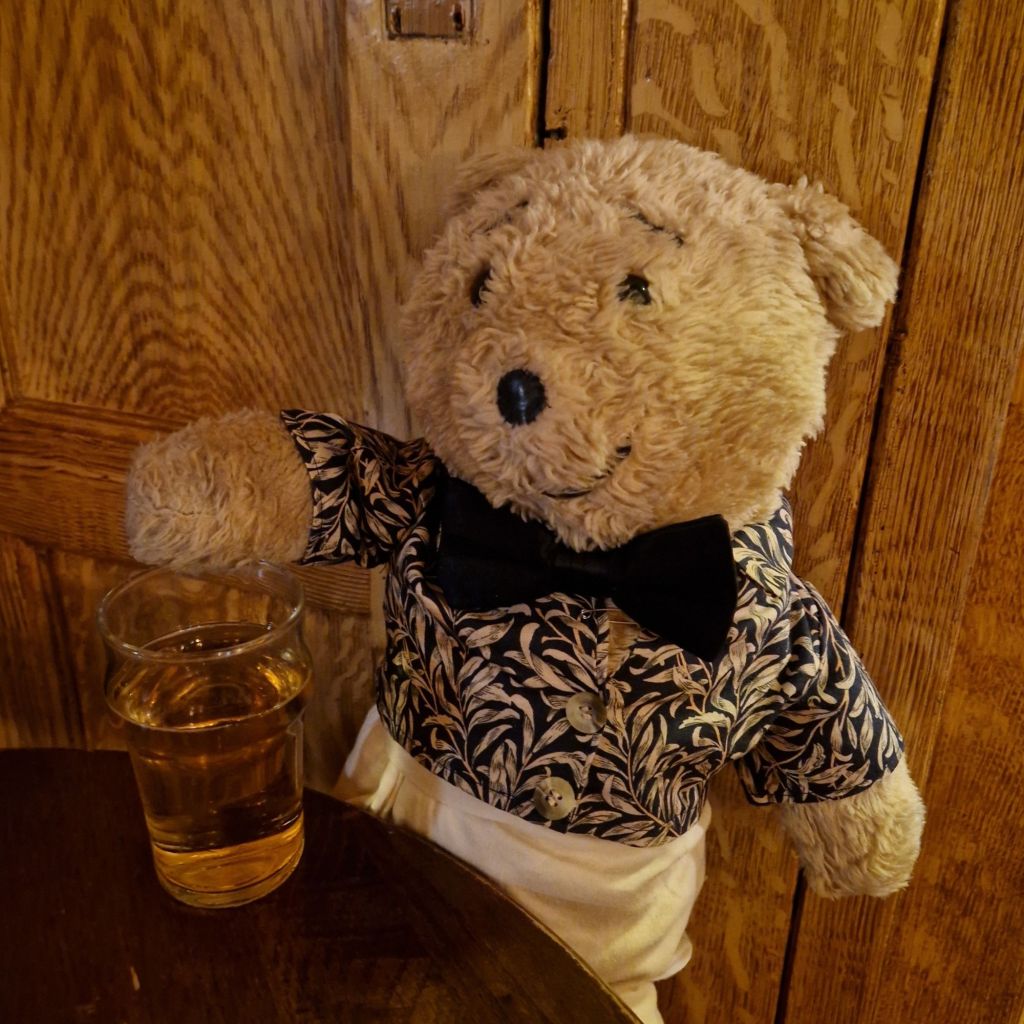
After dinner we went into Oxford to an historic pub (The Lamb & Flag) for a drink.
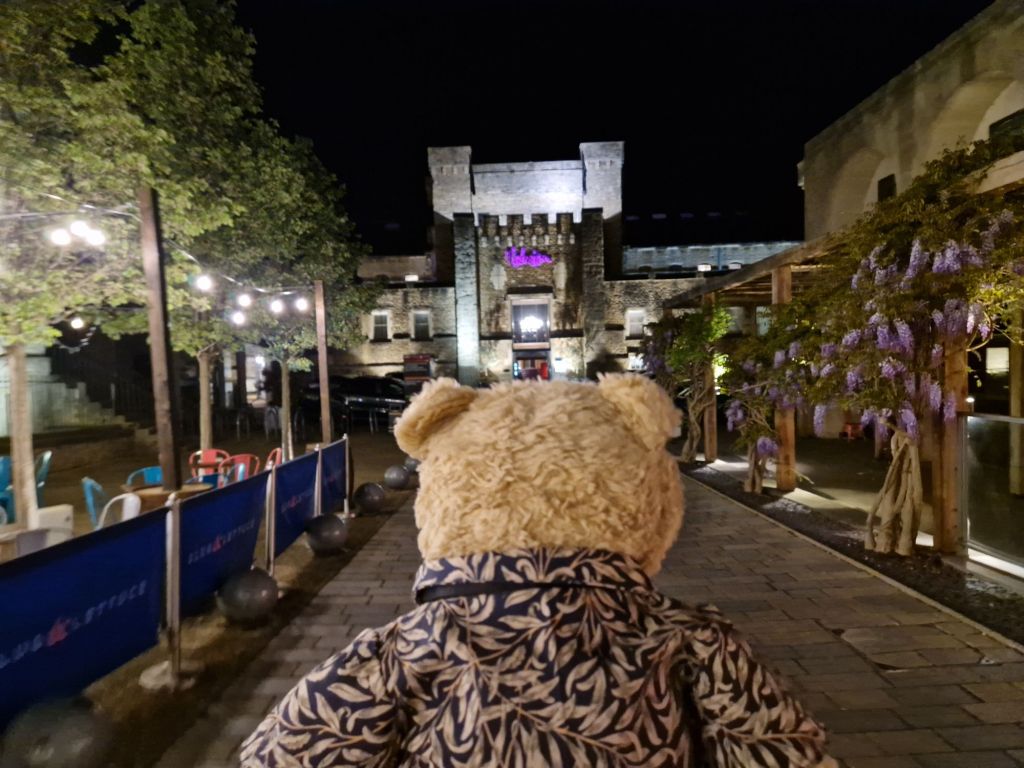
The hotel looked very grand all lit up when we walked back to it.
I had a fairly early night as the next day we were getting up at 5am to join the May Day celebrations. I didn’t have breakfast at the hotel as it was way too early!
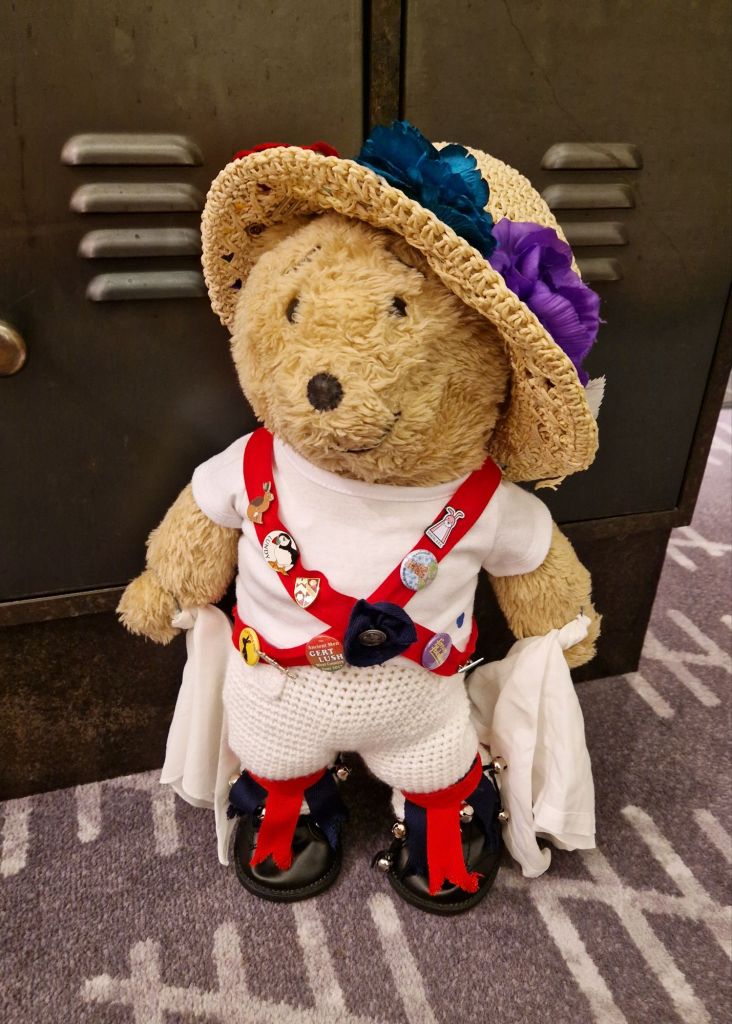
The following morning I put on my Oxford Morris outfit and set off to Magdalen Bridge to hear the choir sing then dance.














































































 Horace the Alresford Bear