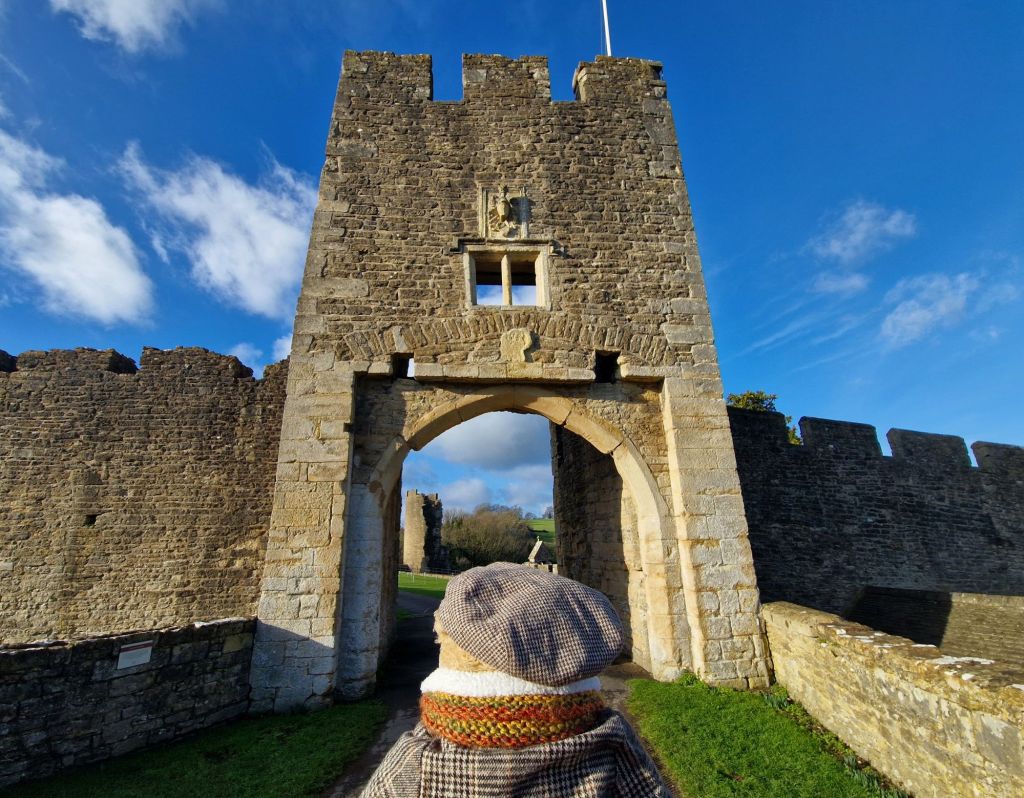
It was a cold January day when I walked into the ruins of Farleigh Hungerford Castle in Somerset. The castle was built by Thomas Hungerford at the end of the 14th Century, and almost doubled in size by the end of the 15th Century after his son, Walter, added the outer walls which brought the village church into the castle grounds.
The original castle had a tower in each corner as shown in the illustration below.
When Walter Hungerford increased the boundary and took the church into the castle grounds the village church was converted into the family chapel and mausoleum.
The church was very cold with several ornate chest tombs where important deceased Hungerford family members were entombed.
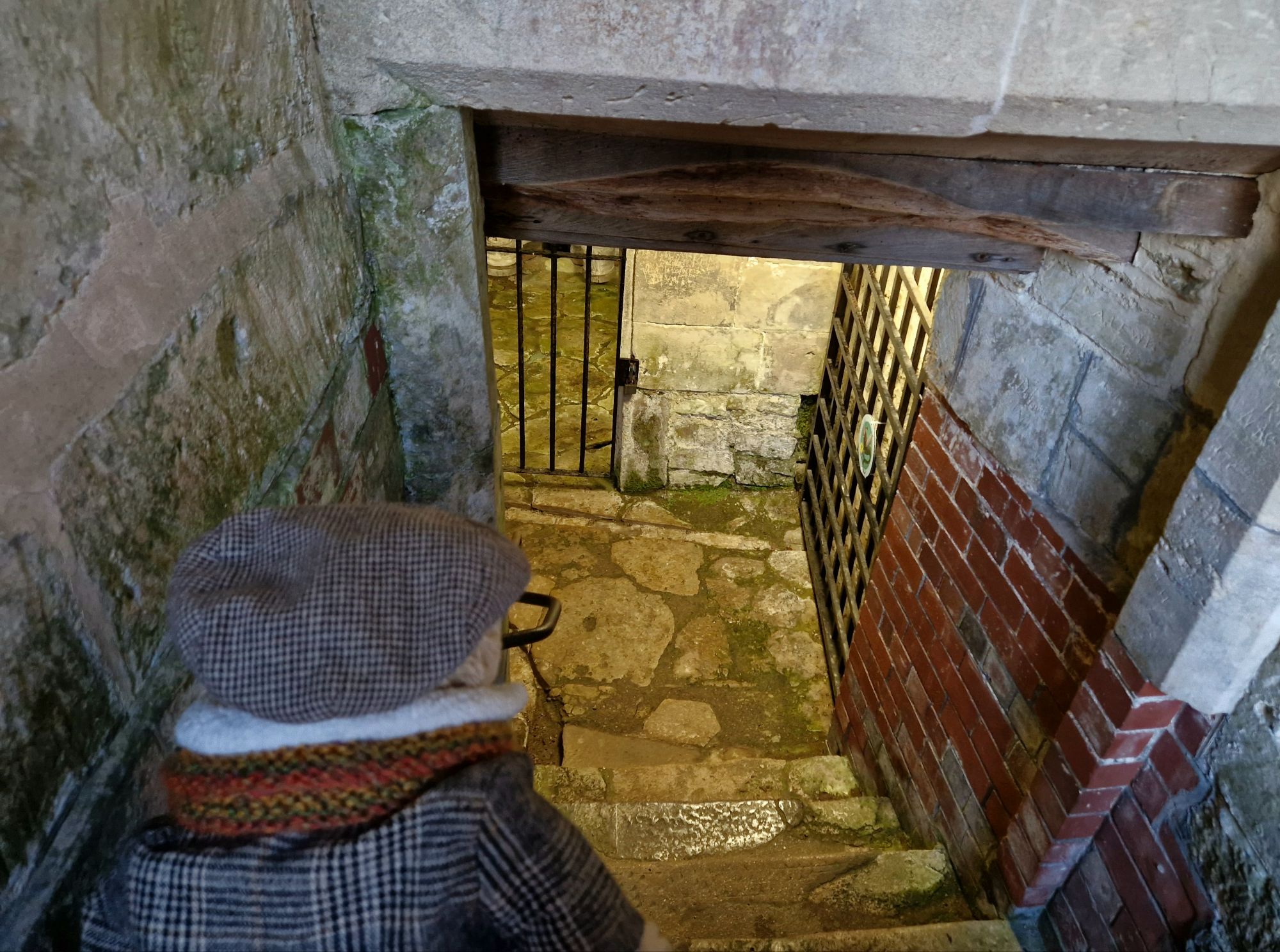
After leaving the church I found some steps leading to the crypt underneath which was created after 1600 to hold coffins of Hungerford family members.
The lead coffins were body shaped, and some had faces on. I thought they were a bit creepy.
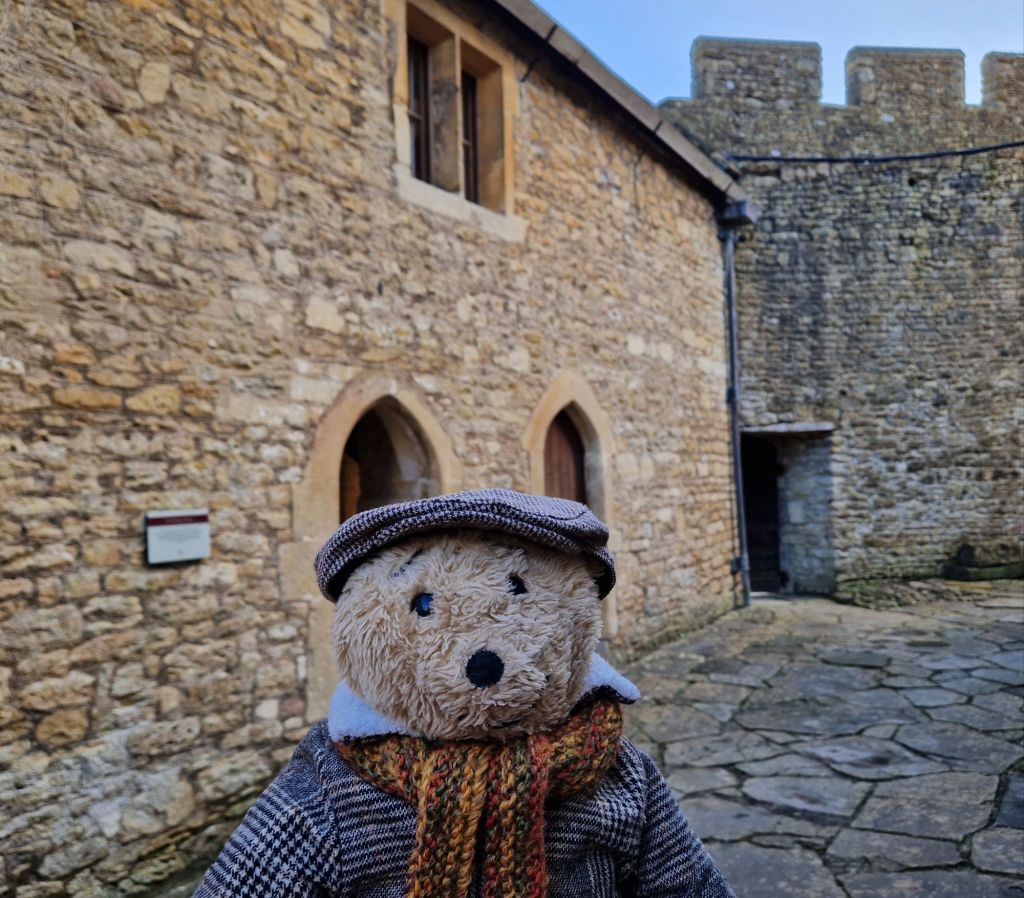
The Priest’s house below, was built in 1430 to house priests but was used as a farmhouse from the 1600’s until 1959.
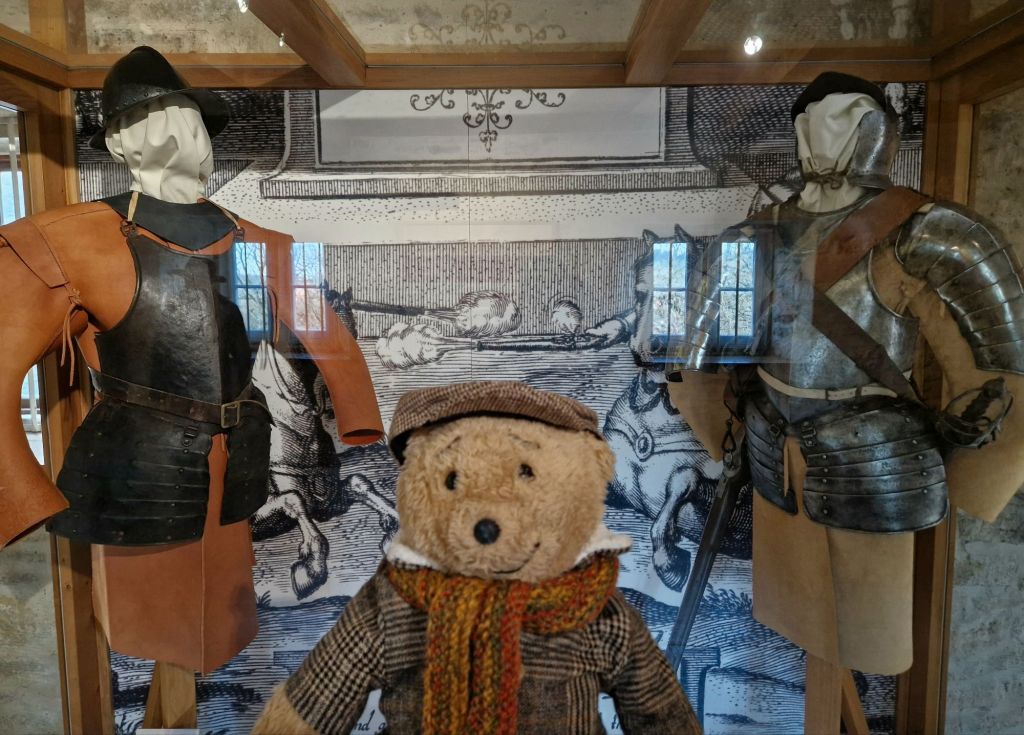
Reflections of windows on the glass has made the photo below a bit odd, they shouldn’t be there!
The figure on the left is wearing ‘part armour’ over a thick buffalo hide jacket, which pikemen would have worn in preparation for battle. They had to wear the armour to the battle site and it was very heavy so preferred to rely on the leather to protect them rather than full armour.The figure on the right is wearing the armour of a mounted trooper from about 1620. It all looks very uncomfortable.
I went back outside to have a good look at the ruins.
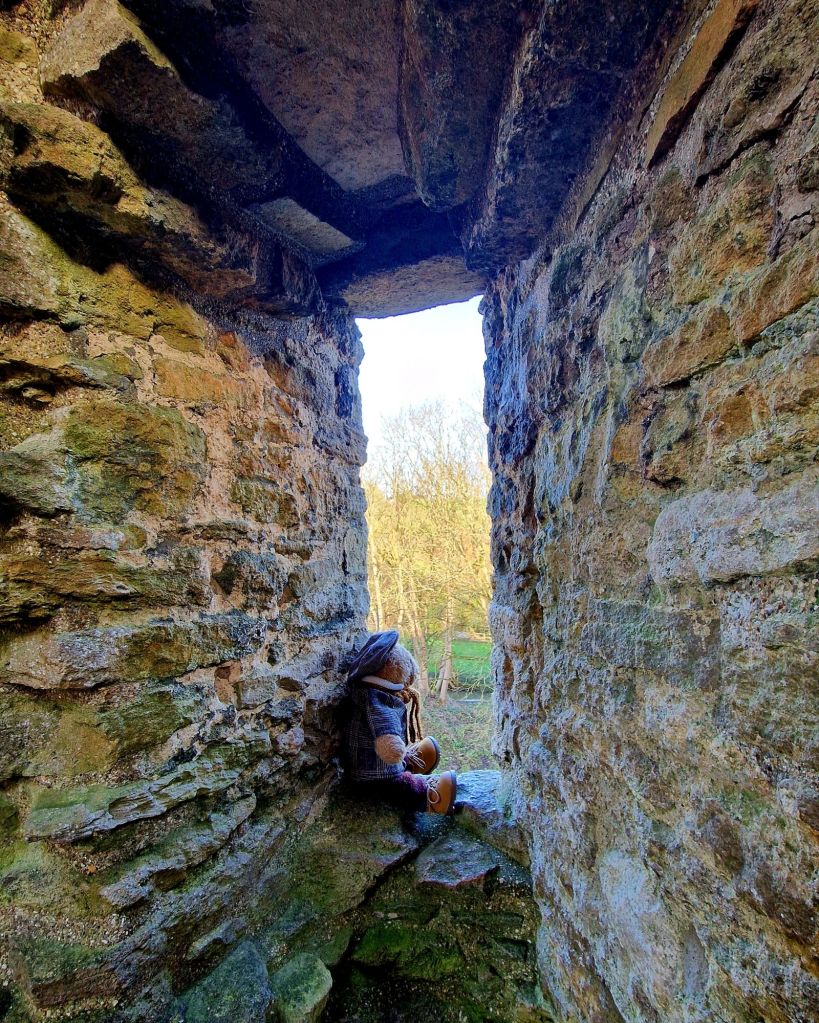
The River Frome can be seen from the castle windows.
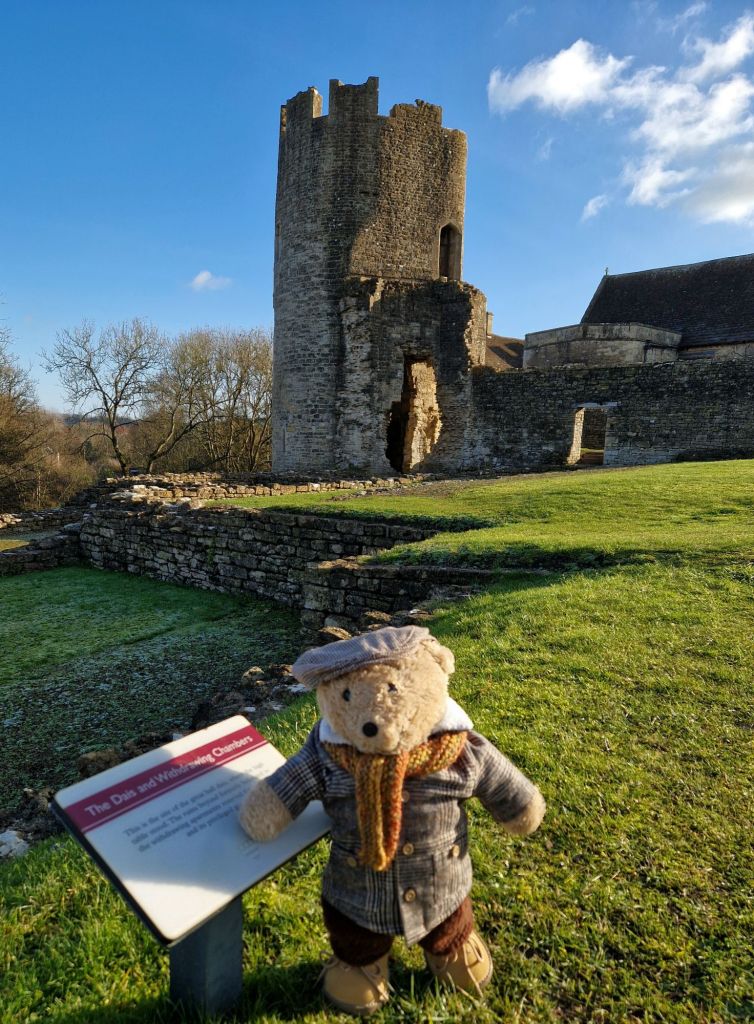
The castle had chambers that were for ‘withdrawing’, the name which went on to be shortened to ‘drawing room’ in stately homes.
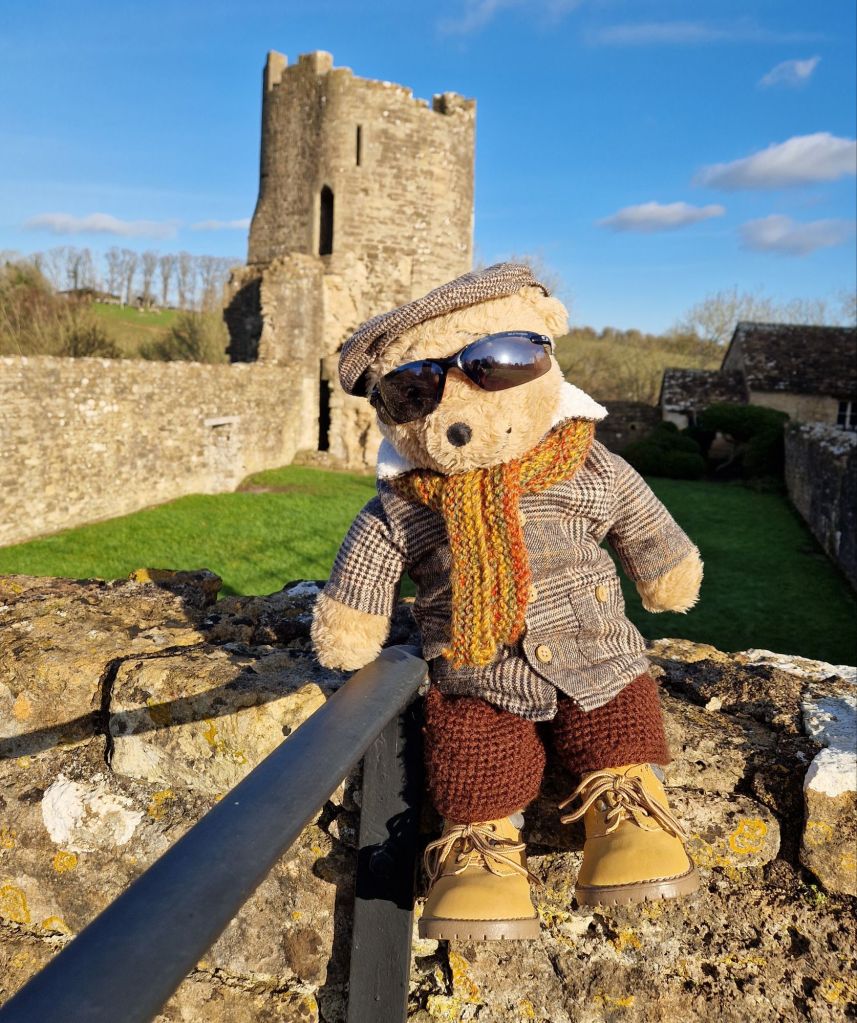
Although it was very cold I needed my sunglasses as the low winter sun was very bright.
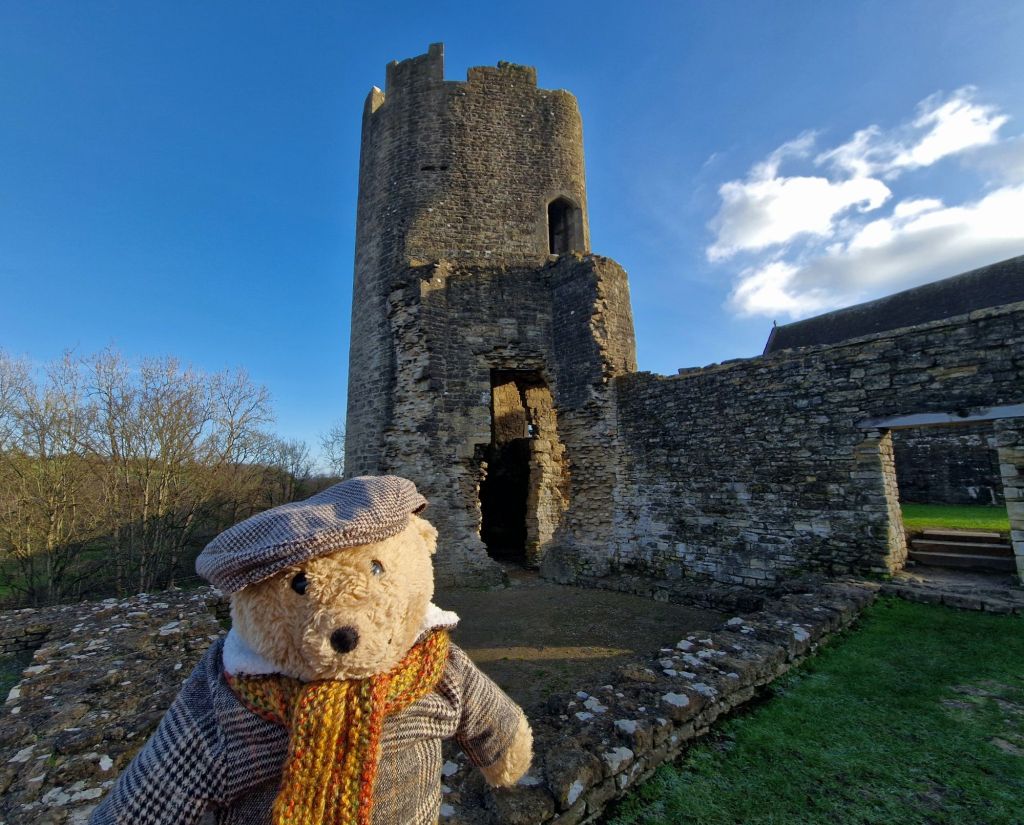
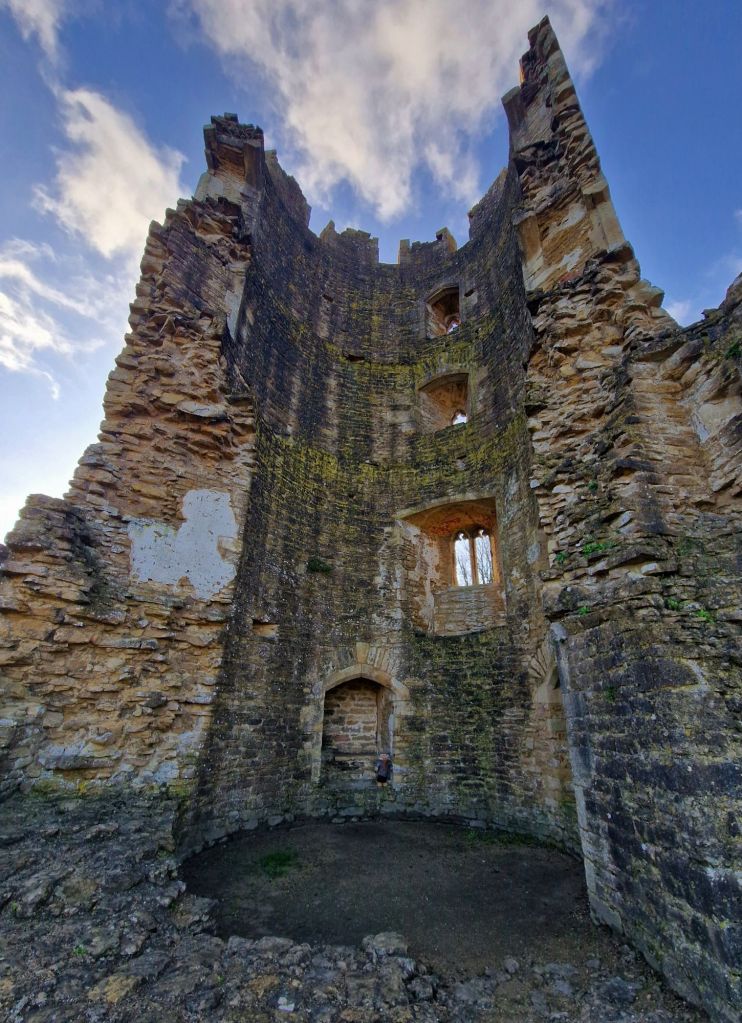
I read all about The Lady Tower before having a good look at it.
It was thought that the 3rd wife of Lord Walter Hungerford was locked in this tower for several years and fed through a window at night by villagers, and she wrote to Thomas Cromwell to complain about it.
There wasn’t much left of the garderobe (toilet).
It was a very interesting visit and my humans wondered why they had not visited before as it is only 20 miles from our home.
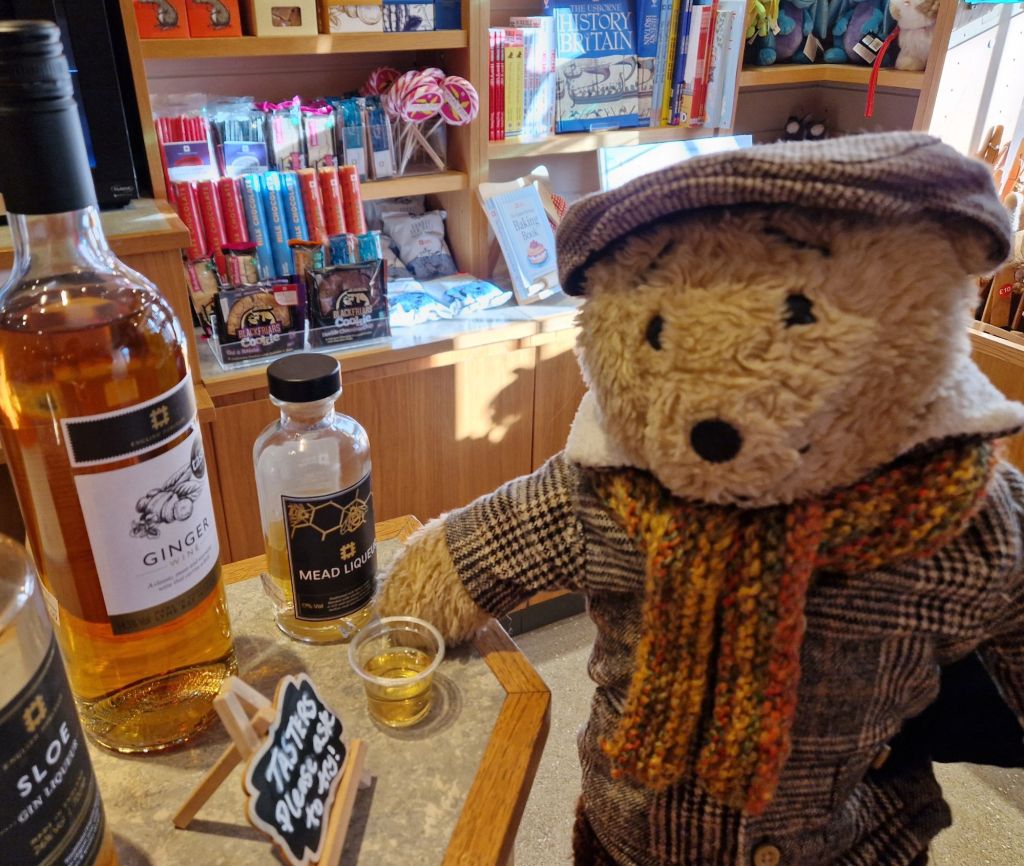
600 years ago the castle inhabitants would have made and drunk mead, so before leaving I sampled some in the shop. It was very sweet and warming.
Farleigh Hungerford Castle belongs to English Heritage and is open on Saturdays and Sundays. There is an entrance fee, but as we are members of CADW (Welsh Heritage) we visited for free. Well worth a visit if you are in the area.
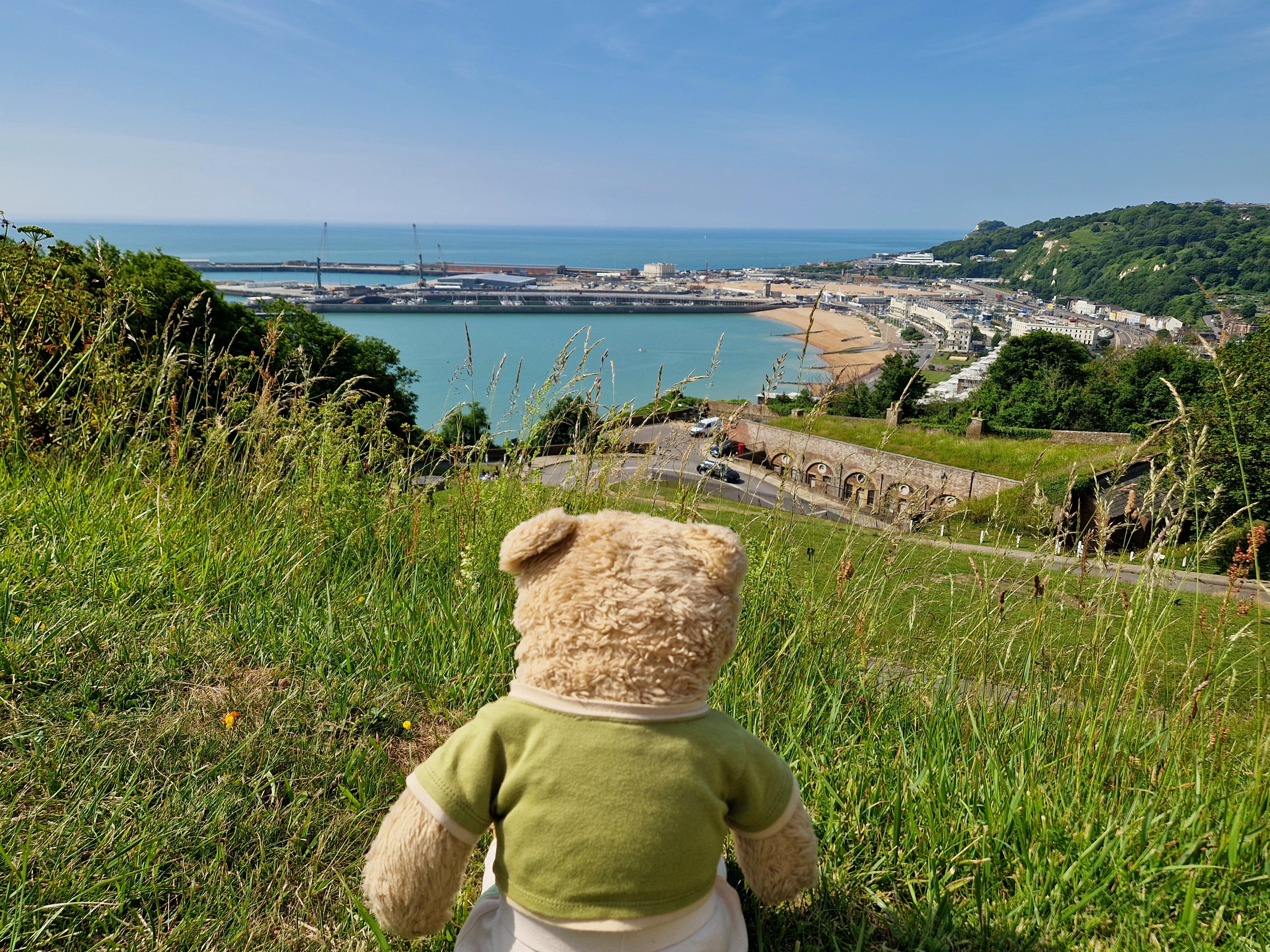
The first thing I did on arriving at Dover Castle was to sit and have a look at the view of Dover. Dover Castle is quite big and there is lots to see, so shortly after I set off to explore.
The history of Dover Castle goes back to iron age times, it is thought that some of the huge banks and ditches were created over 2000 years ago. I started my tour at a more recent building; The Fire Command Post and Signal Station, which dates back to 1904, the concrete platform above it was added in 1941 during the 2nd world war to protect it from aerial attack.
Inside the Fire Command Post and Signal Station I was able to look out to see through binoculars It was from here that the 2nd World War Dunkirk evacuation was co-ordinated.
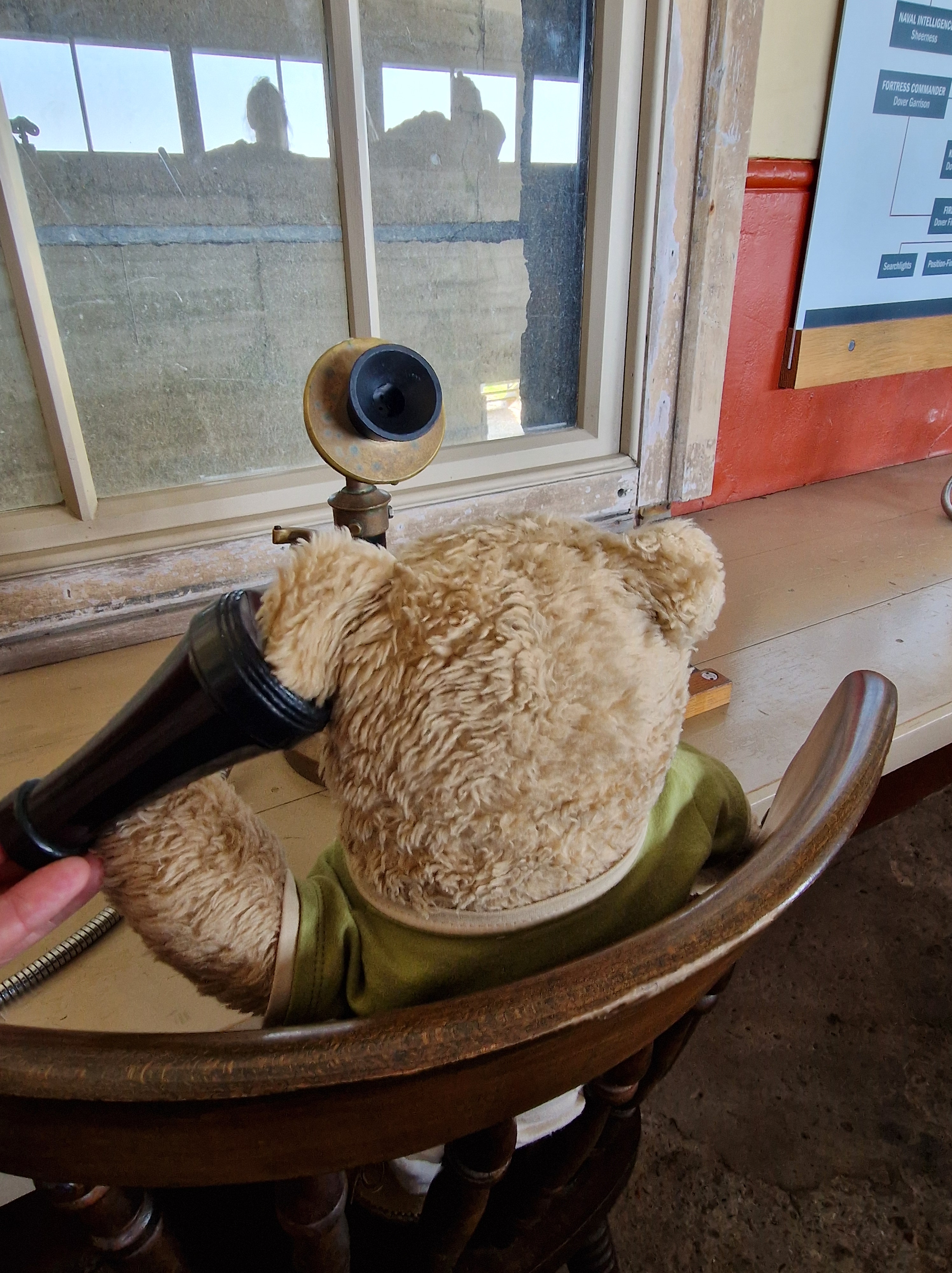
I listened to the recorded messaged on the telephone for a while.
Morse code was used to send messages, which consisted of sequences of ‘dots’ and ‘dashs’ to represent letters of the alphabet that were sent using radio waves.
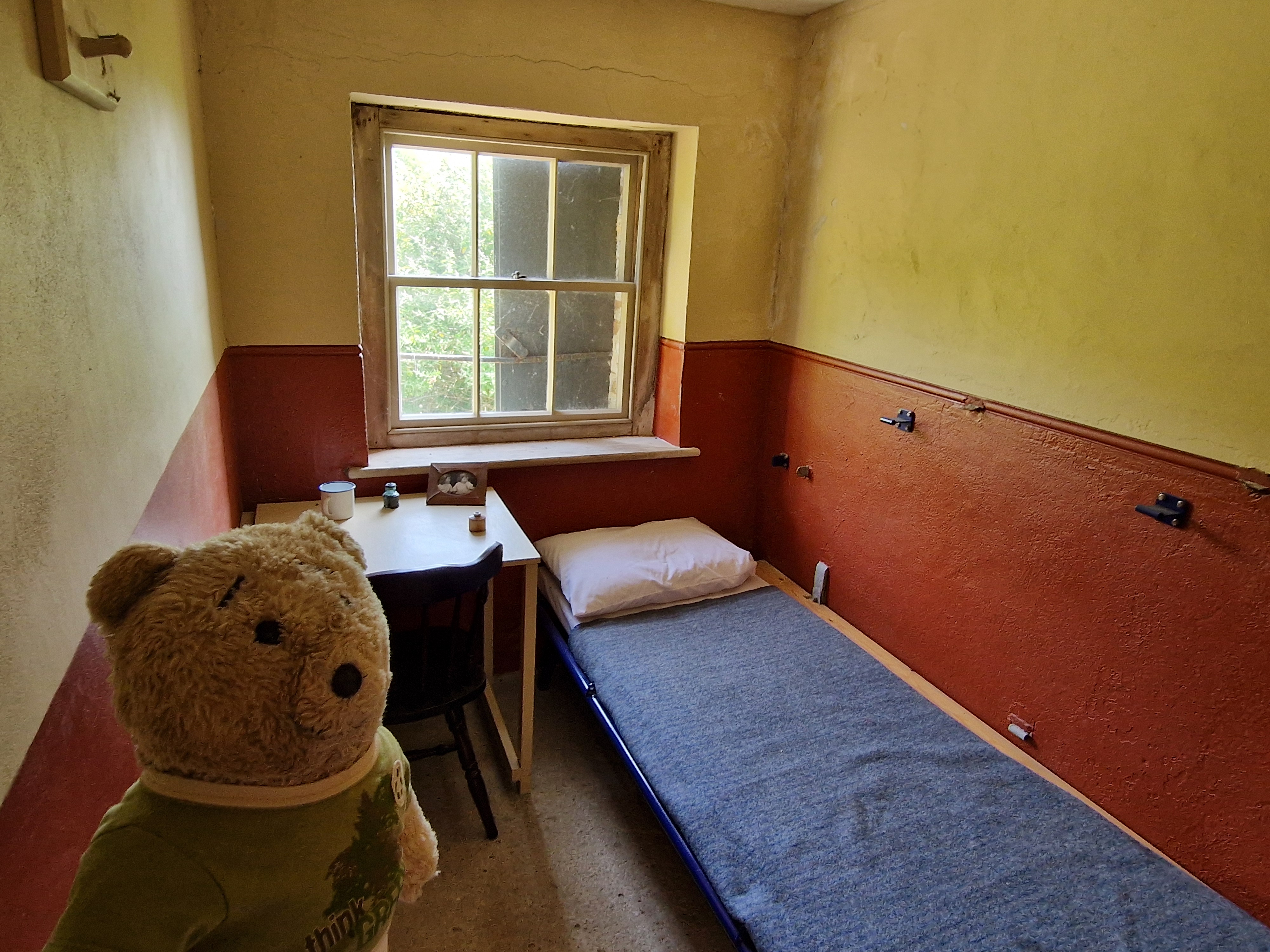
This was the telegraph operator’s bedroom.
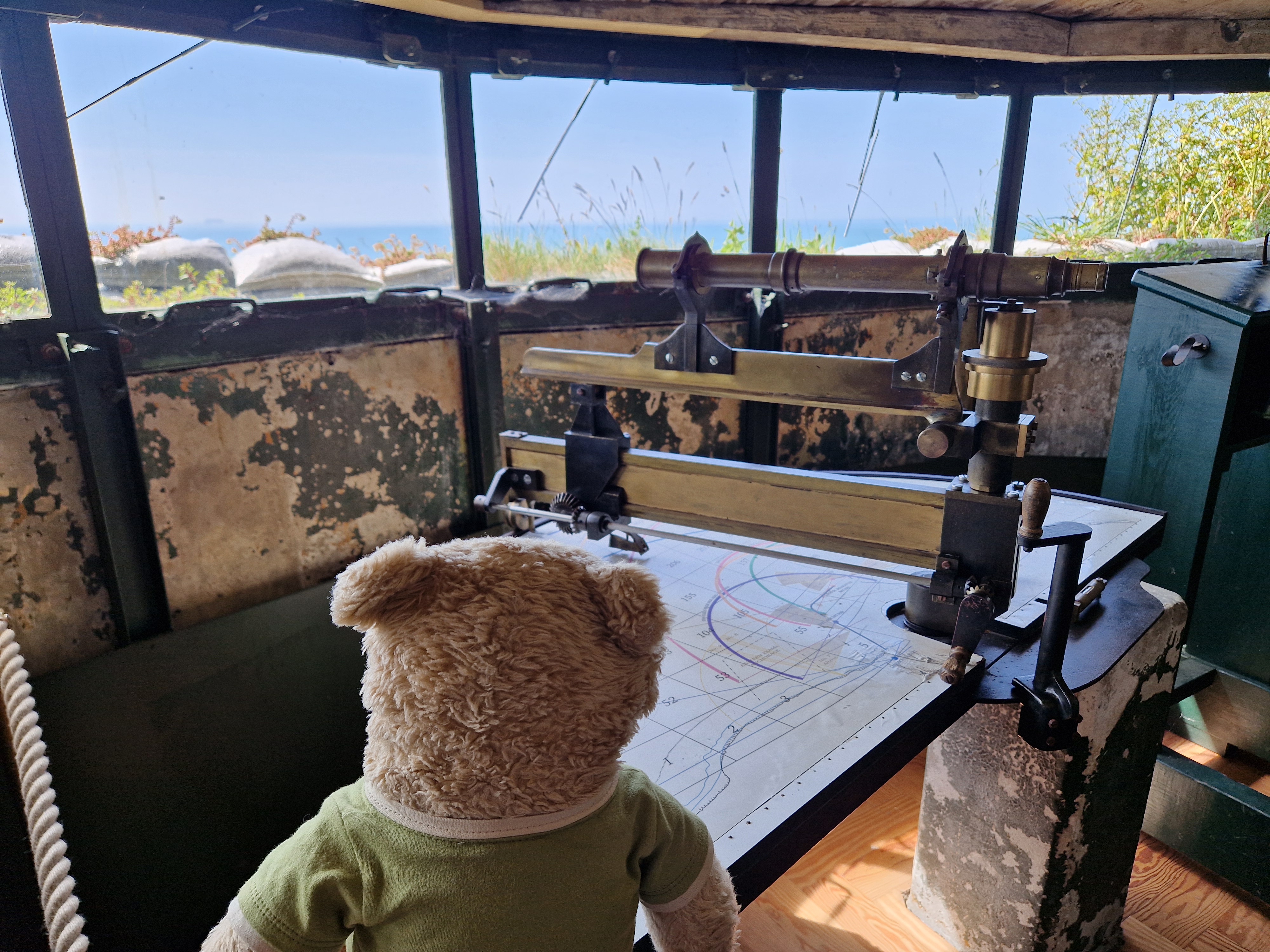
I looked at the range finding equipment used for commanding the gun batteries facing the English Channel.
The bowl of porridge that was stuck to the table had gone rather hard!
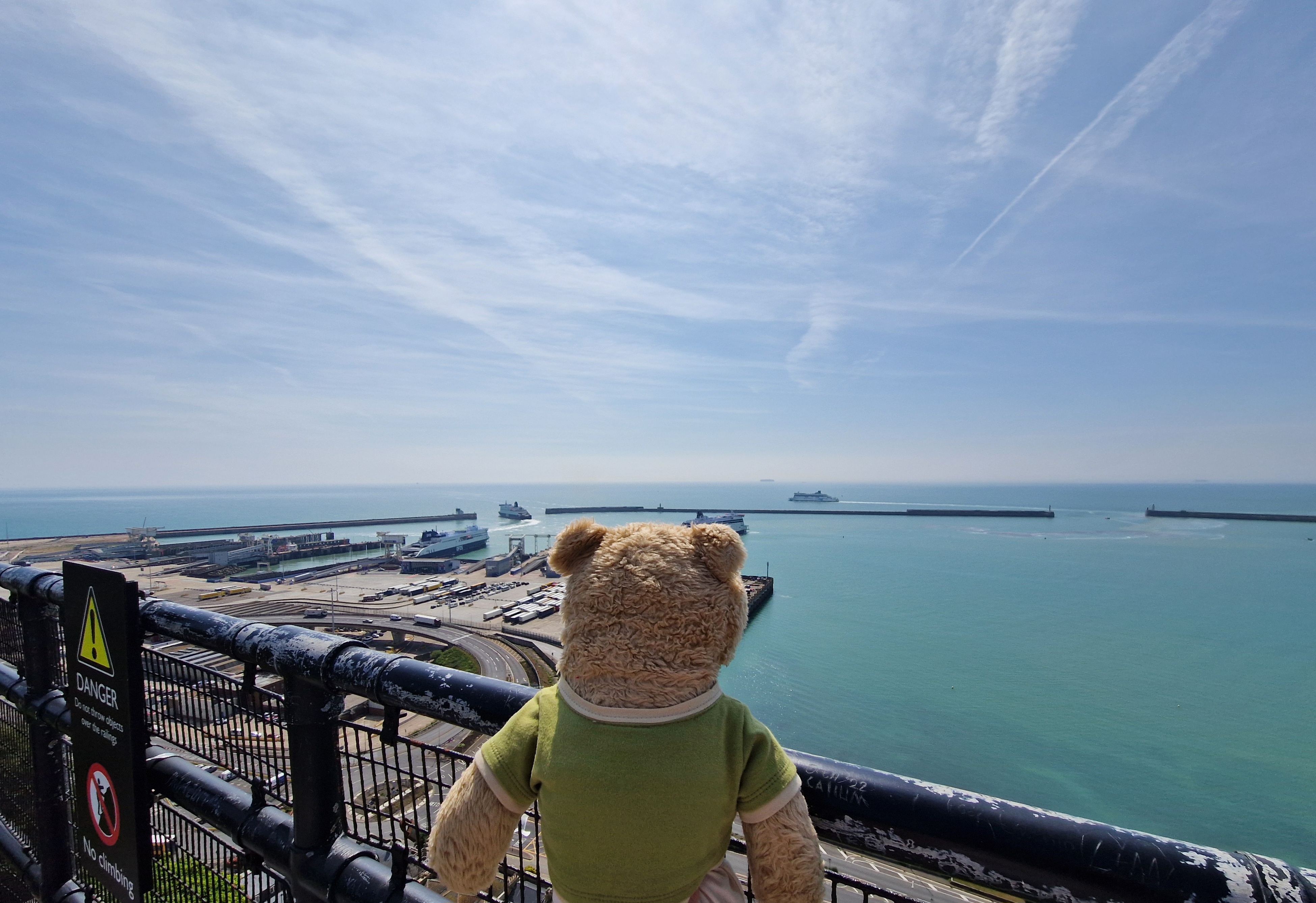
There was an excellent view of the Port of Dover from the platform above the command centre.
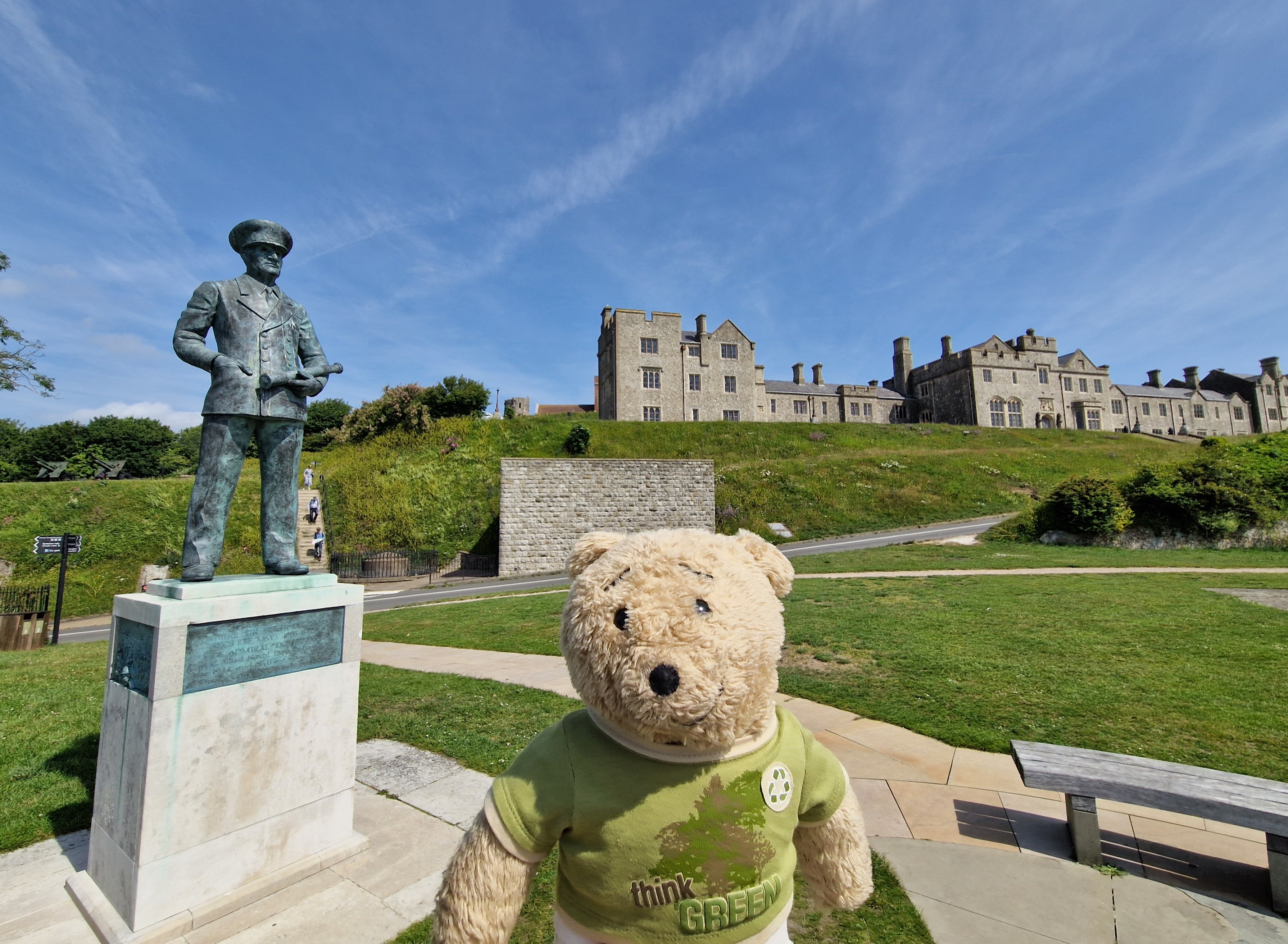
Here I am stood in front of a statue of Admiral Ramsey, who organised the evacuation of Dunkirk in 1940 when thousands of British soldiers became stranded on the beach at the start of the 2nd World War. The buildings behind me were 18th Century Officer’s Barracks (not open to public).
Next we had a tour of the some of the tunnels that are underneath the cliffs that overlook the English Channel. These tunnels were created in the 18th Century to defend England against the French in the Napoleonic wars. They were brought into use again and extended into a bomb proof centre for defending the coast.
Unfortunately no photography was allowed in the tunnels. They were very interesting, a complete network of tunnels and rooms all set within the cliffs of Dover. We also had a tour of the underground hospital where servicemen received medical treatment. I was on my way out in the photo below!
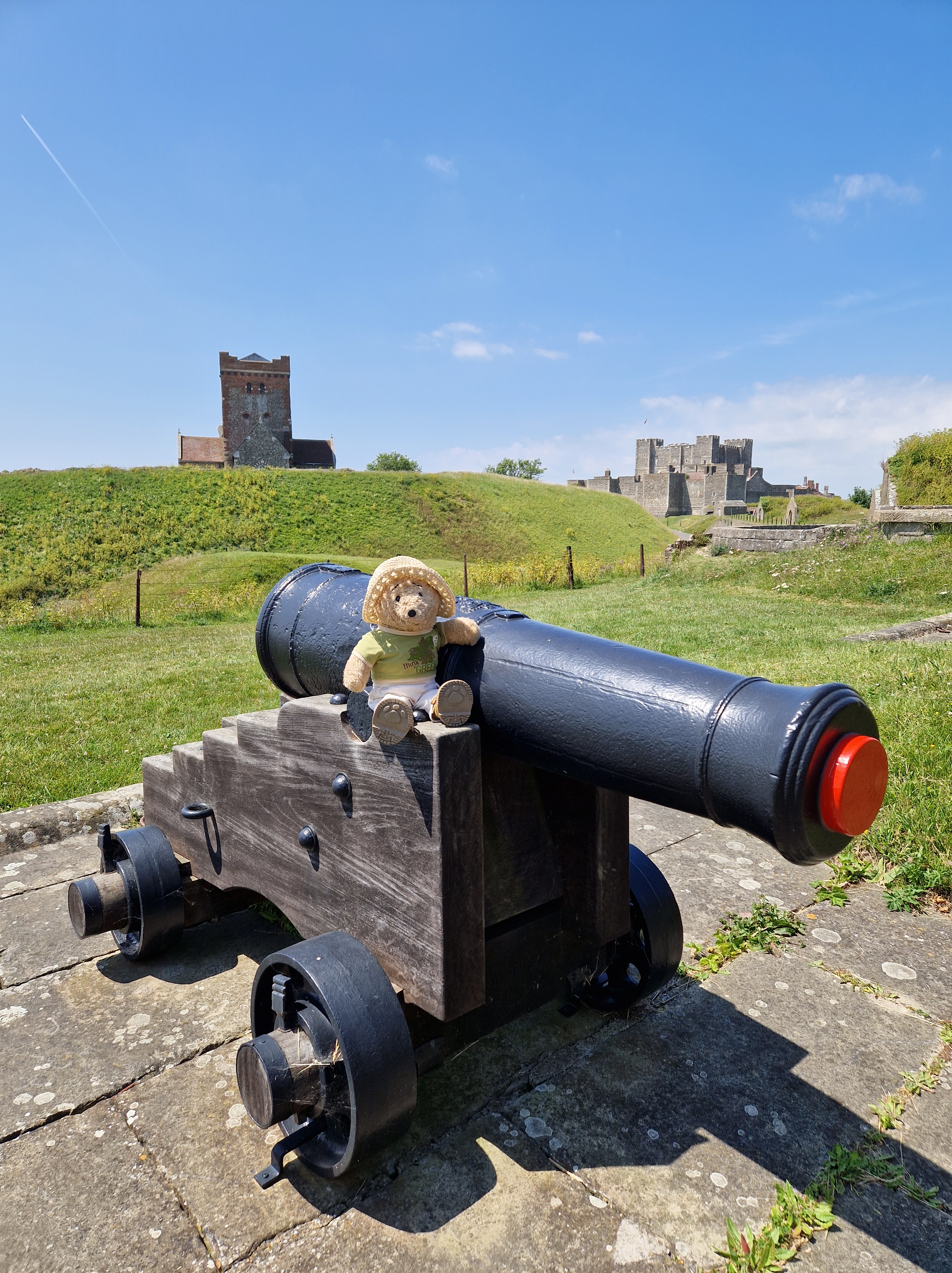
Back outside in the sunshine we wandered around the castle walls for a while where there are cannons facing the sea.
There was also an anti-aircraft gun that would have been used in 2nd World War.
Fitzwilliam Gate was built after the Great Siege of 1216 when the North Gate was damaged and got blocked up. It is named after a 13th Century Knight Adam Fitzwilliam who provided guard service for the castle.
It was all quite a lot for a small bear to take in, so much history has happened at Dover Castle. I sat for a little while and wondered, teddy bears had not even been invented when these walls were built.
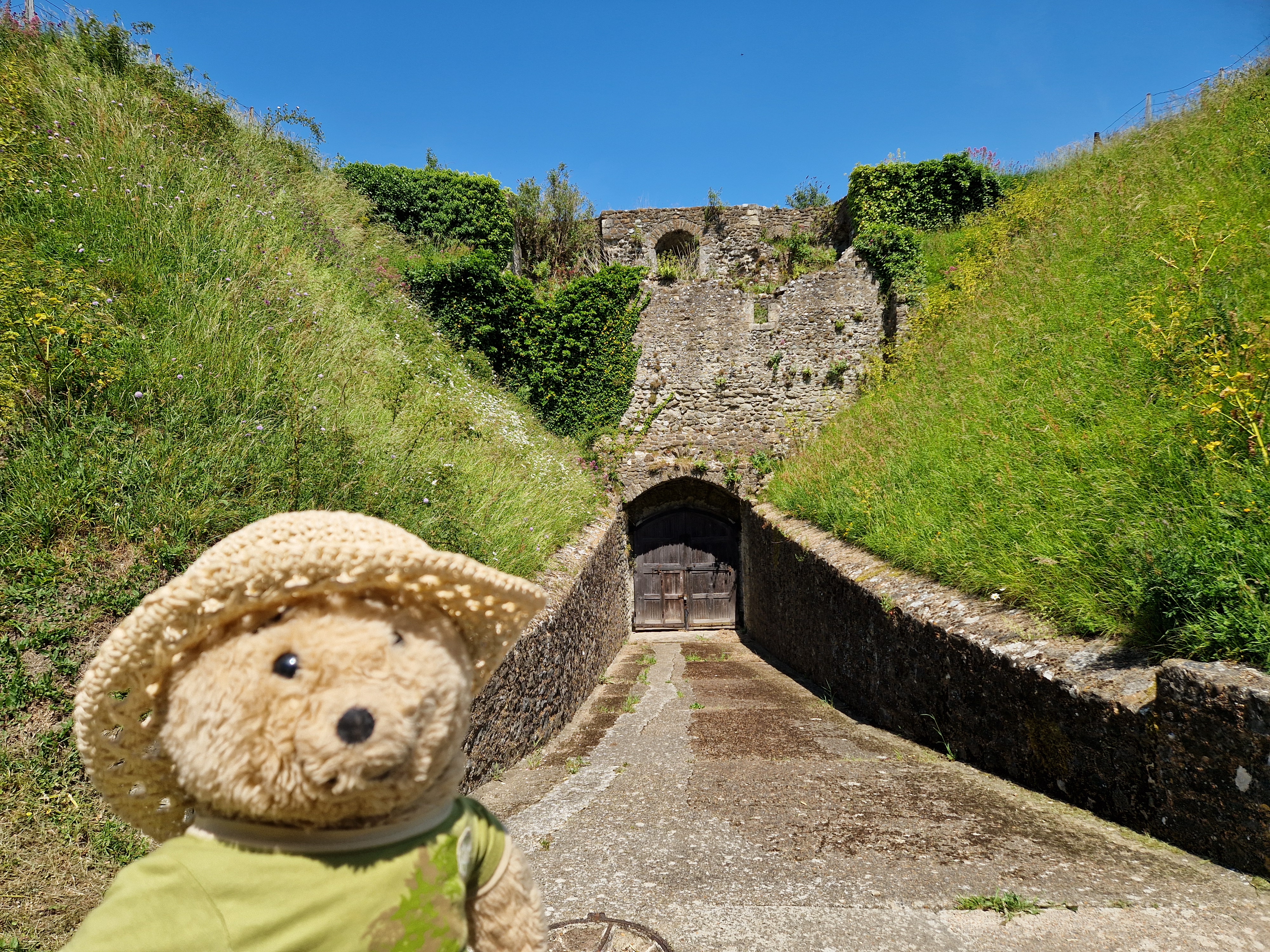
The weather was getting quite warm and it was relief to find some more tunnels to explore away from the heat of the sun. The Spur Tunnels are set underneath a huge mound of earth and were built in the 13th Century after the Great Siege in order to provide defence for the Castle.
I had to go down lots of steps to access the tunnels…
It was quite a long way walking through the tunnels..
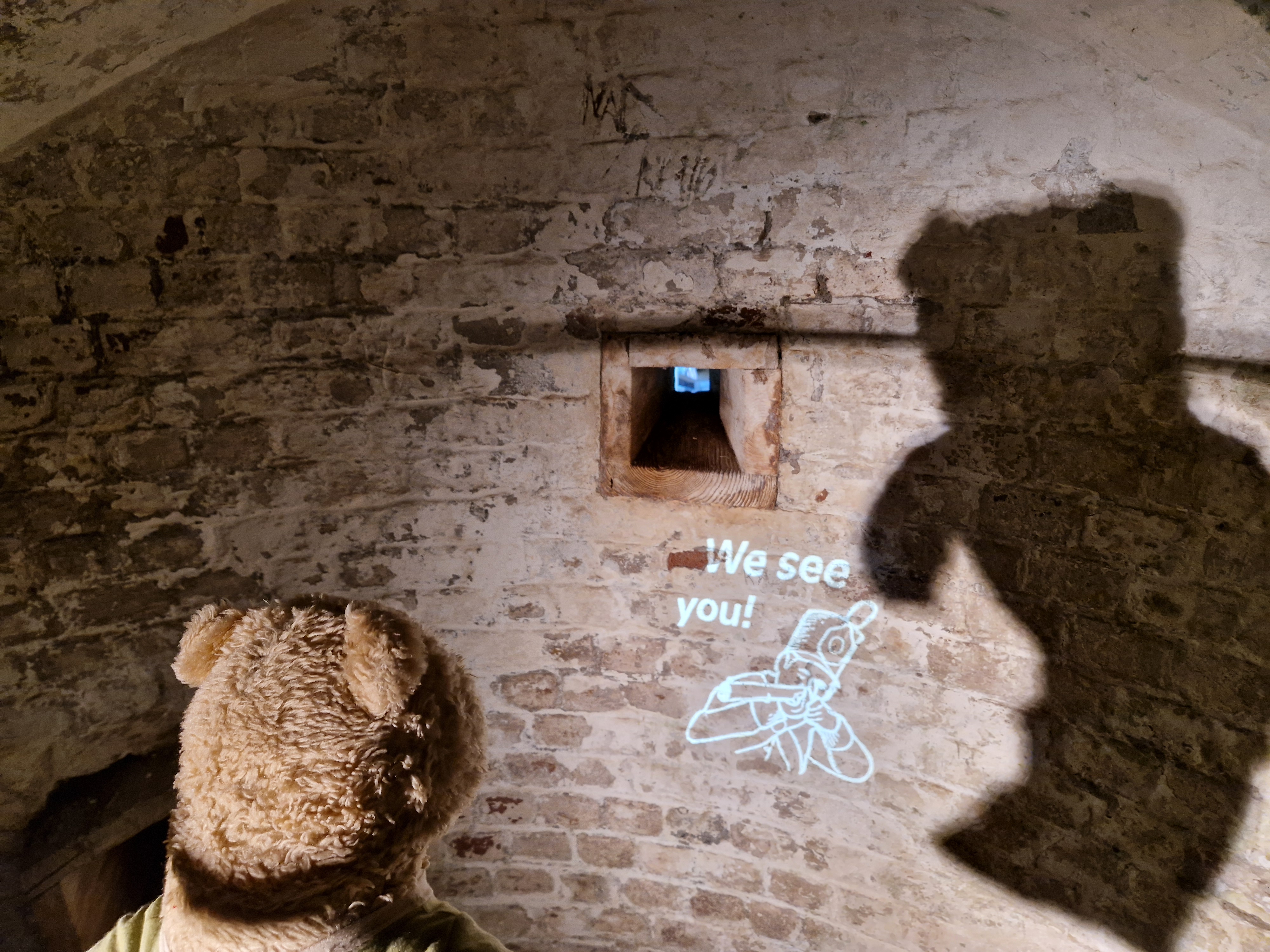
Eventually I arrived at the end, where I climbed up the steps to have a look through the holes in the wall.
I could see another tunnel and other castle visitors walking through it! This was a spy hole.
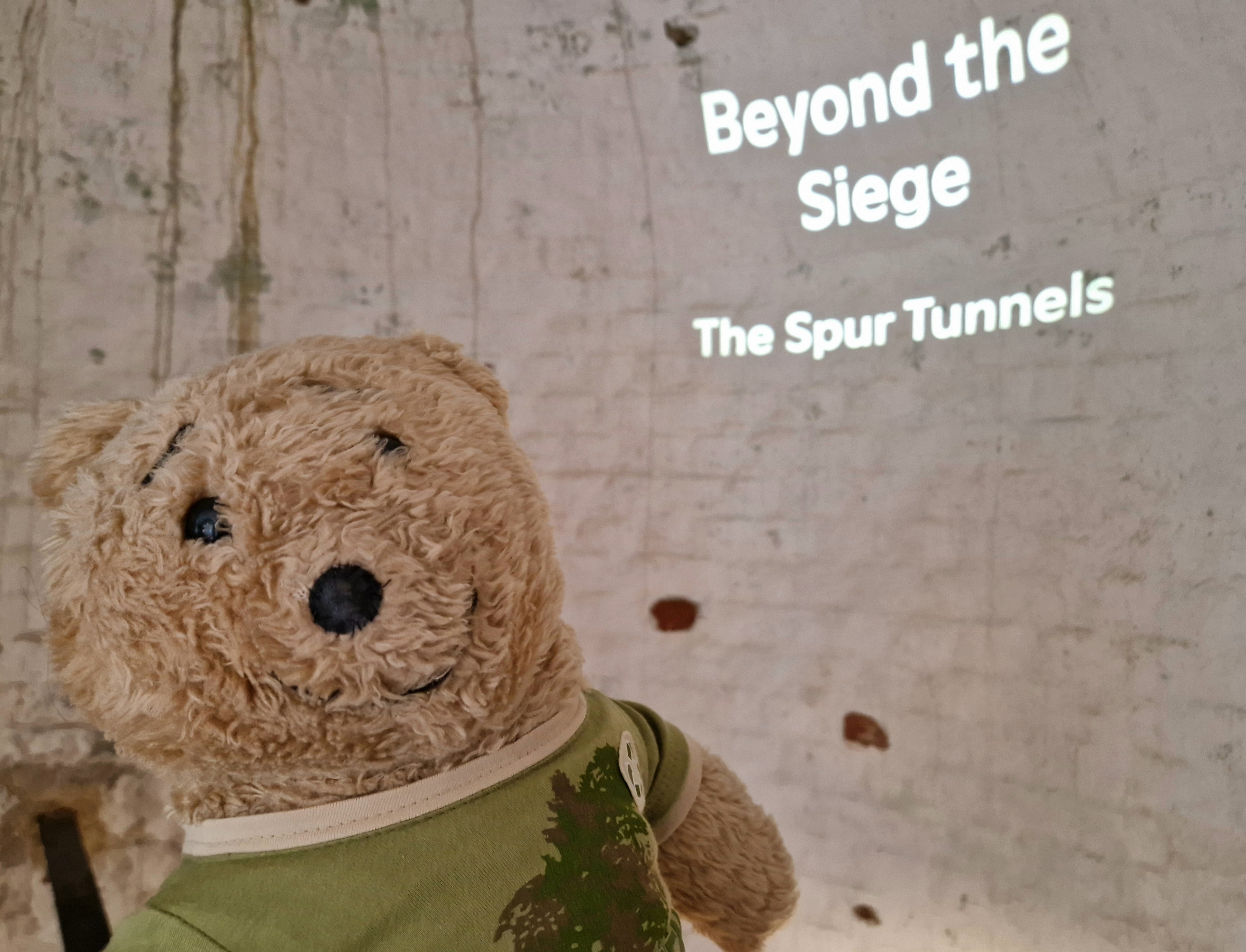
We went down some steps to a lower level (the writing was projected onto the wall).
….and there was the other side of the spy hole!
There were a series of doors in the tunnels that could be operated remotely using cables and pulleys. If intruders were spotted entering the castle they could be trapped in the tunnel by lowering the doors.
These were the devices used to shut one of the doors.
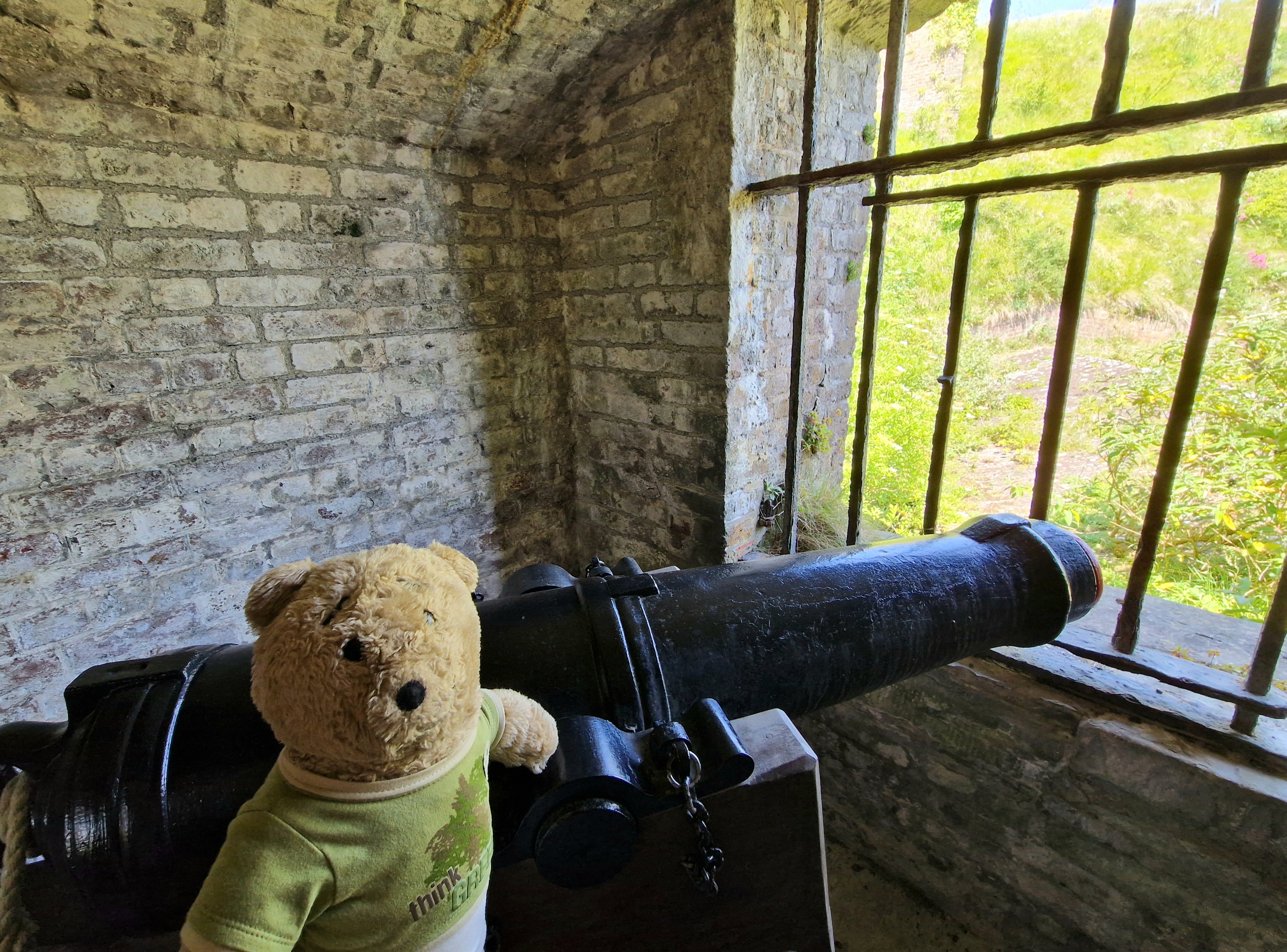
The short cannons known as carronades (after the Carron Ironworks in Scotland where they were made) could fire cannonballs at a short distance.
I was feeling quite tired after leaving the spur tunnels but there was still lots to see.
The guide suggested we should walk to a viewing point to get a good photo of the castle, which we did!
Then it was back up the road through Constable’s Gate to get back into the castle grounds.
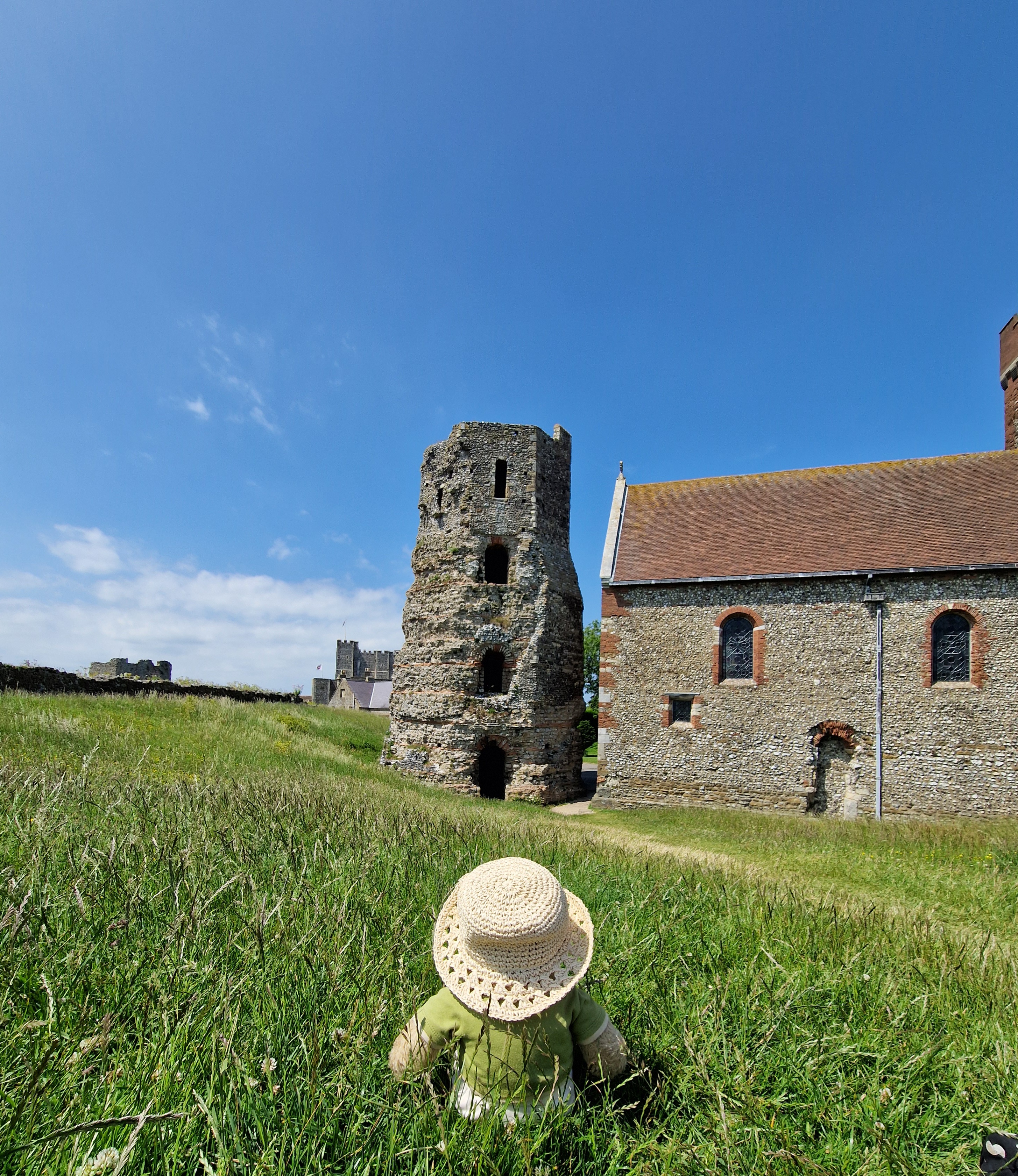
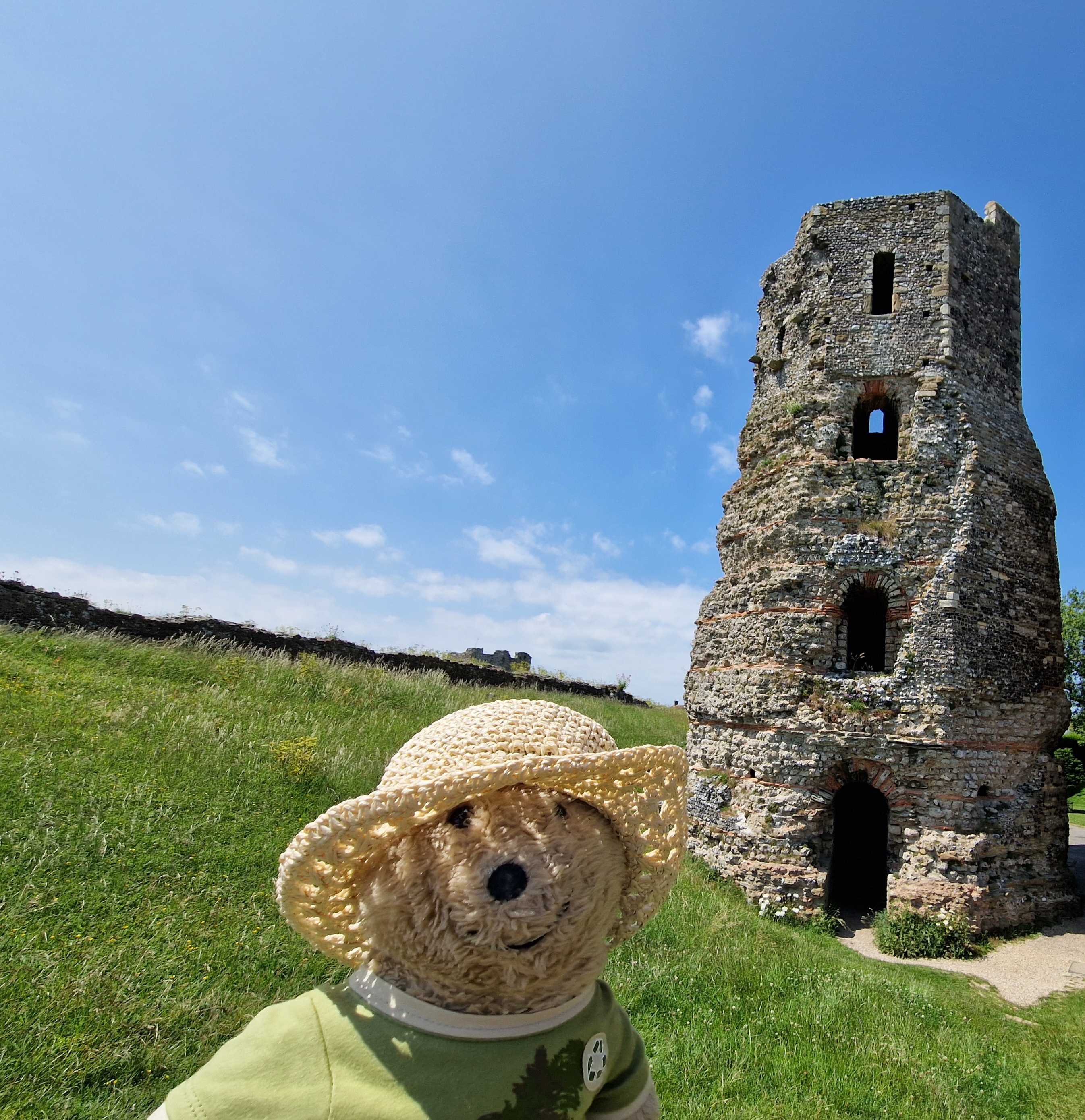
We headed towards the Roman Lighthouse which is right next door to the Saxon Church. I sat for a while and tried to imaging it with a fire burning at the top warning ships 2000 years ago…
Lots has happened to the lighthouse since the Romans built it including a bit extra on the top when it was used as a church bell tower in the 14th Century. If buildings could talk the lighthouse would have so much to say about what it has seen over the years.
Last on the list of sightseeing was The Great Tower, the building of which was overseen by King Henry II.
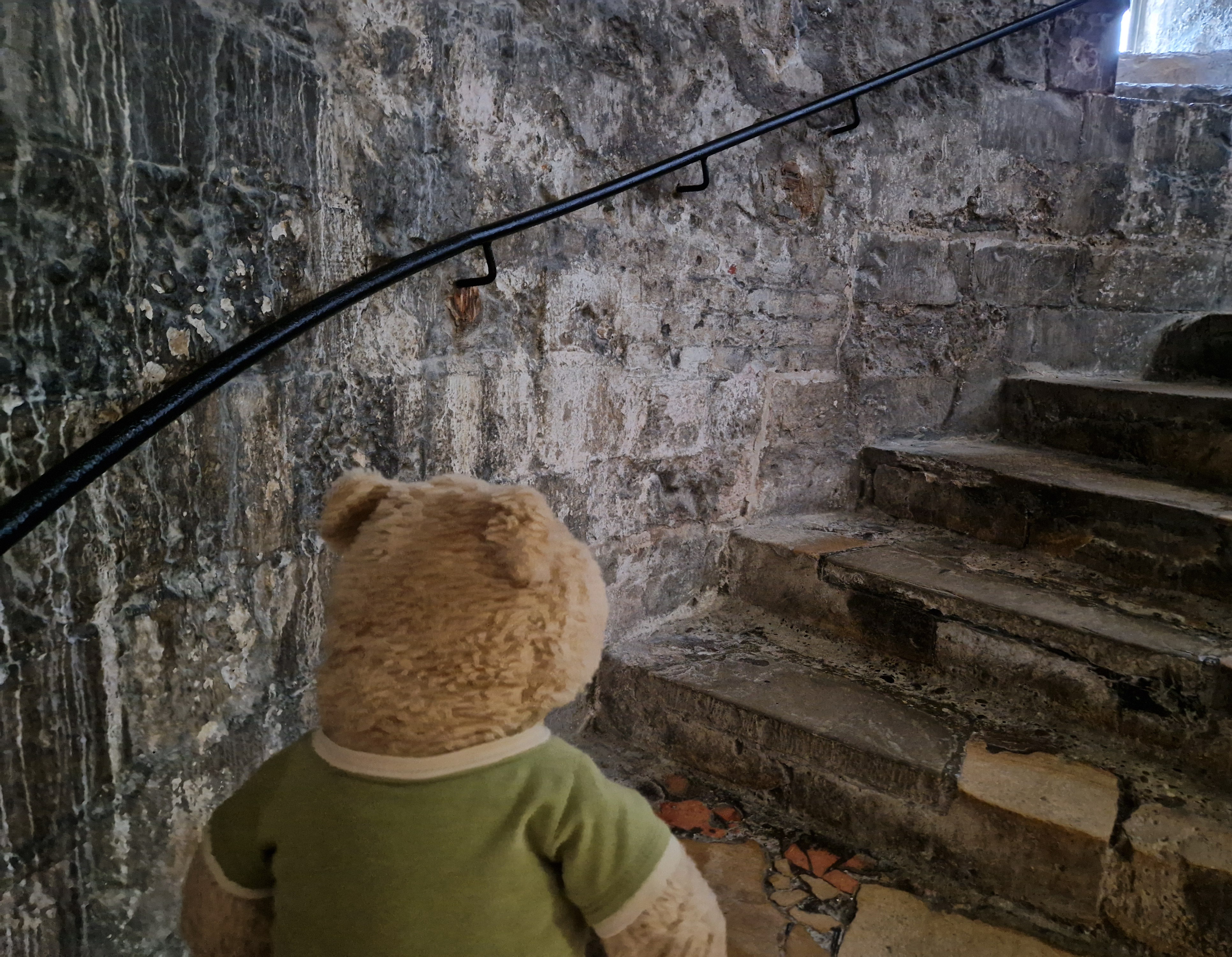
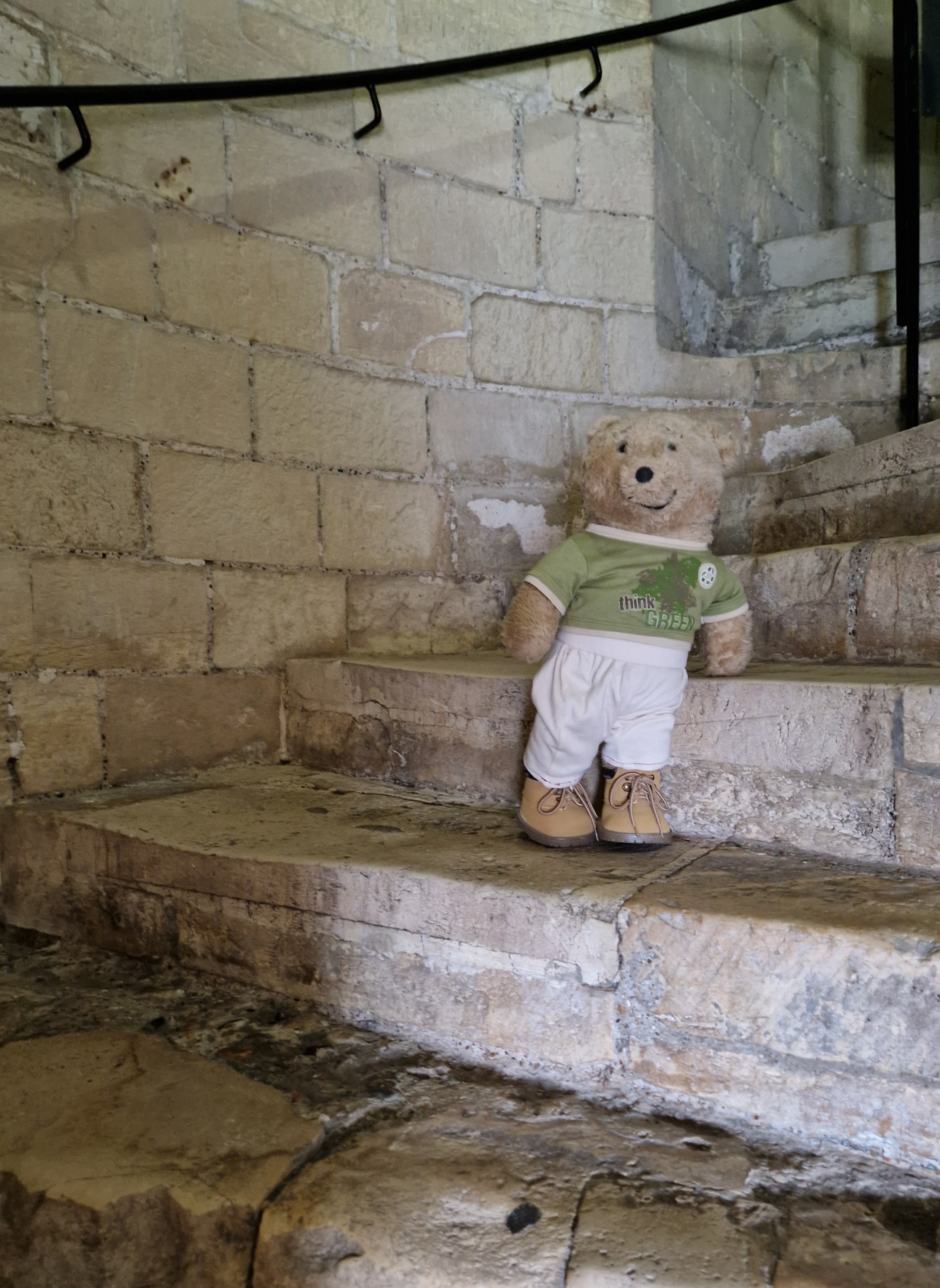
There were many steps to climb to reach The Great Hall.
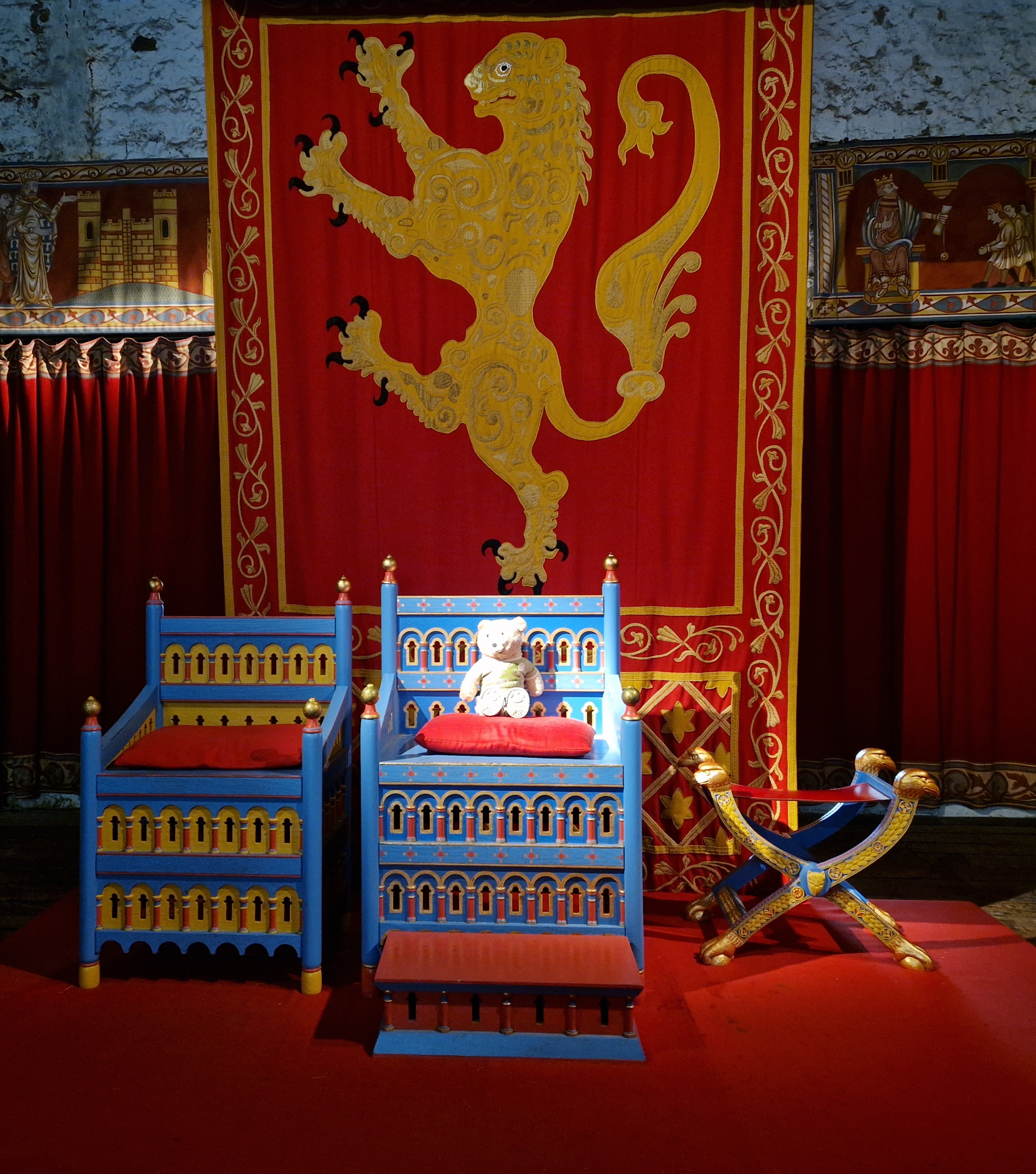
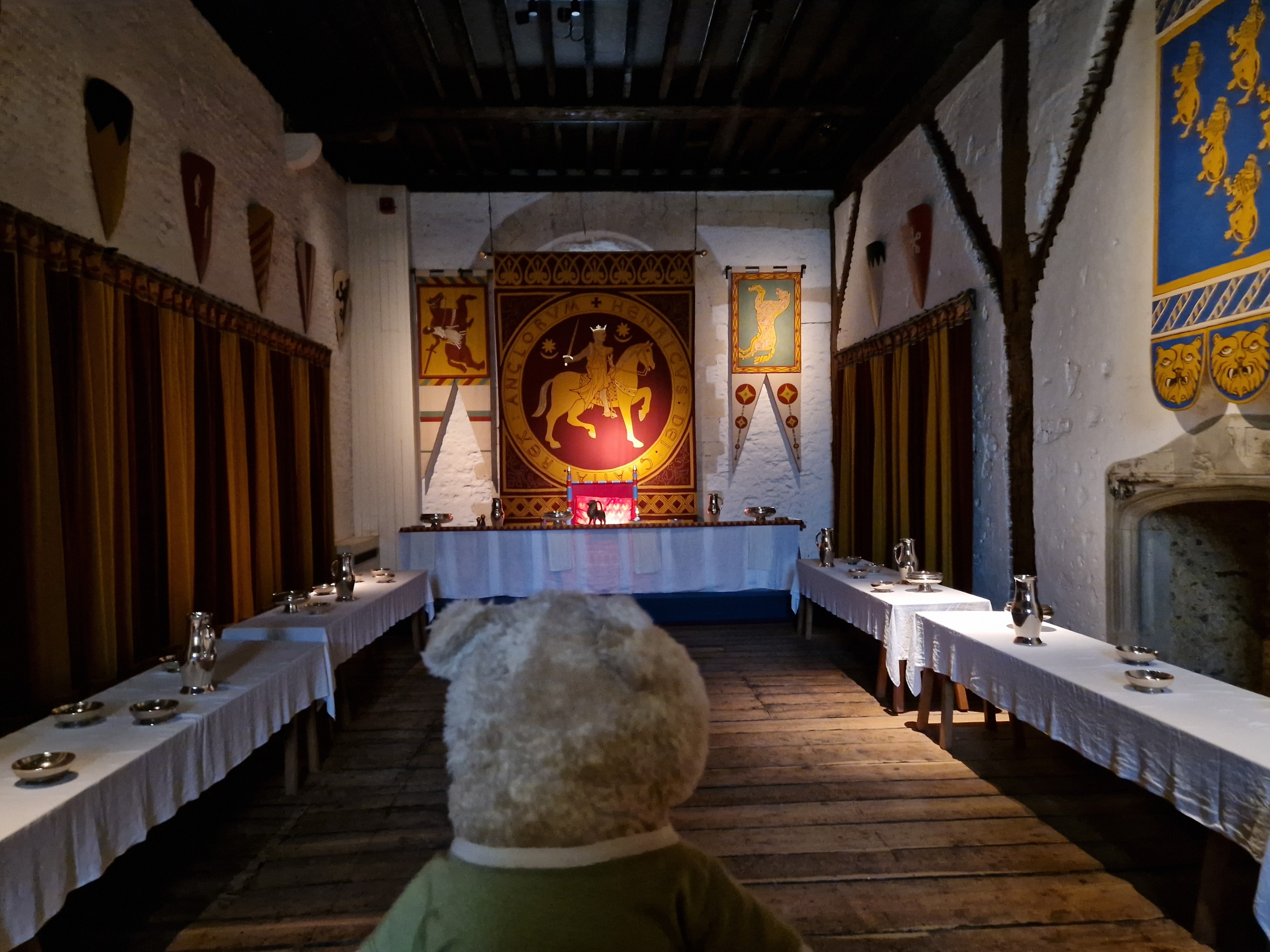
A few years ago English Heritage dressed the inside of The Great Tower to look as it may have done in medieval times when Henry II was on the throne. As the throne is reproduction and not an antique I was allowed to sit on it.
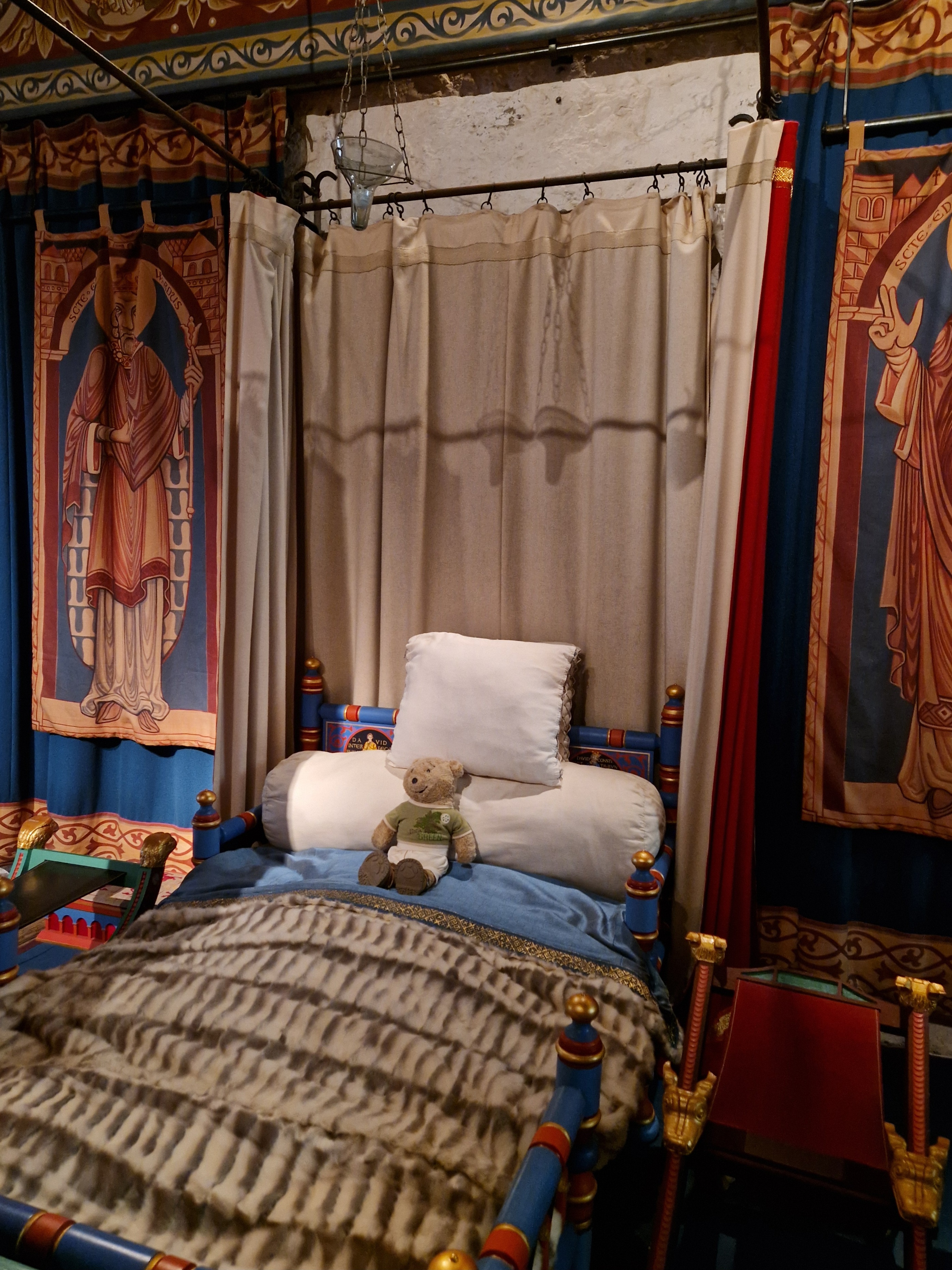
800 years ago having rich colours in the decorations signified wealth and power. The King may have had a bed rather like this one. The room guide sat me on the bed for the photograph (humans aren’t allowed to sit on it). We had a chat and as well as being very knowledgeable about the castle he was also a teddy bear collector.
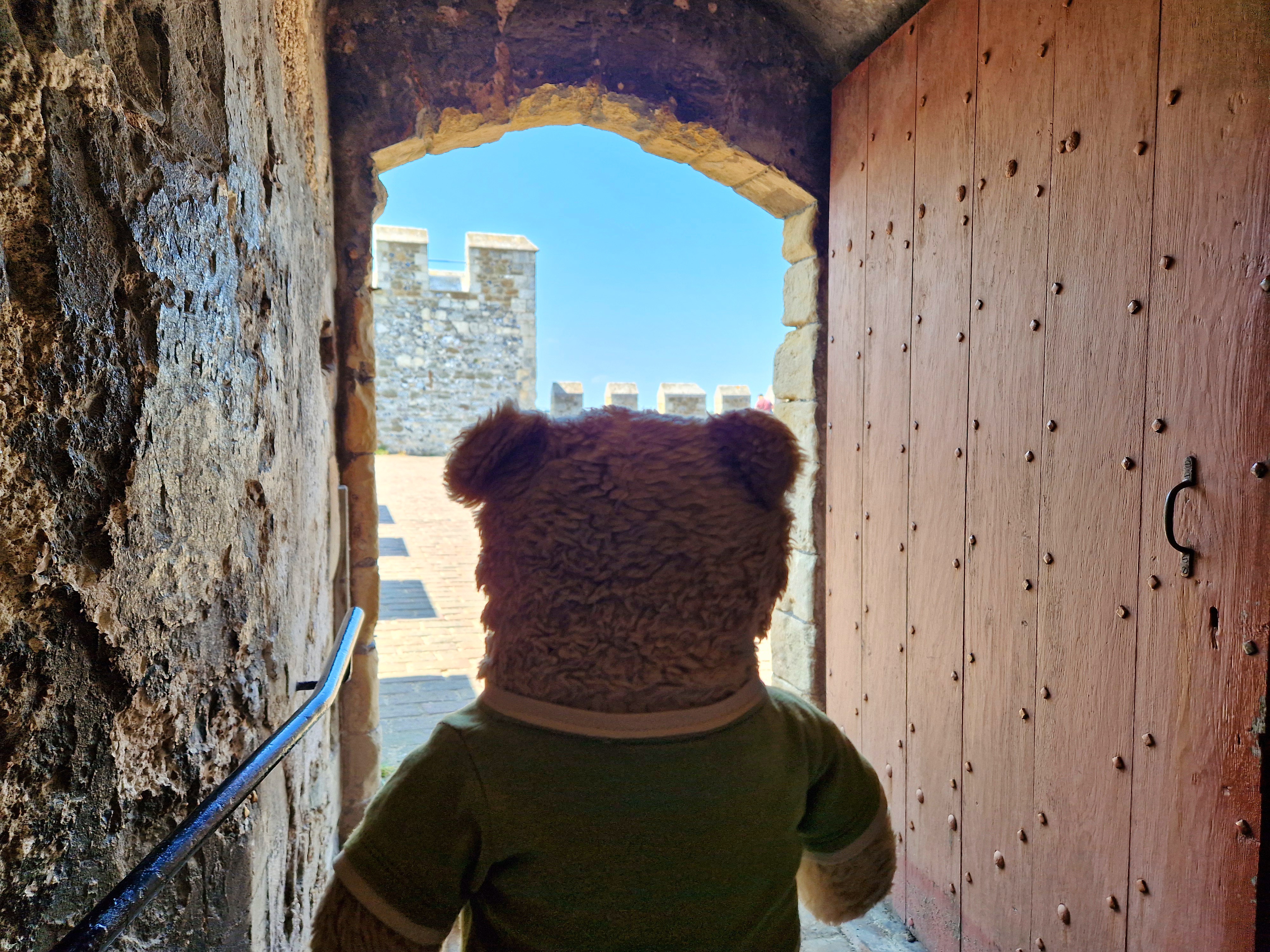
I went on up the many stairs to the roof.
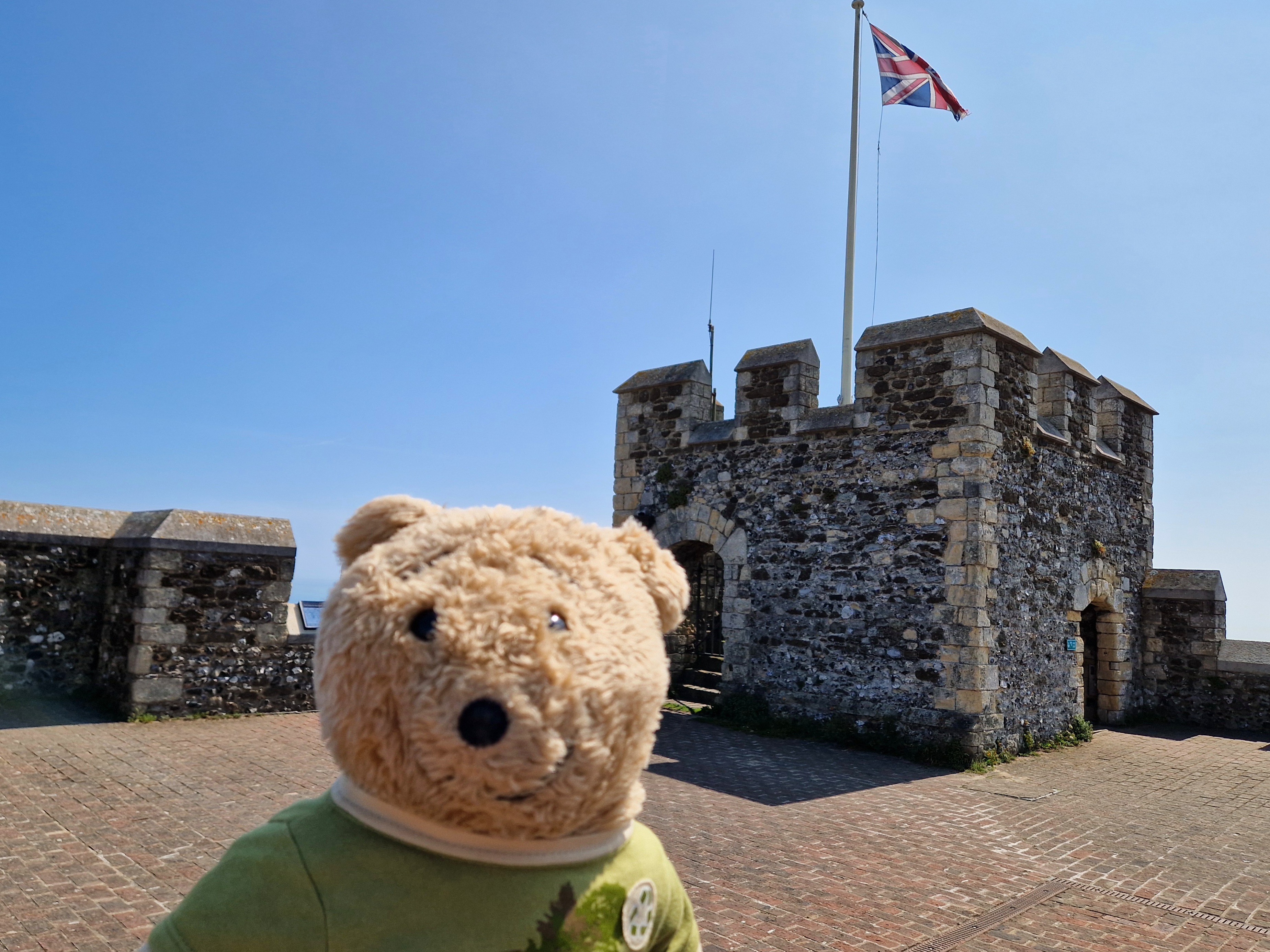
The roof has been altered numerous times in the last 1200 years.
There is an amazing view from all sides, here I am looking out to sea over the Saxon Church and Roman lighthouse.
I was starting to feel quite hungry so made my way downstairs towards the kitchens.
Another big hall, with tables laid ready for the king to have supper with guests.
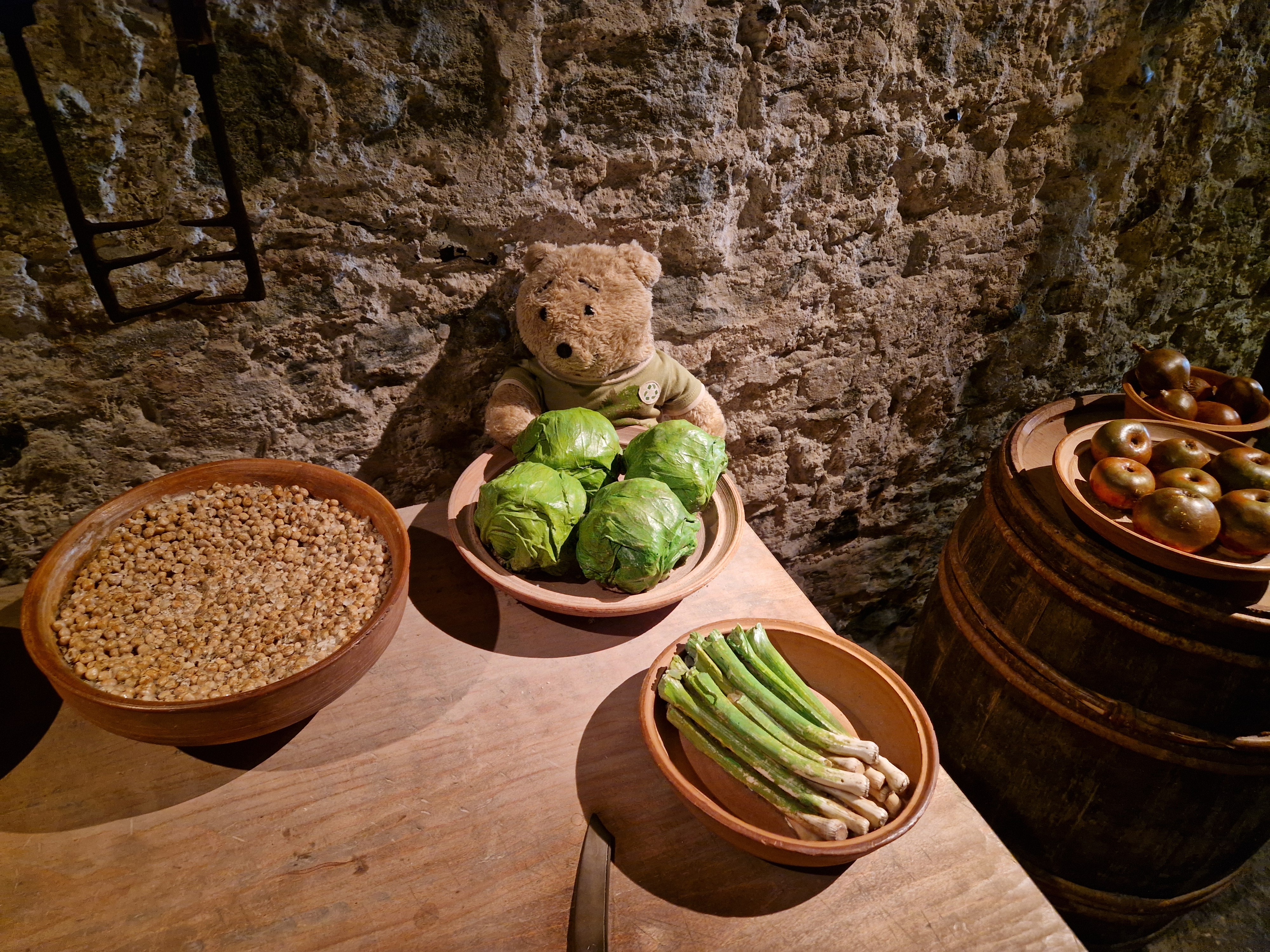
English Heritage have made the ground floor look like a medieval kitchen as they believe it was probably used this way.
I was quite relieved that the large join of ham was plastic!
I think this is where laundry took place unless huge stews were made in pots like this!
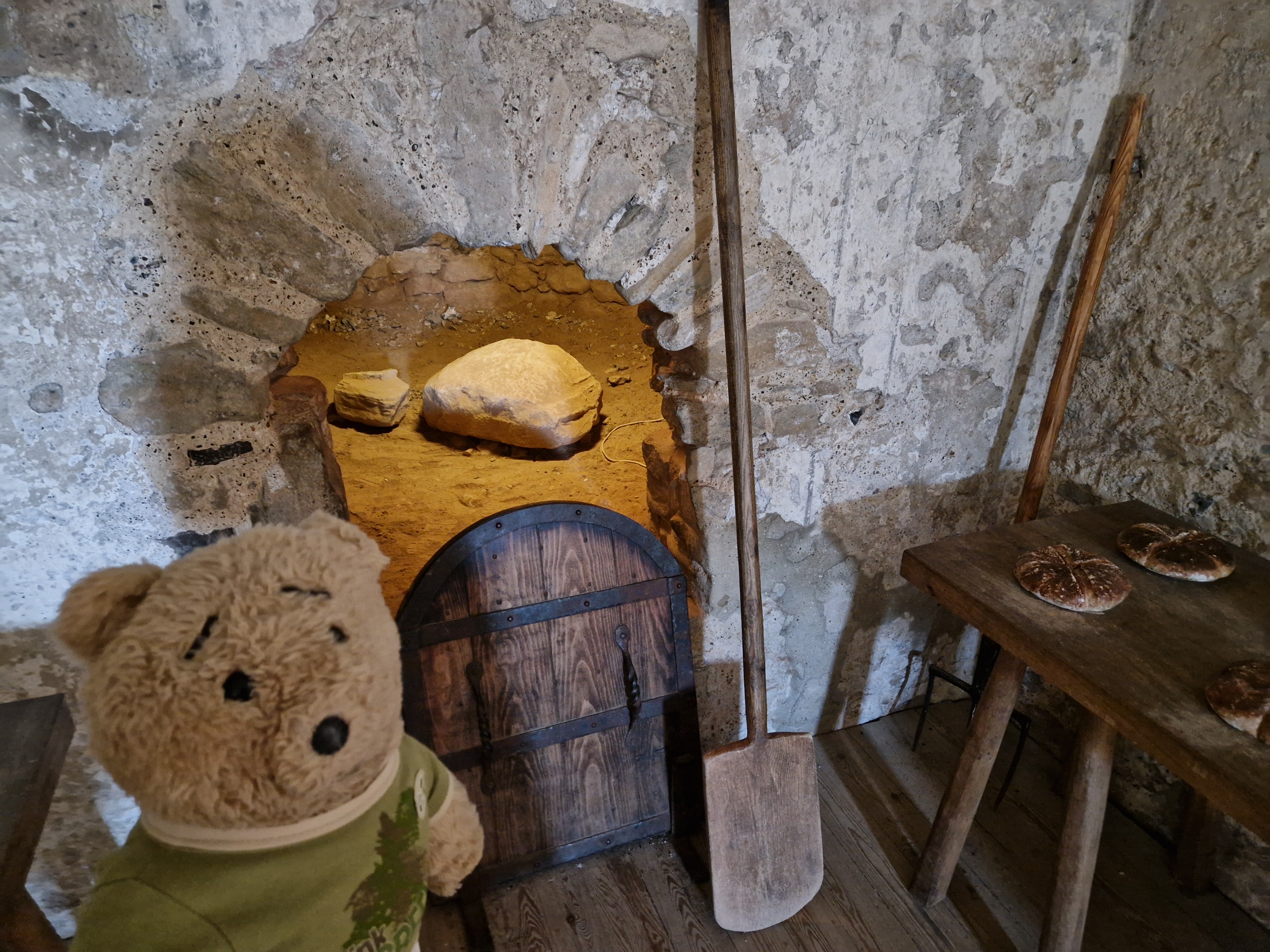
The existence of a large bread oven suggested to historians that this area was very likely used for cooking.
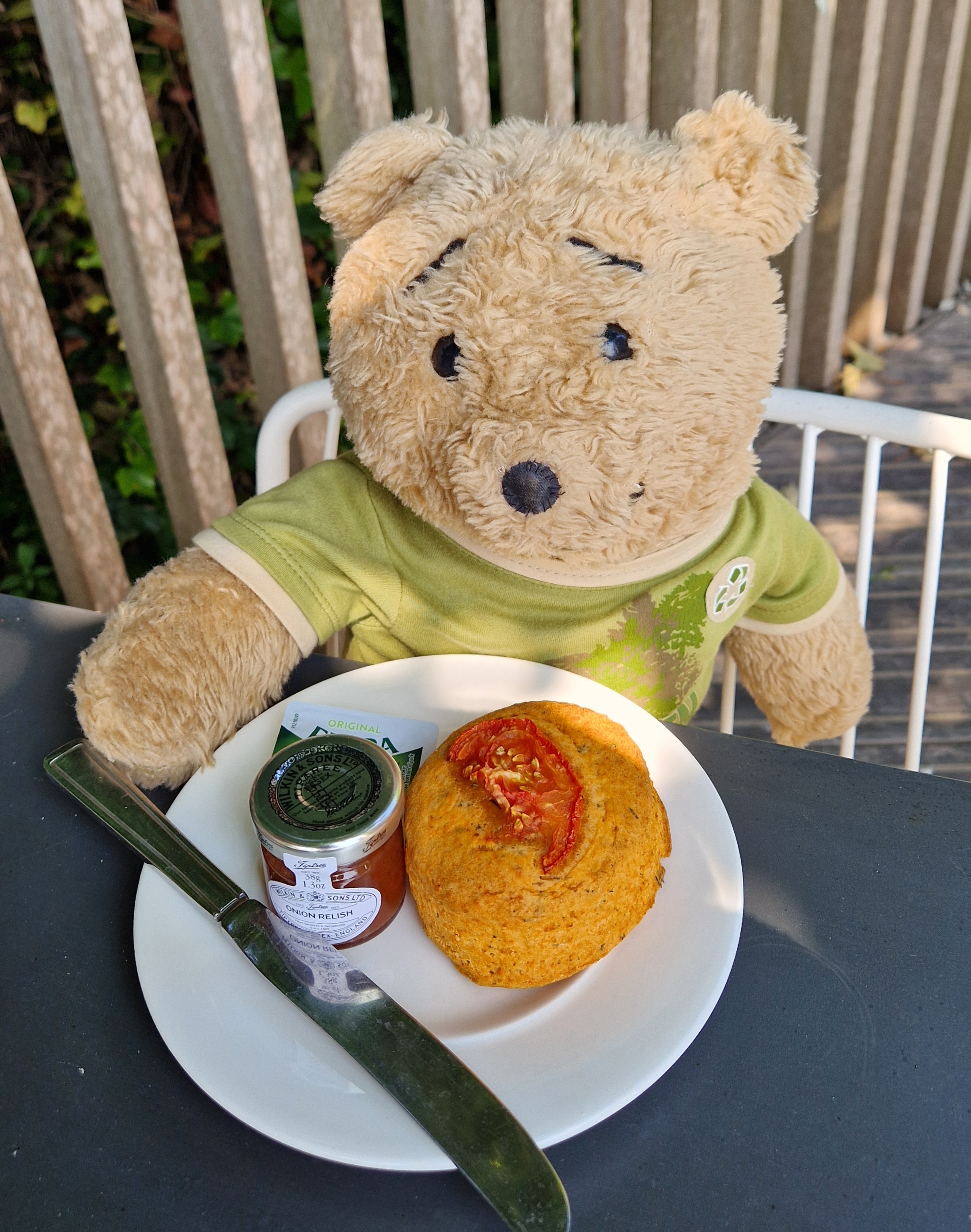
After looking at all that food, even though artificial, I was feeling rather hungry. We made our way to the NAAFI restaurant to get a snack. I very much enjoyed the savoury tomato scone with onion chutney.
When we returned to our holiday accomodation I was quite tired, but before retiring to bed I had a good look at the guide book.
All in all it was a grand day out, with lots to see and learn with a tasty scone at the end. Do visit Dover Castle if you are in the area. It was free for us to go in as we are members of CADW, the Welsh version of English Heritage.


























 Horace the Alresford Bear