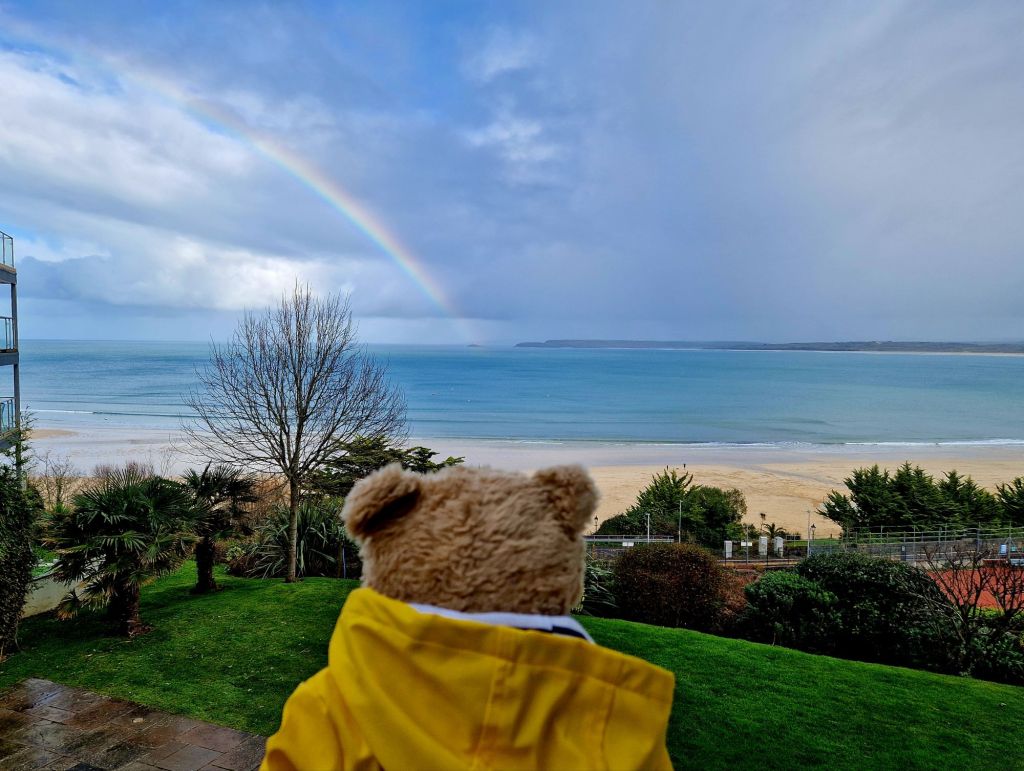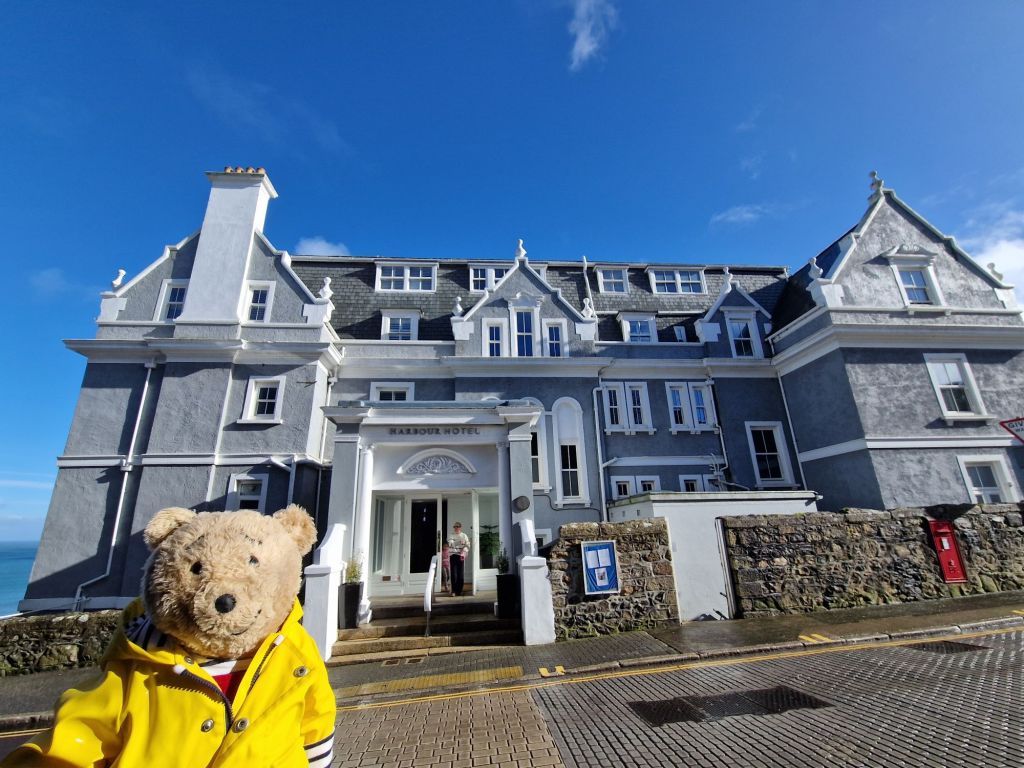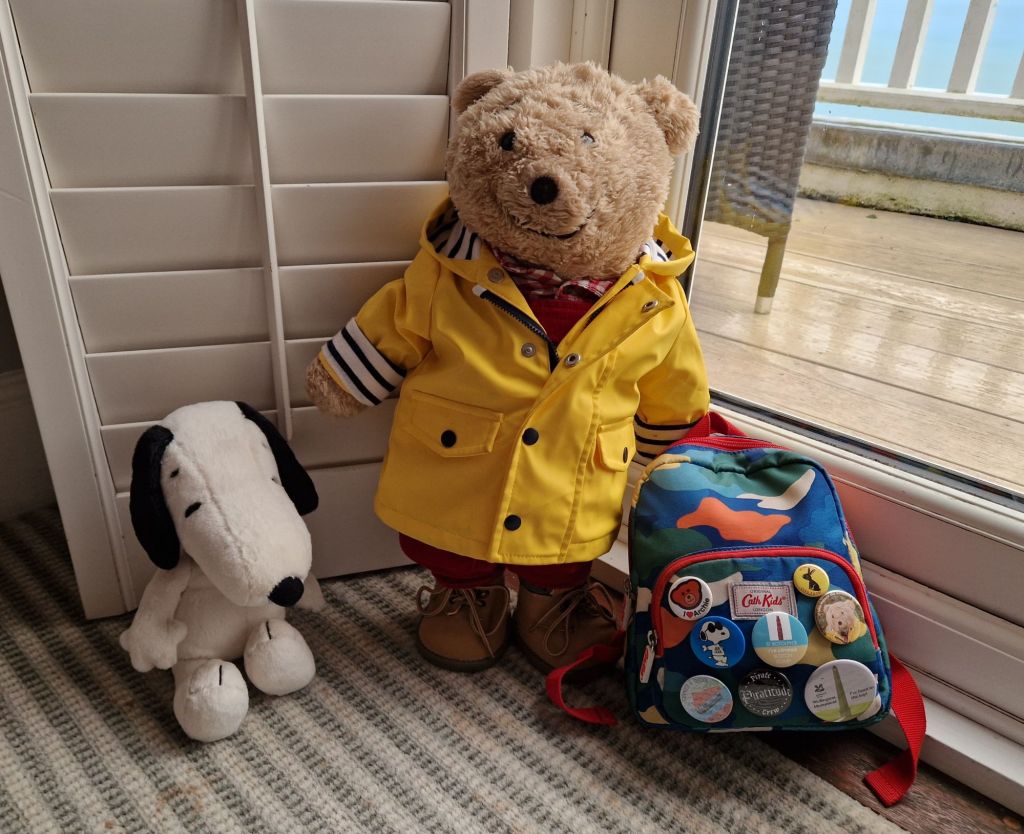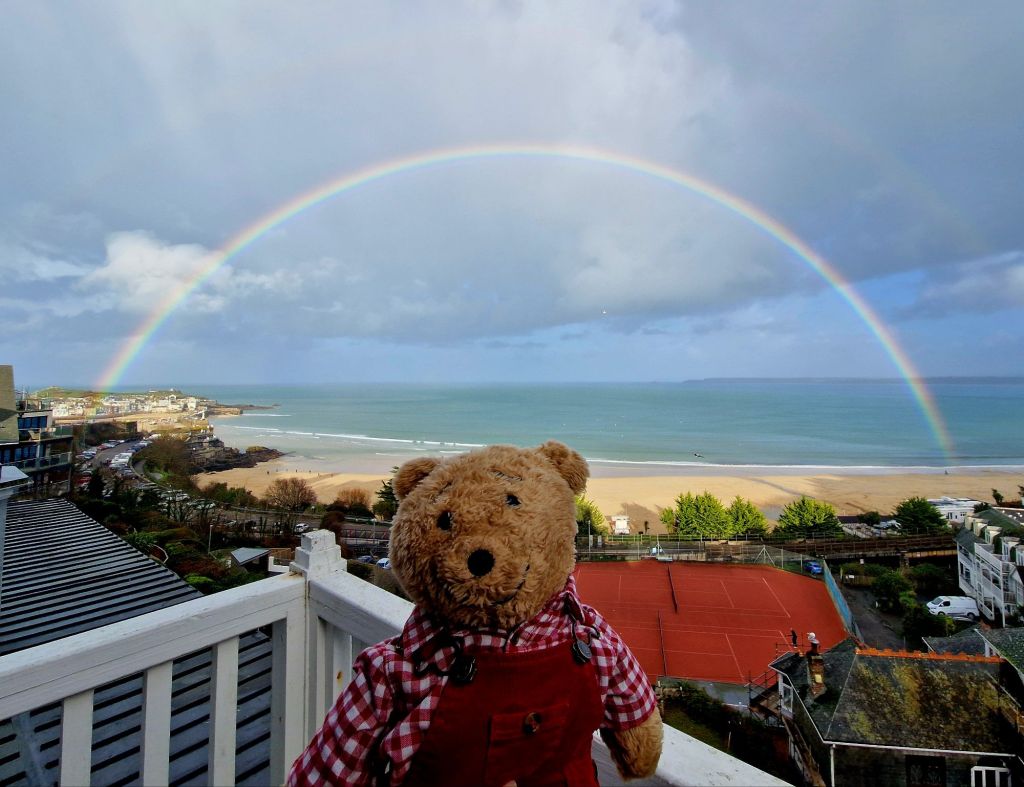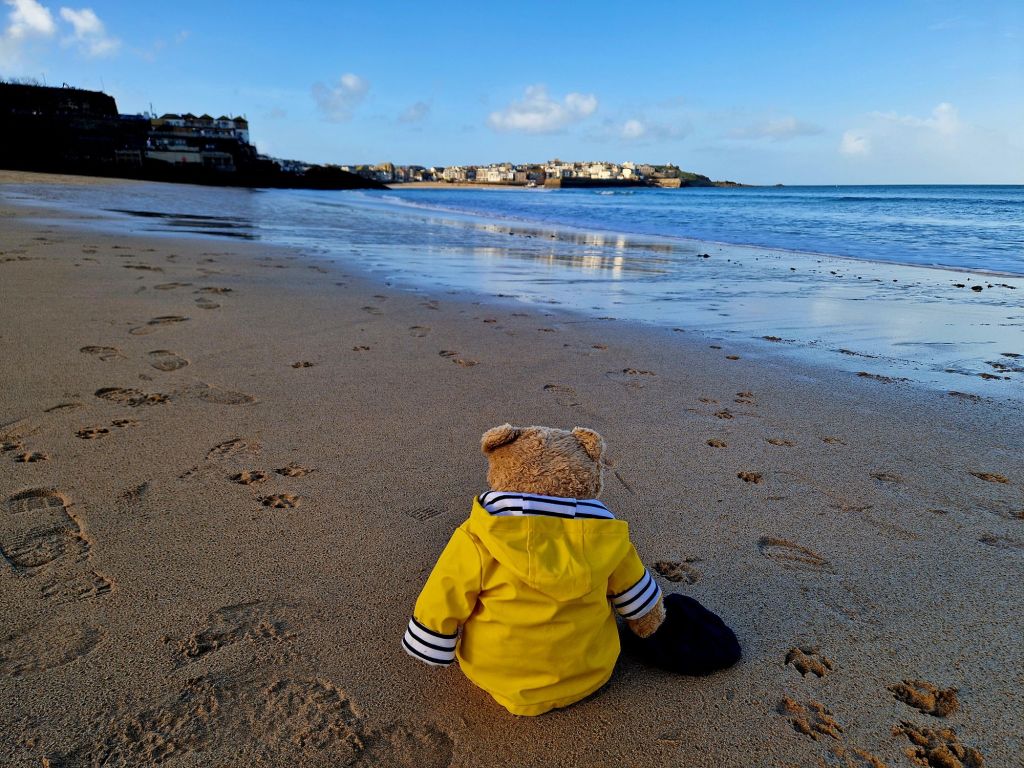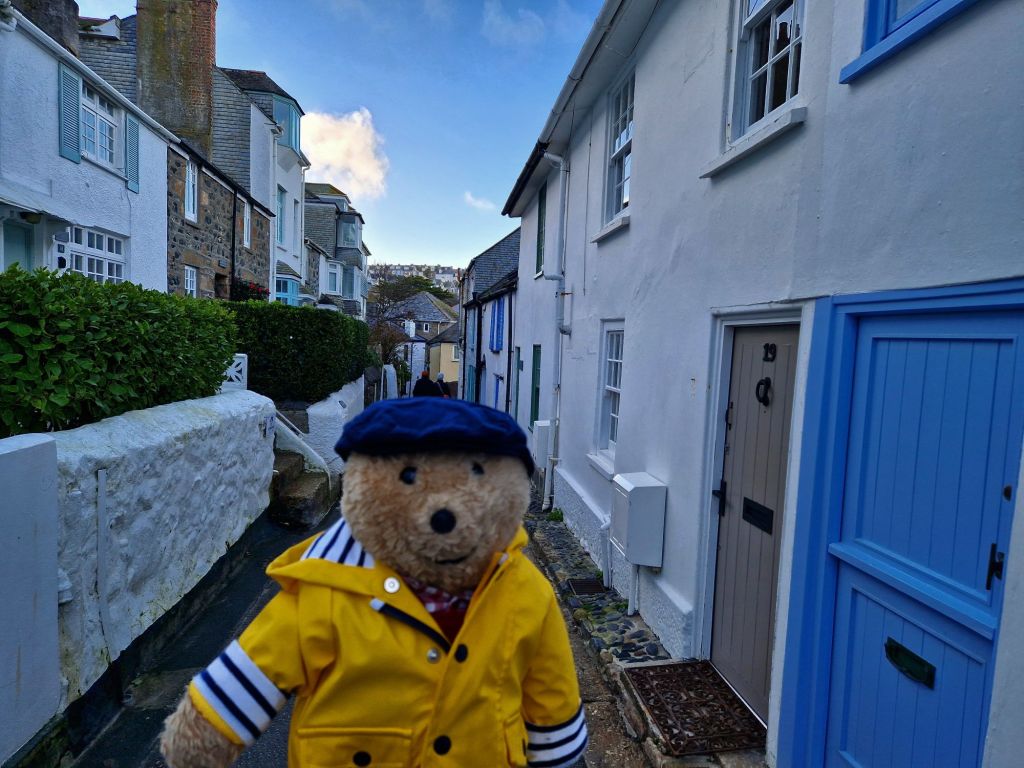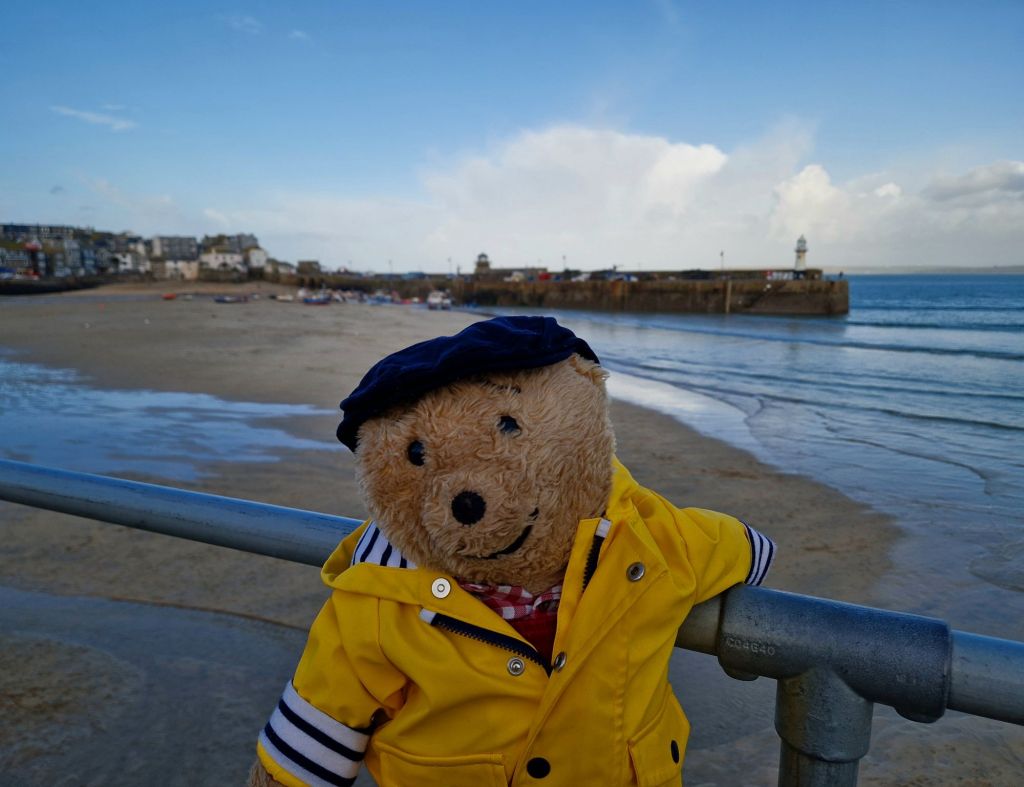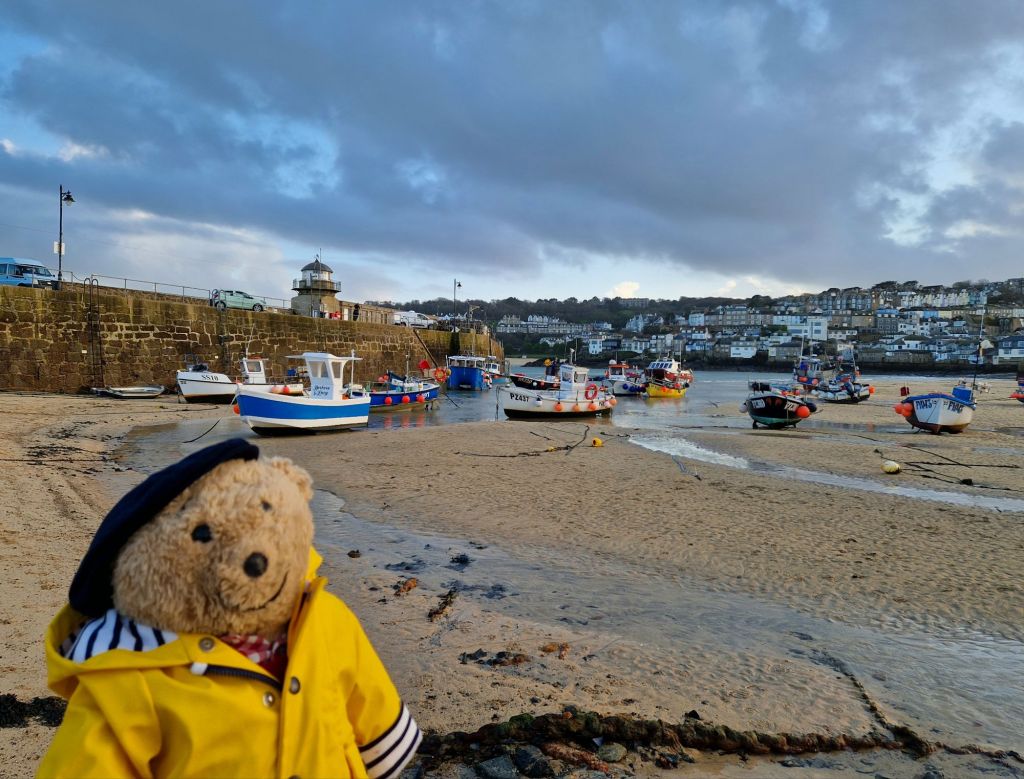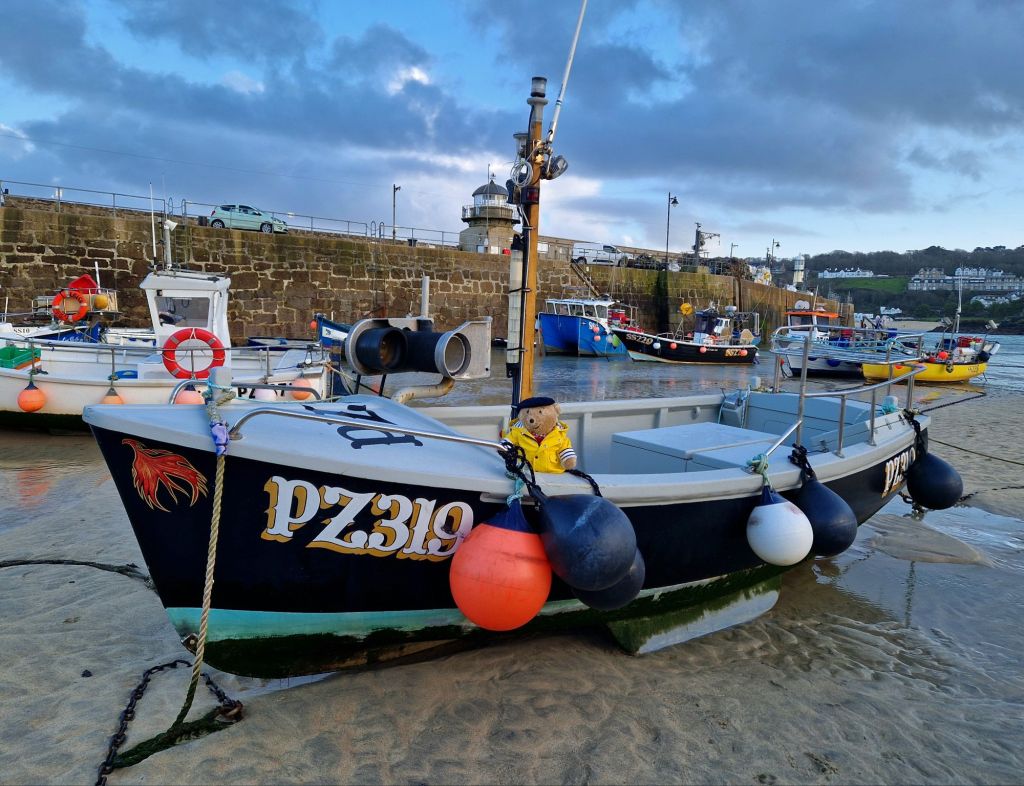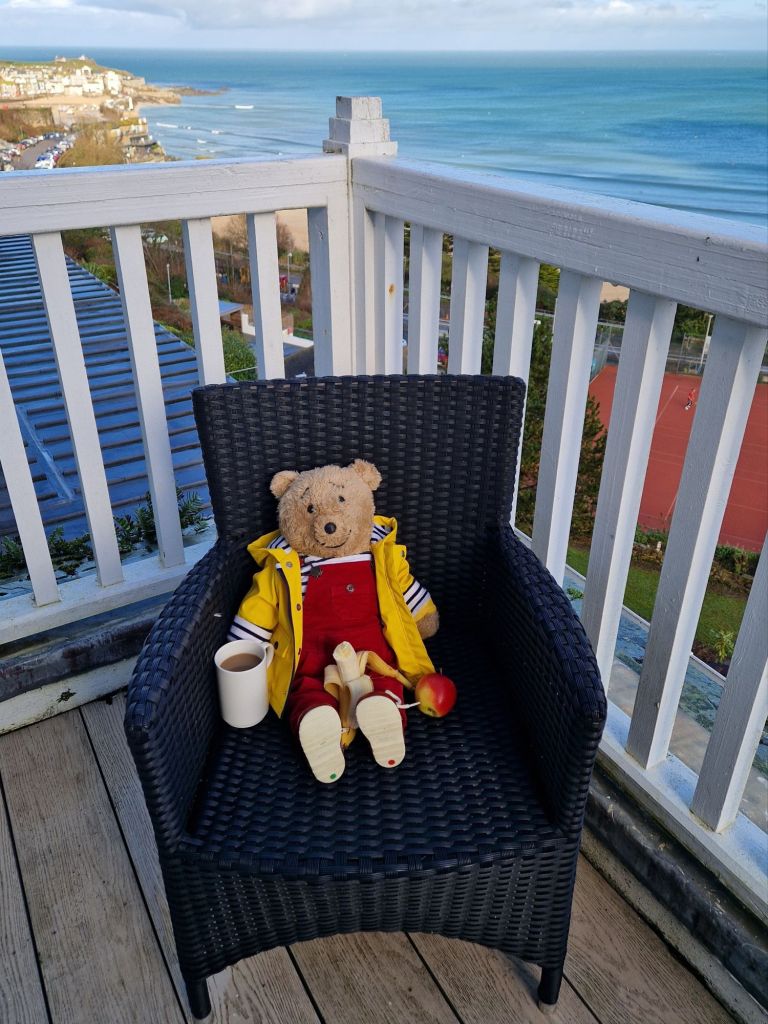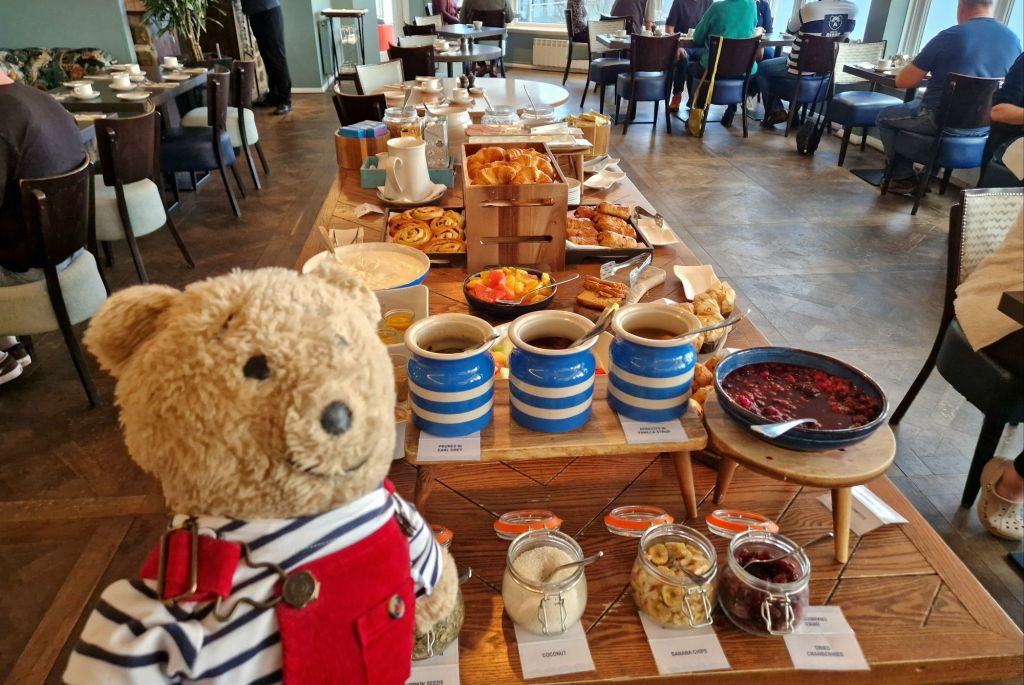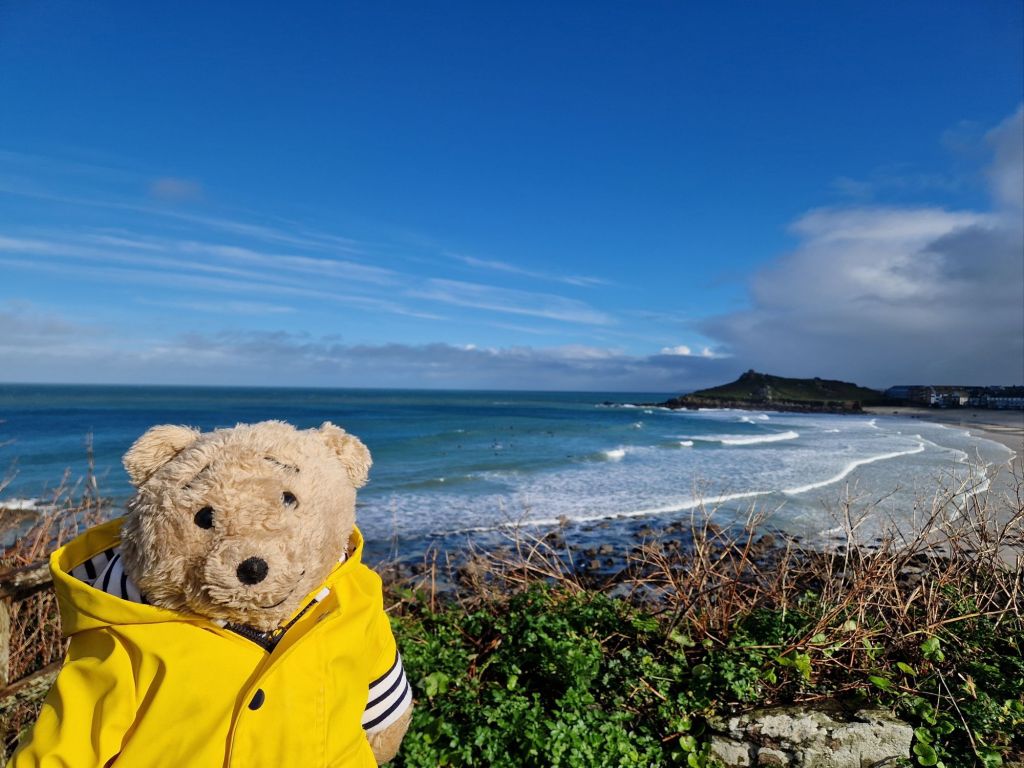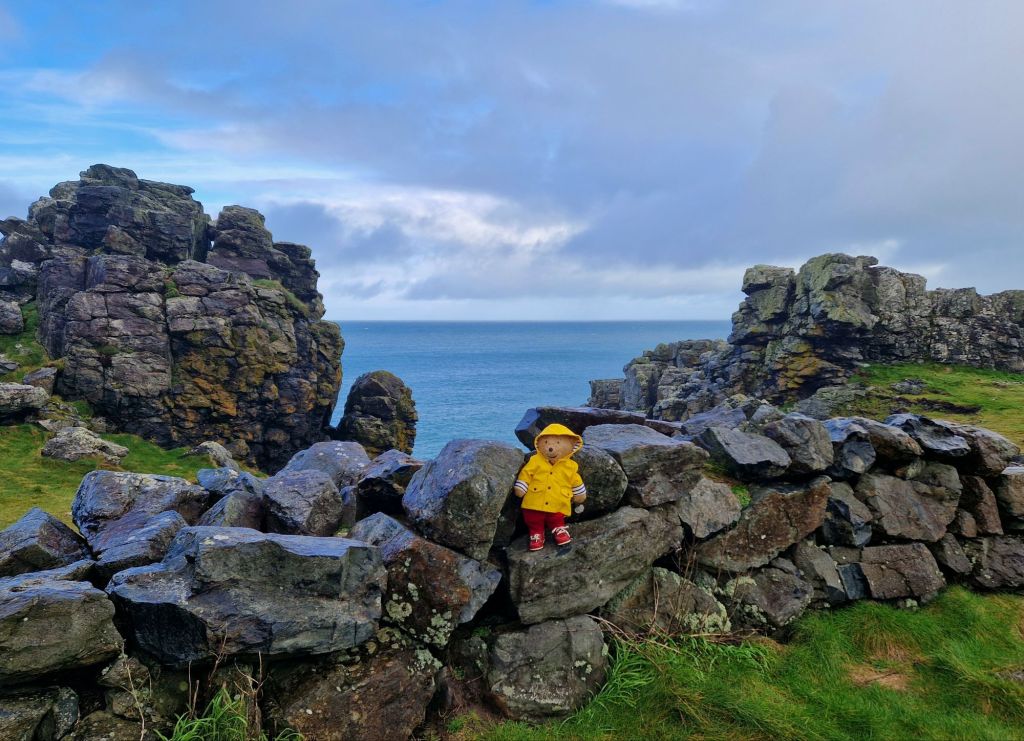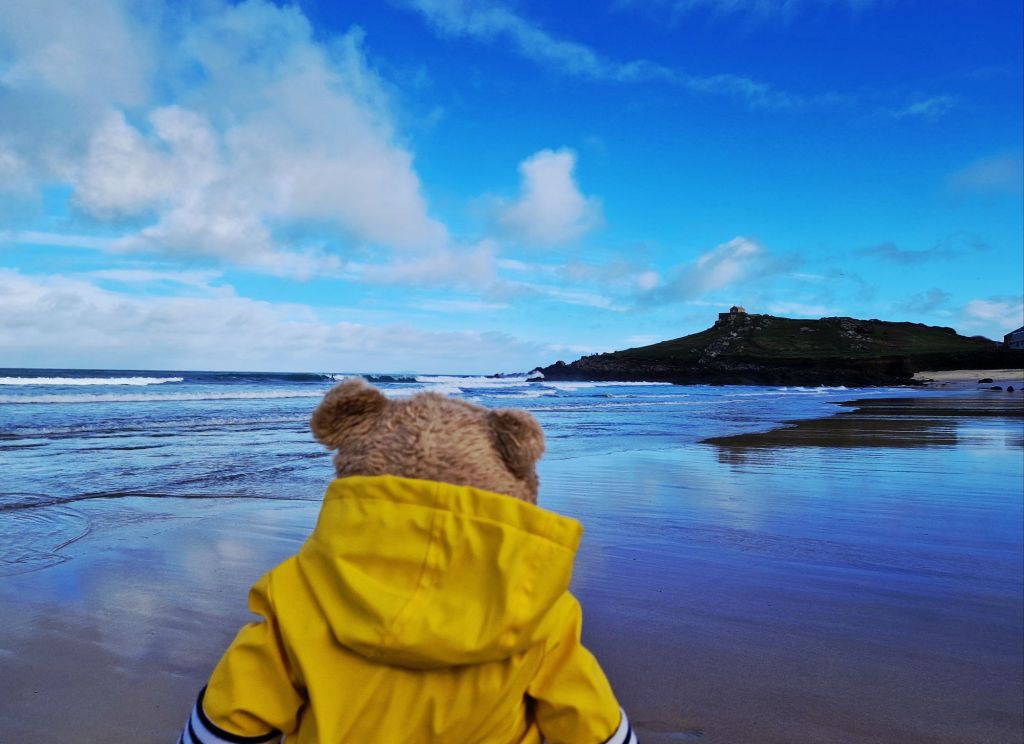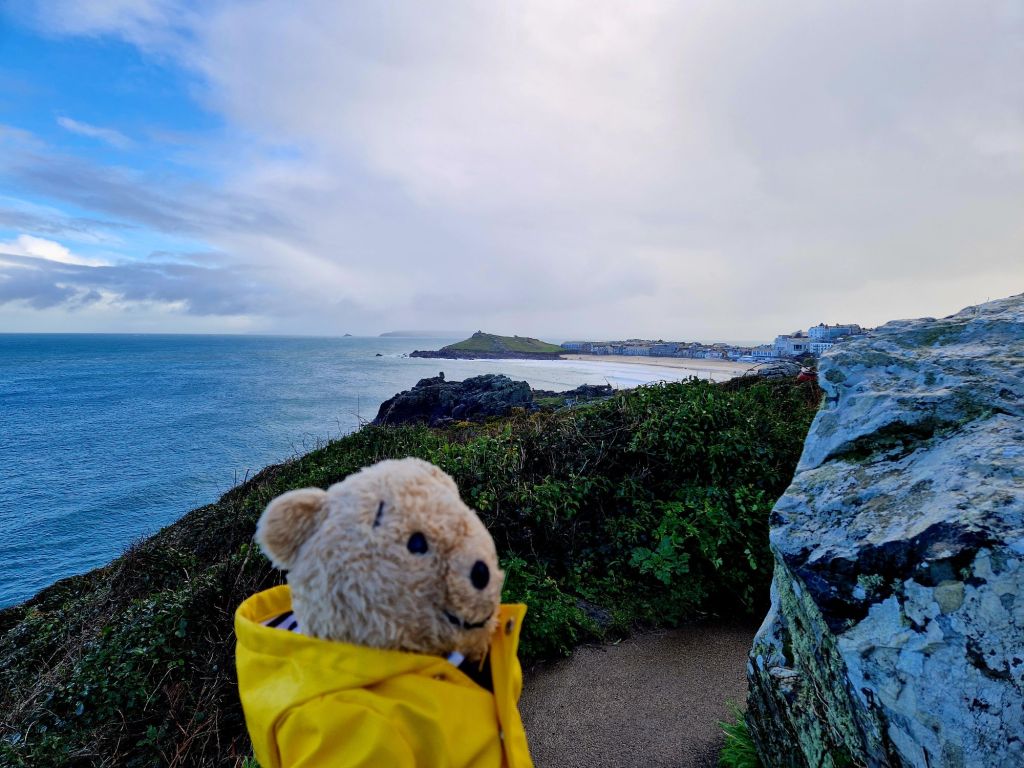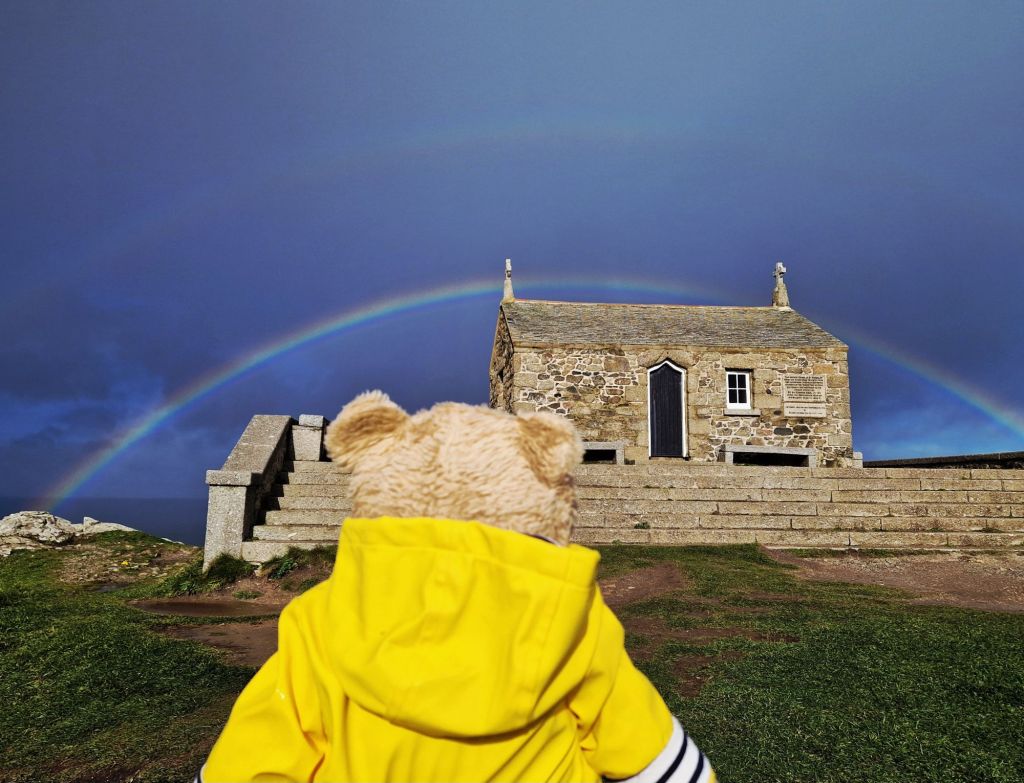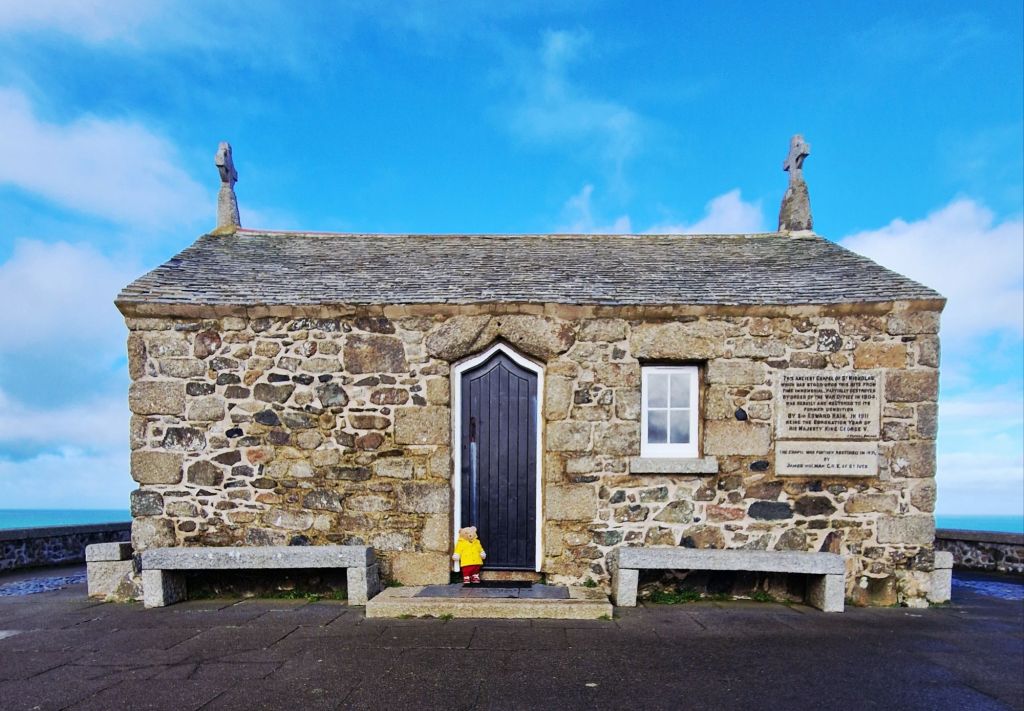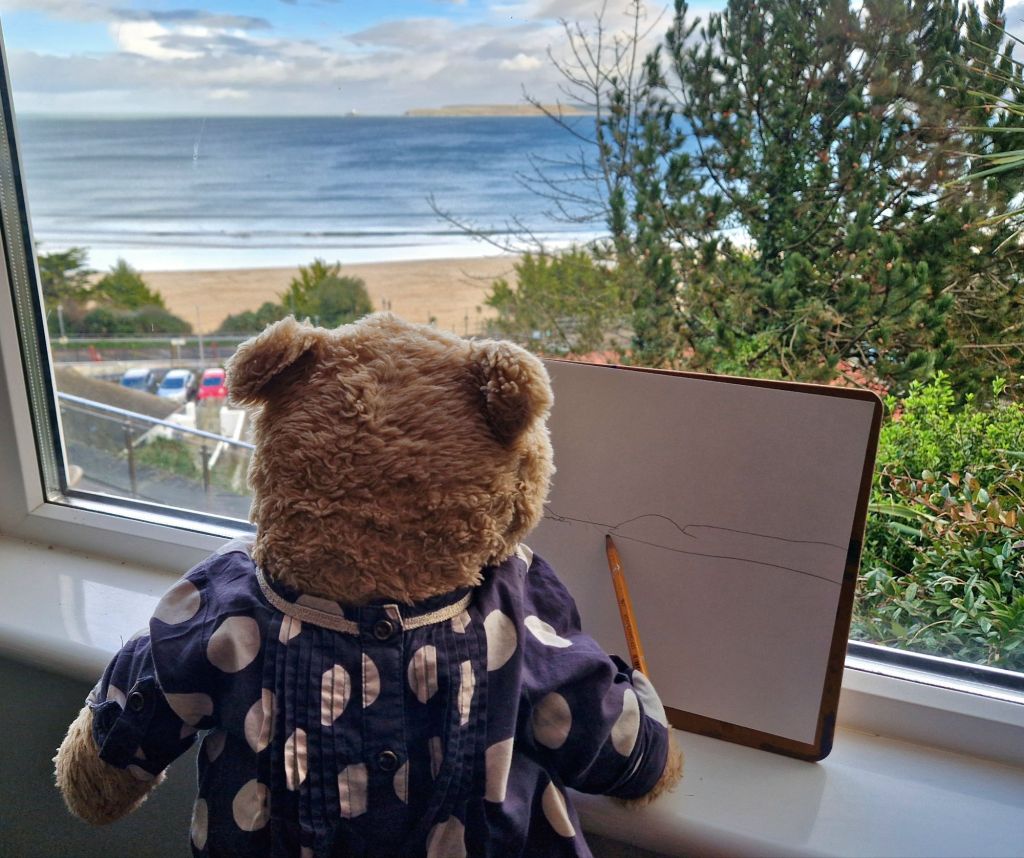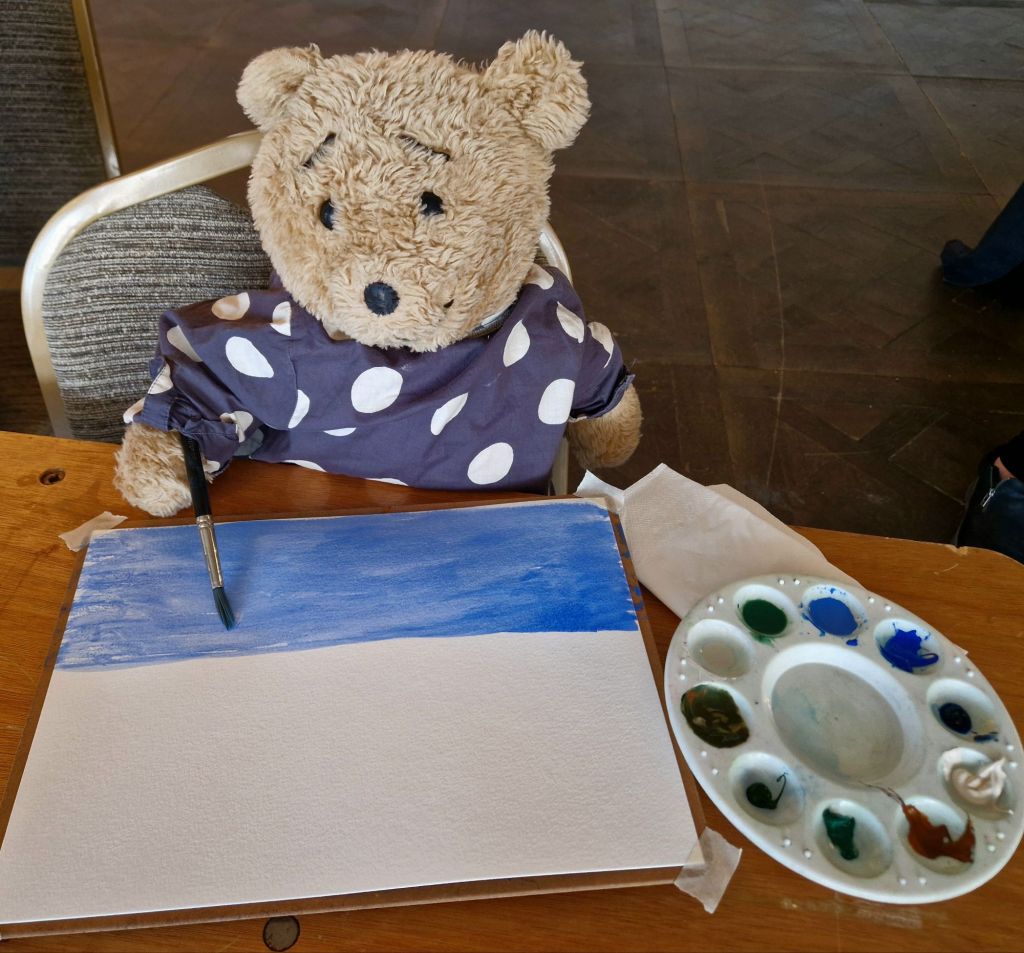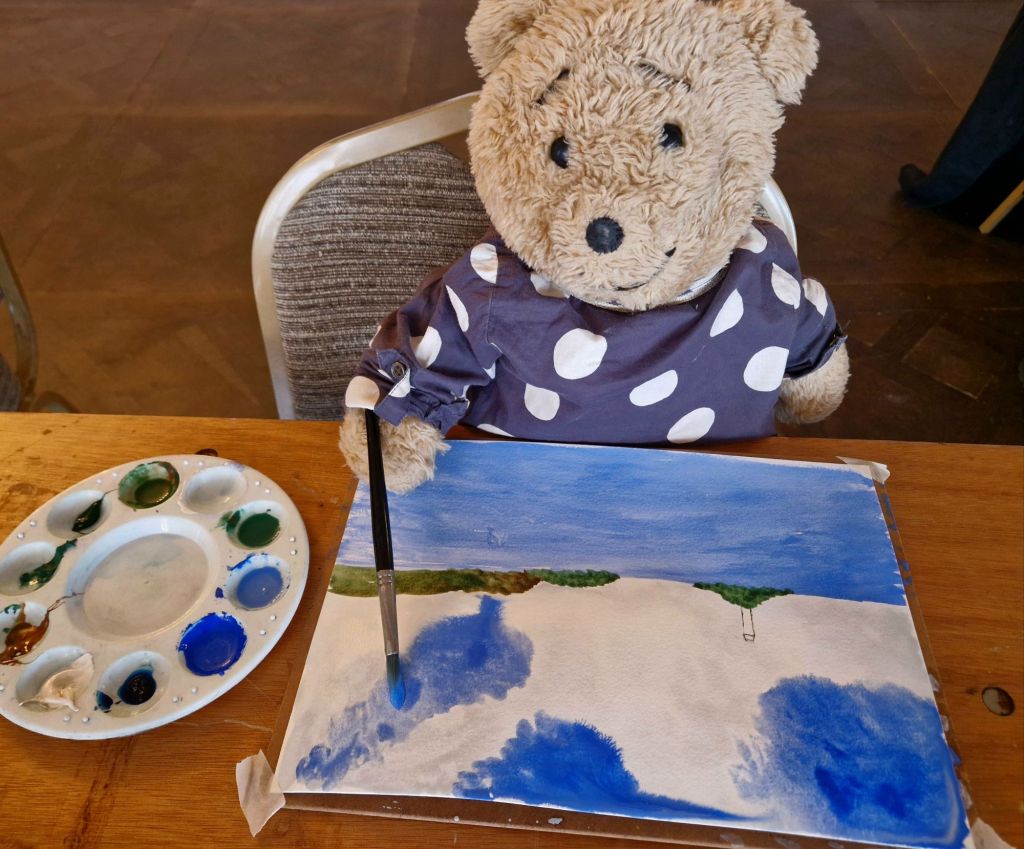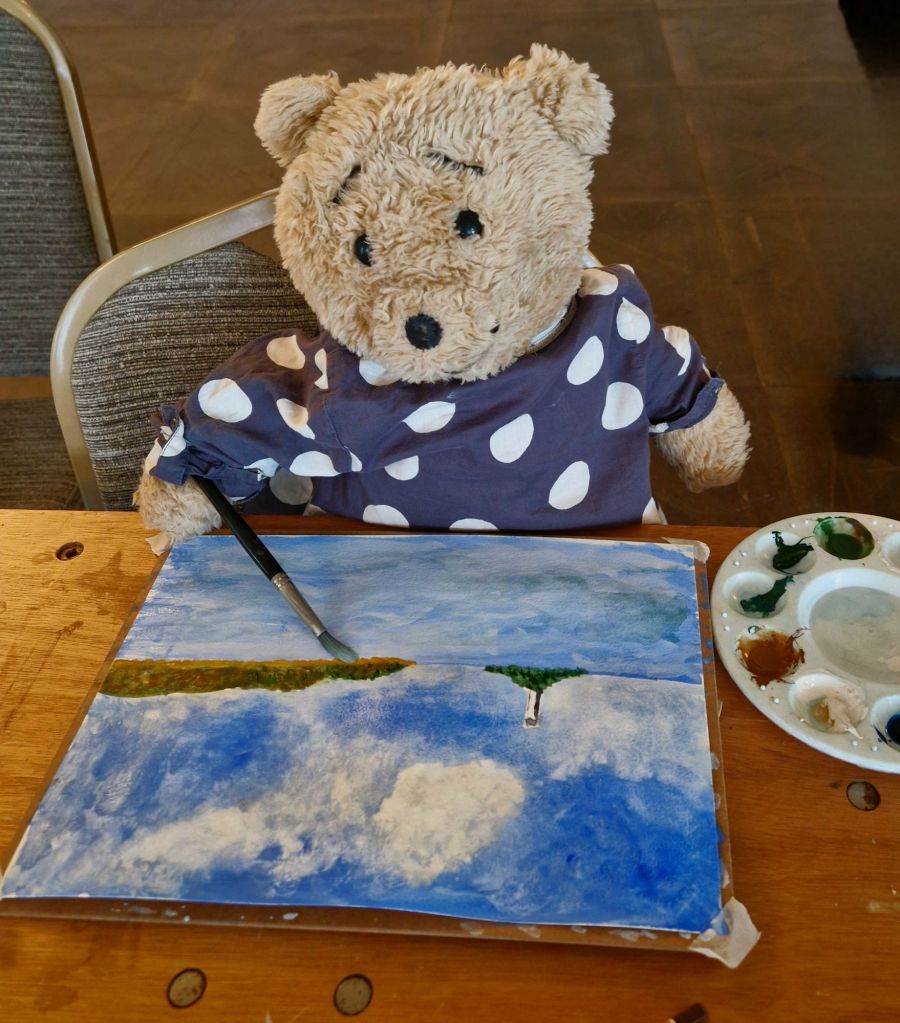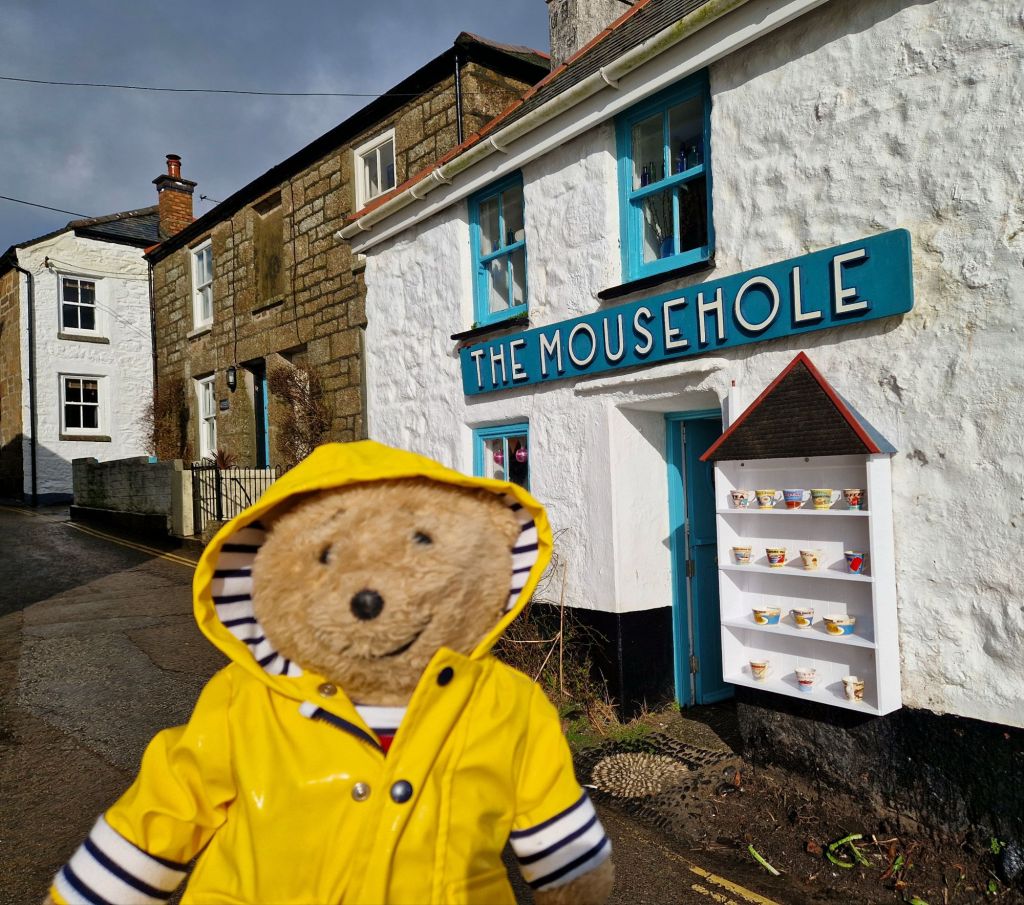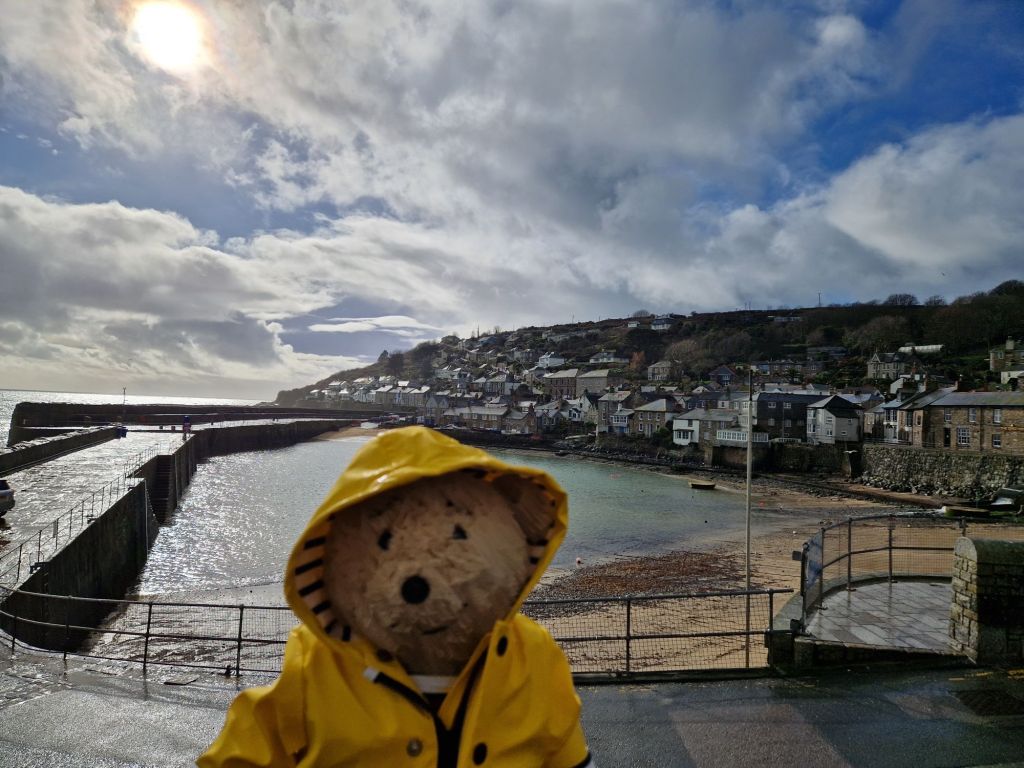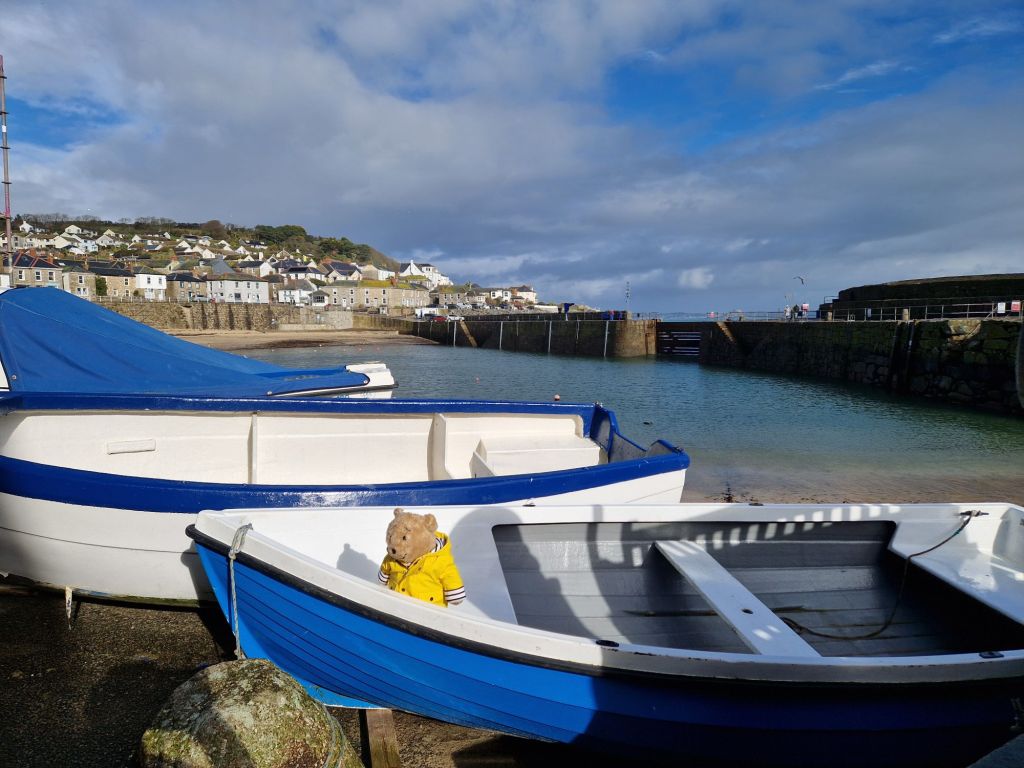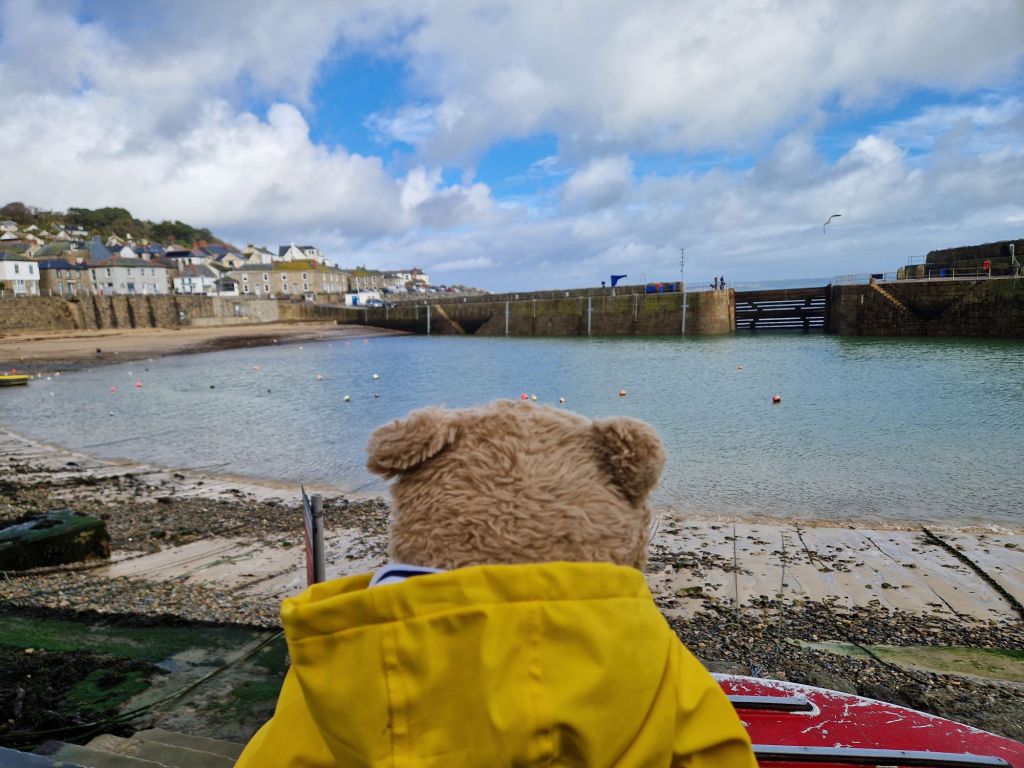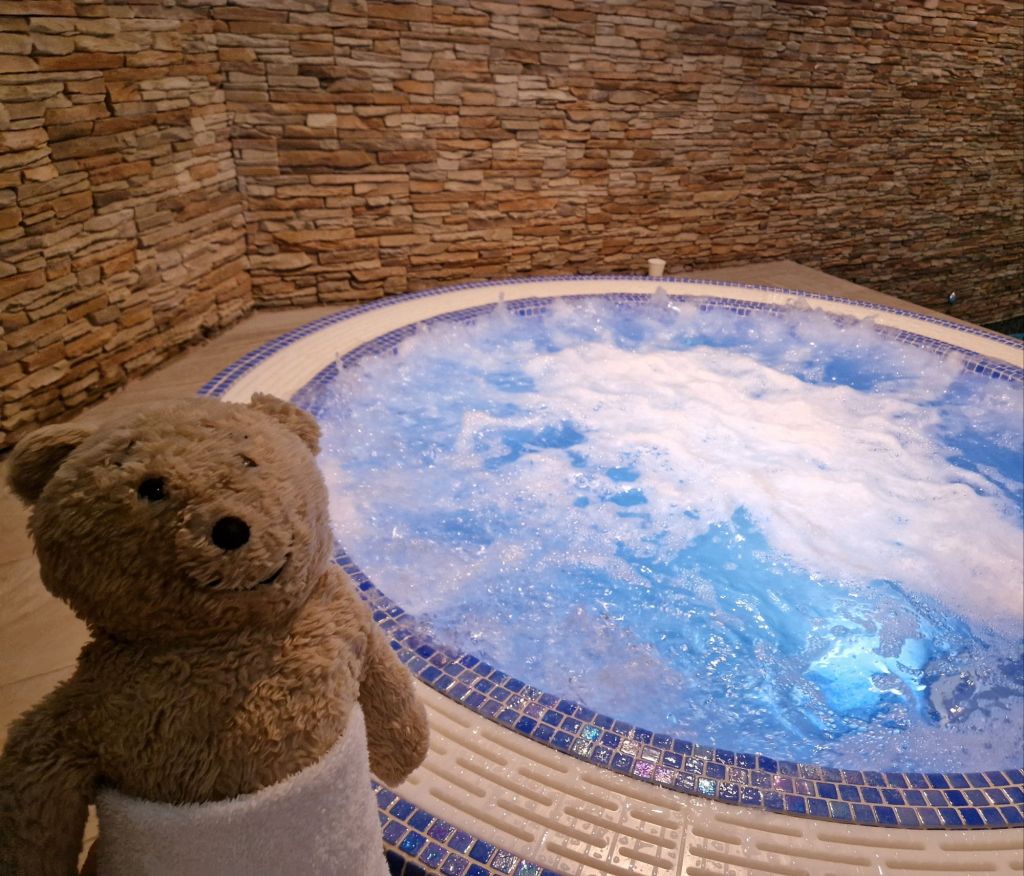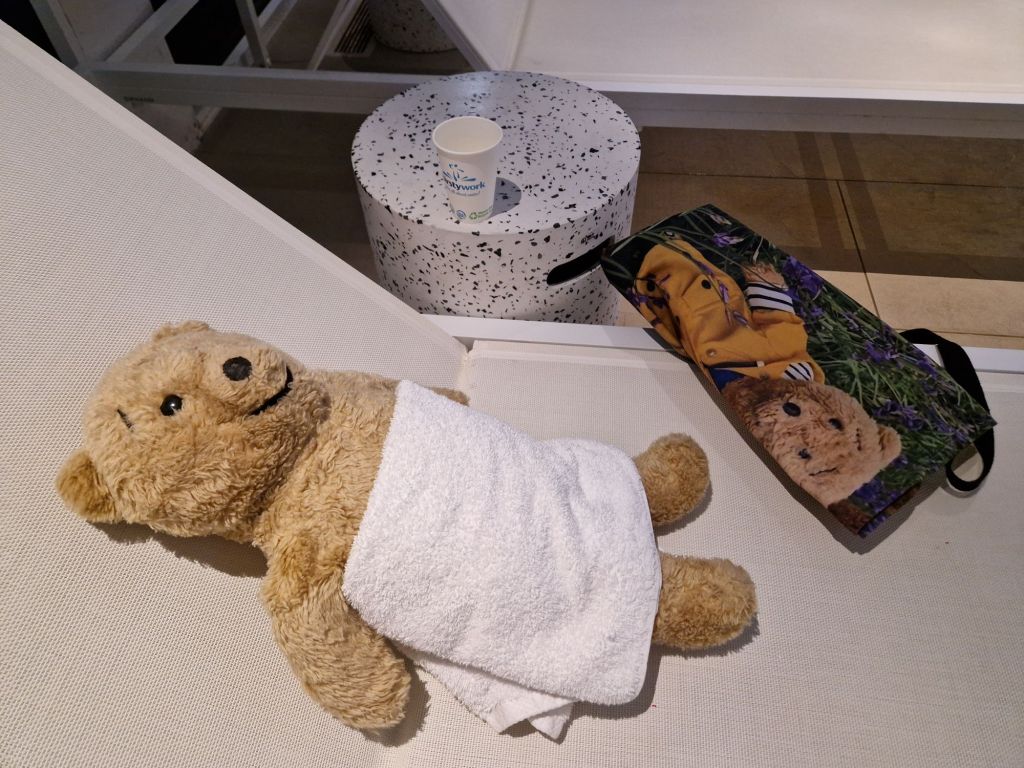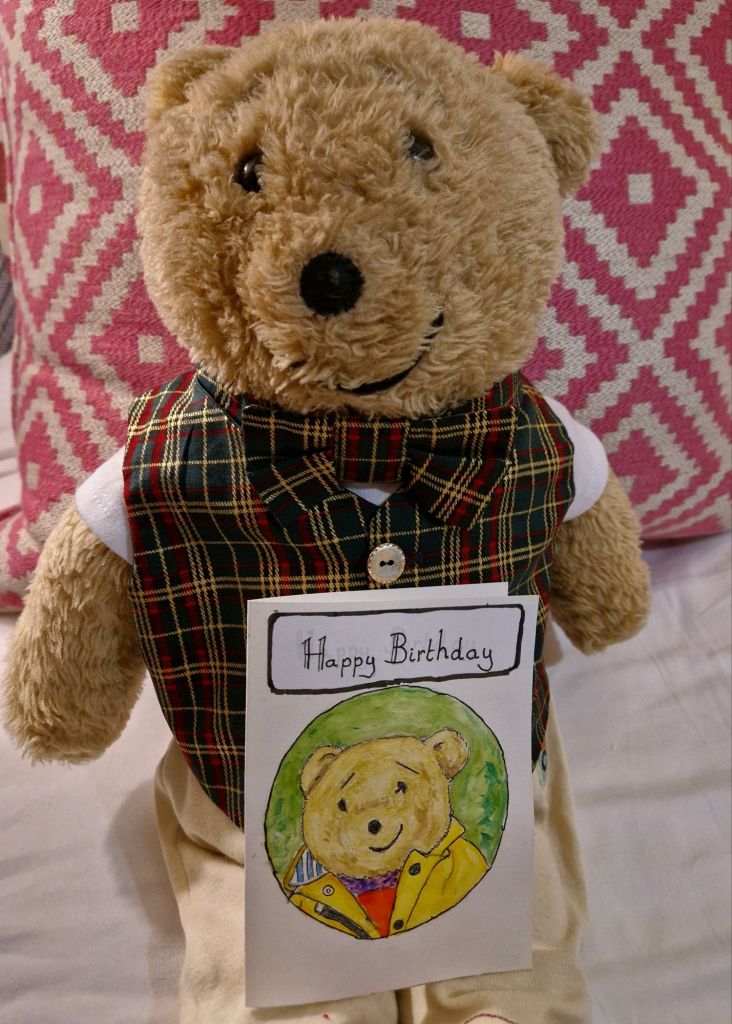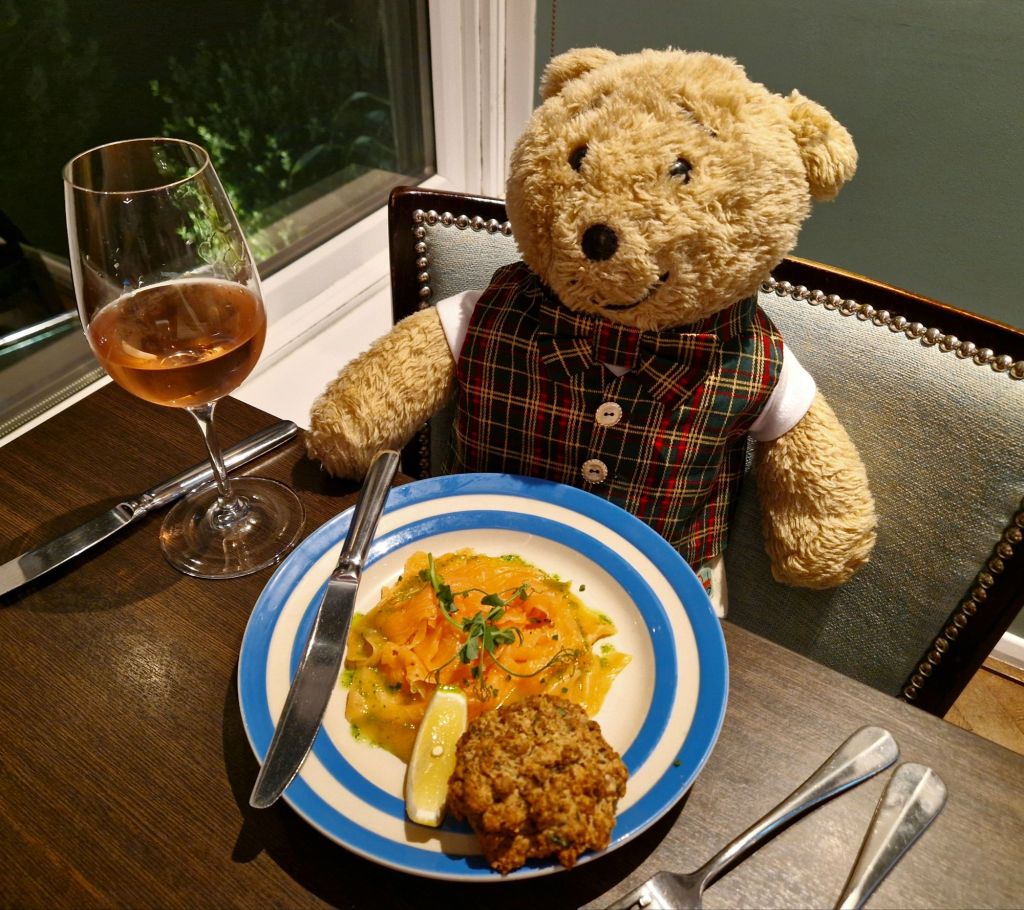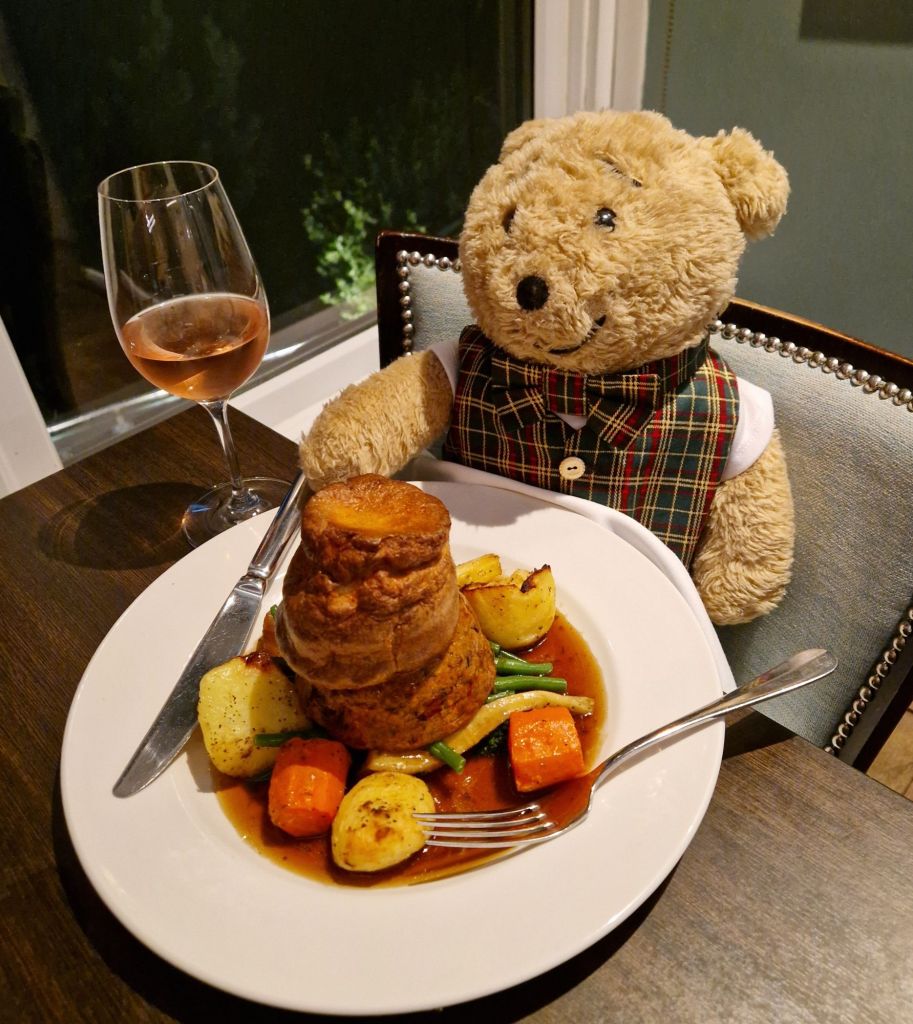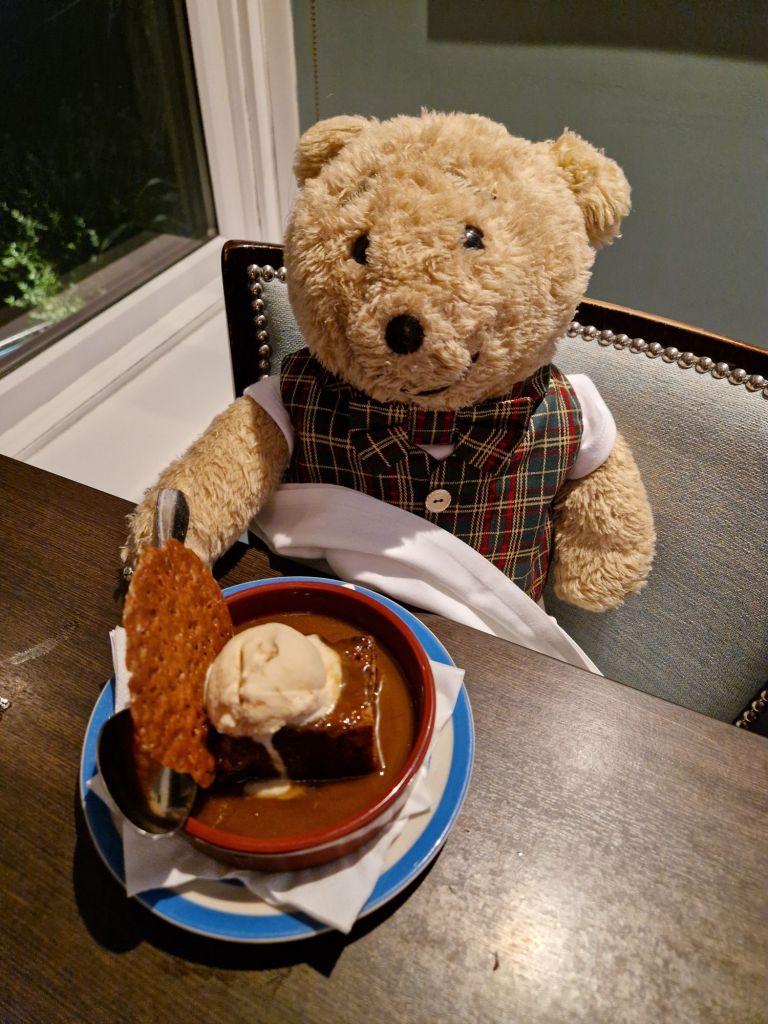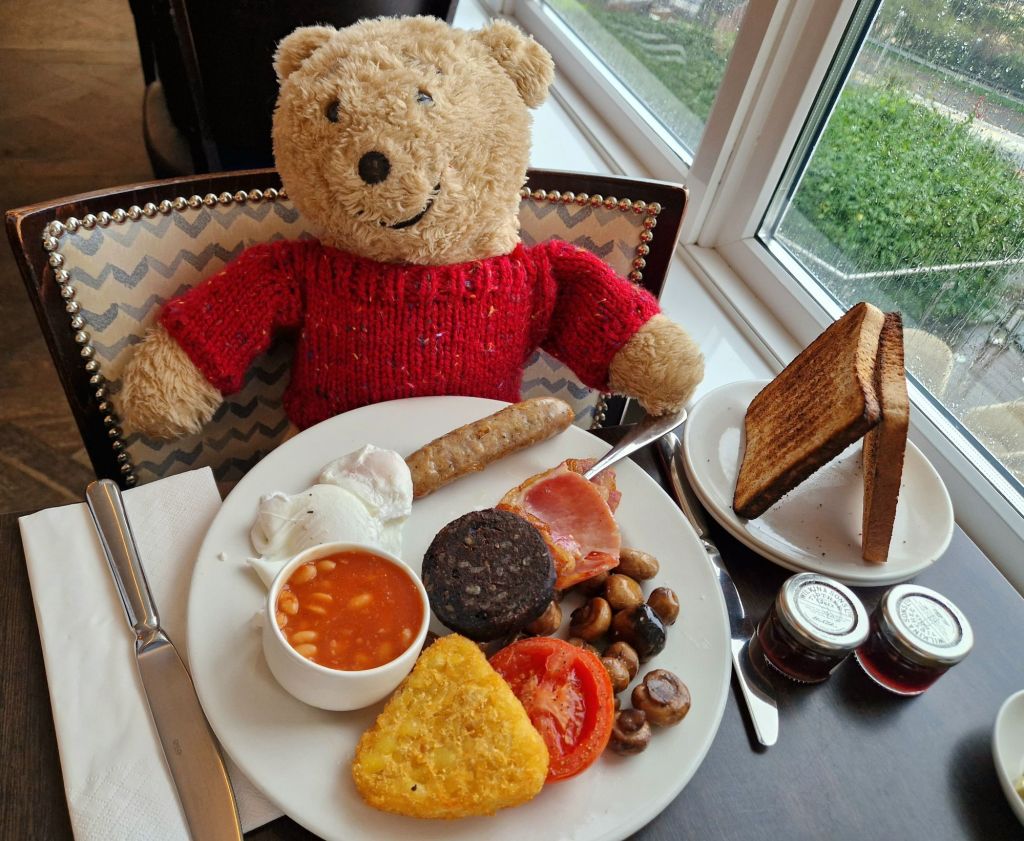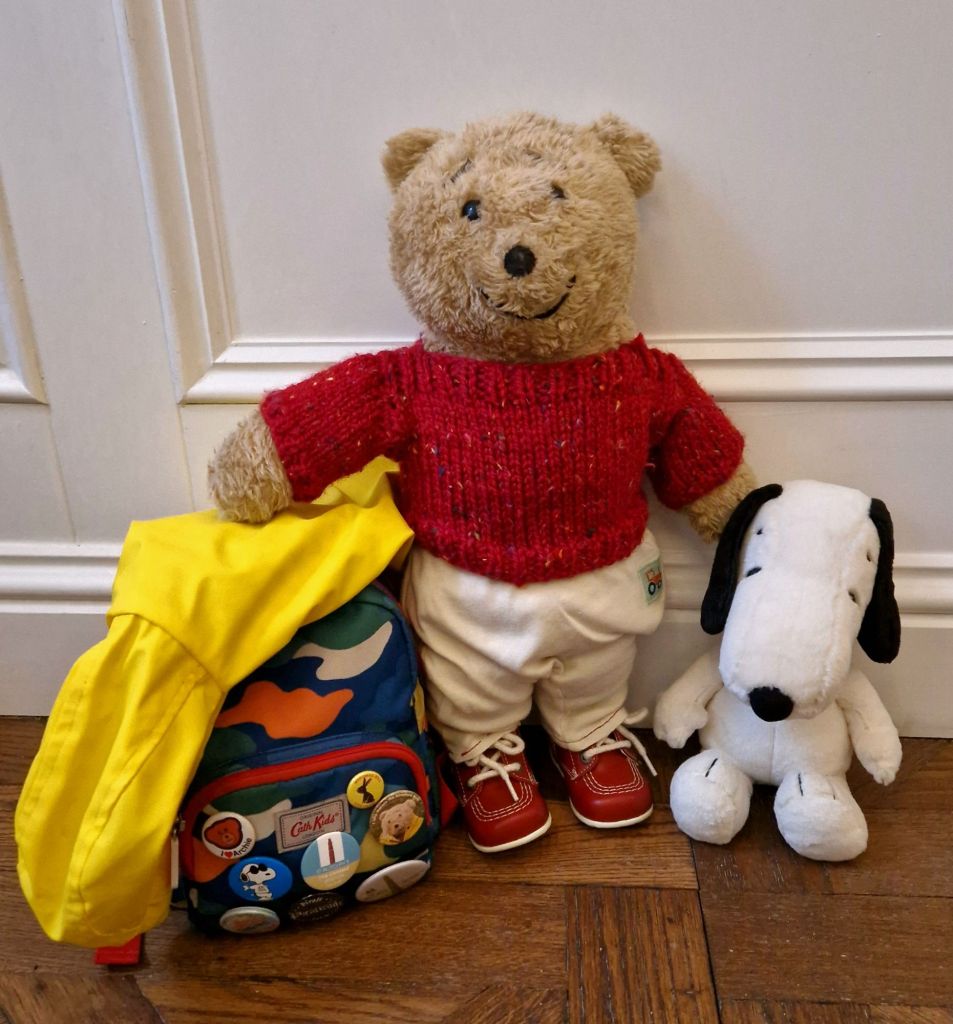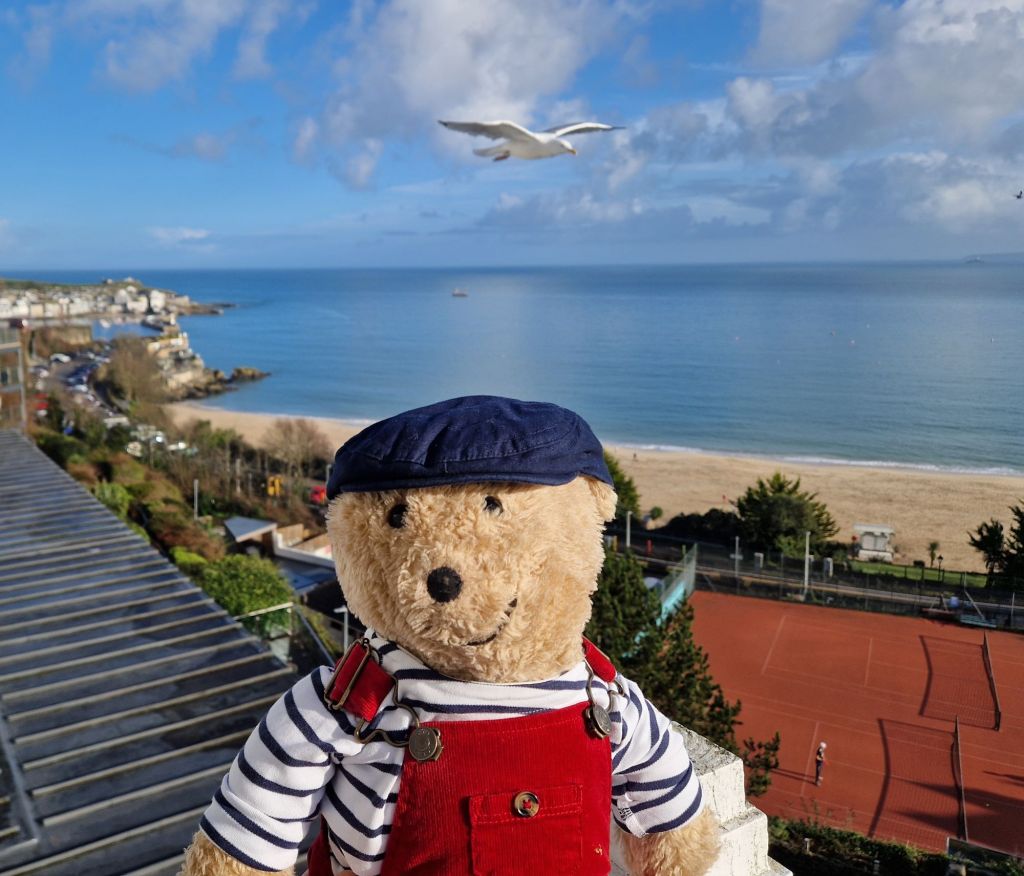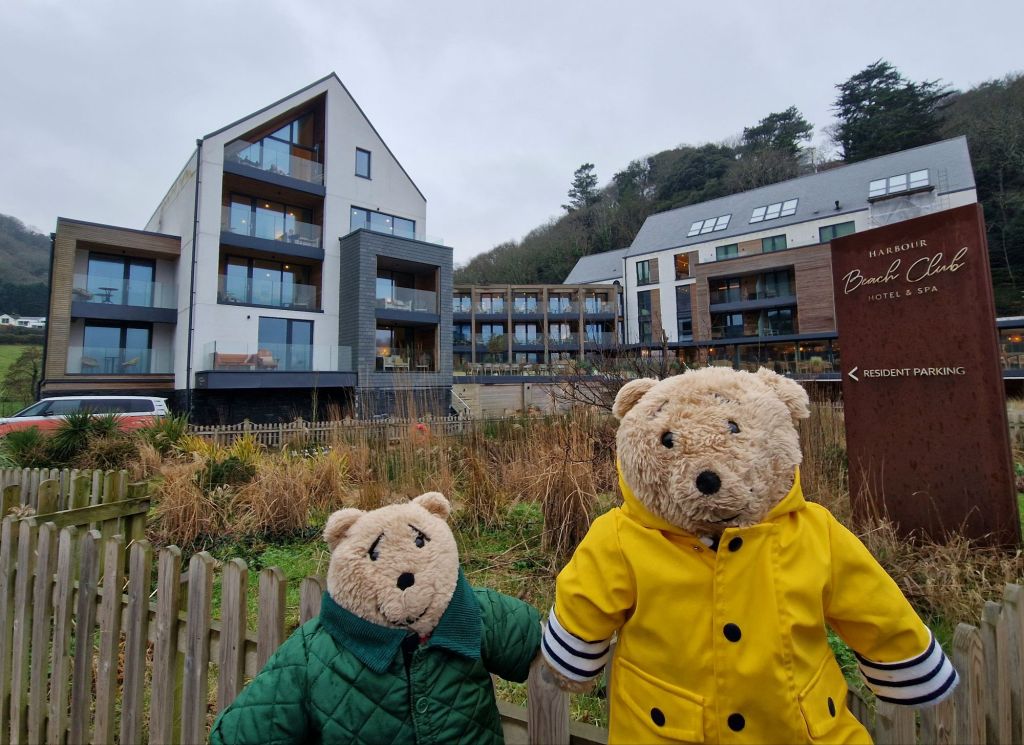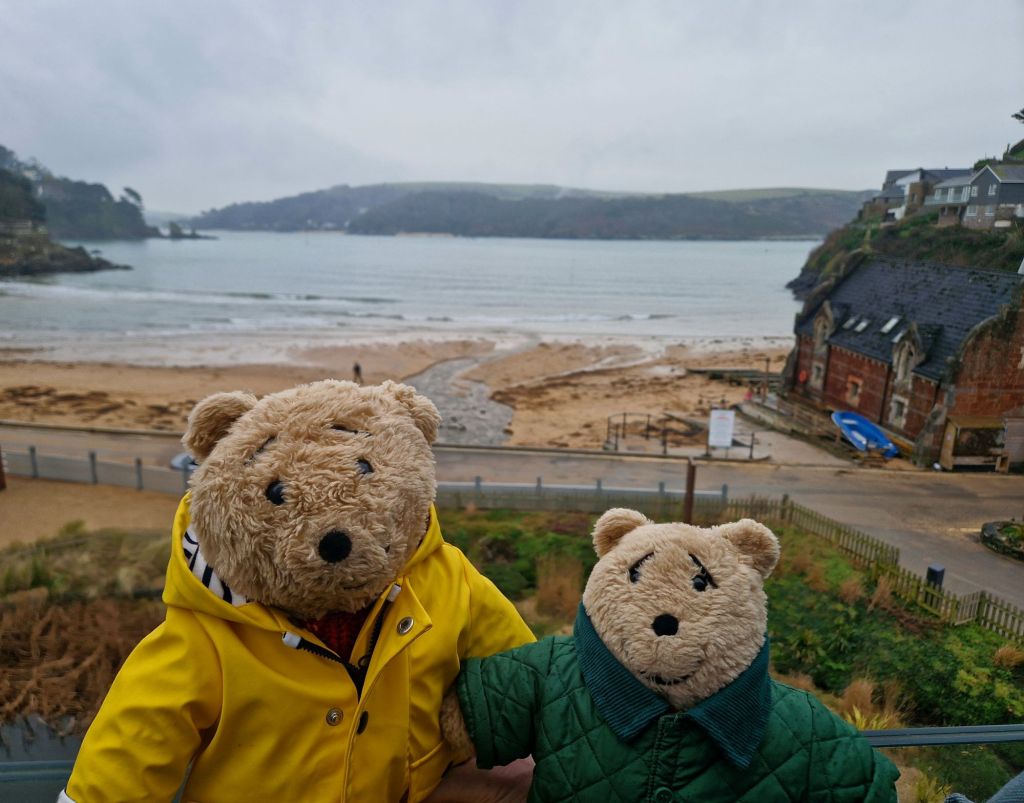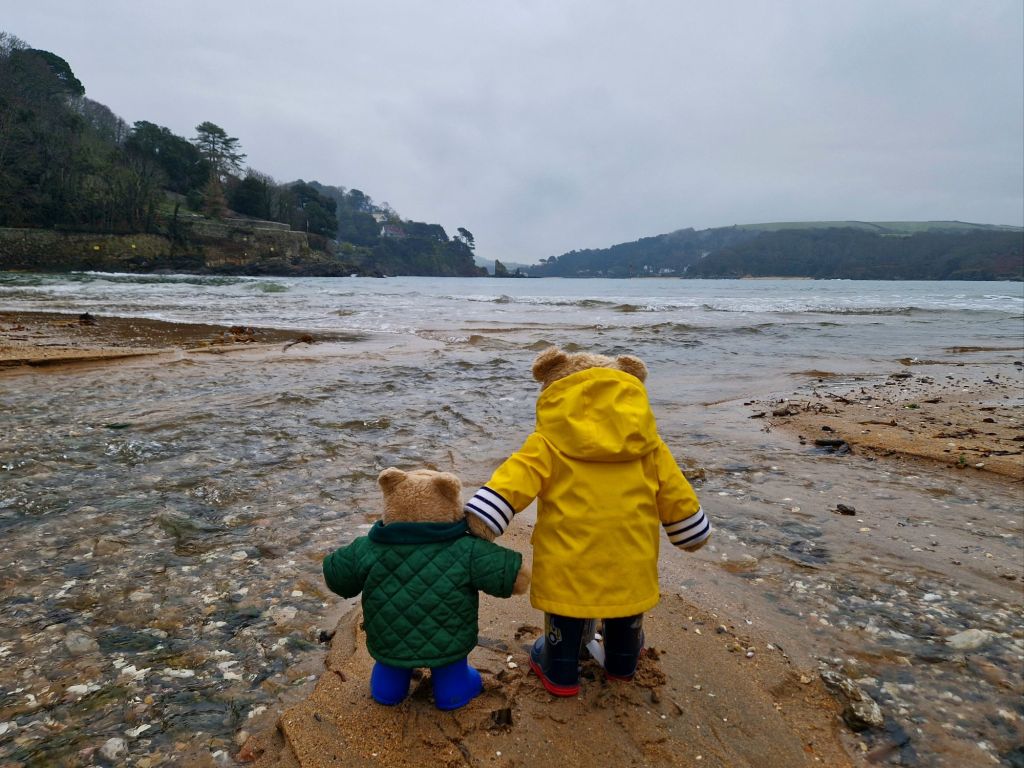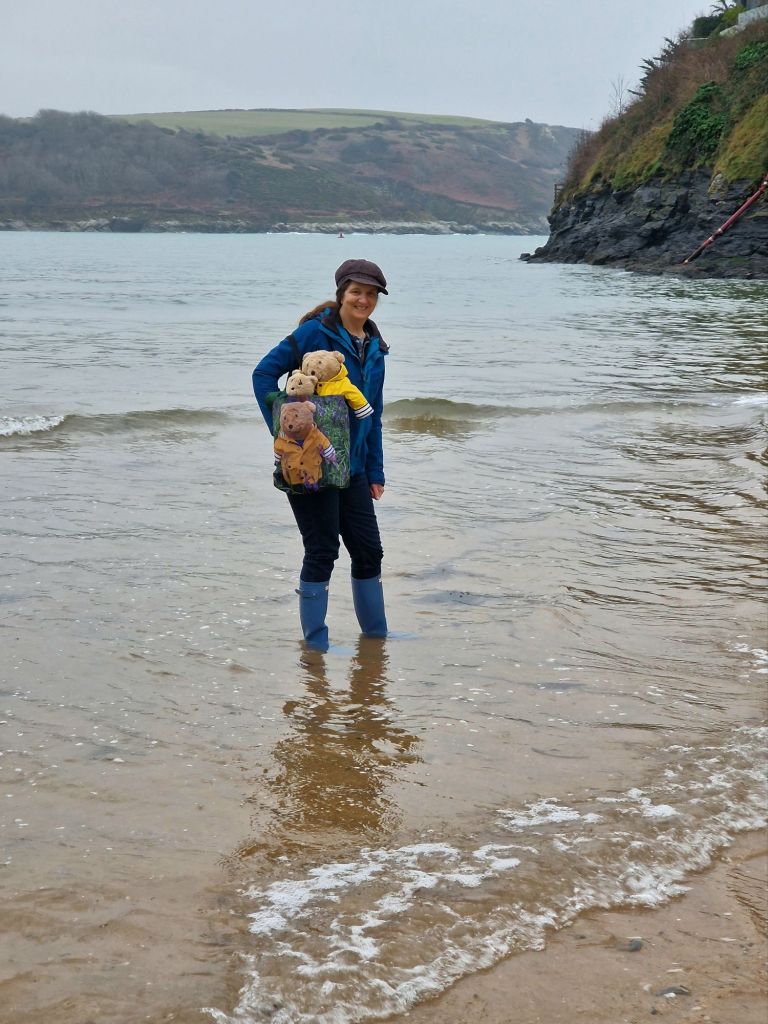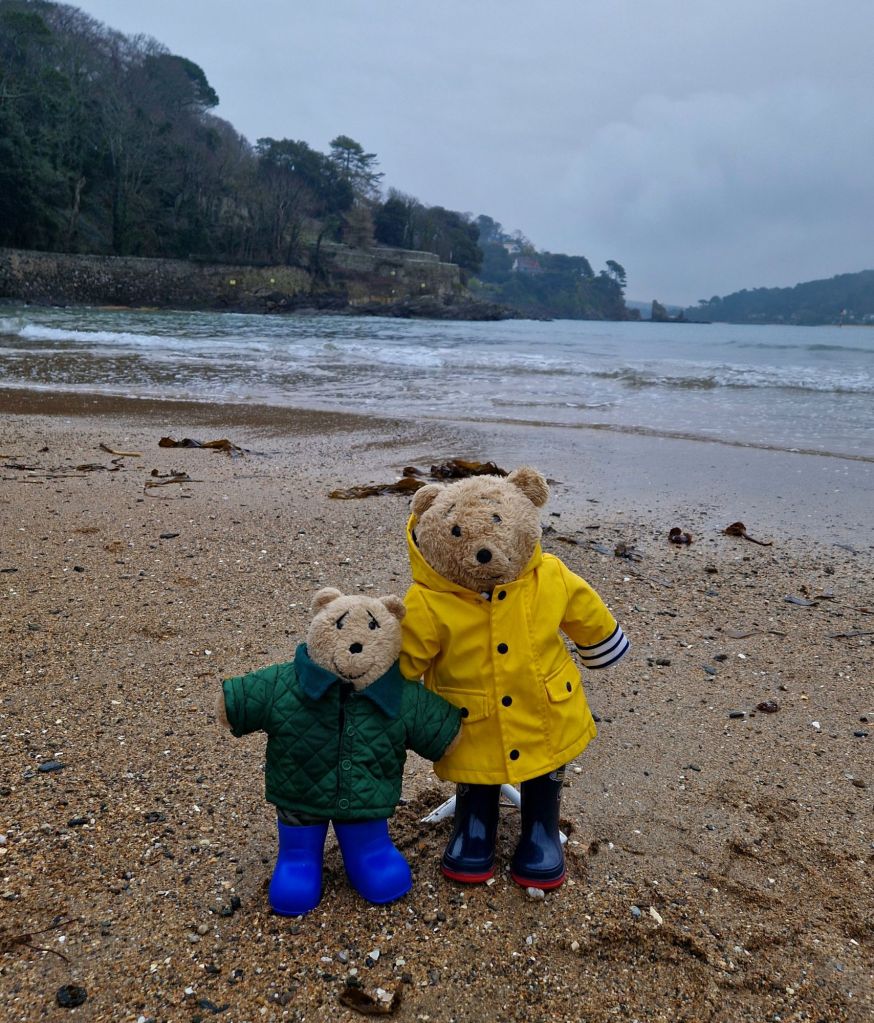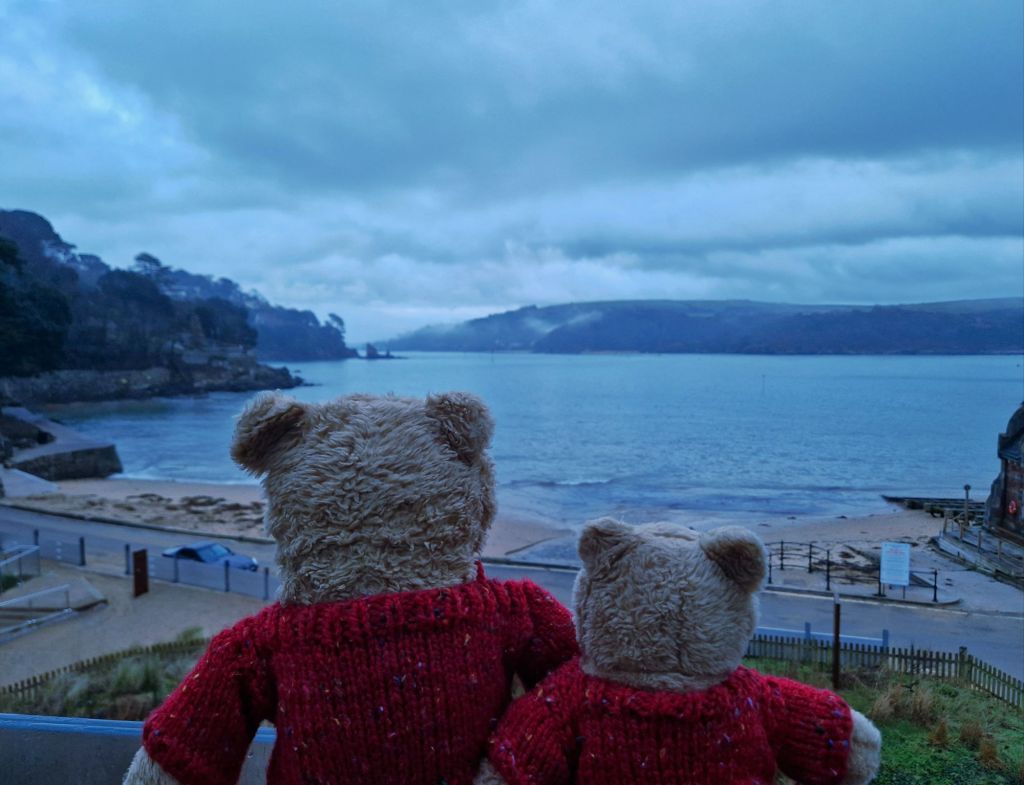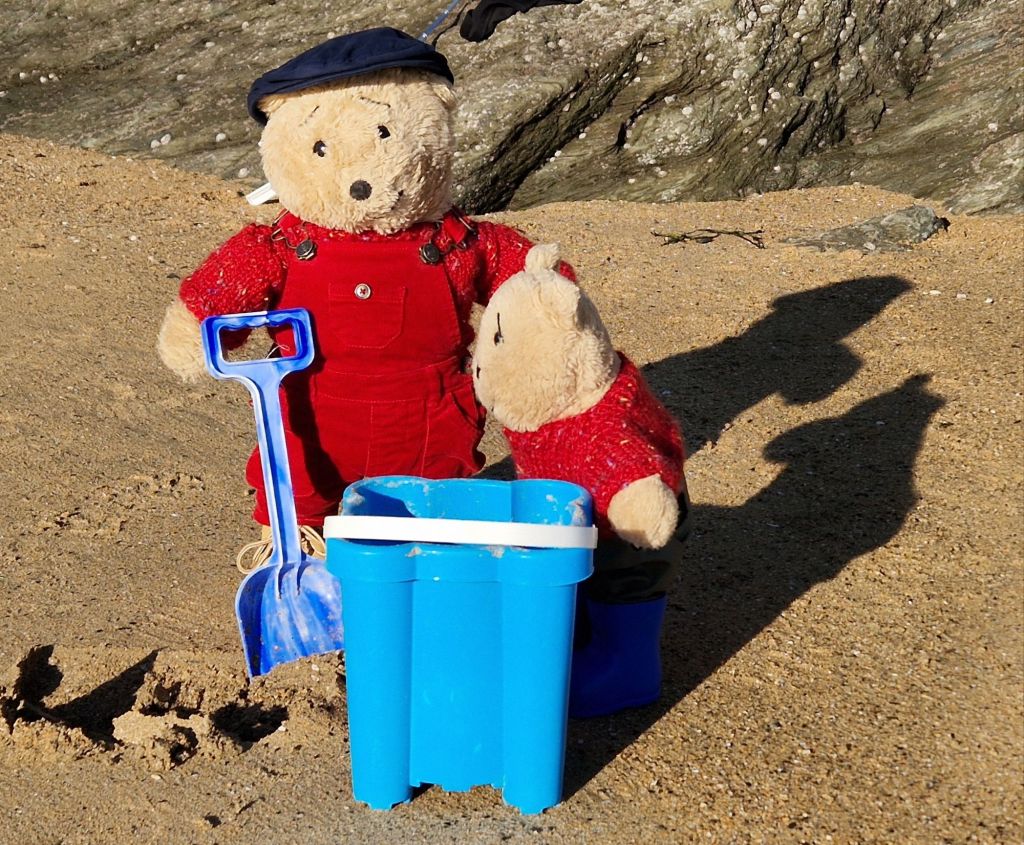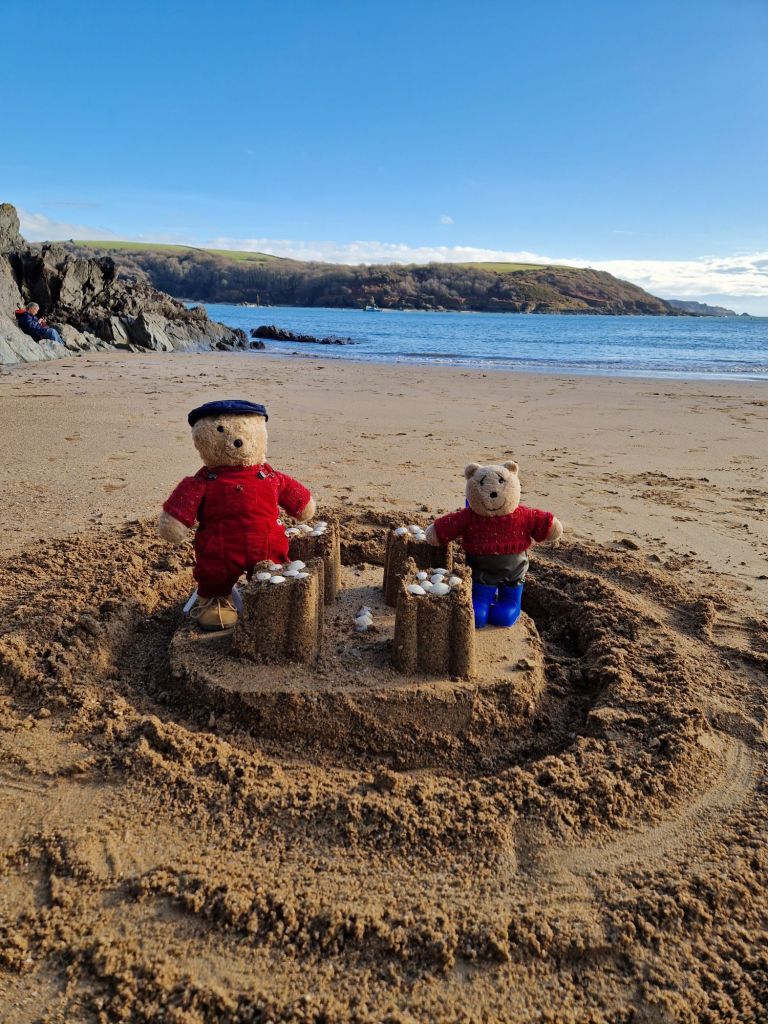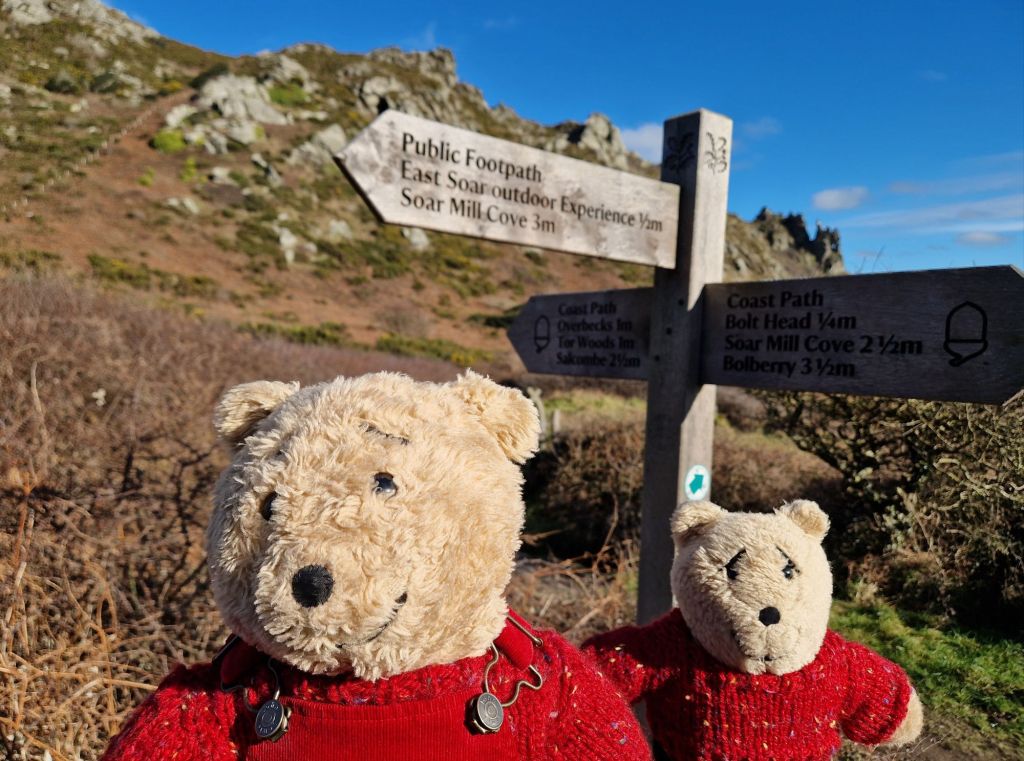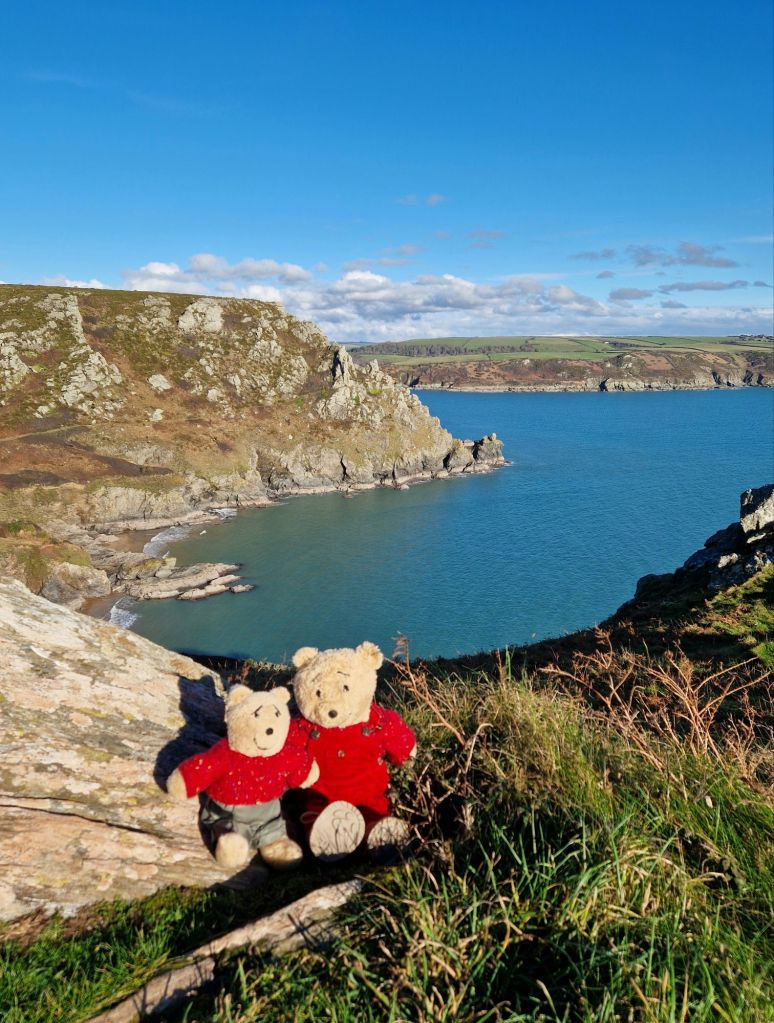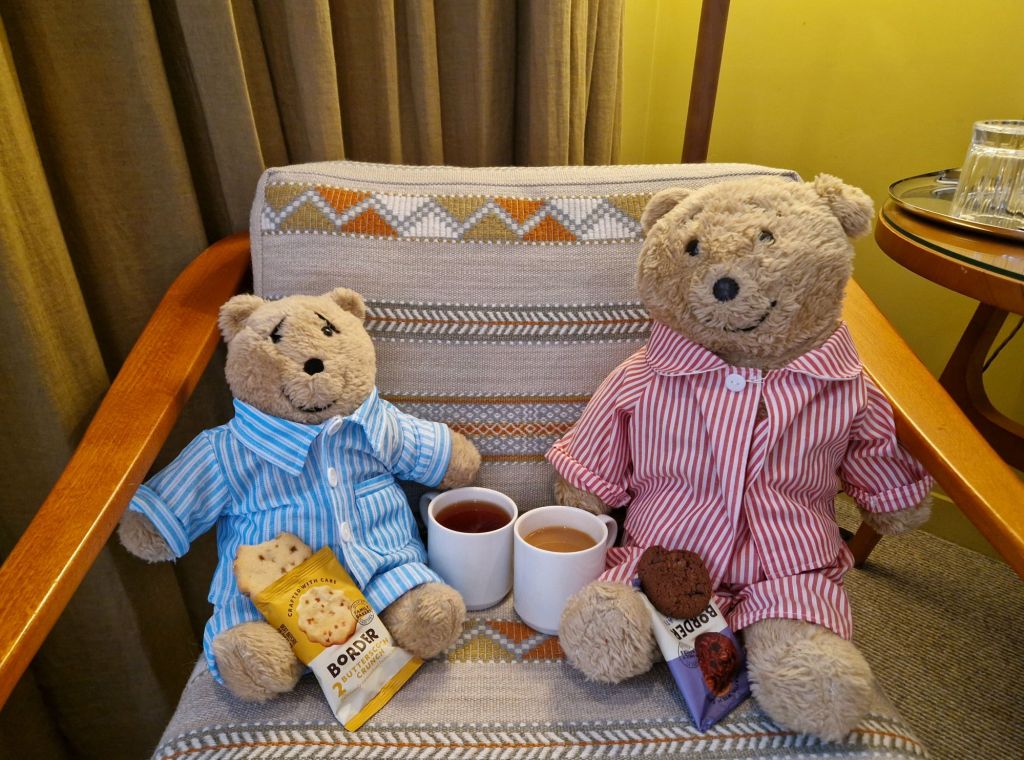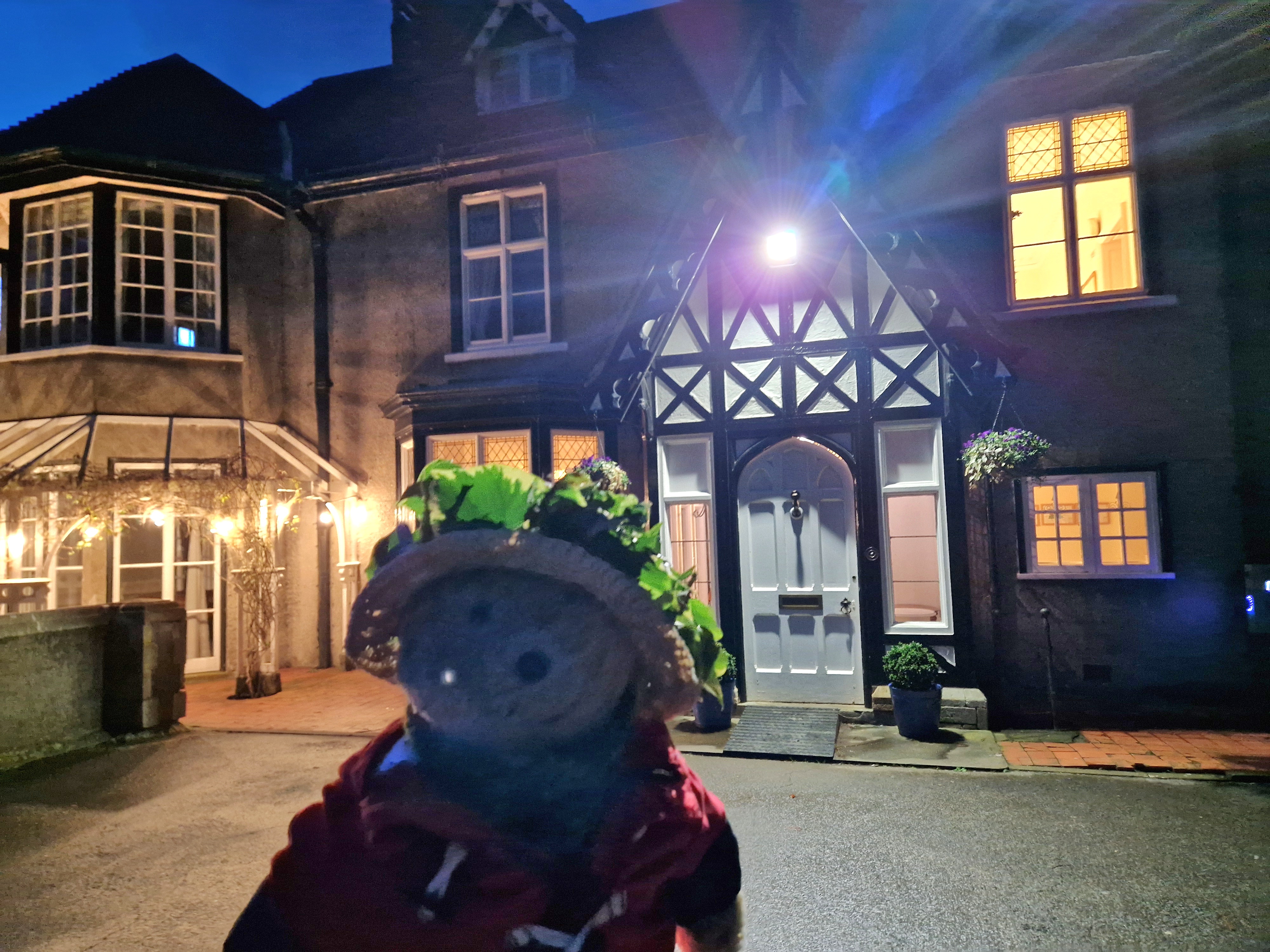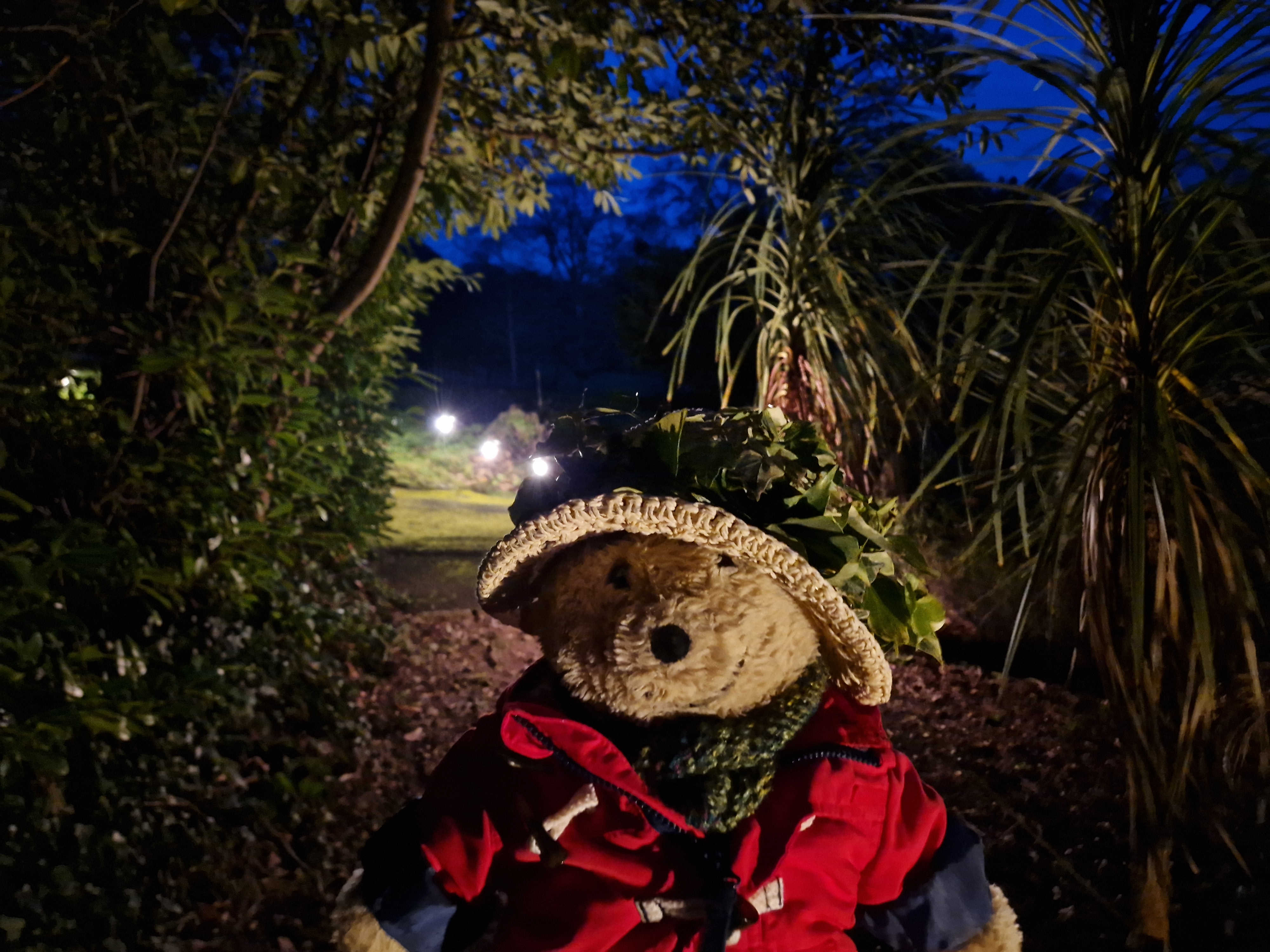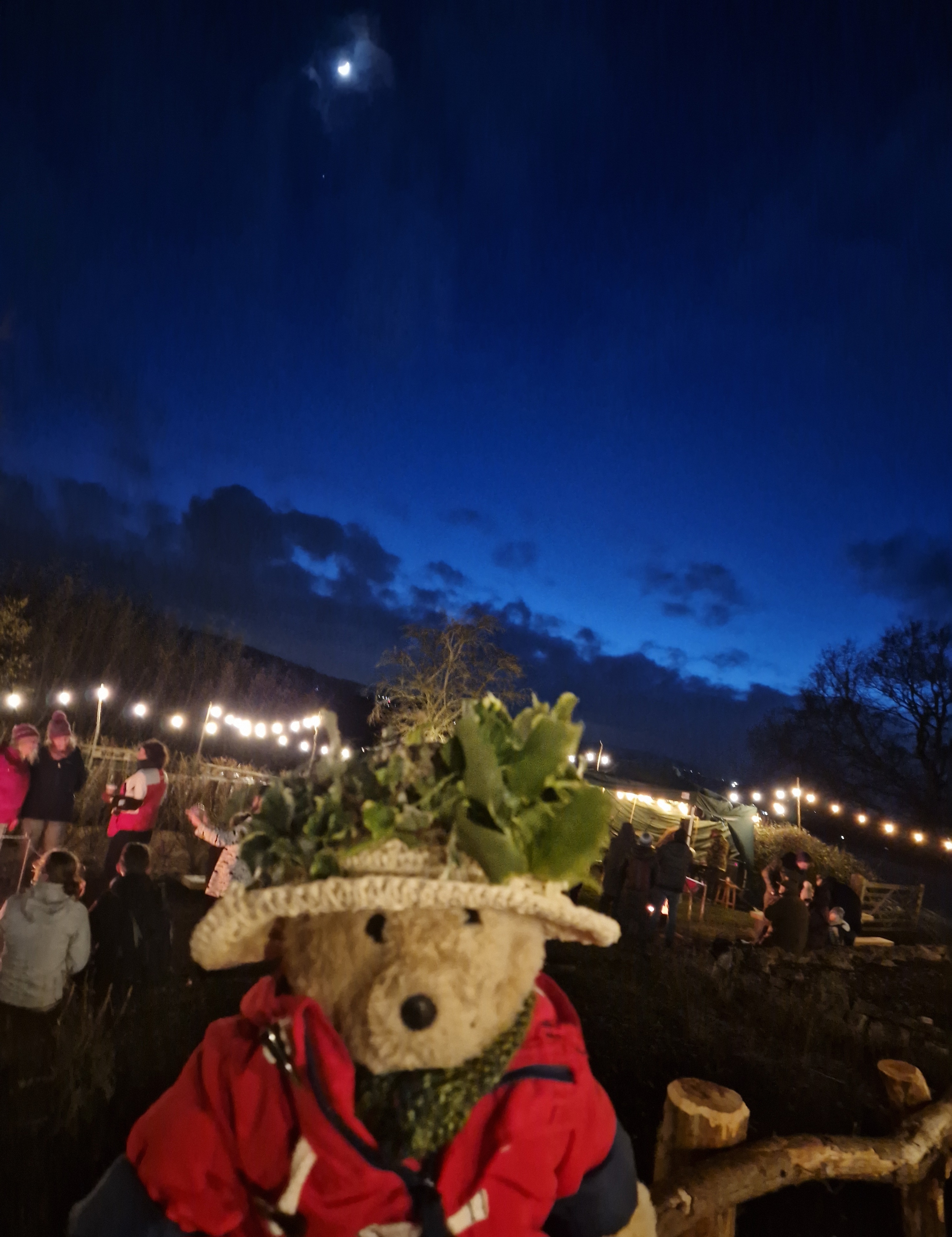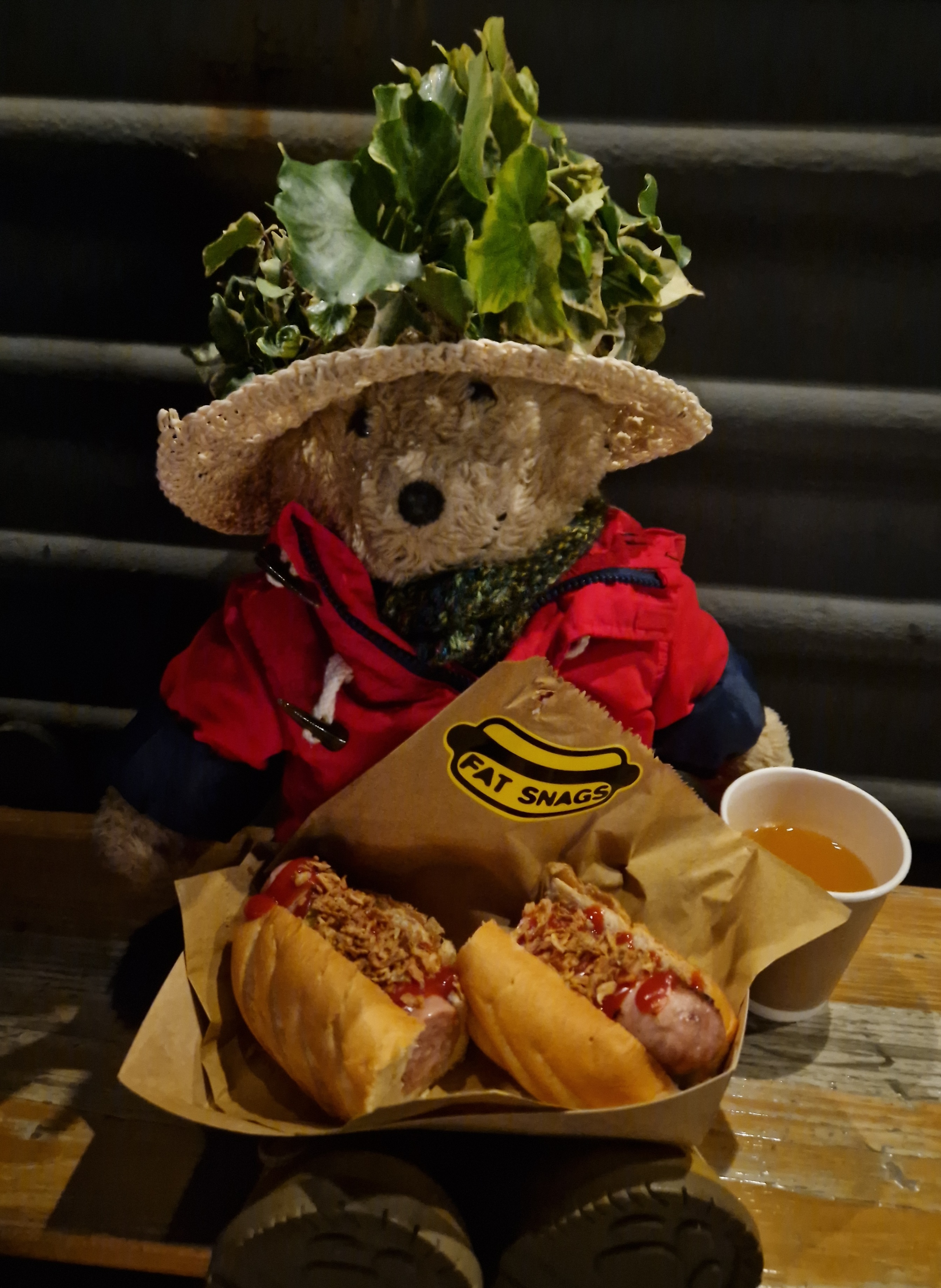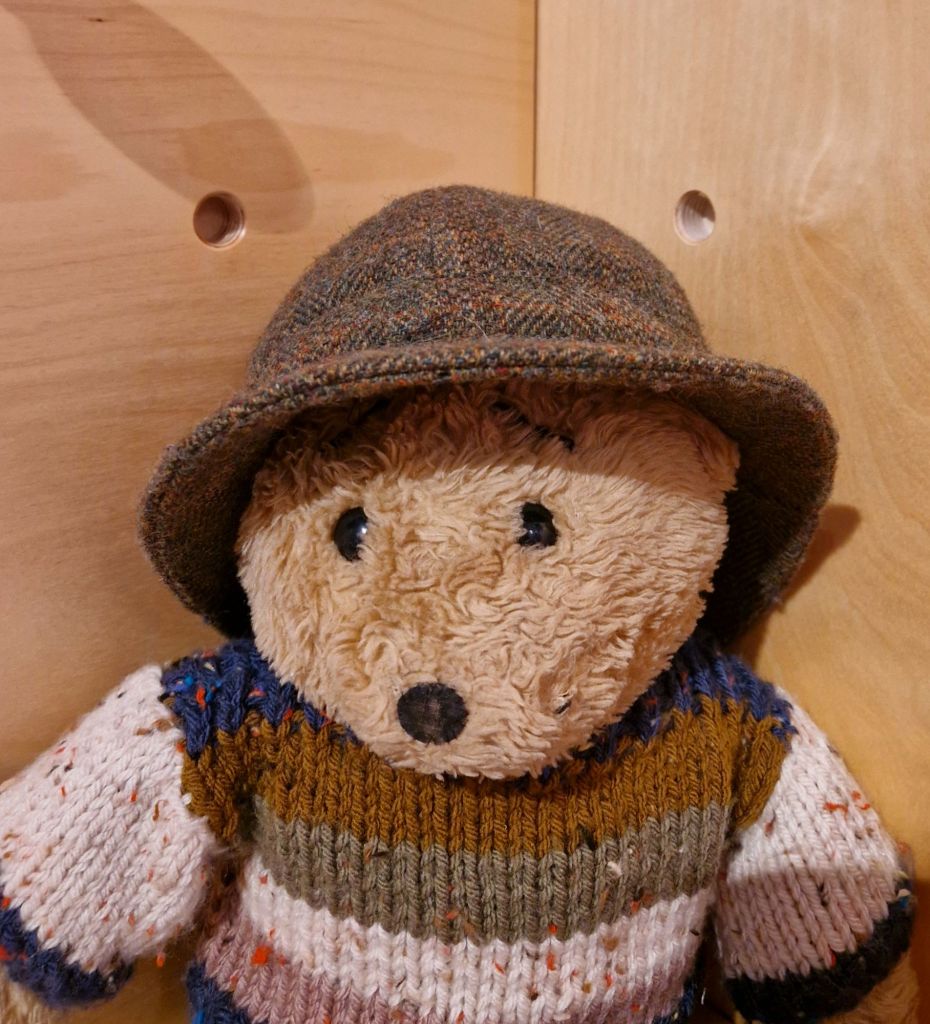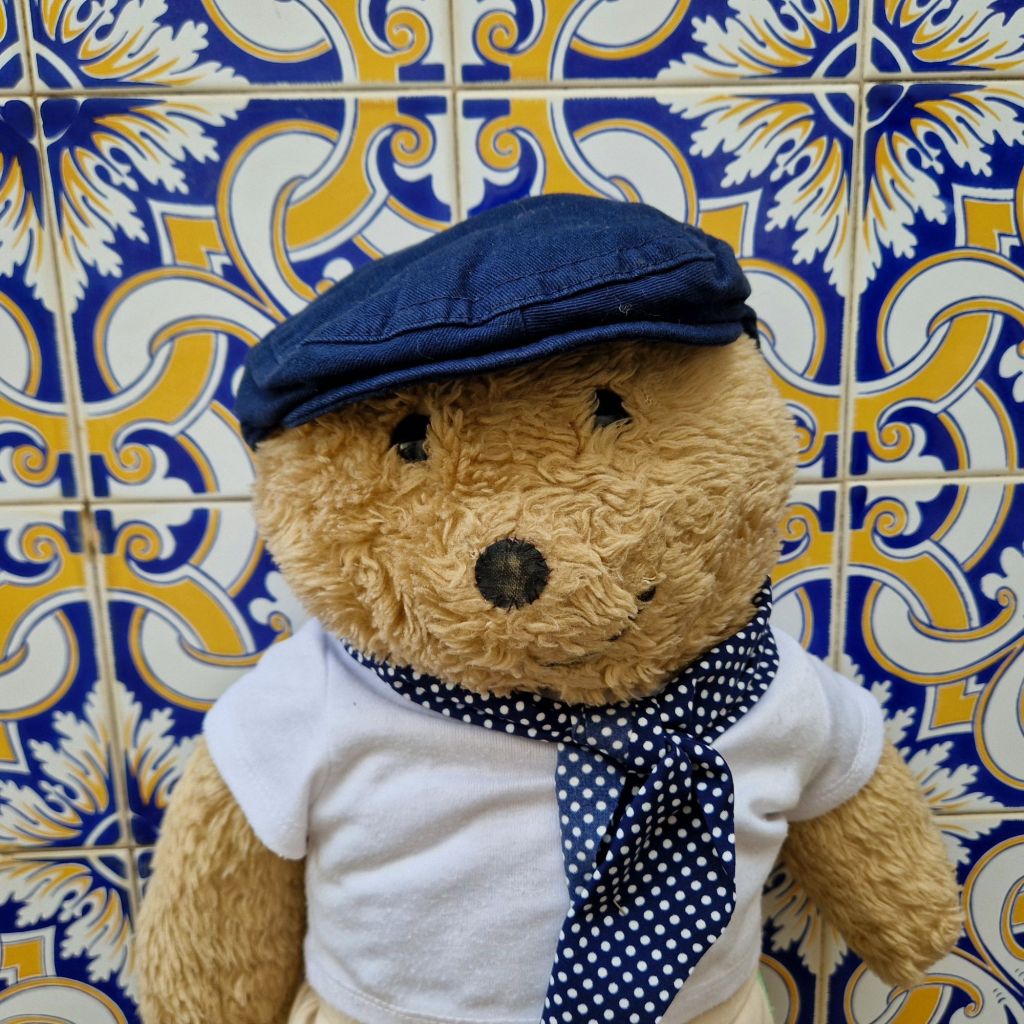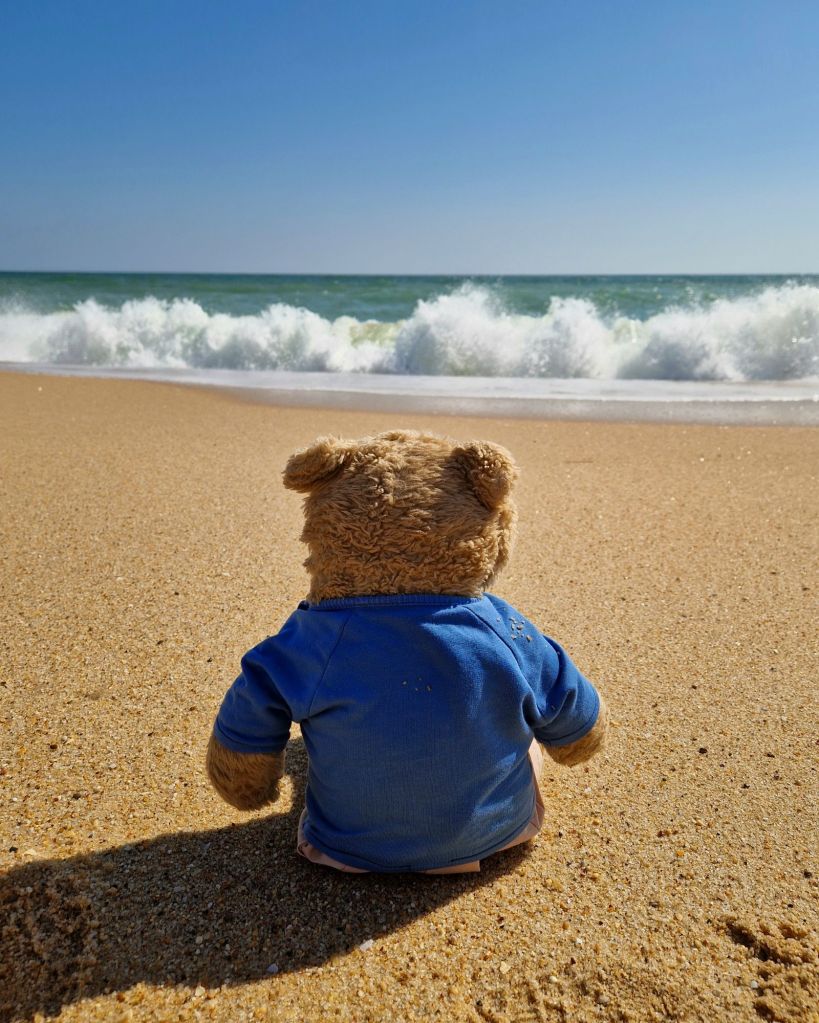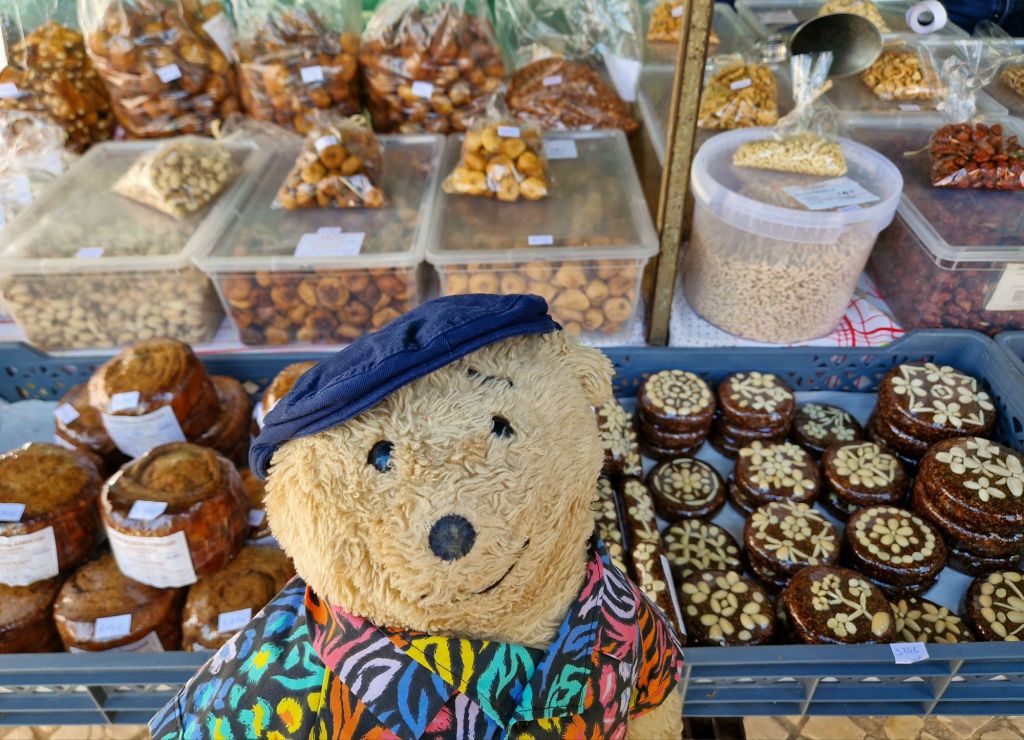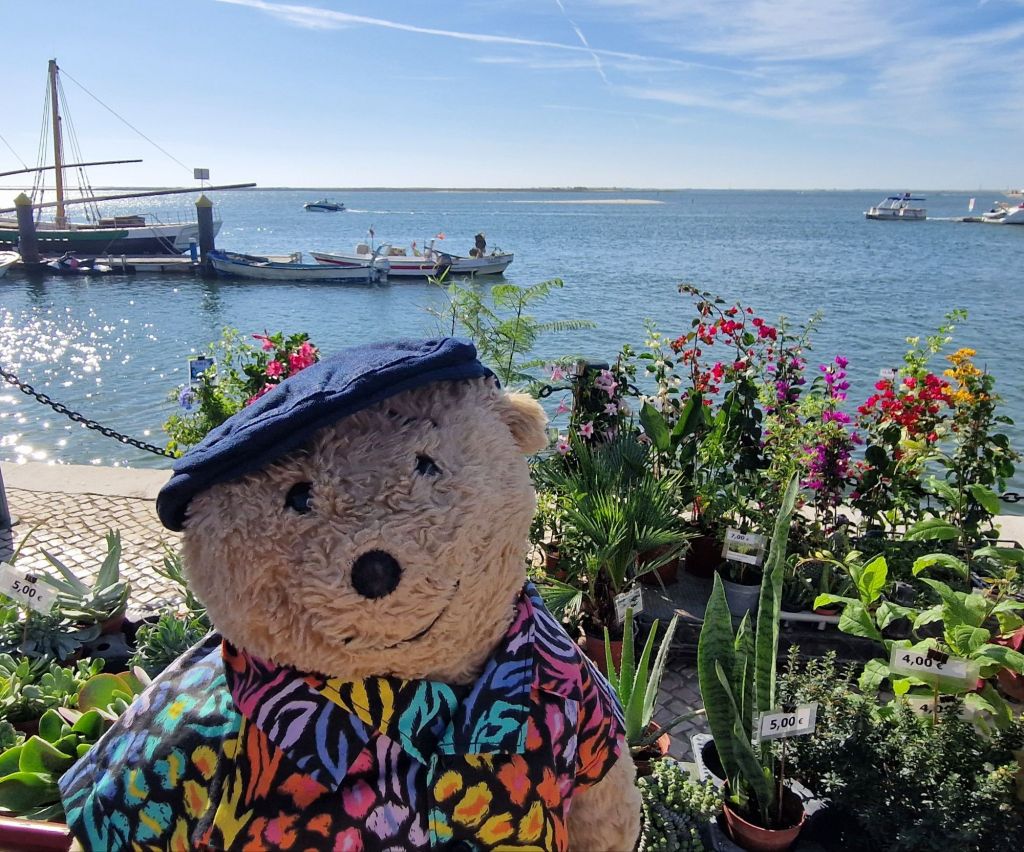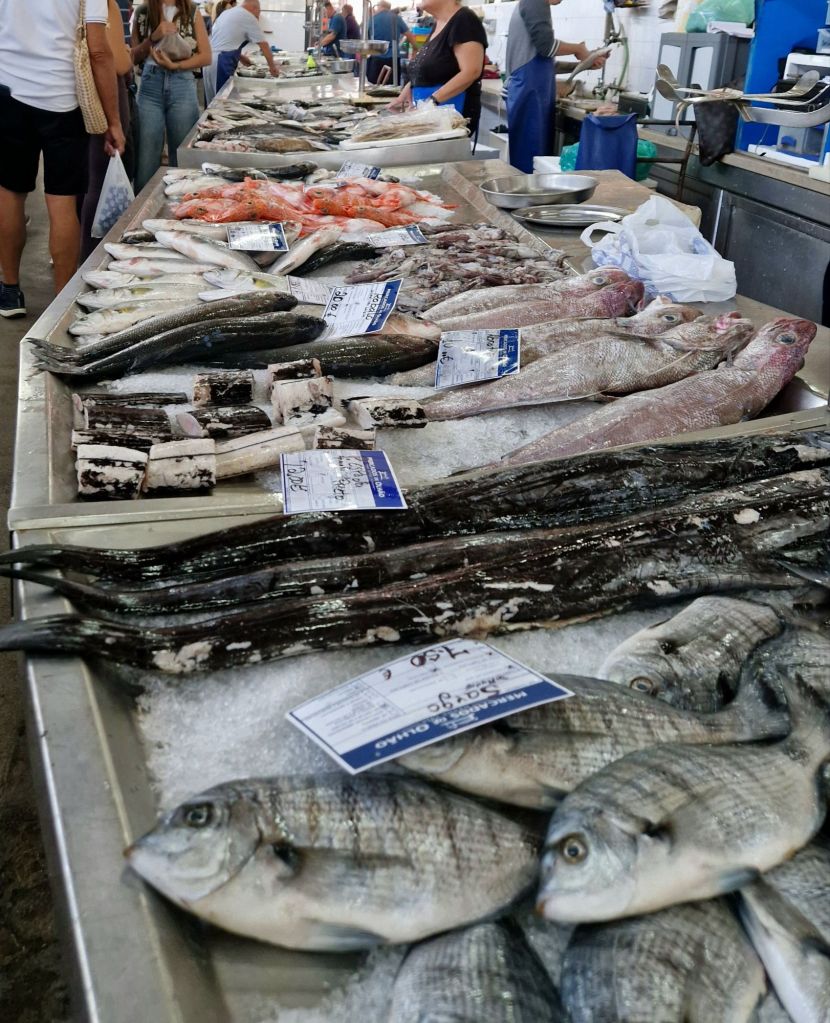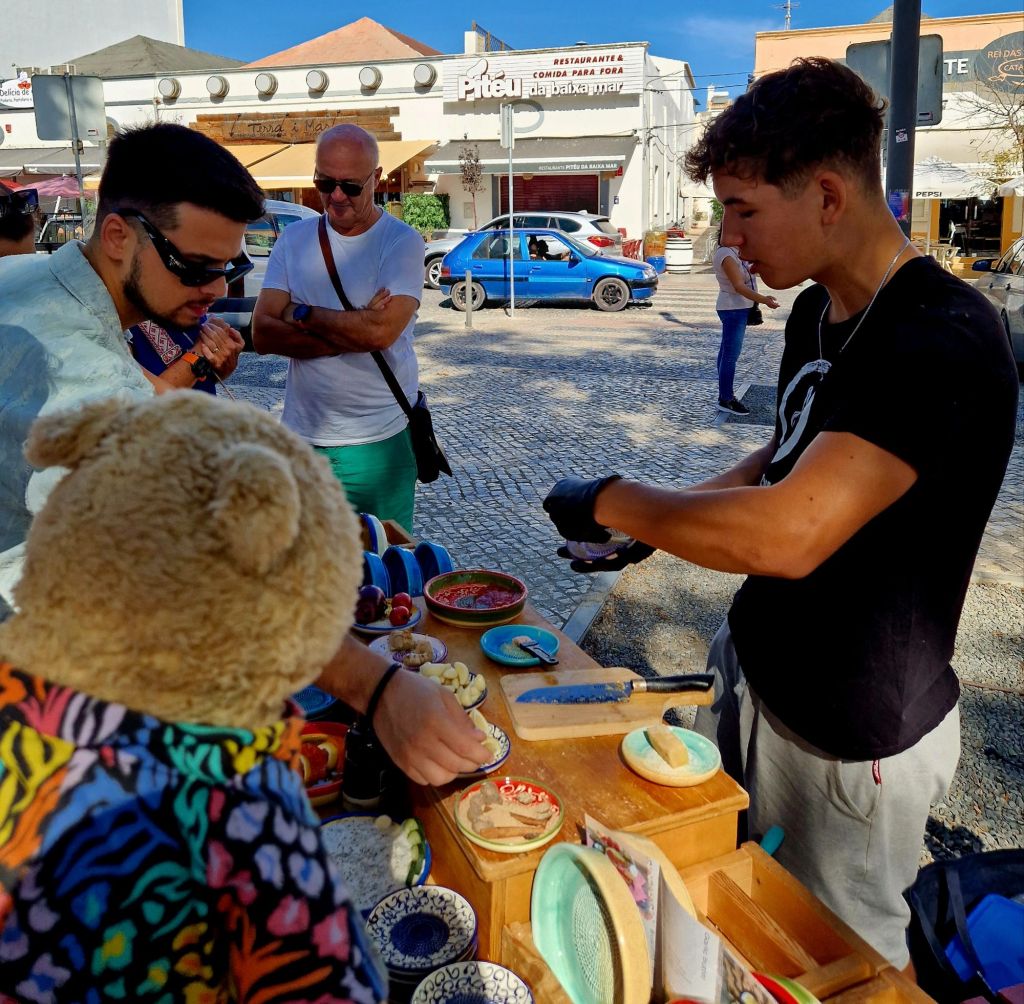
I love to dance, walk and ride bikes. I also enjoy shopping for clothes in in charity shops, though on one occasion I bought a teddy bear called Horace instead!
My humans decided to go and visit the Fairytale Christmas trail at Tyntesfield on a quiet Monday morning in early December 2025. Along the winding path heading towards the gardens were lots of scenes from Red Riding Hood. all of the installations were created by various community groups in North Somerset.
In the rose garden we discovered a pumpkin
I found Cinderella’s shoe, but she must be a giant!
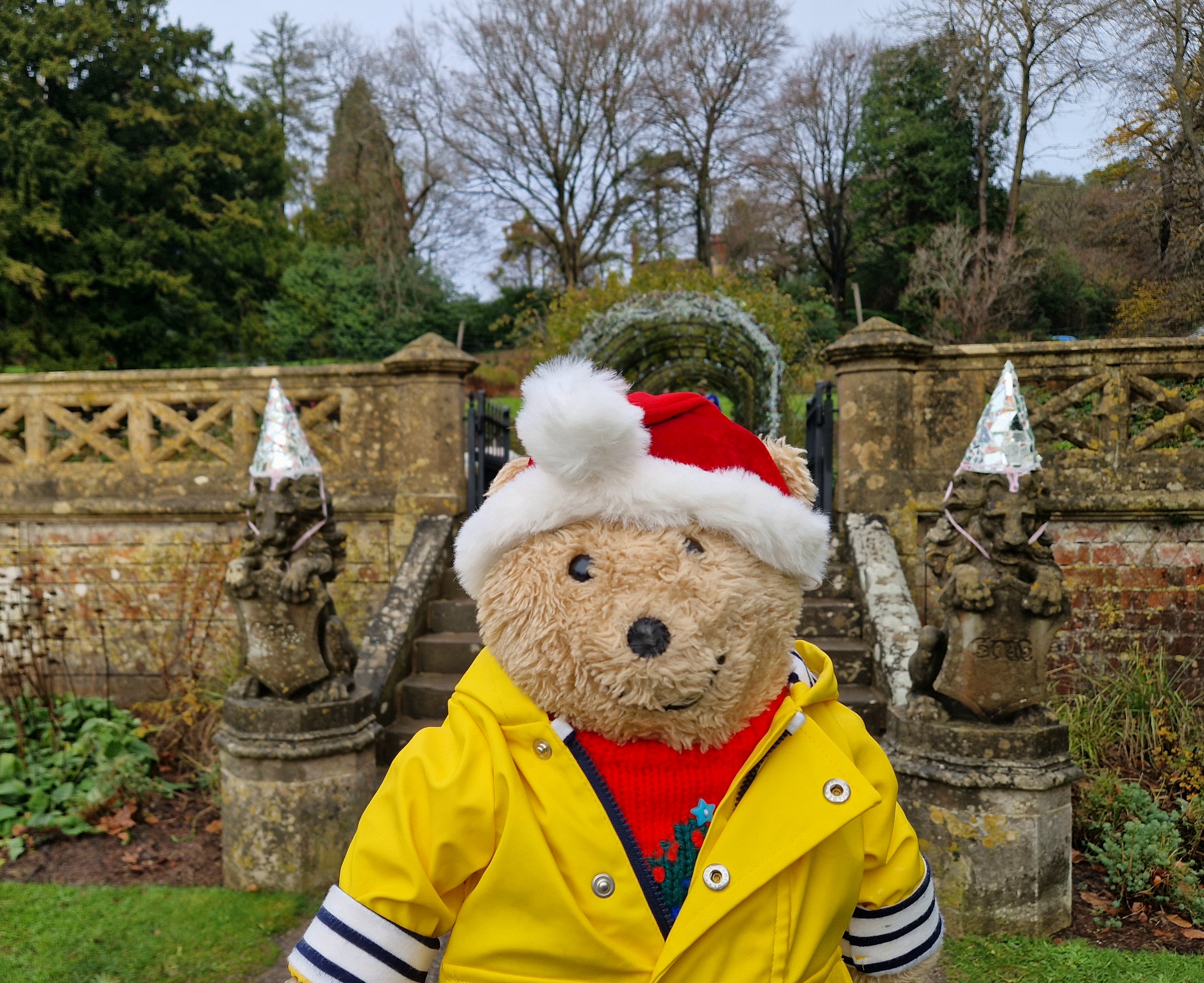
After passing two lions wearing glitzy party hats, I headed towards the house…
As I walked along the path towards the house I wondered what delights there would be inside.
Before reaching the house I found the workshop of Rumpelstiltskin who had been busy turning straw into gold.
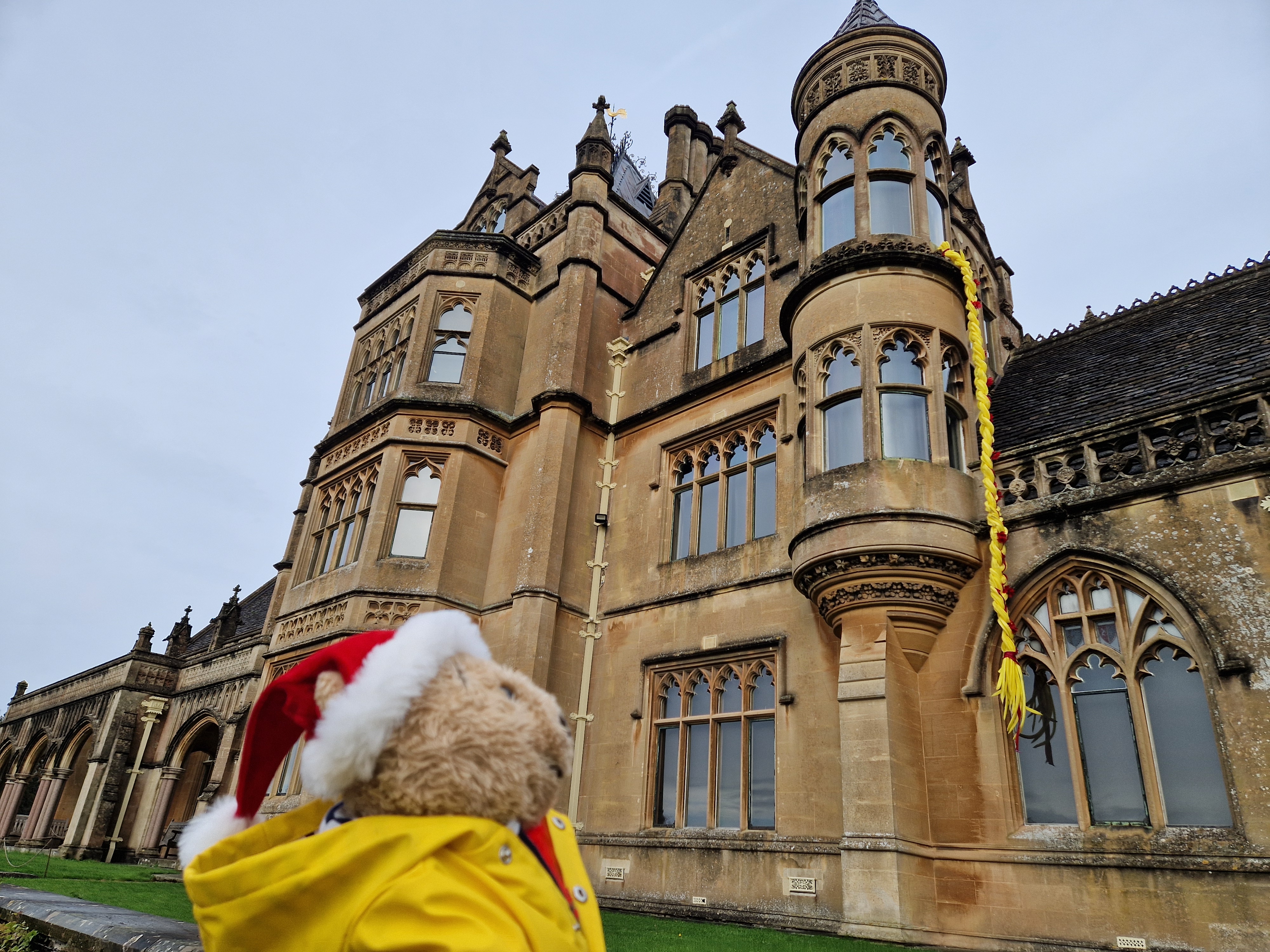
Rapunzel had let down her hair from one of the turrets.
A beautiful wild swan was at the entrance to the house.
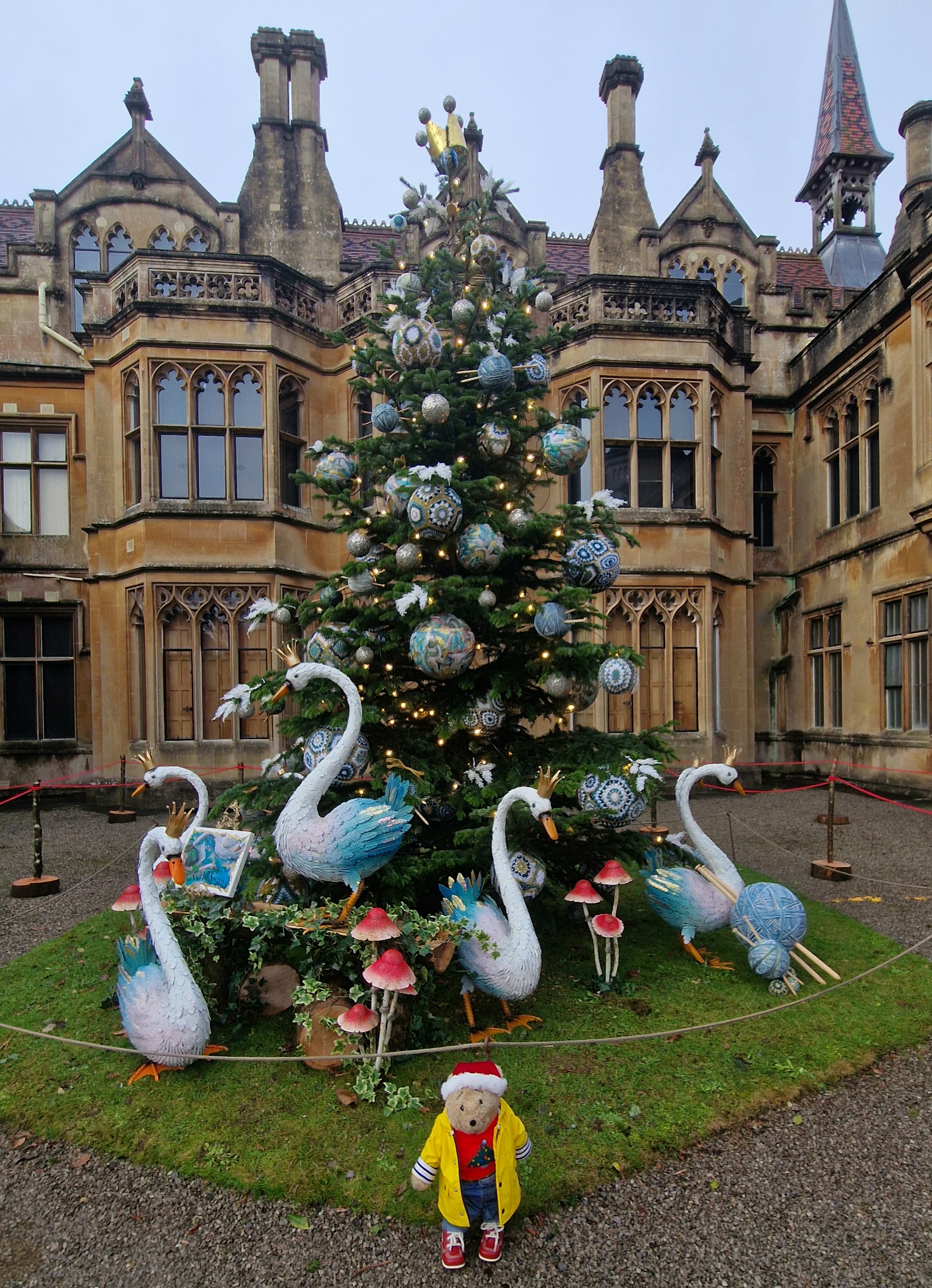
More swans were surrounding the Christmas Tree. The giant baubles on the tree had all been knitted or crocheted.
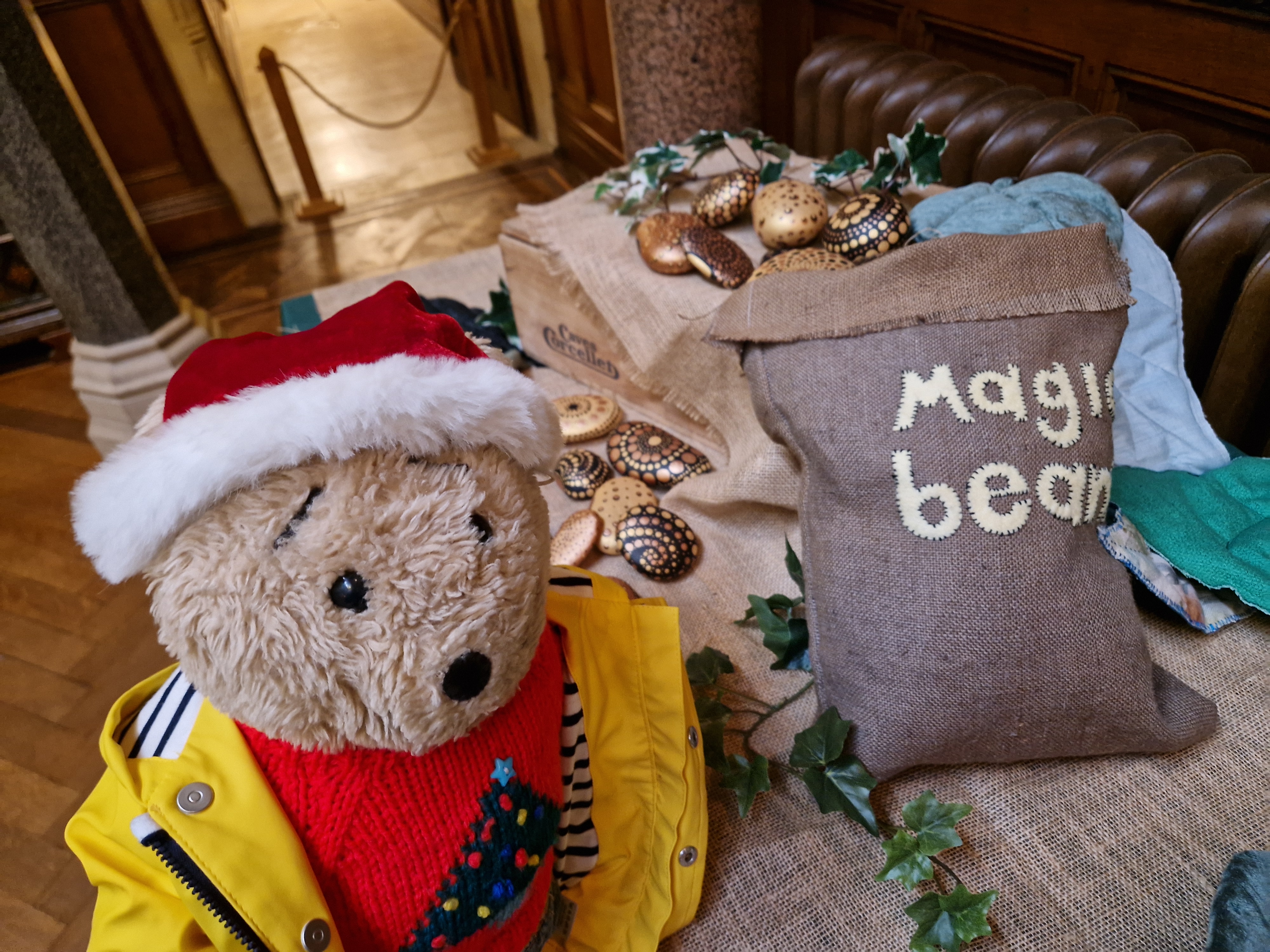
After going into the house I came across a bag of magic beans.
Jack had planted a bean and it was growing up through the stairs. I was glad the giant wasn’t around.
The Library was decorated with an Alice in Wonderland theme with many interesting items to see, but a tad dark to photograph.
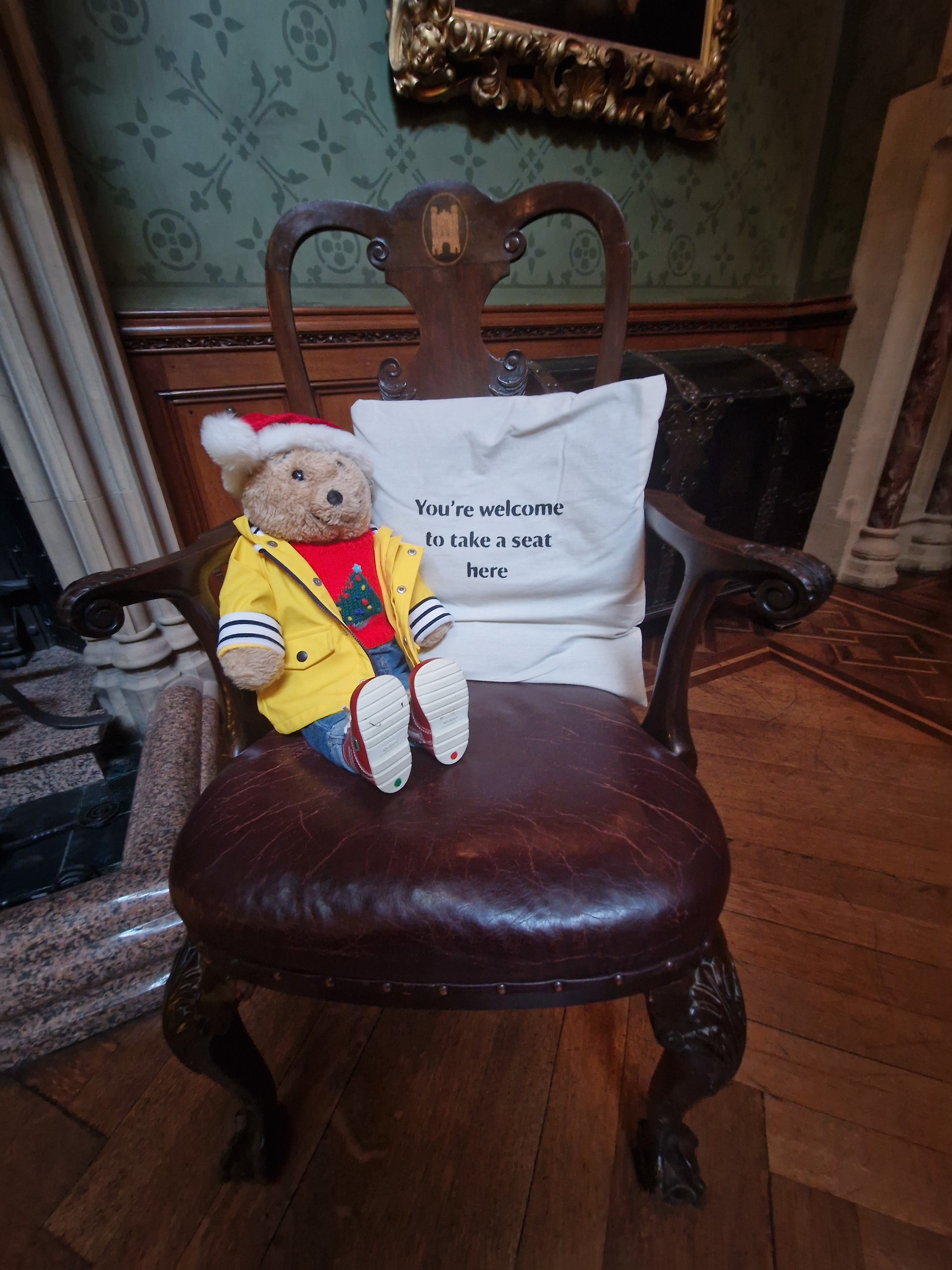
Sometimes a bear’s legs can get a bit tired so a chair that I was allowed to sit on was very welcome.
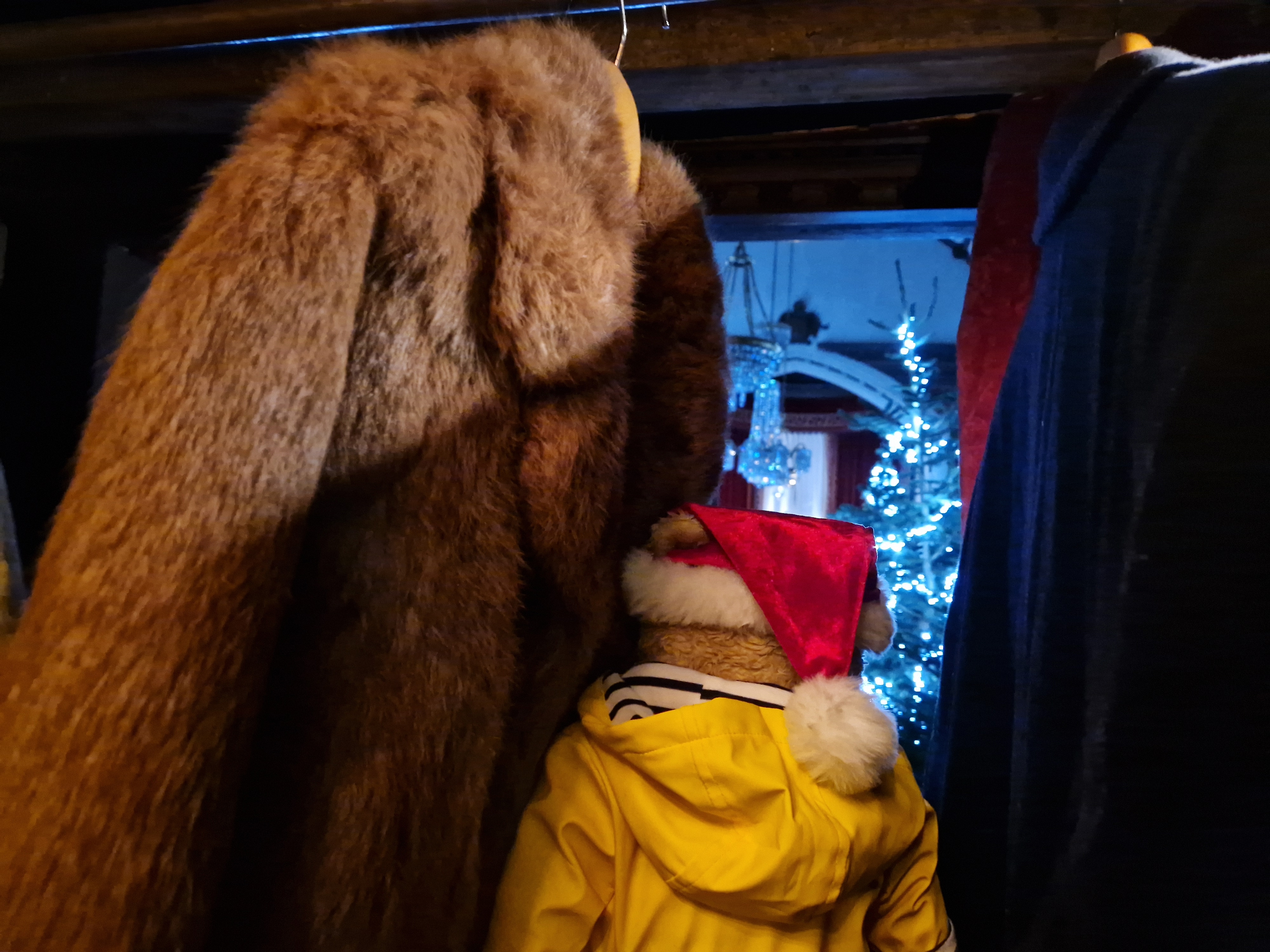
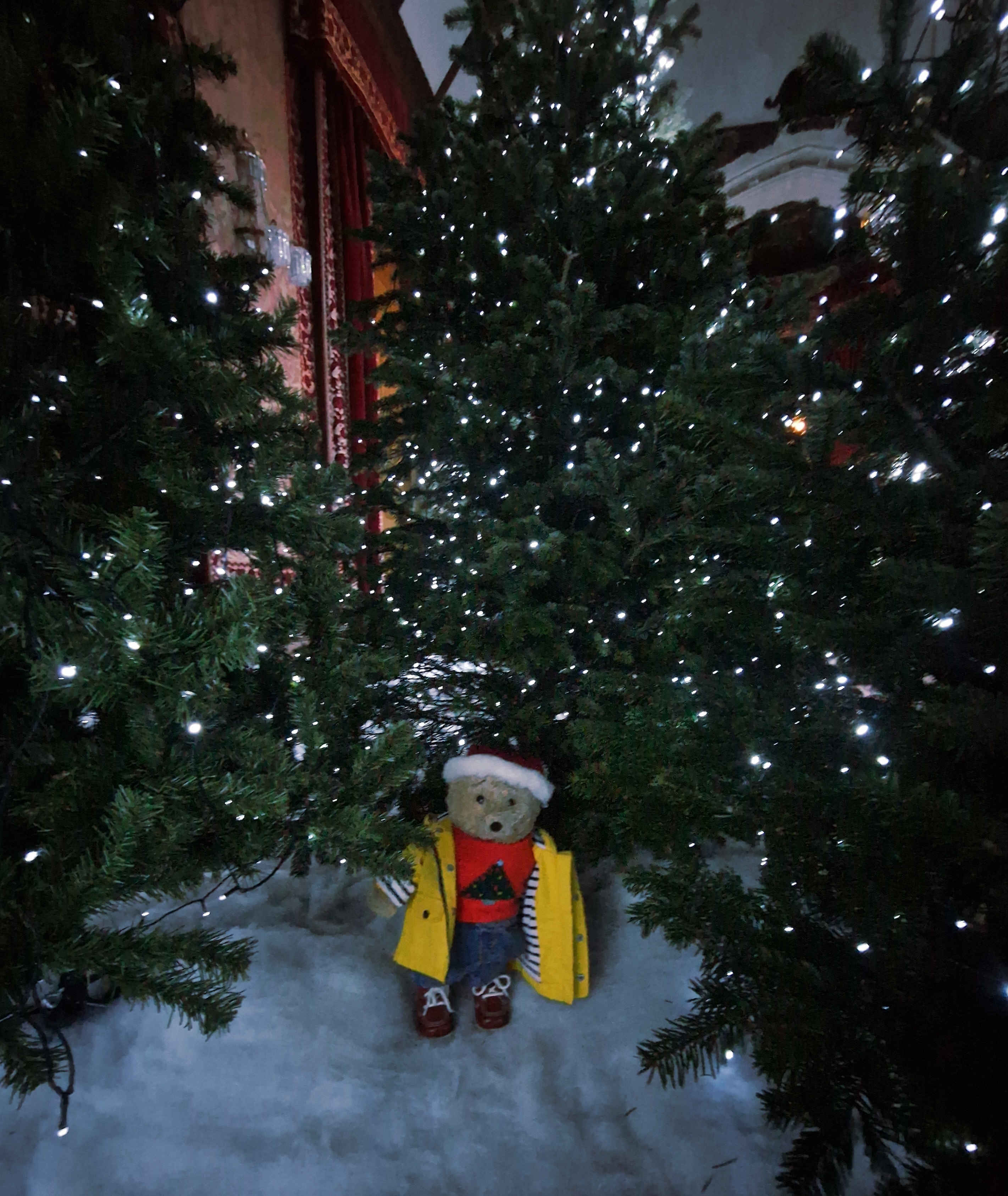
My favourite installation was in the drawing room. I squeezed between some old coats and entered a winter wonderland (which I think may have been inspired by Narnia).
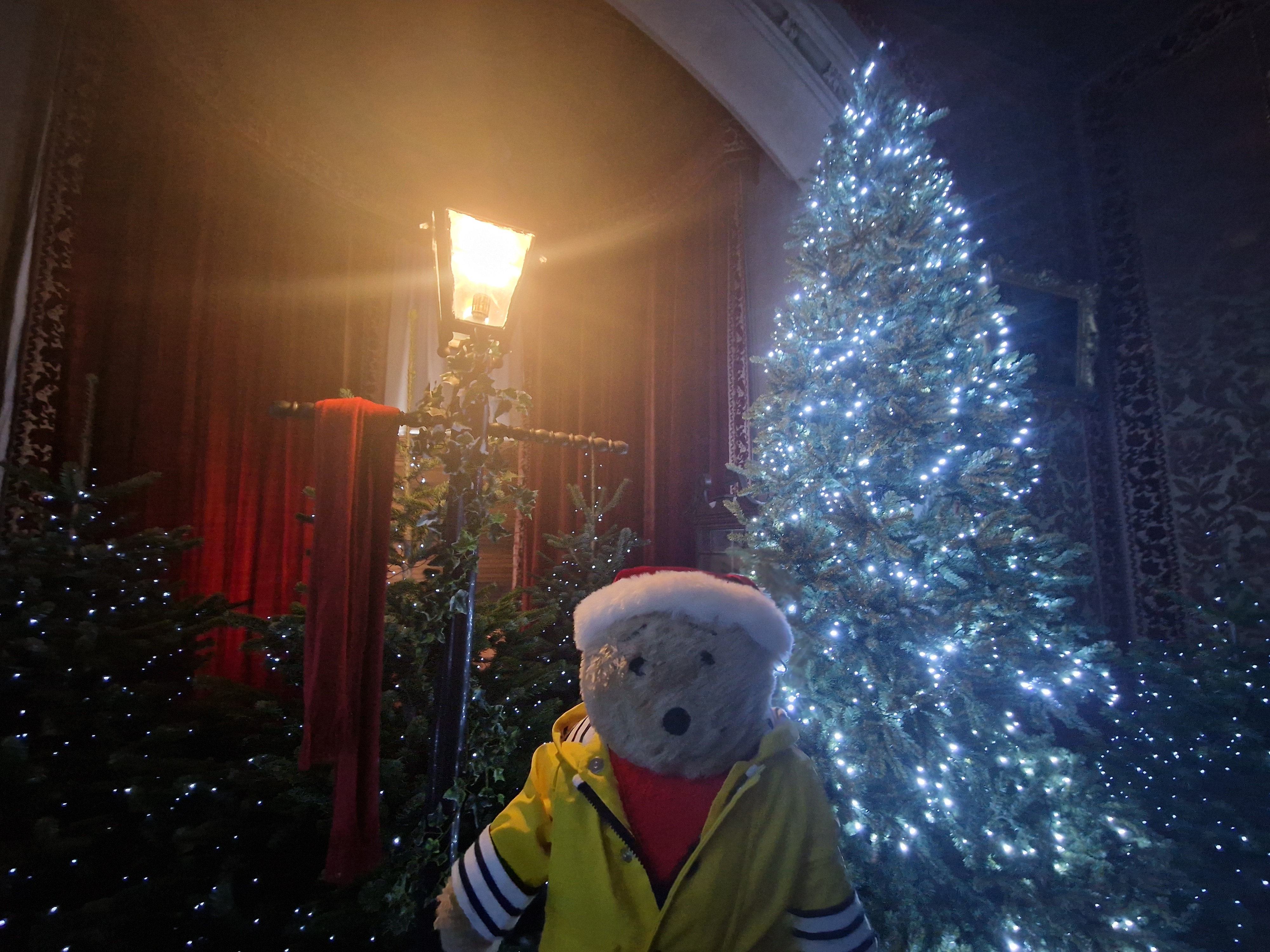
The Christmas trees looked really lovely altogether with lights twinkling. Because I am so small it really seemed to me like I was outside in a wood somewhere.
A street light added to the atmosphere.
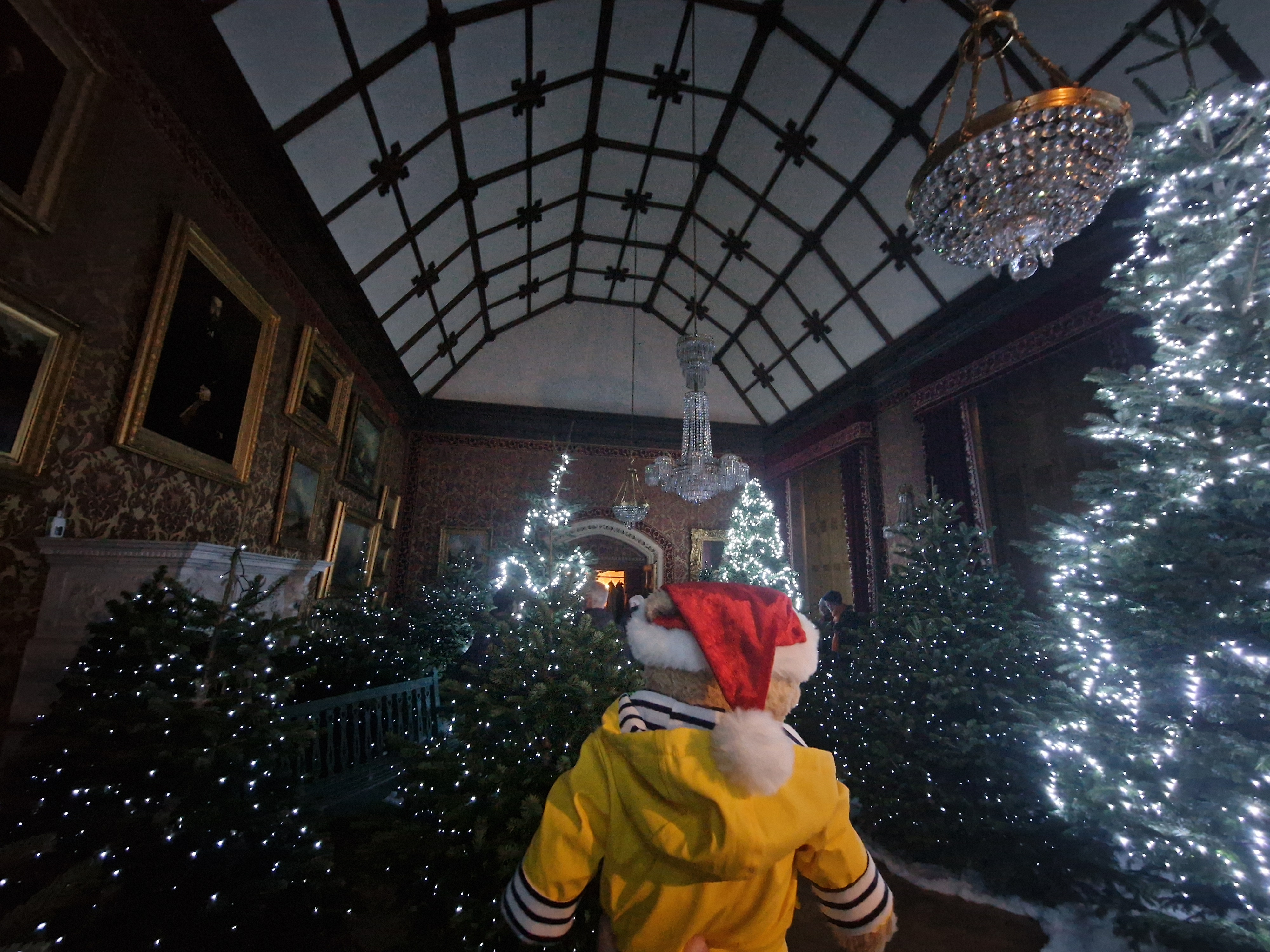
Of course I wasn’t outside, a splendid ceiling was above me and paintings hung on the walls.
The way out was back through the coats!
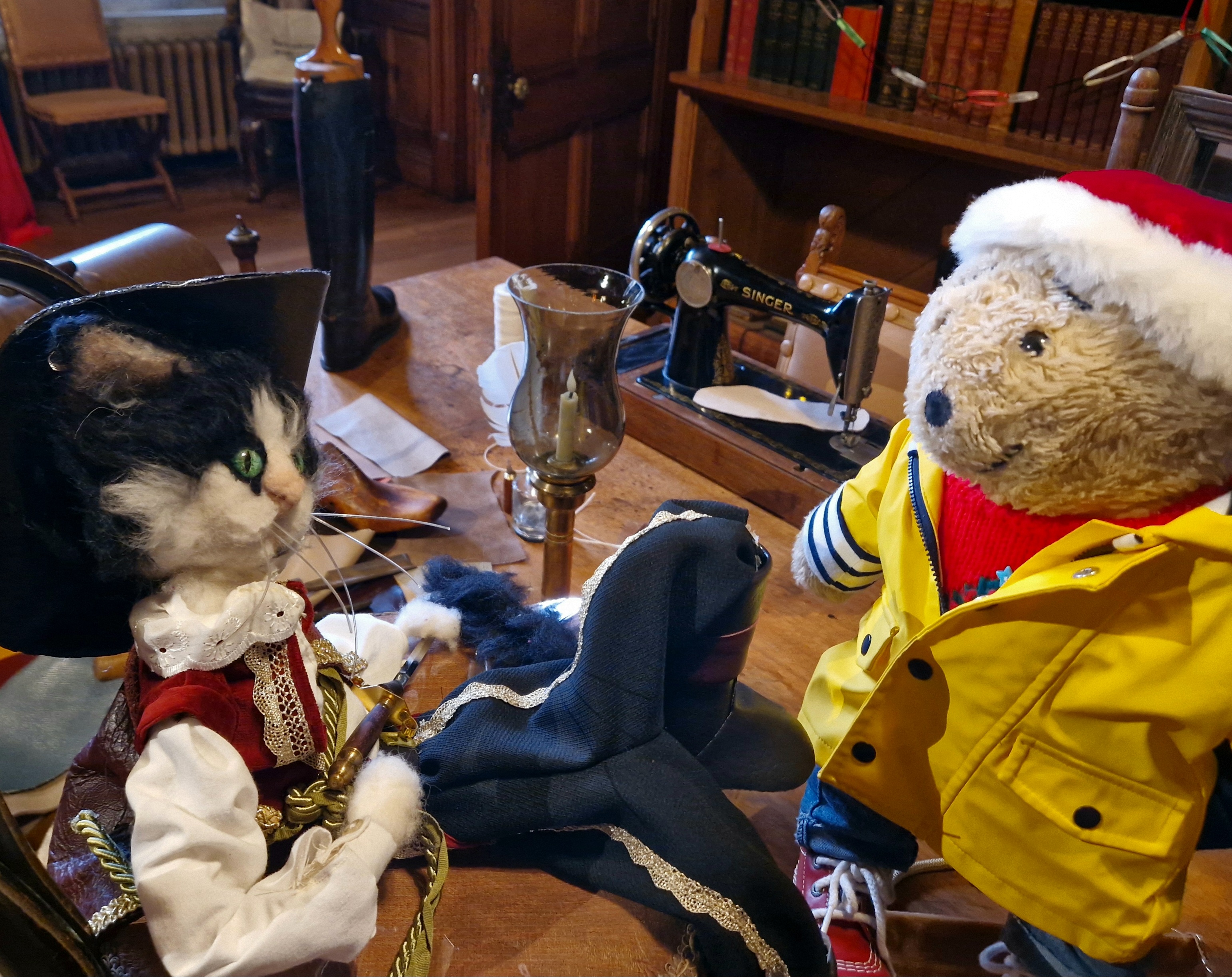
I came across Puss in Boots, a very strange character.
Cinderella’s dress was ready for her to wear to the ball. It was made from dried flowers and looked amazing.
Three Bears were somewhere around, not just any bear, but ‘The Three Bears’!
The table was set up for them with bowls of porridge but they must have been out exploring the woods!
Back outside in the courtyard a little village had been set up with mulled wine being sold.
I went on down to the Orangery to see the Hansel & Gretal installation and found Christmas trees decorated with doughnuts…
…and a gingerbread house with two giant gingerbread people.
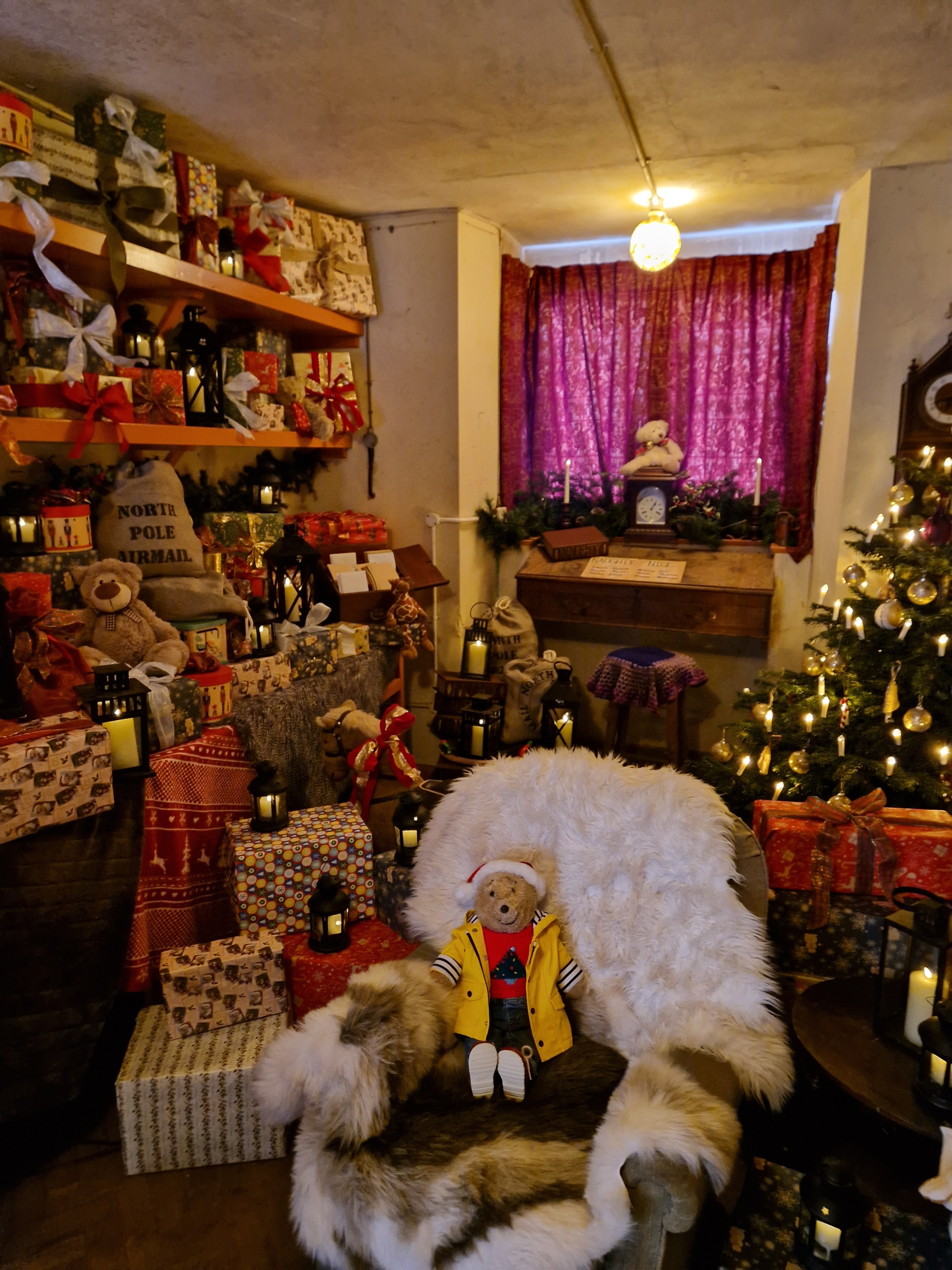
Finally I discovered Father’s Christmas’s grotto, but he had gone out!
All in all visiting the Tyntesfield ‘Once upon a Christmas Time’ was a lovely experience. It is running from 1 December 2025 until 4th January 2026.
My human occasionally adopts antique bears. This dear little Alpha Farnell bear recently arrived.
After sharing her arrival on my Facebook page lots of names were suggested. We chose ‘Nellie’, as it sort of derives from the end bit of ‘Farnell’ and as my human forgets our names sometimes, she should be able to remember Nellie.
Nellie wasn’t particularly dirty but we always like to freshen up new arrivals. Nellie is a 1960s bear and would have been stuffed with kapok, so we couldn’t put her in the bear jacuzzi (the word we bears call the washing machine. Nellie required surface washing to avoid wetting the kapok stuffing.
My human added a little clarifying human shampoo to some water and whipped it up into lots of bubbles. We then proceeded to gently dab Nellies fur with the bubbles. It can also be a good idea to give an old bear a brush with a gentle toothbrush before the washing process to remove and dust and grime, but Nellie was already quite clean so we didn’t brush her first.
Once Nellie had been dabbed all over with the bubbles it was time to soak the detergent off her fur.
We did this using high quality ‘blue roll’ which my human uses in the kitchen instead of kitchen towel as it works better. We knew that the blue roll dye wouldn’t come out as we have used it on spills on a light coloured wool carpet, but it is probably best to use white kitchen towel if you aren’t sure, or a towel.
After drying Nellie off we dabbed her again with clear water, rinsing the cloth to remove any shampoo.
She was ‘rinsed’ and dried off a couple of times, any shampoo left behind would make her sticky. Nellie didn’t mind as she didn’t want to be a ‘sticky’ bear!
The 3rd and final rinse had a dash of gentle fabric softener added to condition her fur. We aren’t sure what Nellie’s fur is made of but don’t think it is mohair.
The end result was Nellie wrapped up in a pink spotty towel, she looked like she had just been swimming (something us bears must not do!)
I took Nellie upstairs to dry her fur using a hairdryer.
In between blowing her with warm air I brushed her fur.
Nellie’s nose was unravelling so with a bit of help from my human I performed some nose surgery. It was quite hard getting the needle through her snout which is stuffed quite firmly.
Nellie now all fluffly with her lovely little blue ears.
I had a little surprise for her, a little dress that was handmade for a doll that my human bought from an Etsy shop seller ‘dollytot’.
Nellie was absolutely delighted; the dress fitted her perfectly and will protect her 70 year old fur.
Nellie went on to spend the evening sat on the radiator to make sure that she really is dry.
My human was very pleased with how little Nellie turned out. Apparently she was made as a ‘pram toy’ and bears like her were fastened to prams with ribbon in the 1950s/1960s.
Stockport is the home of the only hat museum in the UK.
Hat Works museum is situated inside Wellington Mill, which was built in 1831 as a cotton spinning mill, before becoming a hat factory in the 1890s.
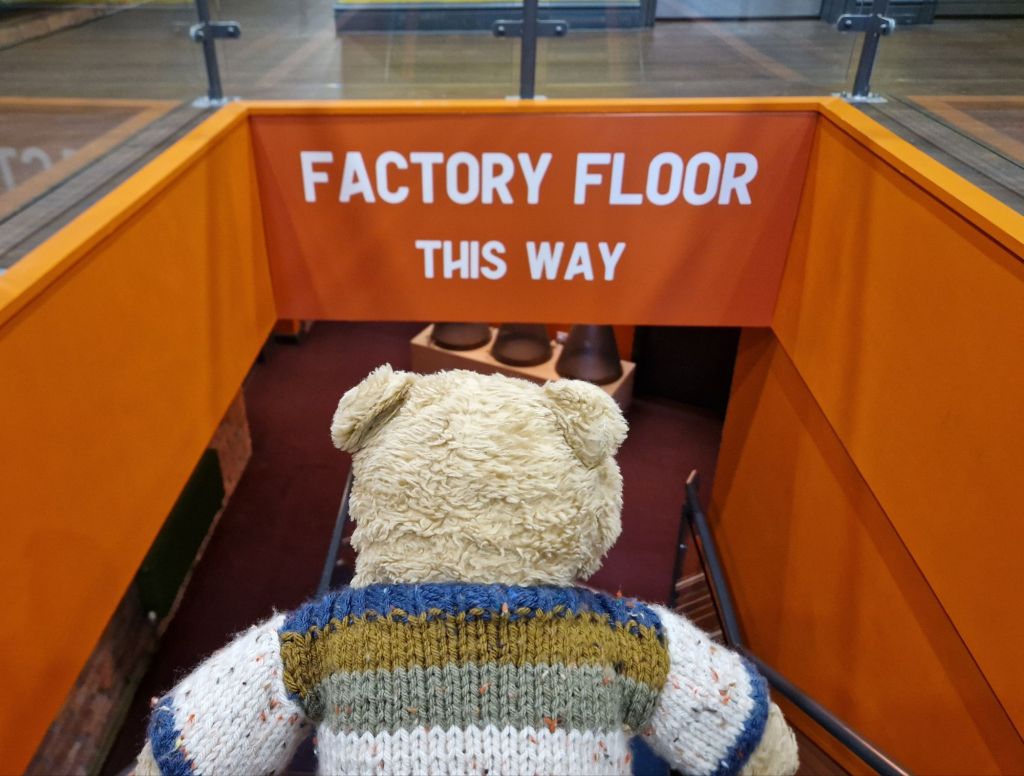
I set off to explore the factory floor, and find out a little bit about how hats used to be made.
150 years ago hats were mostly made from felt which was produced from animal fur. The process was rather gruesome.
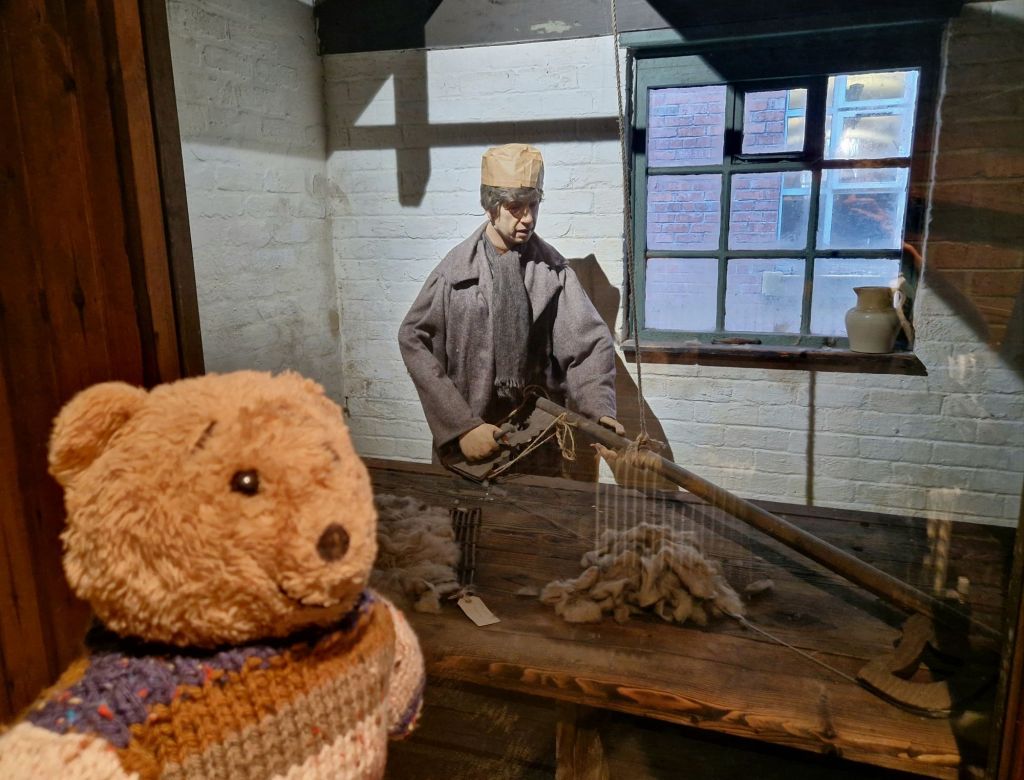
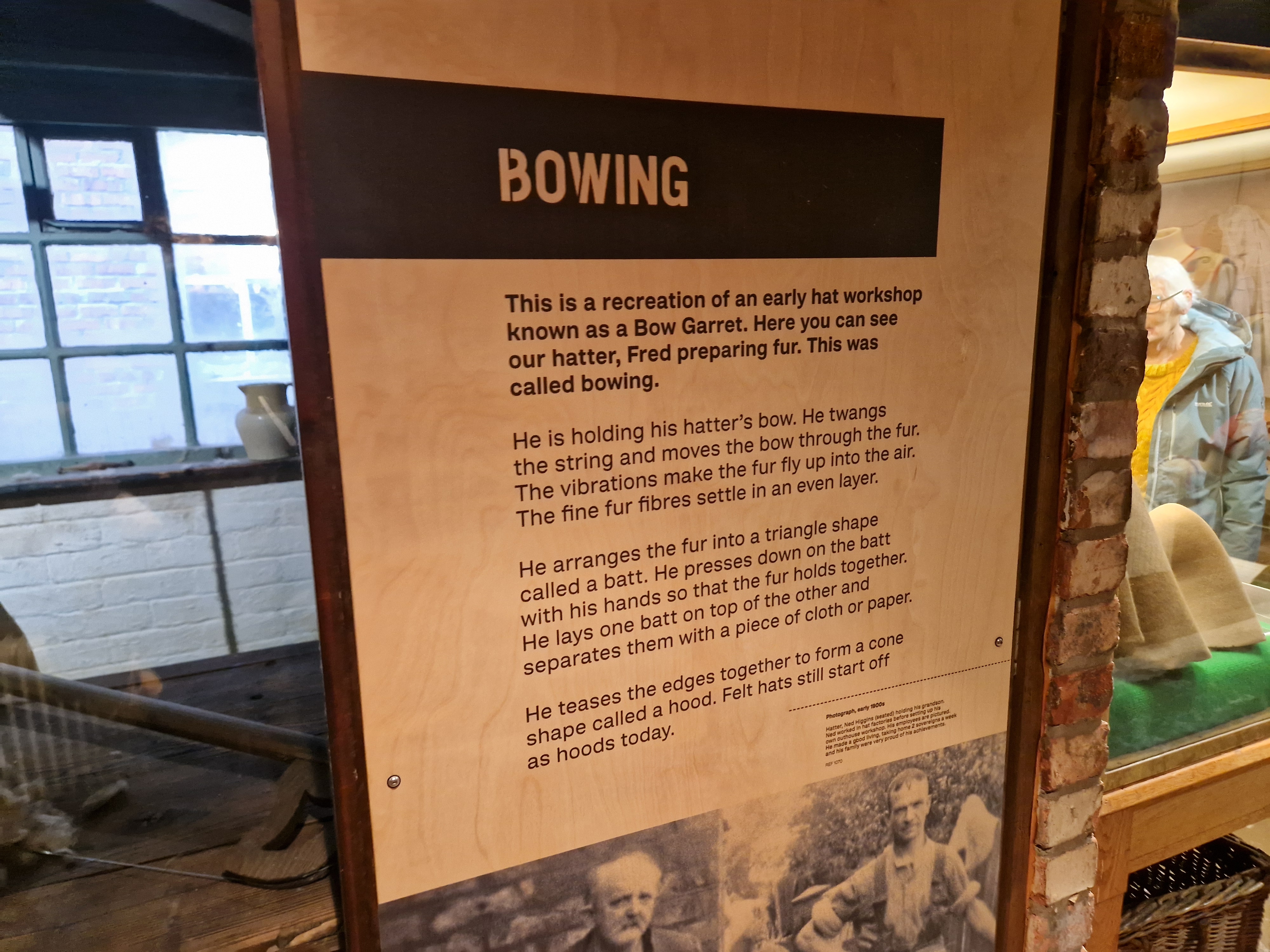
Factory workers had to remove skin from rabbits and other furry animals. After that the long guard hairs were removed from the fur using a special tool called a Hatter’s Bow. The hatter would twang the strings and move the fur through them, and the vibrations made them fly up into the air, the fine fur would settle into a even layer.
Here is the sign explaining the Hatter’s Bow:
Below is me with a ‘Planking Kettle’. The fire underneath heated water and sulphuric acid. The hoods were dipped into the acid and rolled with a special wooden pin. The heat, moisture and friction caused the fibres to lock together into felt. After 4 hours of this process that cone would shrink to half its original size into a strong cone that could then be shaped and moulded into a hat.
This was the last hat making process to be mechanised and was used to train apprentices up until the 1950s.
The process used to make the felt hats, which involved shrinking the fur felt reminded my human of what happened when a merino wool jumper accidentally got into a hot wash, and came out very small with the fabric resembling a sort of thick felt.
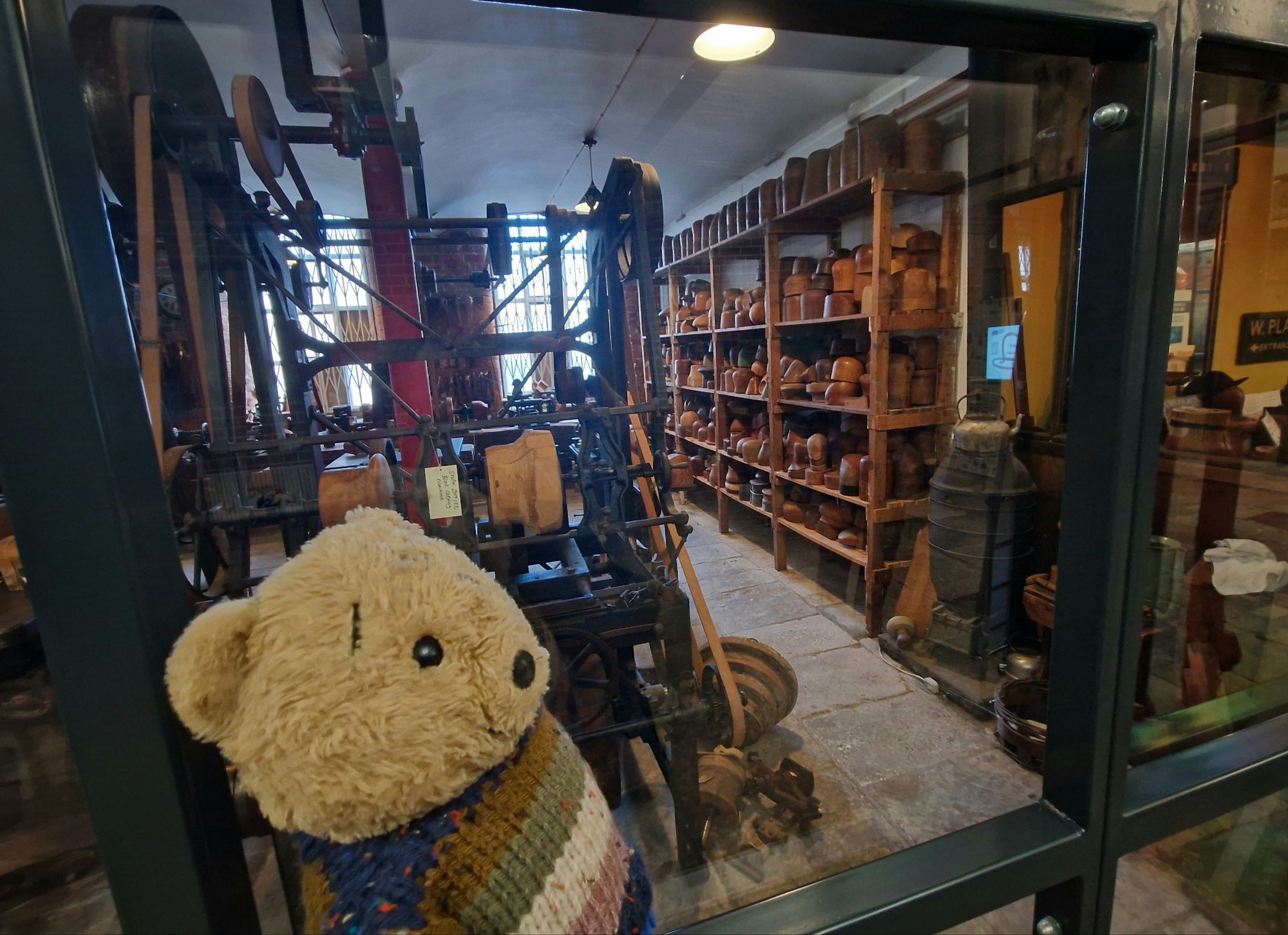
Hat blocks like these were used to shape the hats.
The hat factory was a dangerous place to work, with many hazards to humans. Fur was treated with mercury which resulted in anyone working there being at risk of health problmes including brain damaged from it. This is where the phrase ‘mad as a hatter’ comes from.
In the photo below I am stood next to the tall chimney that you can see outside from quite a distance. Factories were often situated next to rivers which provided the water used in the hat making process.
Hat making eventually became more mechanised and machines were used to do some of the labour intensive processes. Hat Works museum has a collection of these machines collected from some of the various hat makers that used to be in the Stockport area.
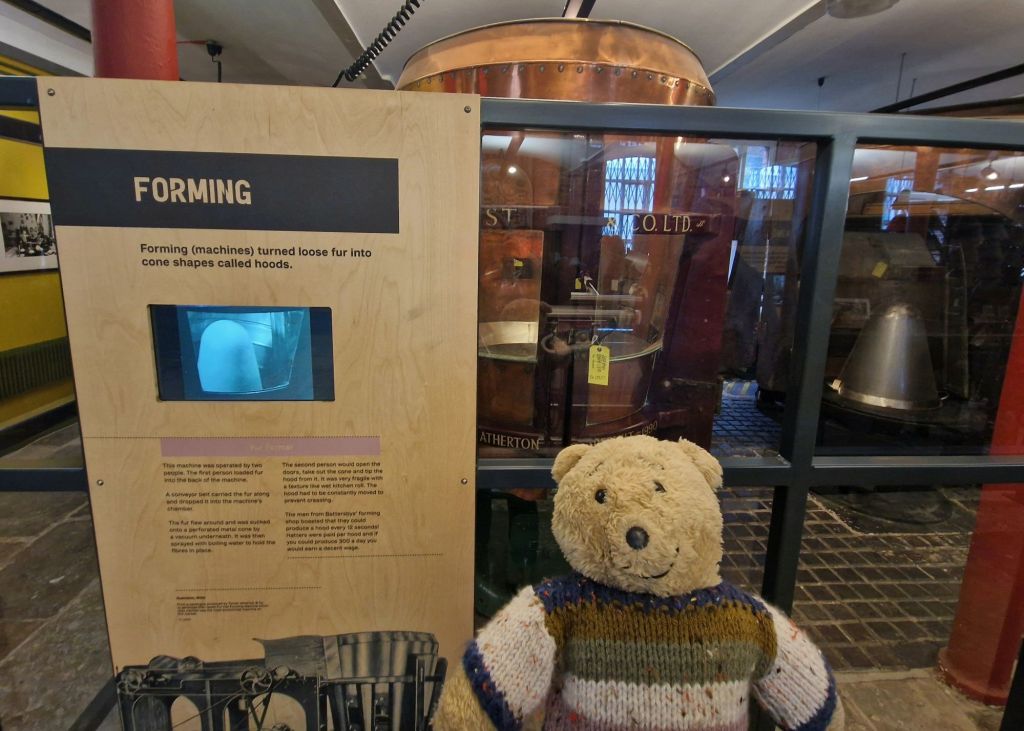
Behind me is a forming machine, that was used to turn the loose fur into cone shapes (called hoods)
The Multi-roller below was used to shrink the hoods instead of the previously used ‘planking kettle’. The display showed a selection of hoods in different sizes illustrating how the size got smaller due to the rolling process.
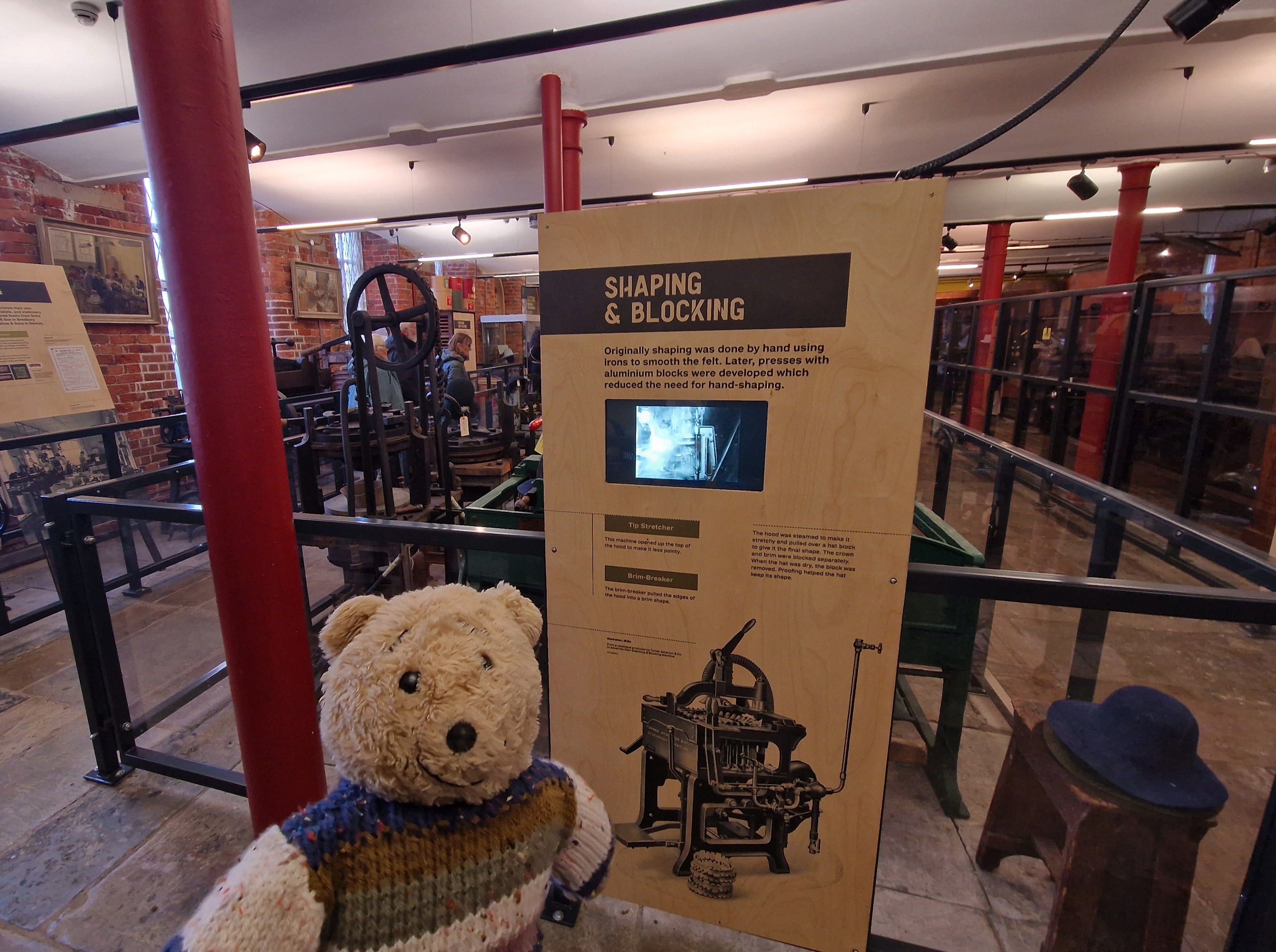
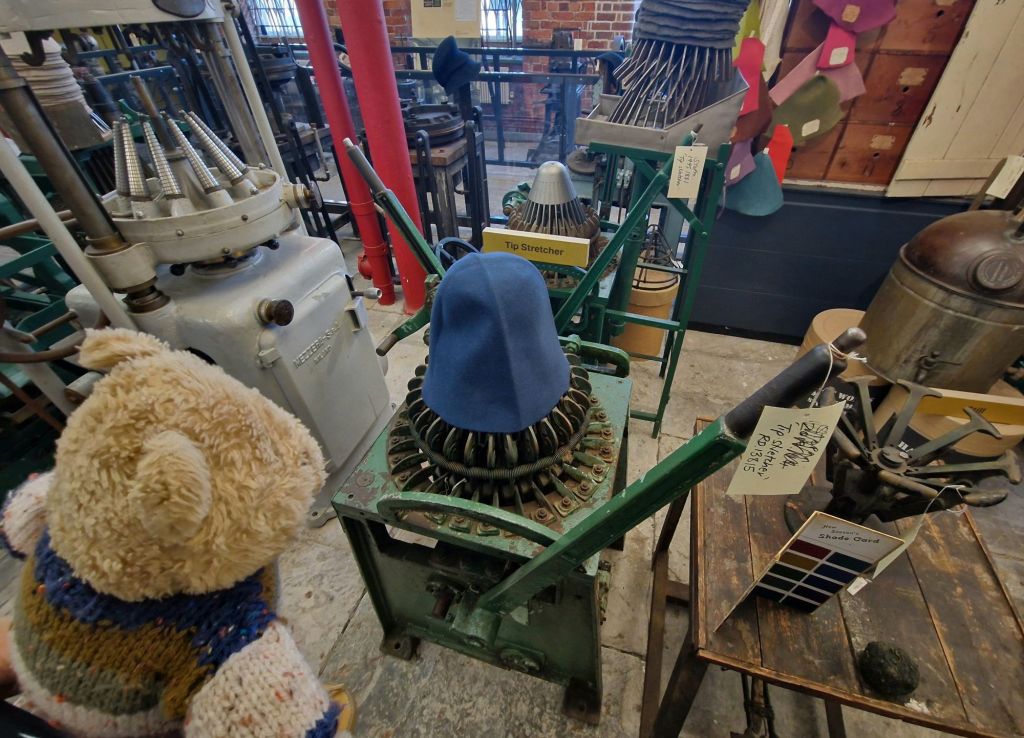
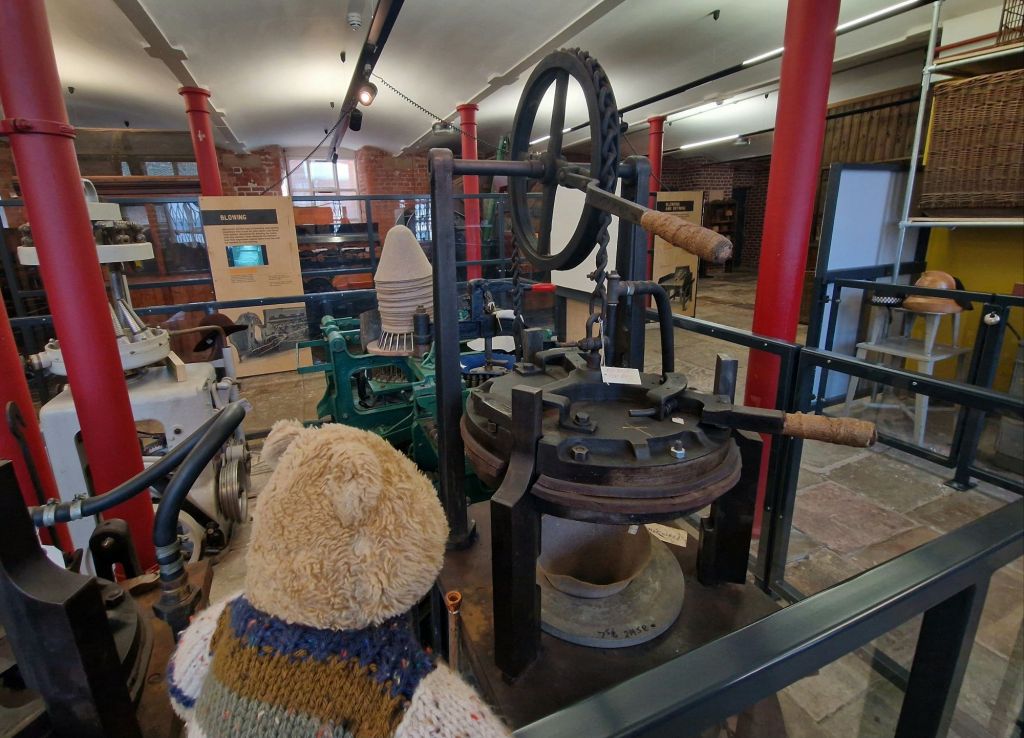
Several machines assisted with shaping and blocking the hats
Here is a ‘brim breaker’ machine used to form the brims.
William Plant & Co were the last hat block makers in Northern England, and when they shut in 1976 the contents of their workshop and office were carefully removed and now displayed at the hat museum.
The old manual typewriter in the office was of interest to my human: she learnt to type on one like it that had belonged to her grandfather. Modern computer keyboards have the keys in exactly the same place so the skill was transferable!
150 years ago it was considered very important to wear a hat, so the hat making business thrived, but lifestyles and trends changed, and very few hats are now made in the UK.
Next I went upstairs to the Gallery of Hats…
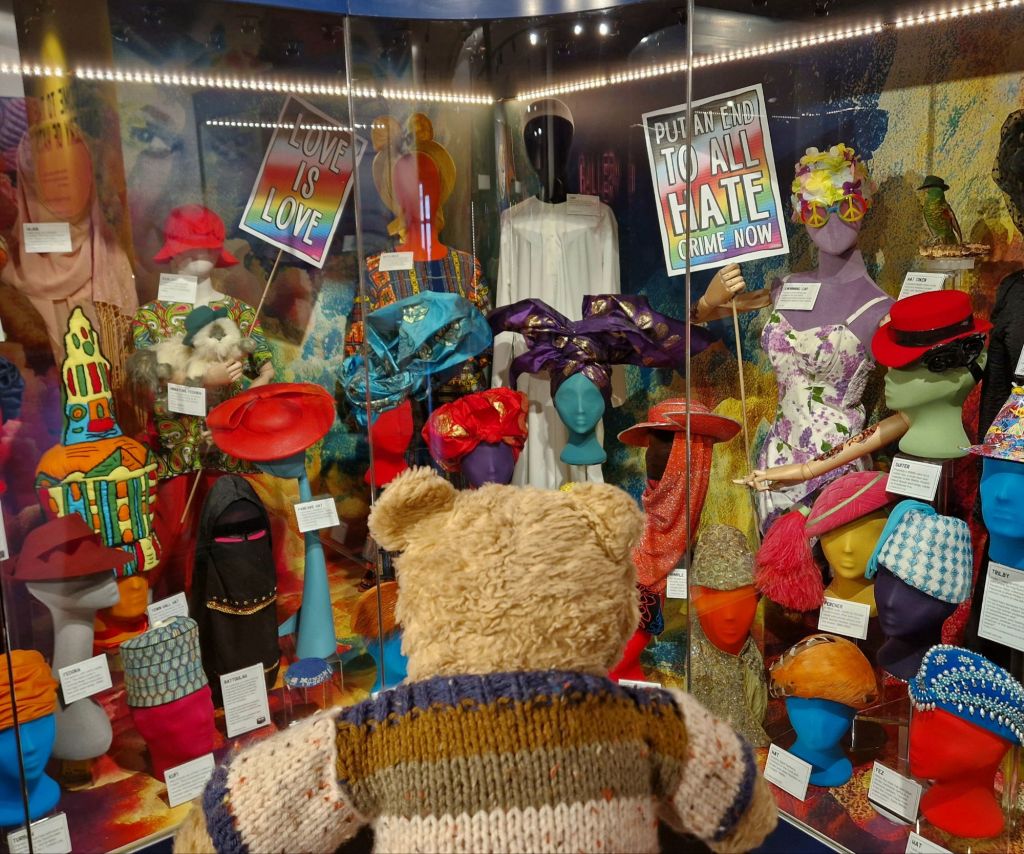
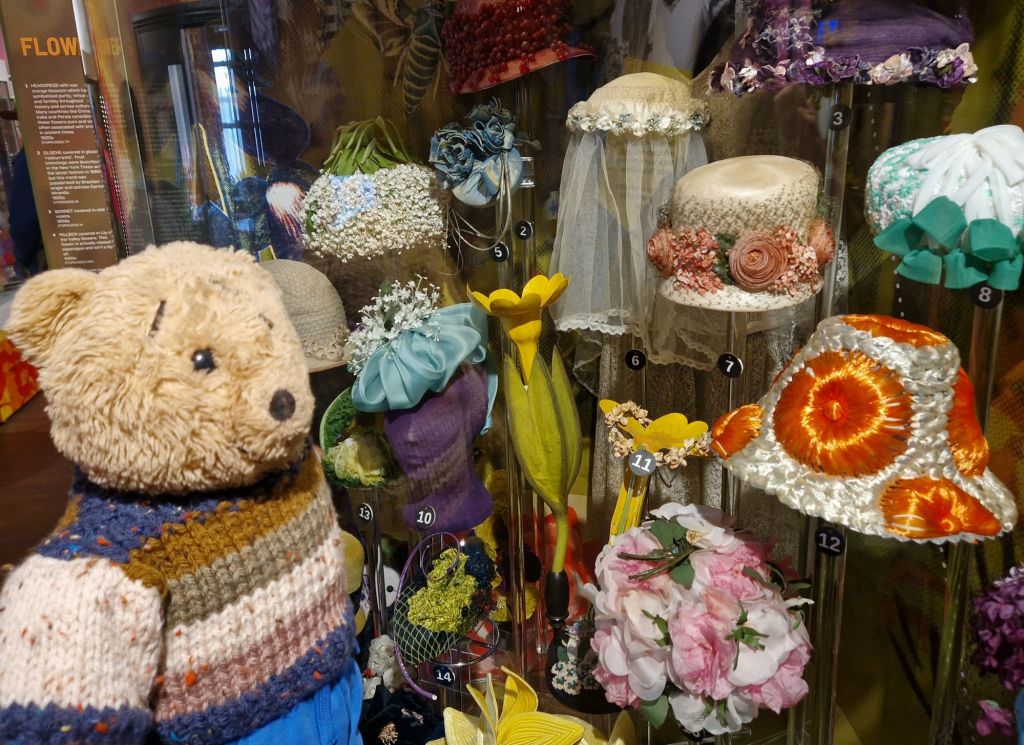
There are hundreds of hats in the gallery!
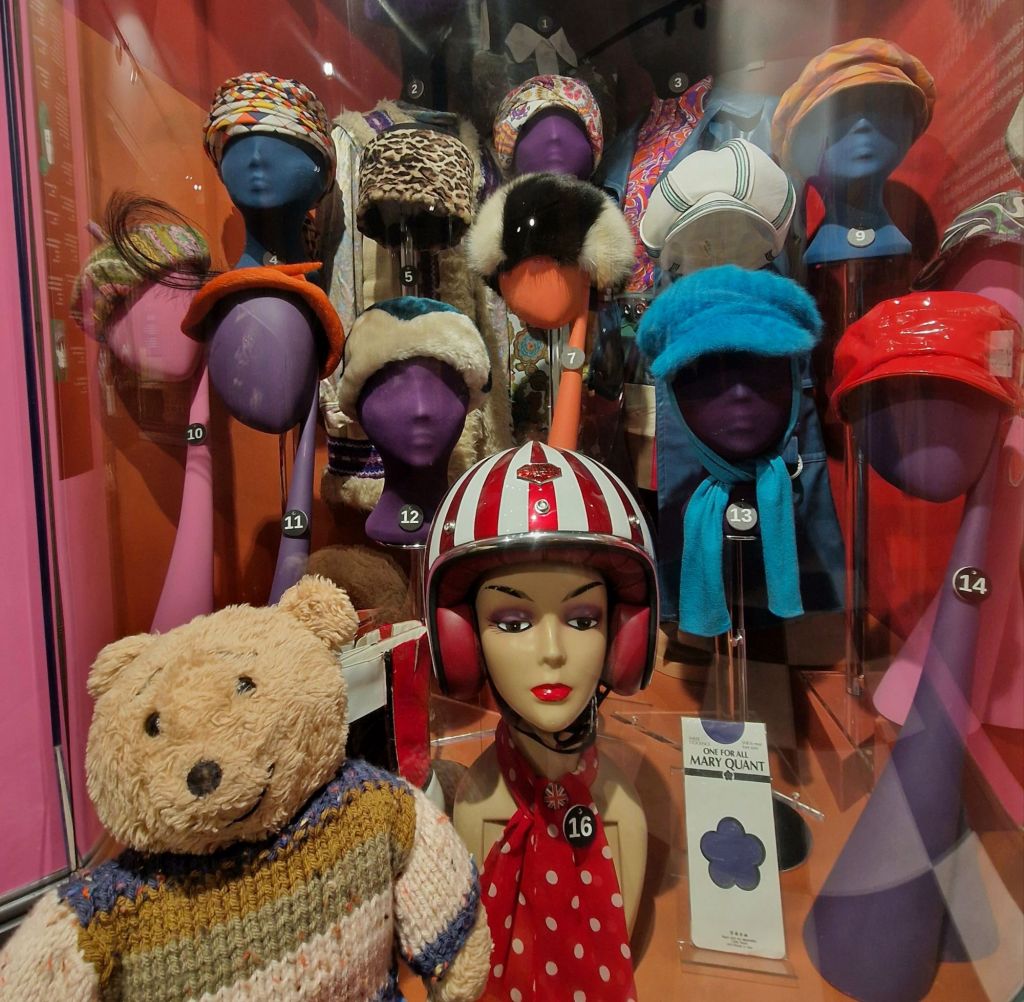
I liked the one with orange splodges on but it was in the glass case so I couldn’t try it on.
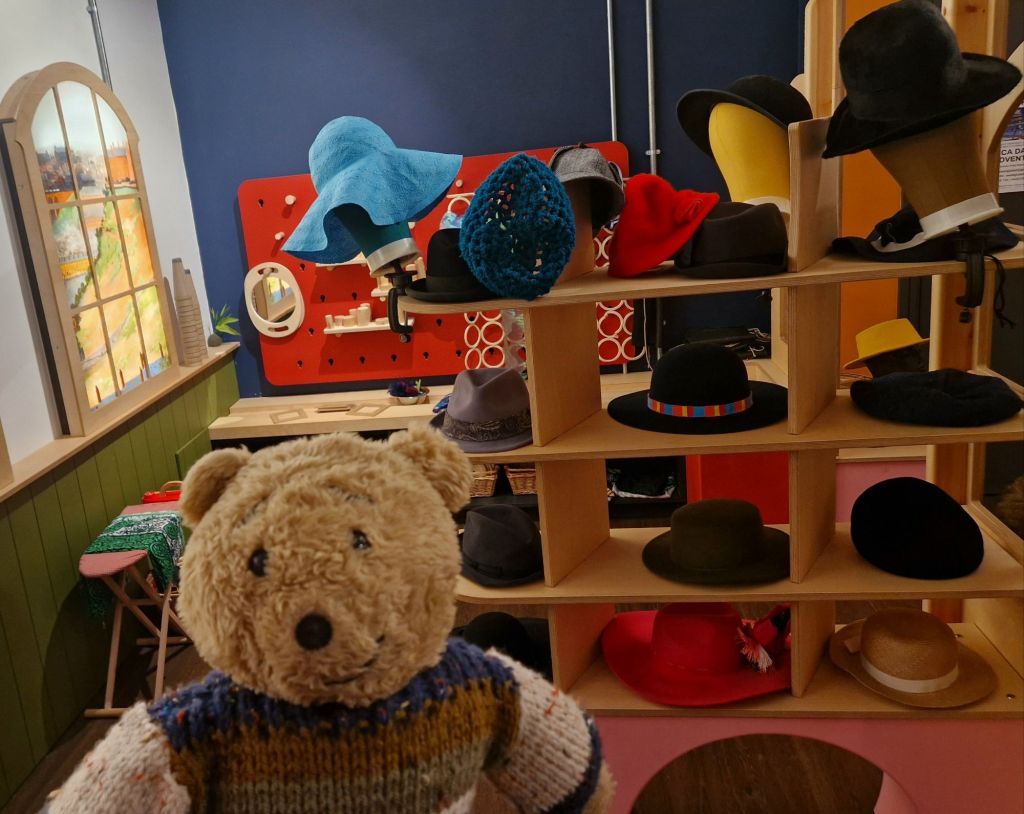
I was jolly pleased to find an area with lots of hats to try on. There were a few humans enjoying trying on hats too.
More hats in glass cases.
Ecclesiastical hats
Pith helmets, which originated in The Phillipines, and made from the pith of cork trees.
Middle Eastern hats…
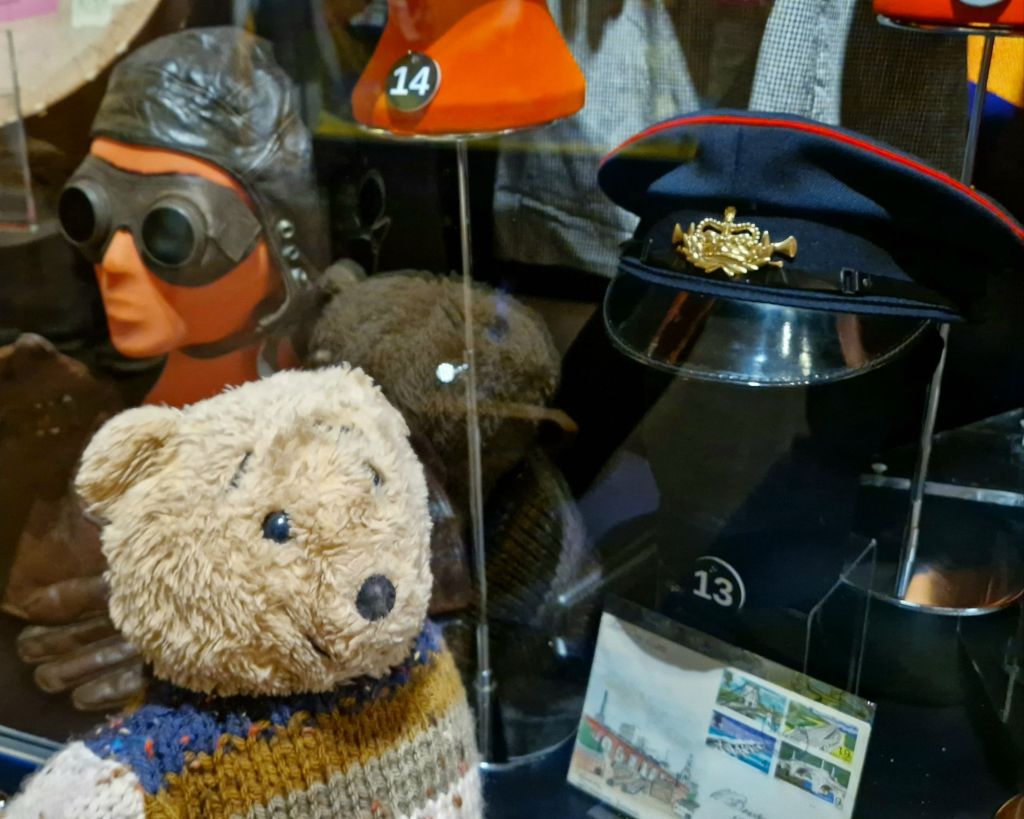
Uniform hats – this one is a postman’s hat.
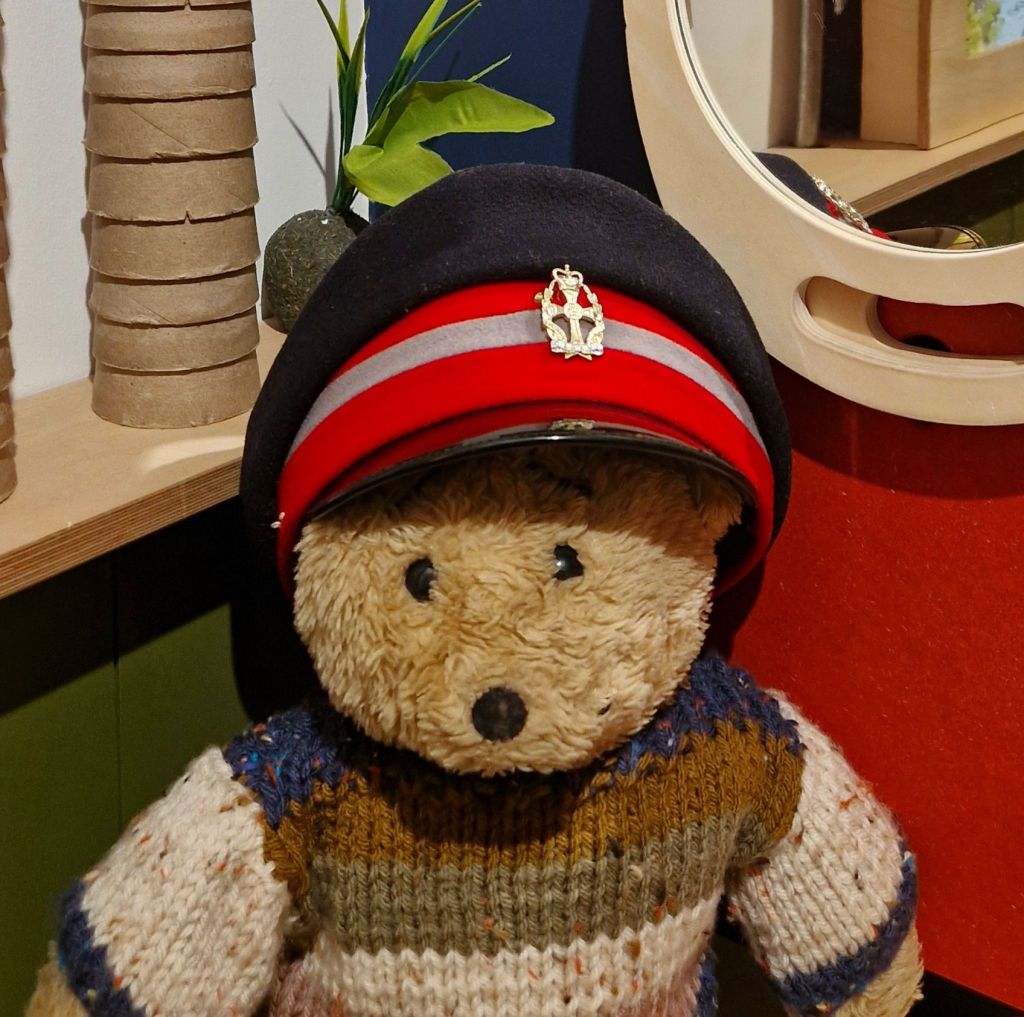
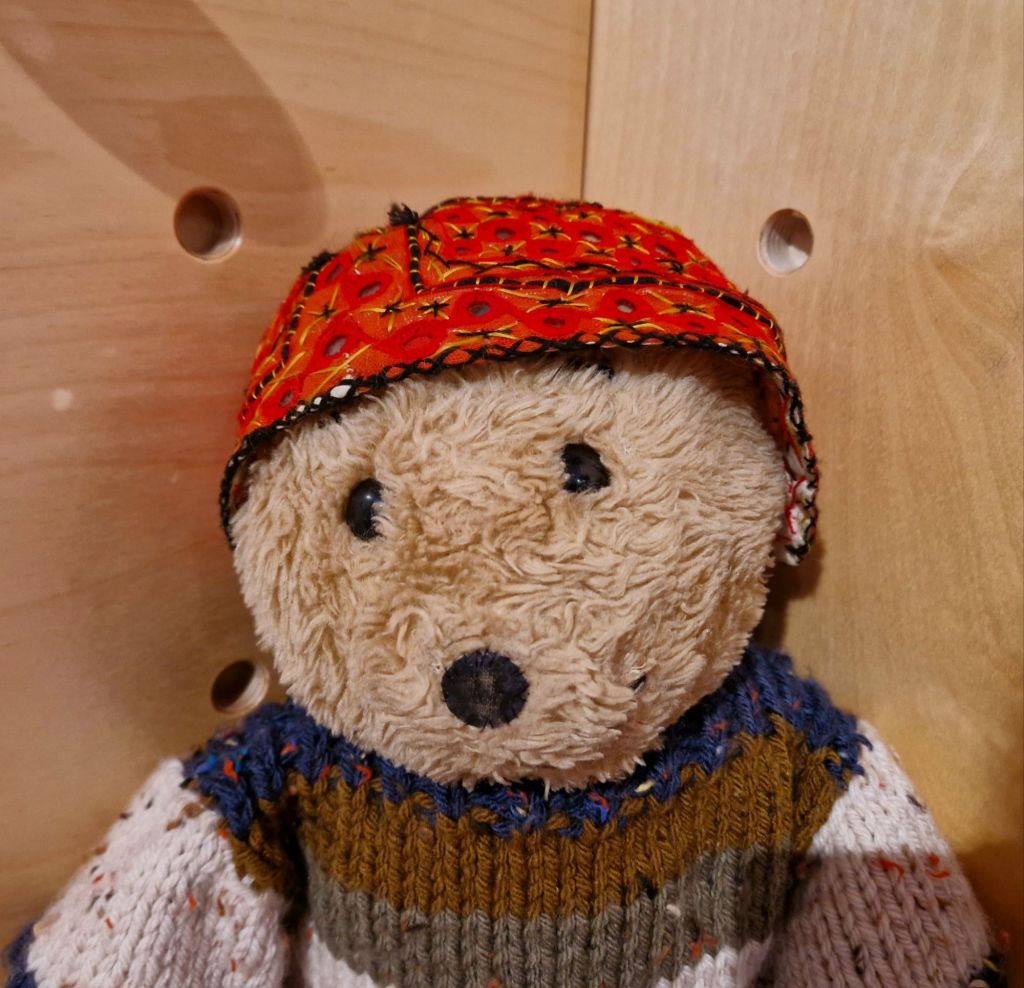
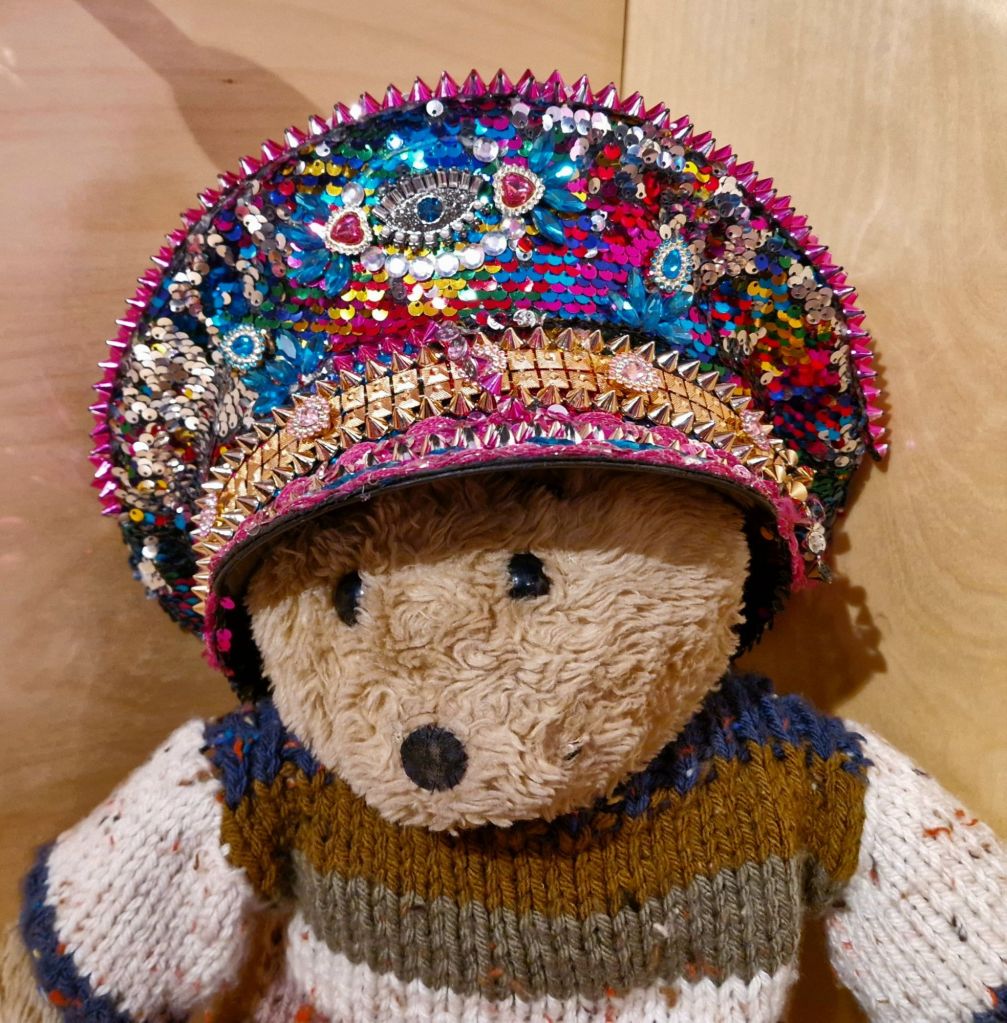
I was absolutely delighted to find more hats to try on!
The Hat Museum could be a good place to visit to find out what sort of hat suits you!
There was even a little ironing board for small humans to do pretend ironing.
The splendid red Mini made an excellent centrepiece. My humans both used to have mini cars a bit like this one.
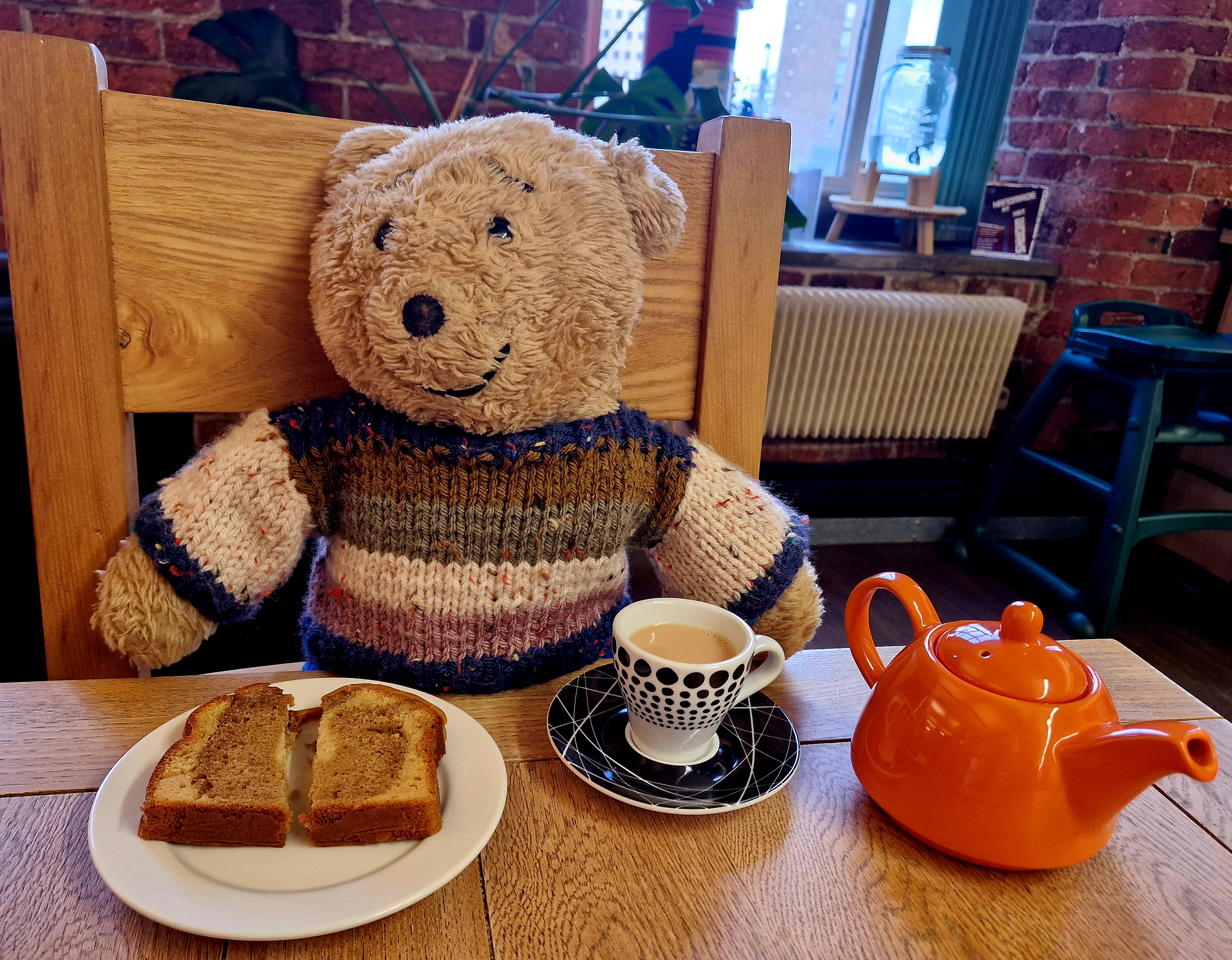
Before leaving Hat Works museum I visited the cafe and had a delicious piece of cake. There was a friendly atmosphere in the cafe with children doing craft activities on some of the tables.
If you are in the Manchester/Stockport area this museum really is worth visiting. At the time of writing this the museum has free entry too. The history of hat making is quite illuminating and it is fun looking a the hat gallery and being able to try on a few hats.
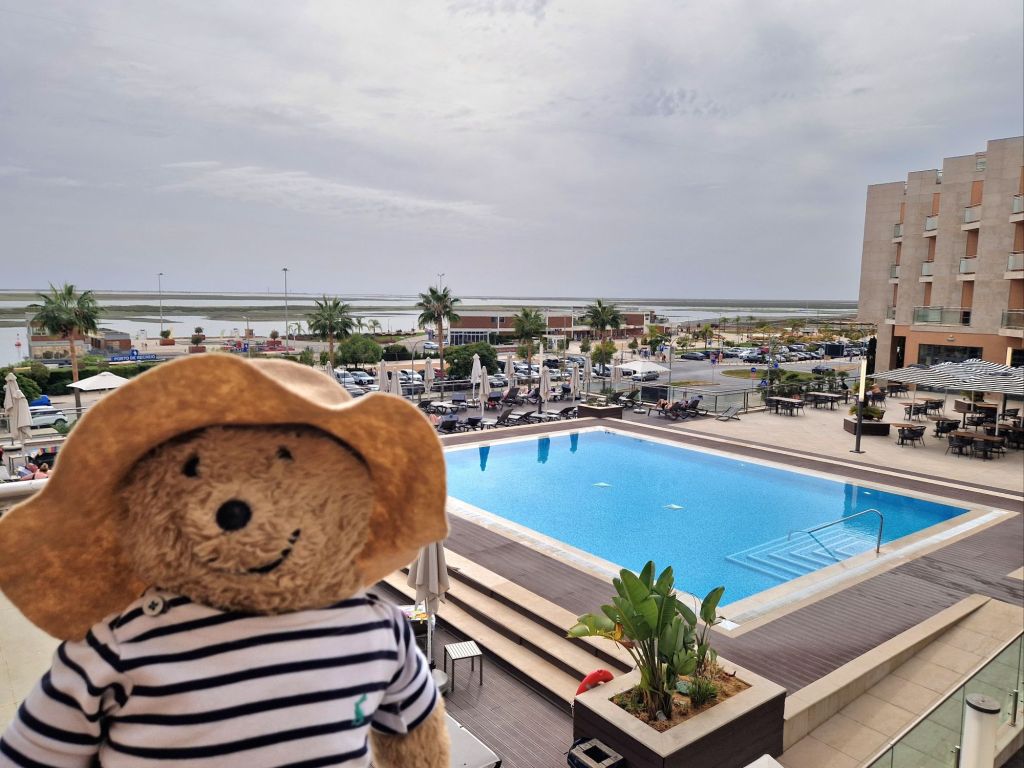
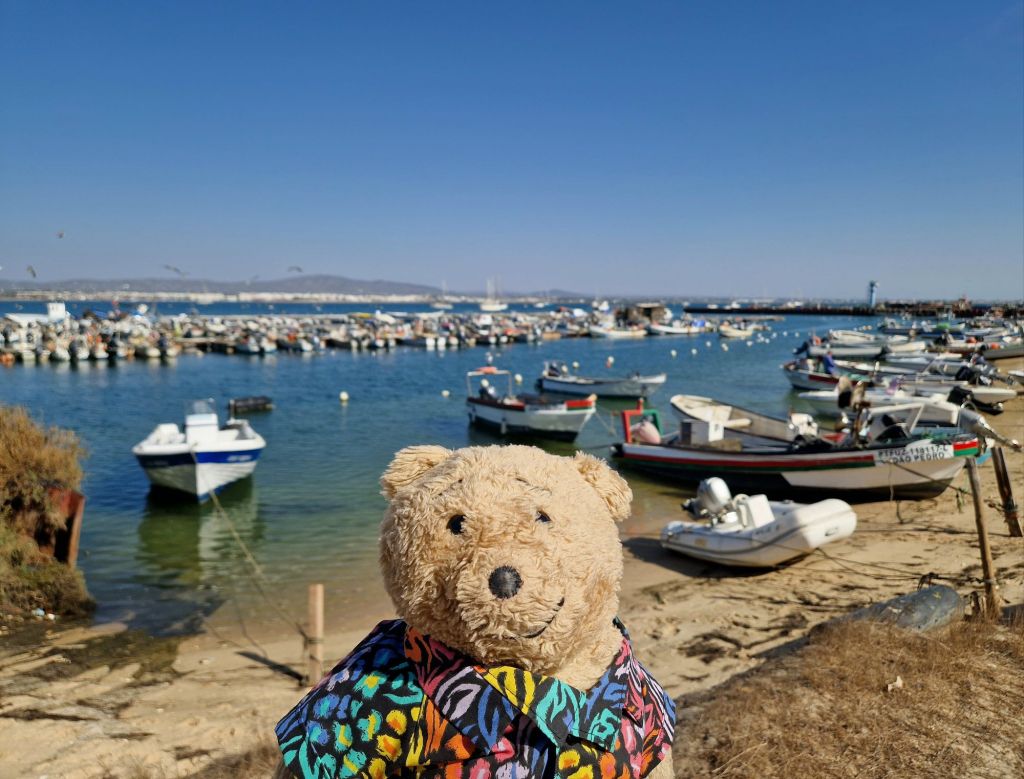
Olhao is a fishing port and not a big tourist destination. We arrived early on an October Sunday morning. After leaving our bags at the only big hotel in the town (the Real Marina) we set off to explore the town.
The Real Marina Hotel overlooks a marina, which is situated in the Ria Formosa, an area of tidal lagoons, sandbelts and small islands which are important sites for wildlife.
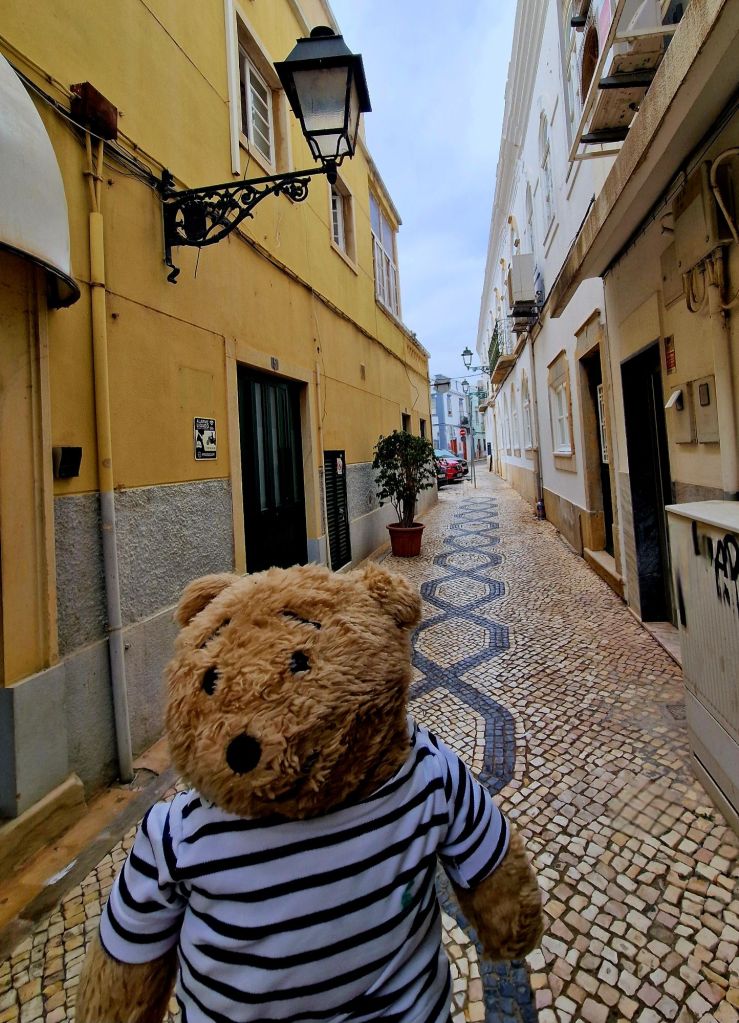
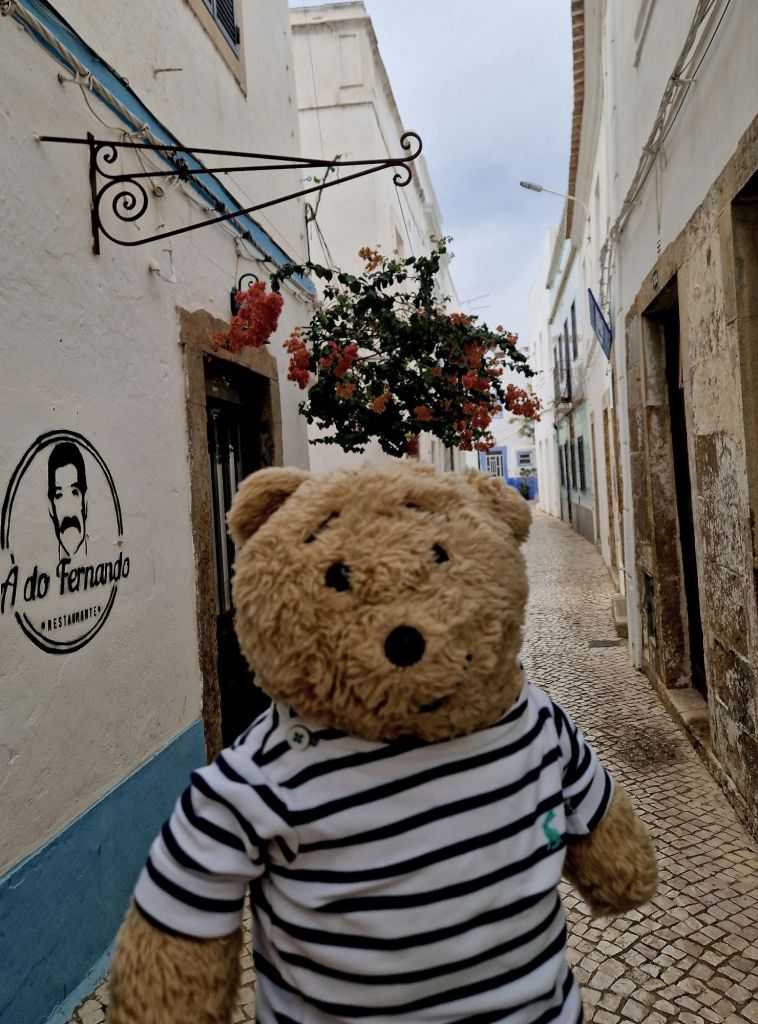
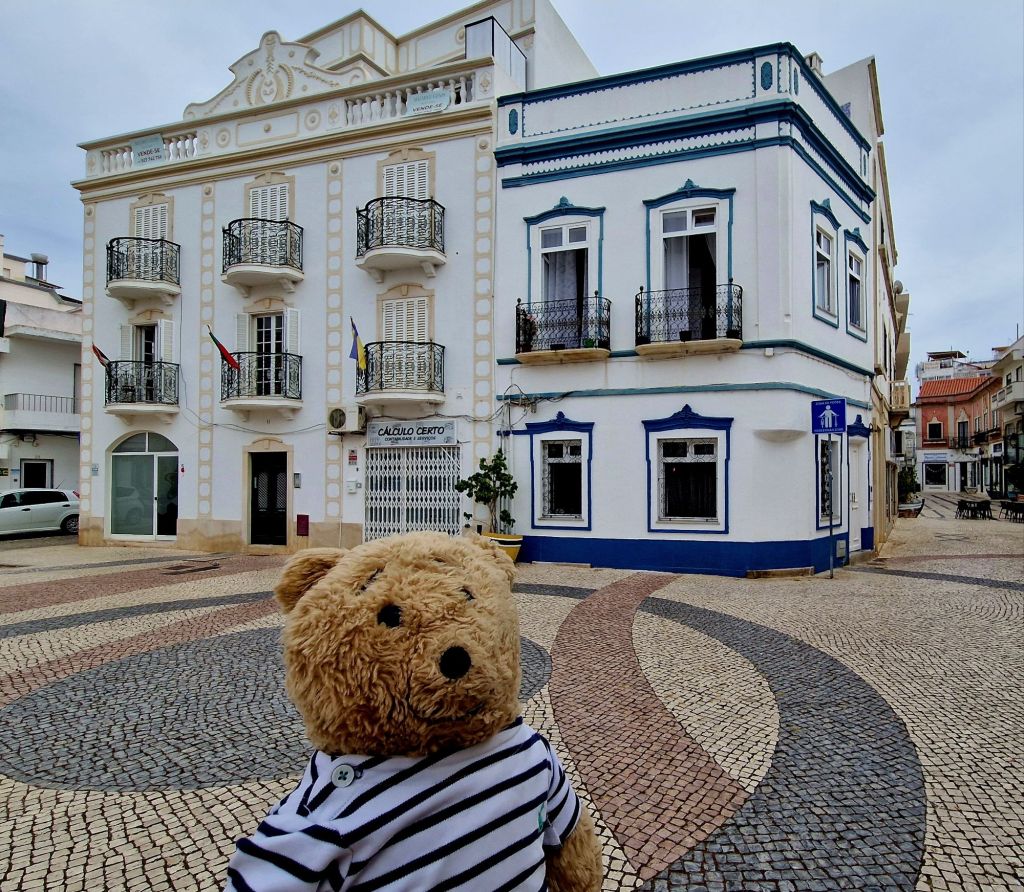
There is a long promenade next to the marina that leads to the town of Olhao. The narrow tiled streets were very interesting to wander around, with many properties having splendid front doors.
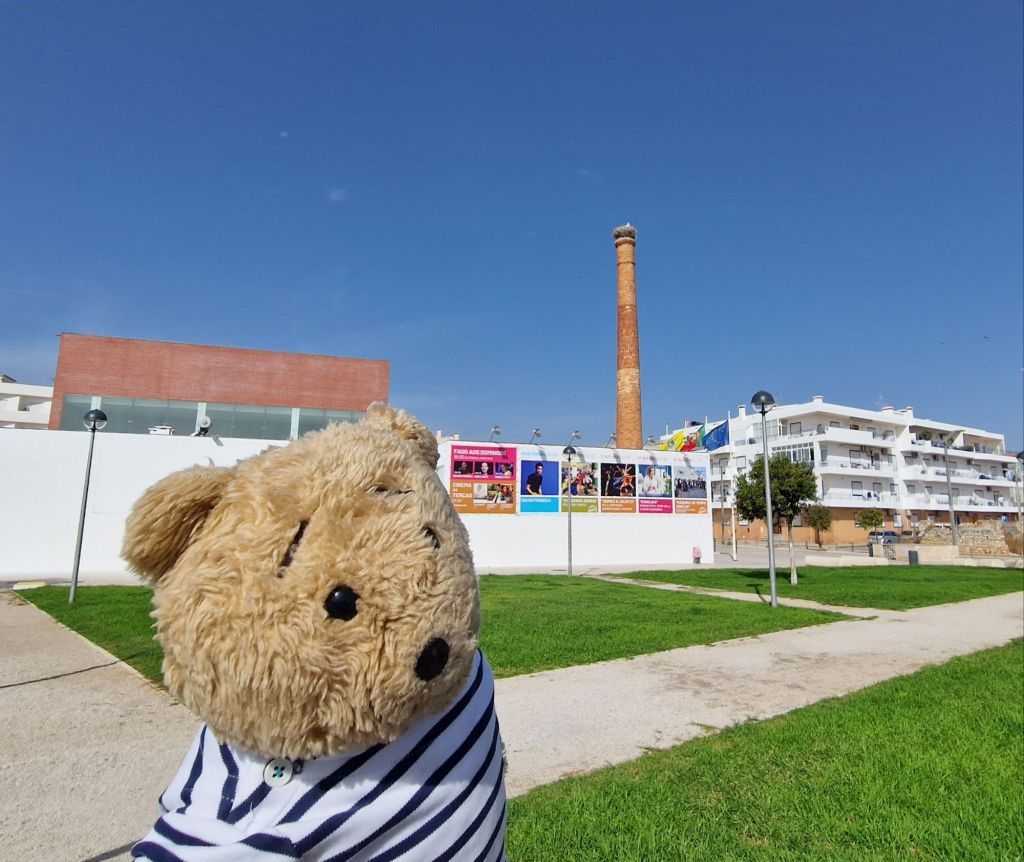
It was wonderful to spot a stork sat on a nest on top of a disused chimney.
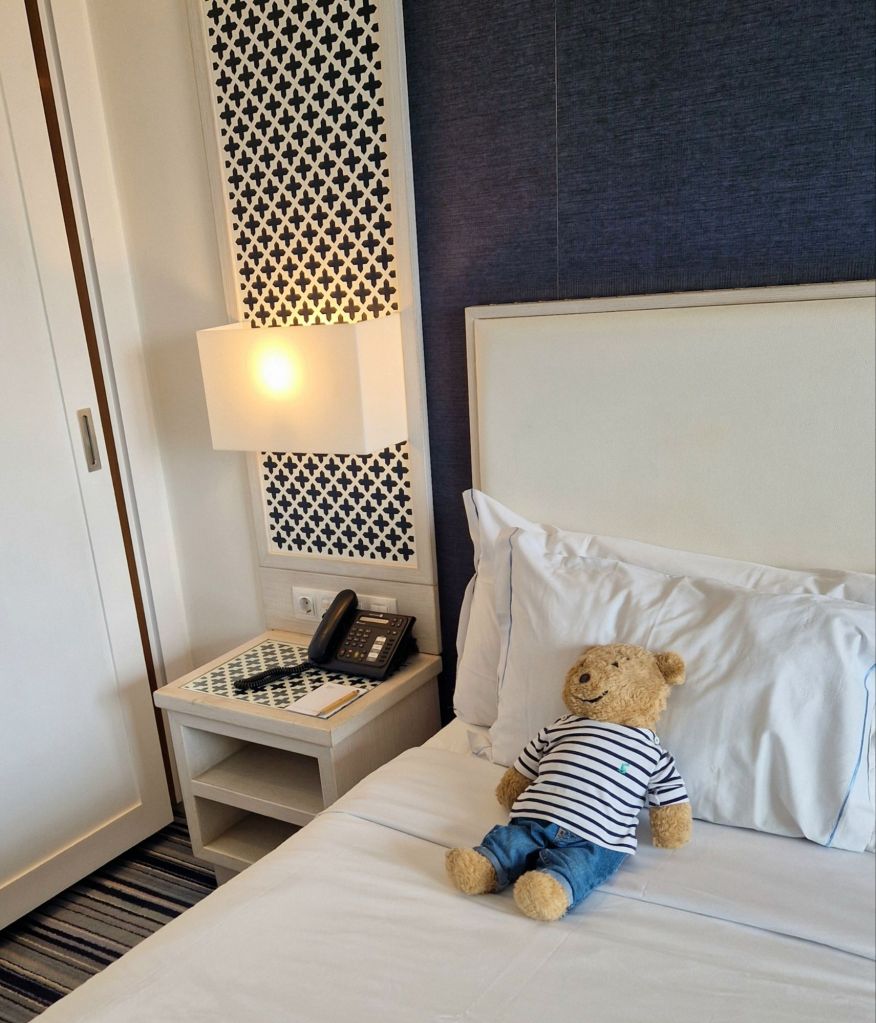
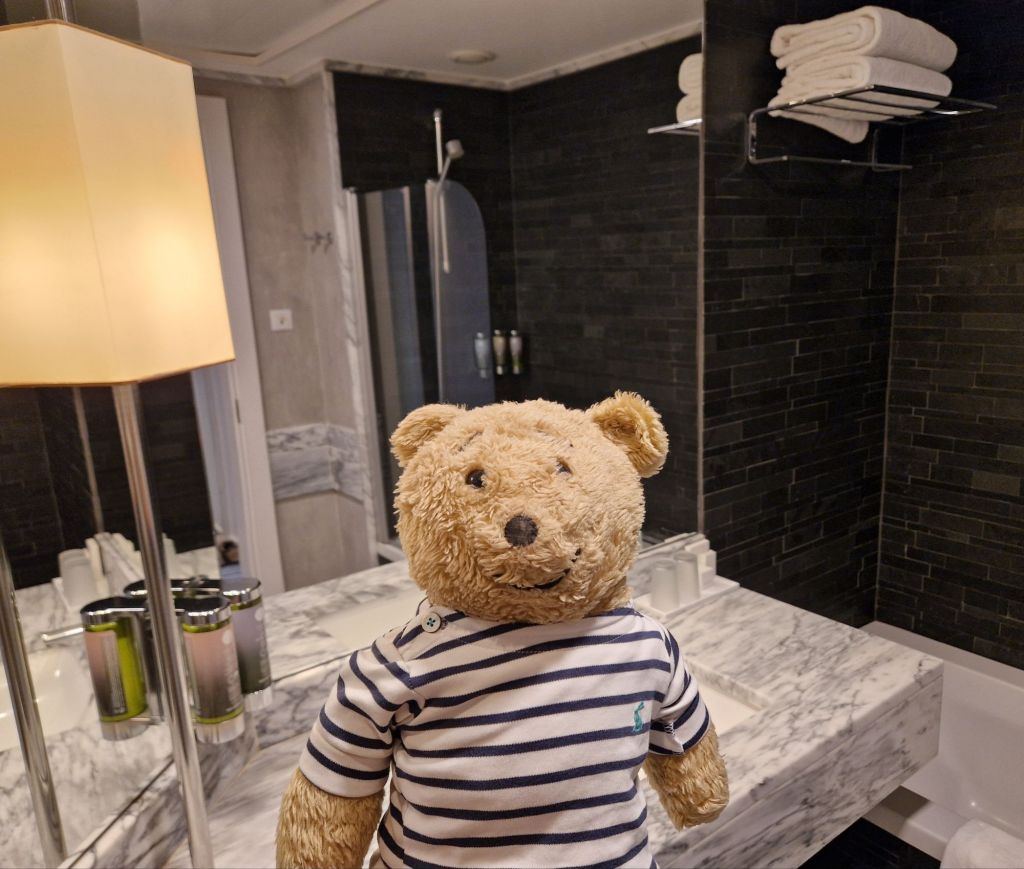
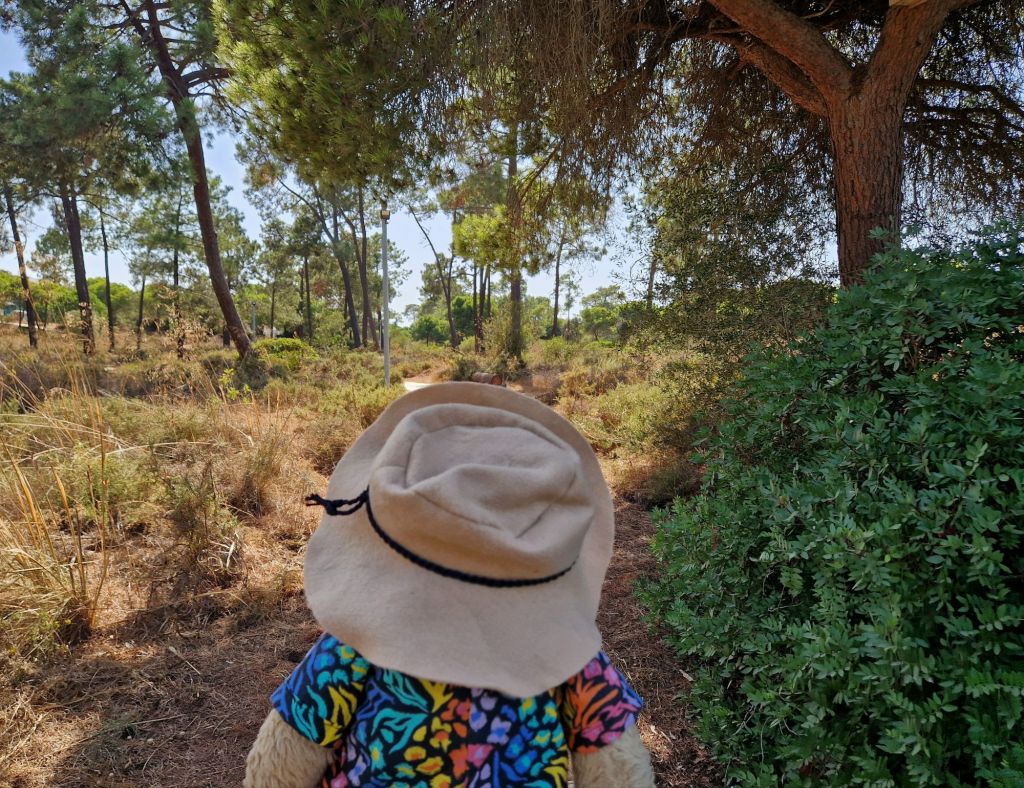
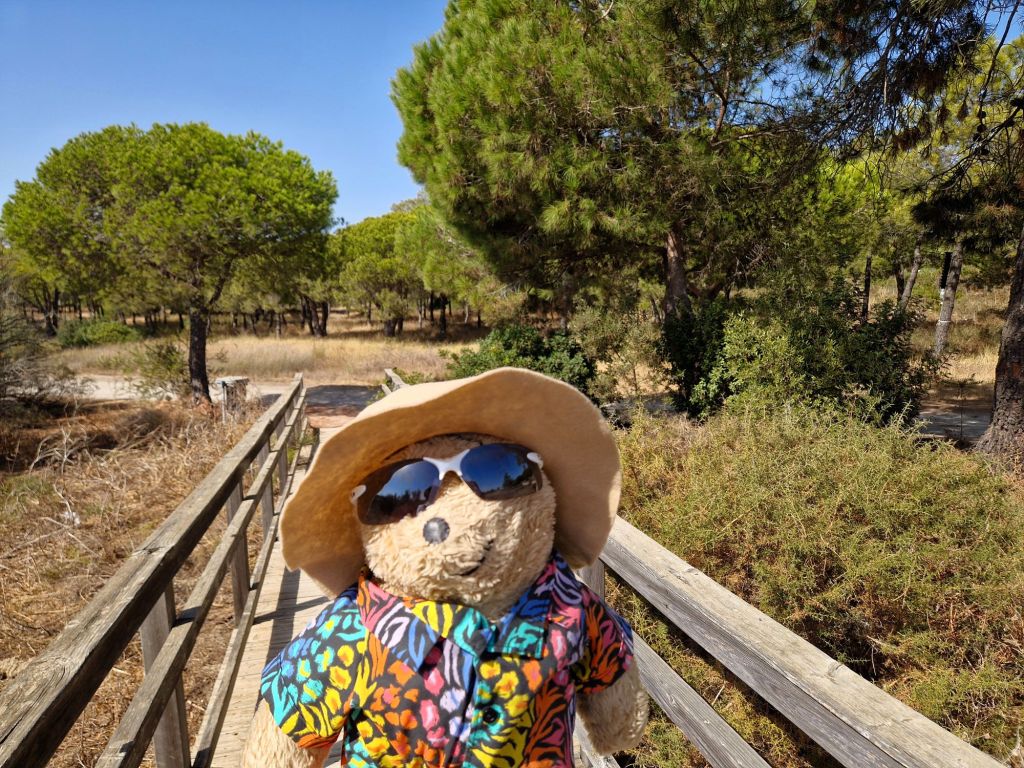
I was feeling quite tired due to the early morning flight so was very pleased when our hotel room was ready at 3pm. It was good to be able to unpack my hat to protect my head from the sun.
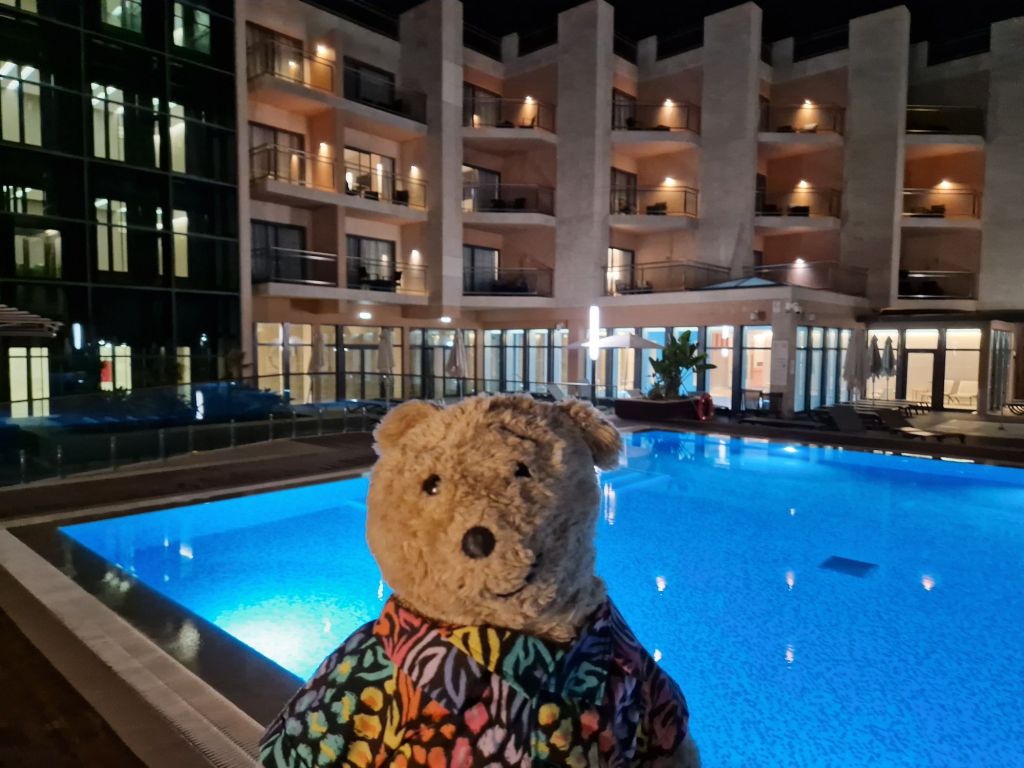
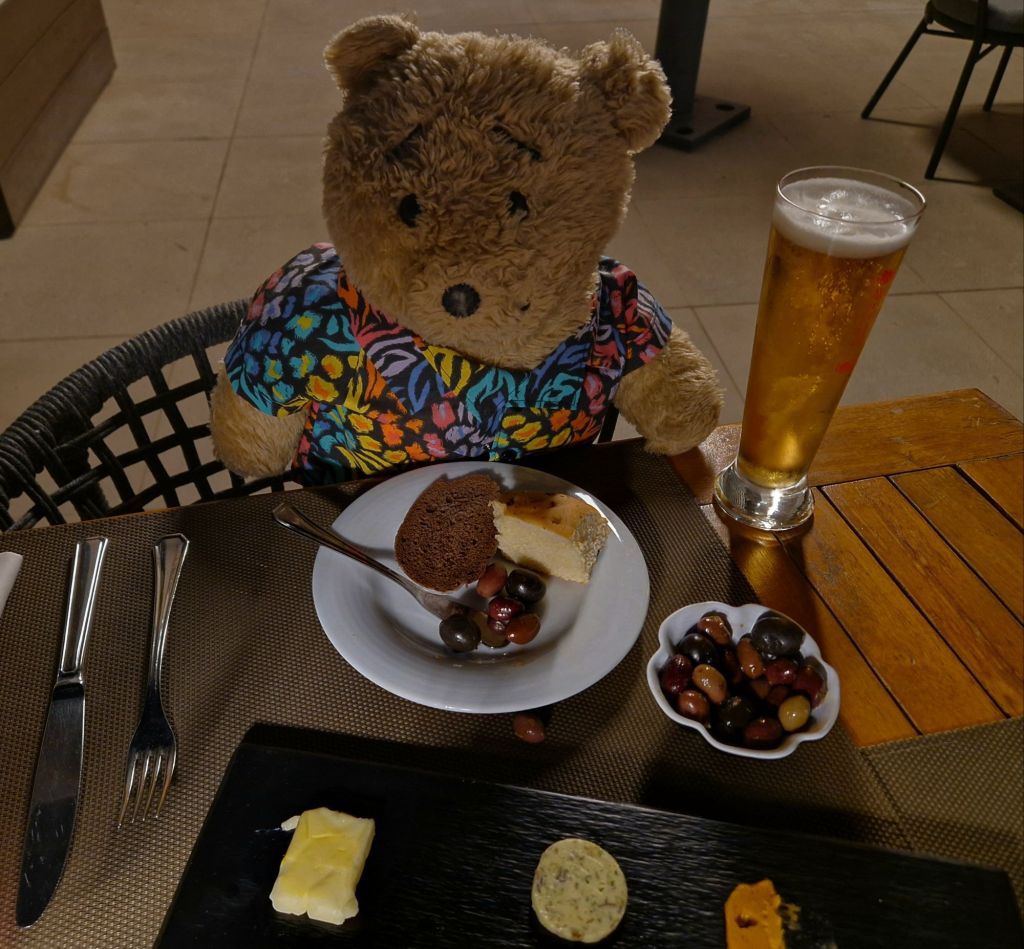
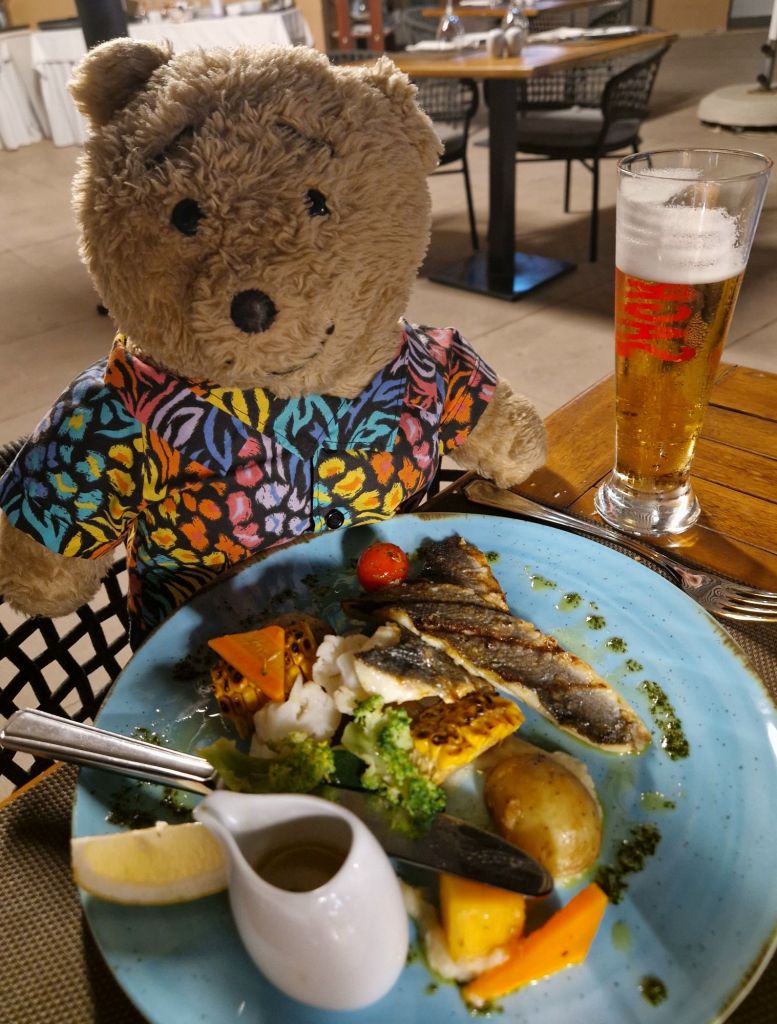
Here I am in my holiday shirt ready for dinner on the hotel terrace.
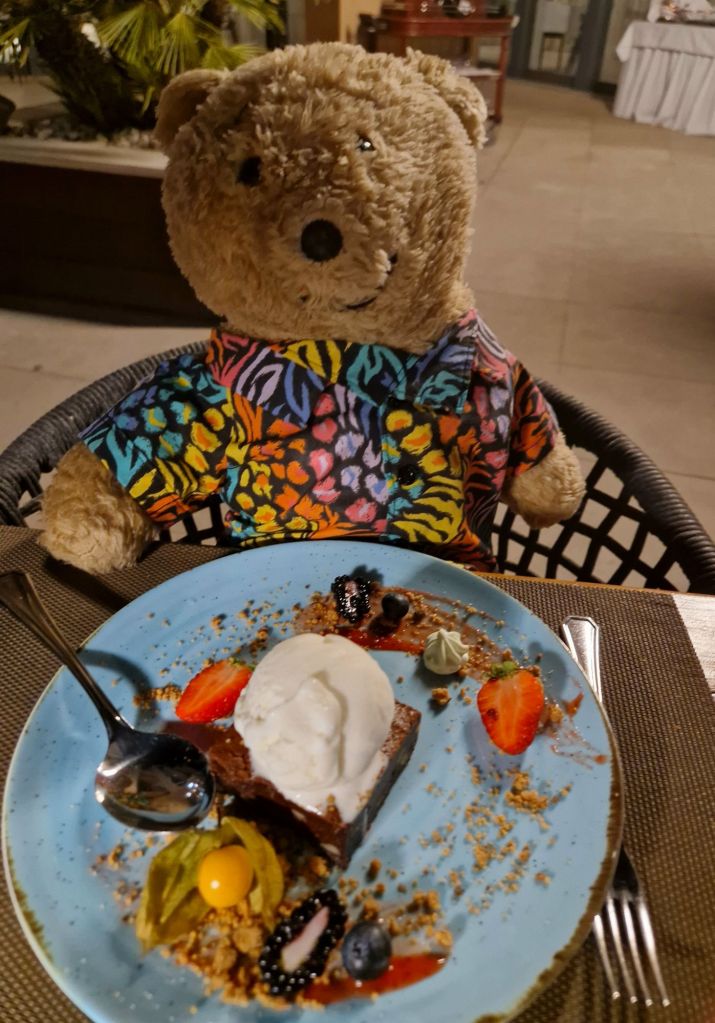
The hotel food was delicious. I opted for bread and olives, followed by seabass and then a chocolate brownie with ice cream. It was lovely to be sat outside (evening temperature was about 20c).
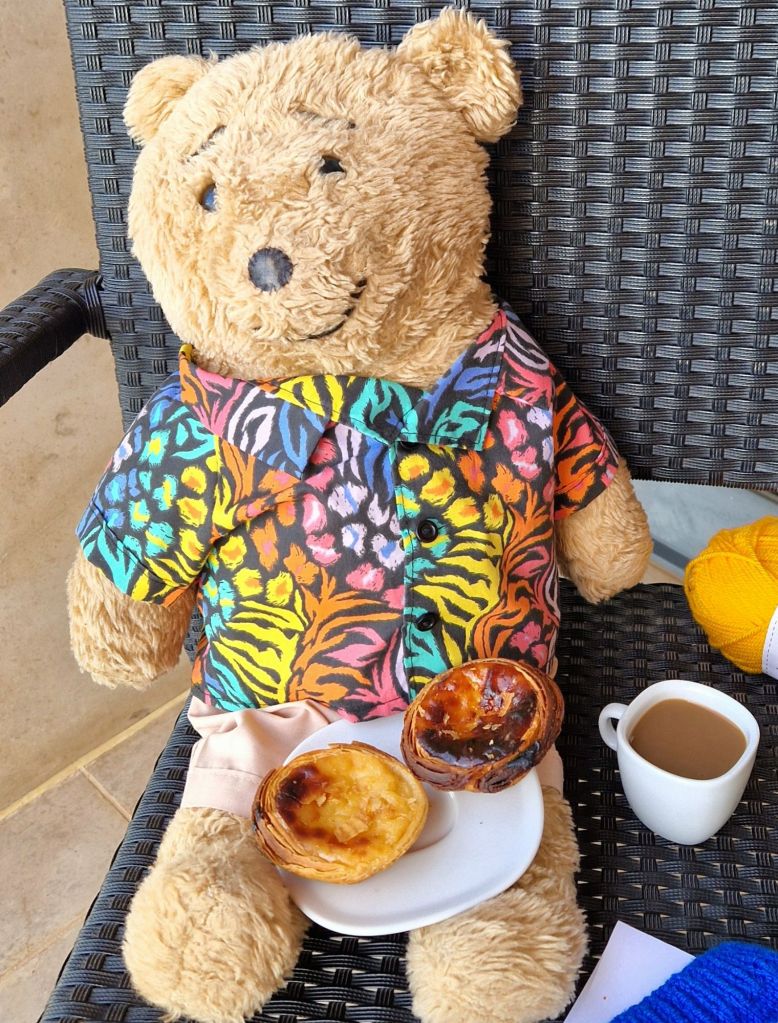
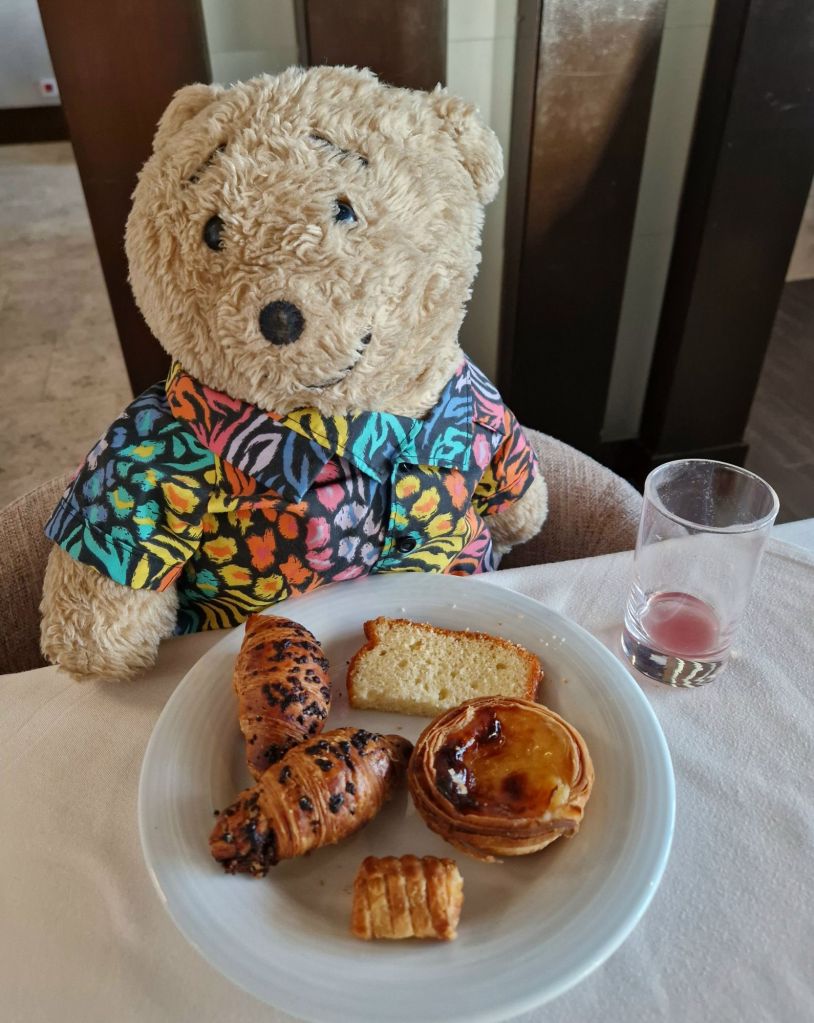
The following morning I didn’t get up early enough to join the humans for breakfast, but they kindly brought a couple of very tasty ‘pastel de nata’ tarts back to the room for me. (You may notice the yarn, I brought along some knitting !)
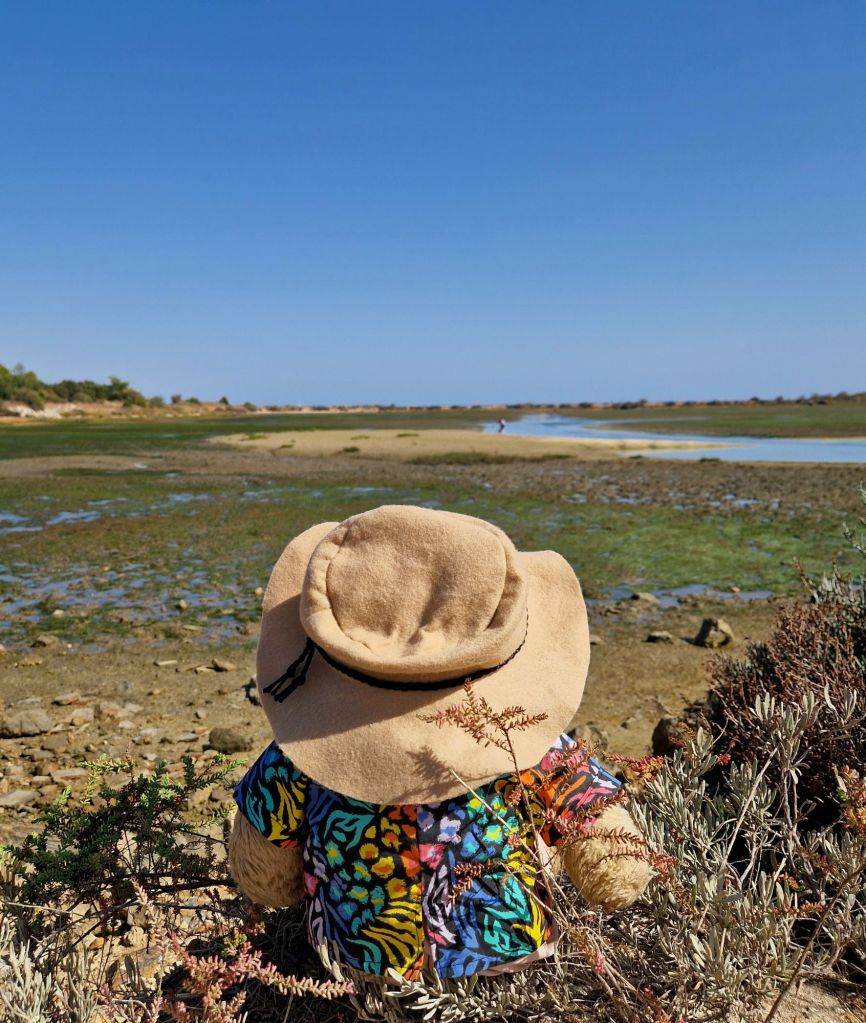
On day two we visited the Ria Formosa Nature Park. The walk from the hotel took us past the port and some industrial units but we soon reached the tranquil nature reserve. The highlight for me was watching fiddler crabs (unfortunately not photographed as they hide in their holes when they sense anyone nearby) and seeing wild flamingos, of which there were many, but again not easy to photograph with a phone camera. There are oyster beds in the lagoons.
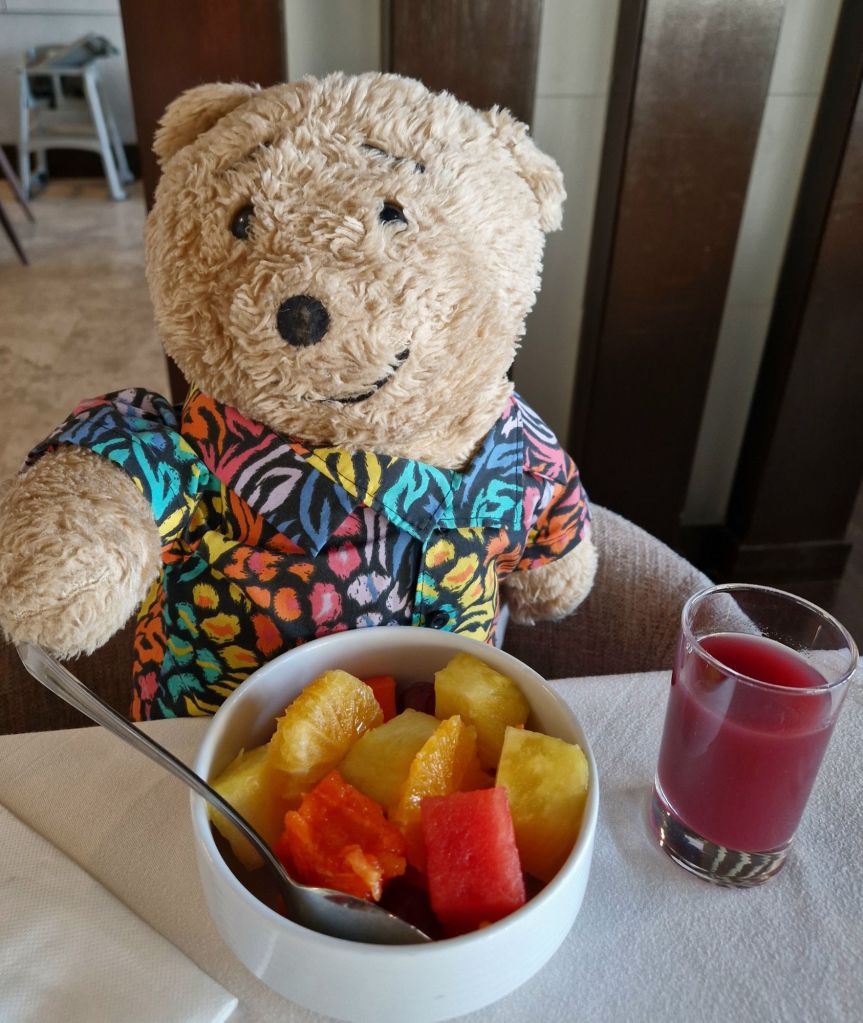
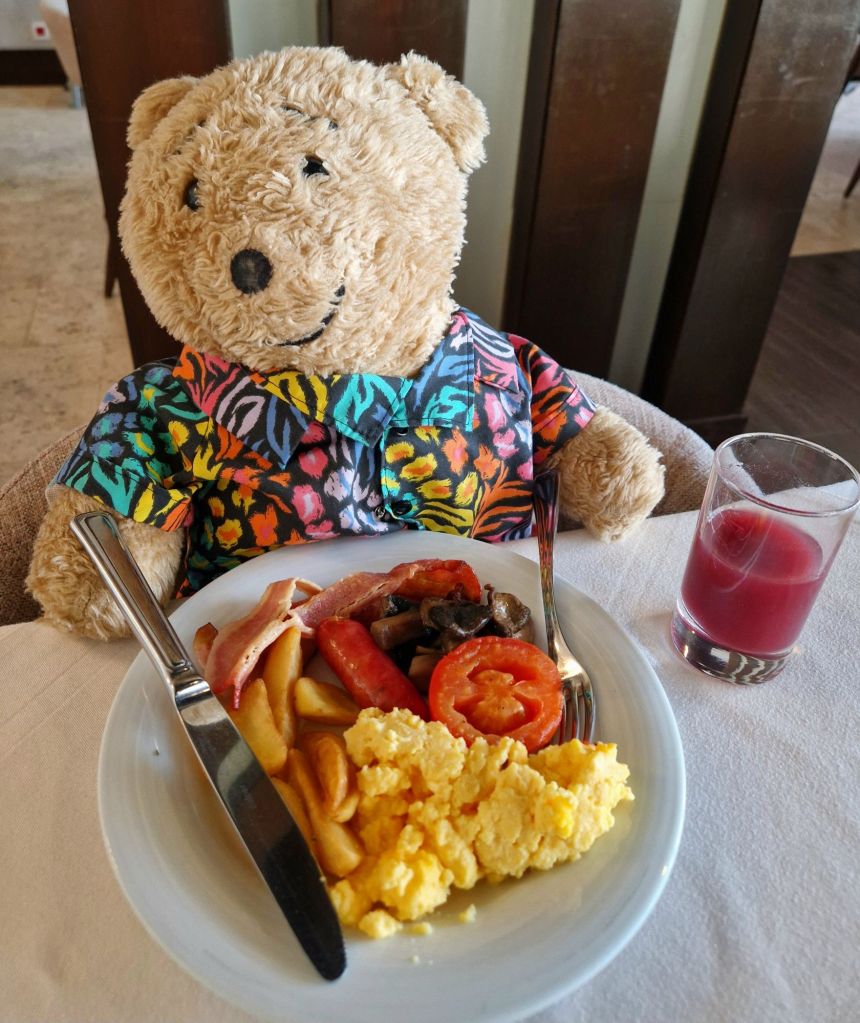
The following day I was up early enough for breakfast ! A bear doesn’t know what to choose when faced with a large choice so I had a bit of everything (but I didn’t eat all of it, humans helped out).
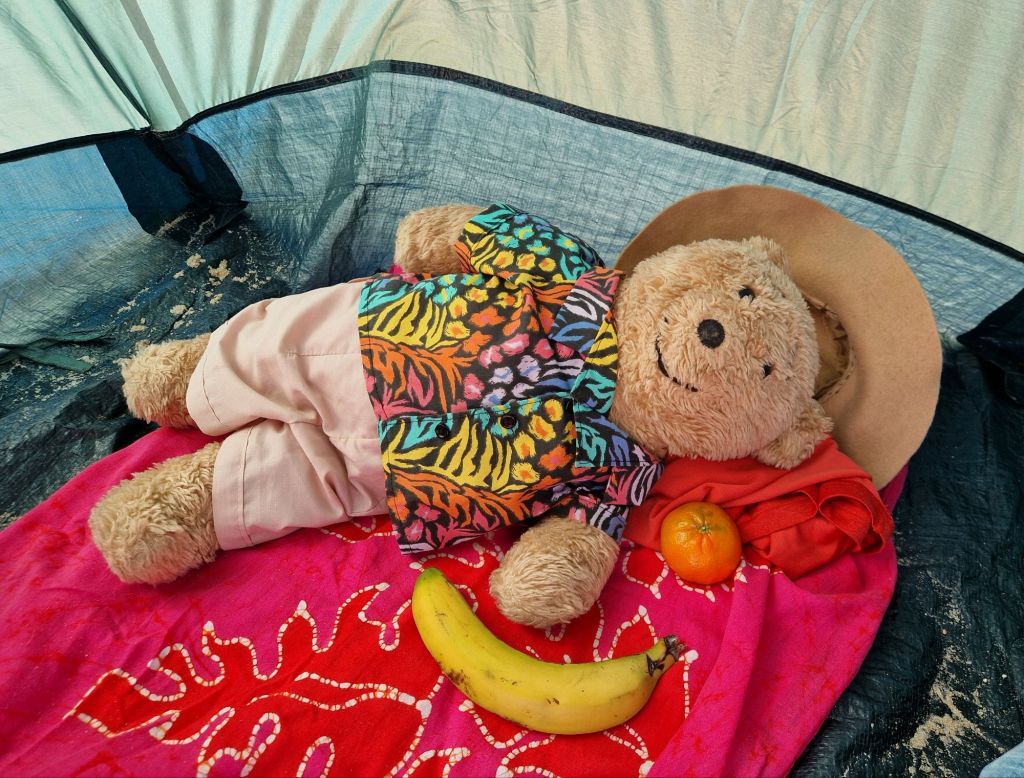
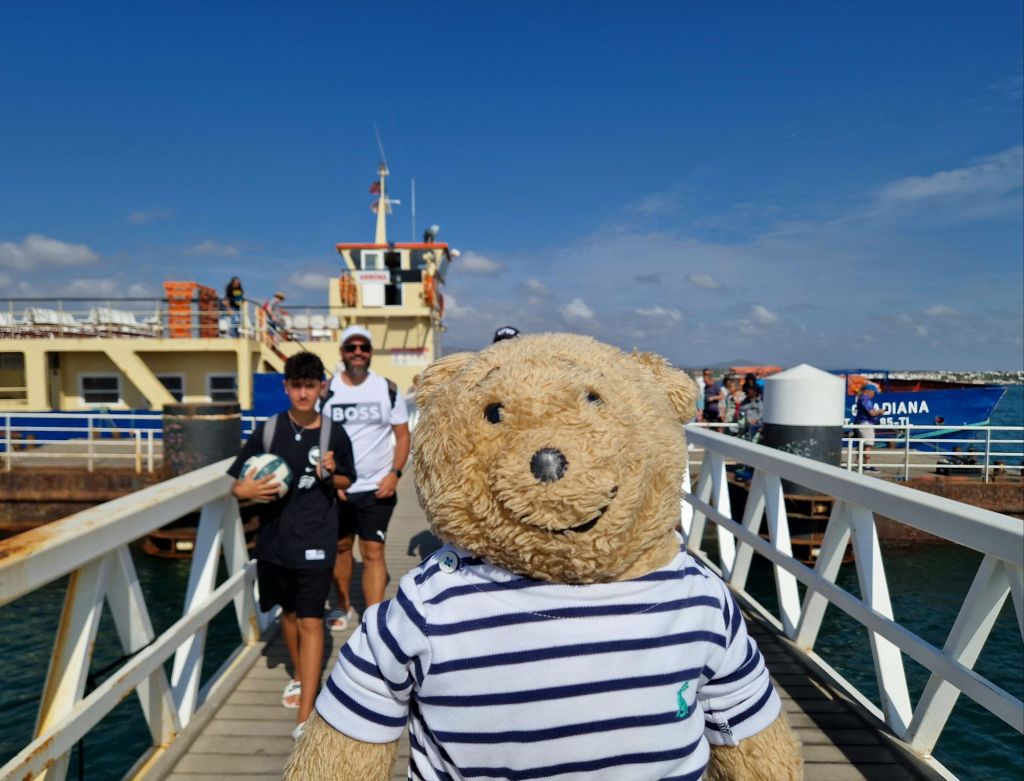
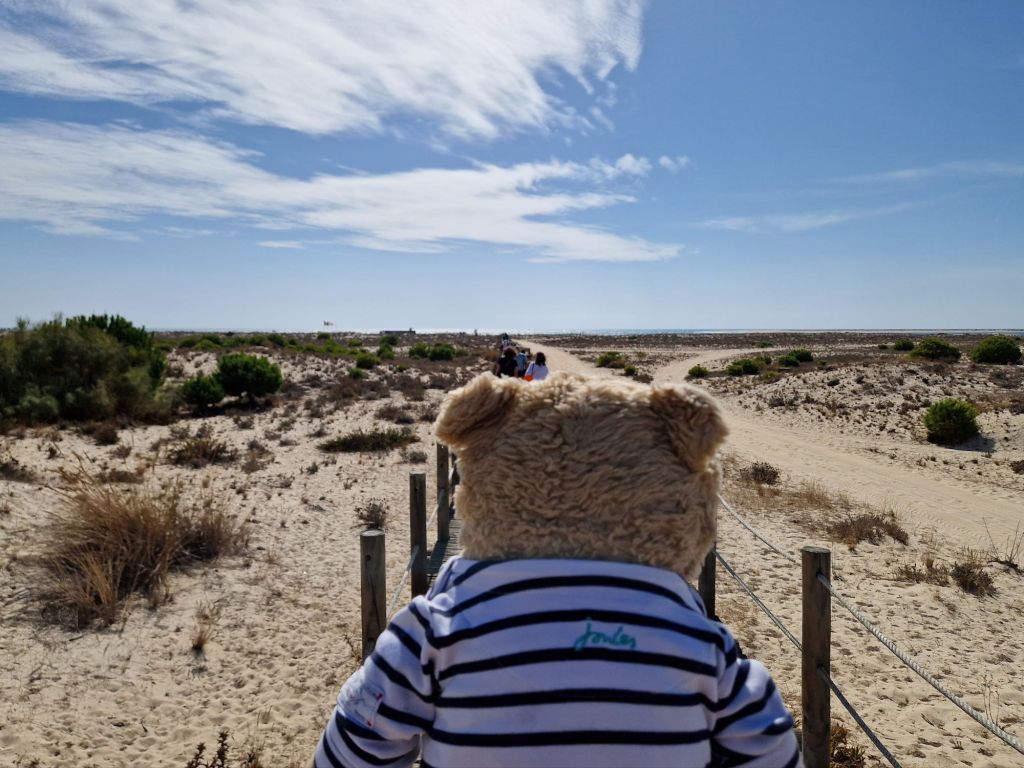
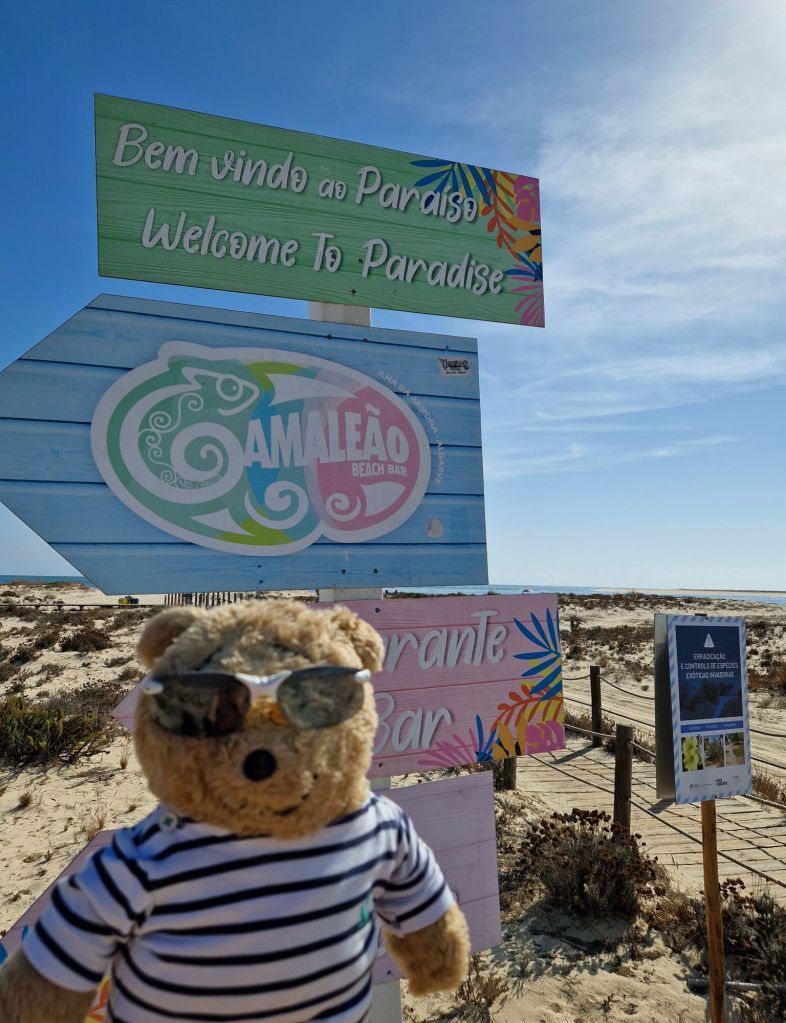
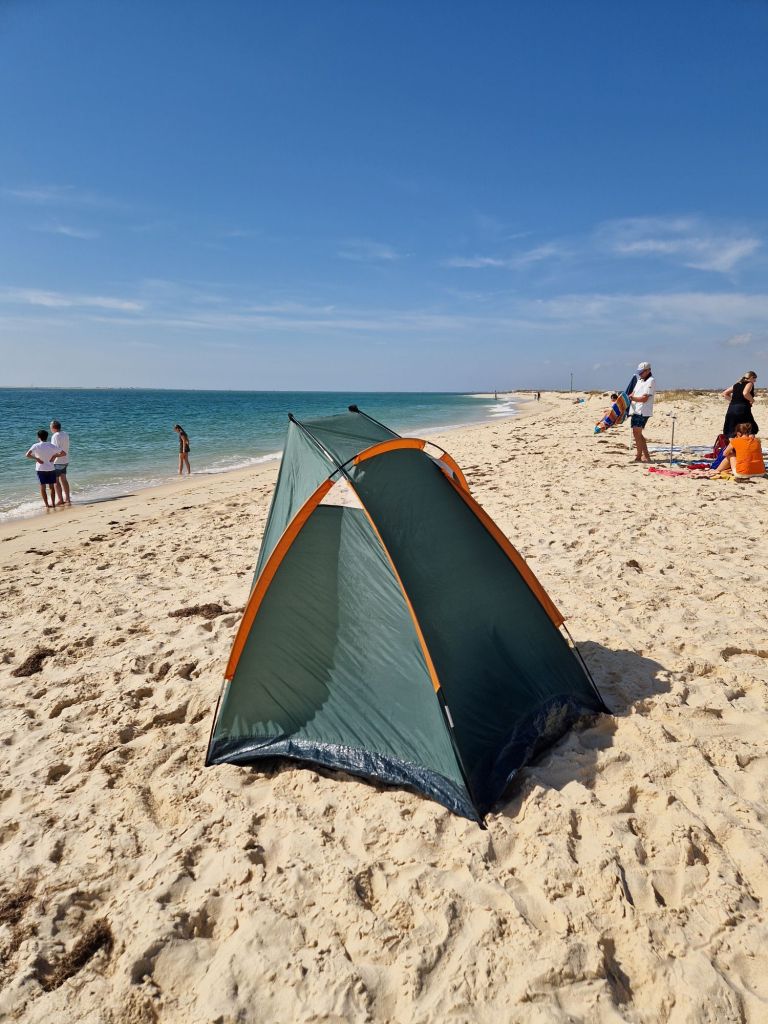
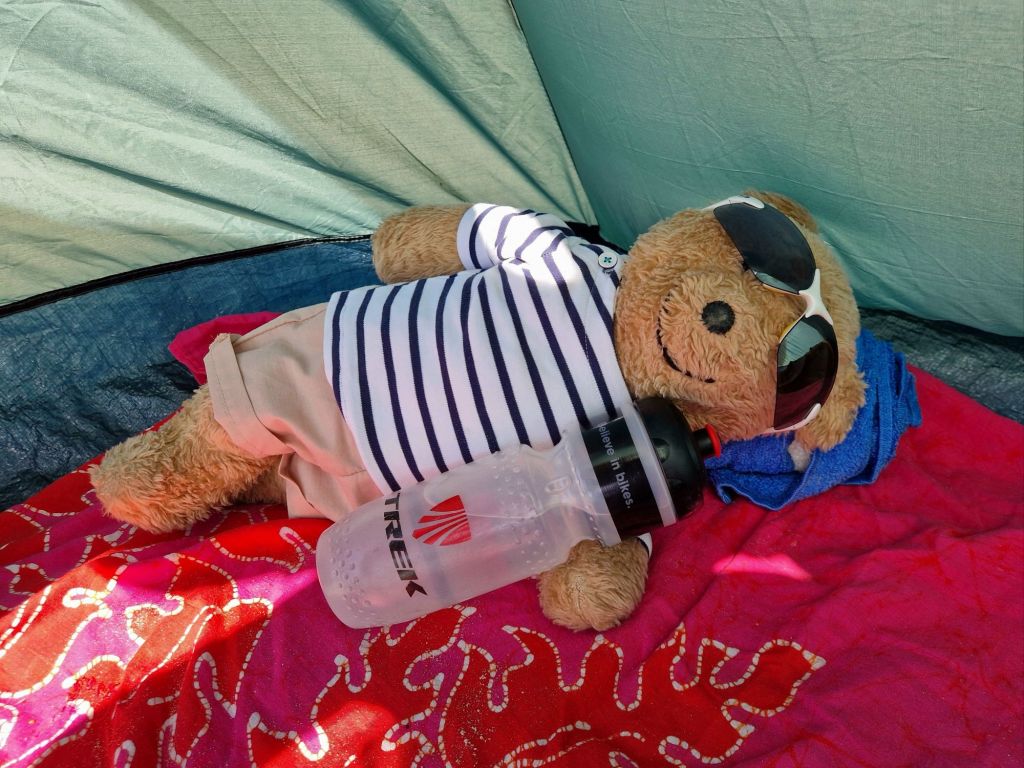
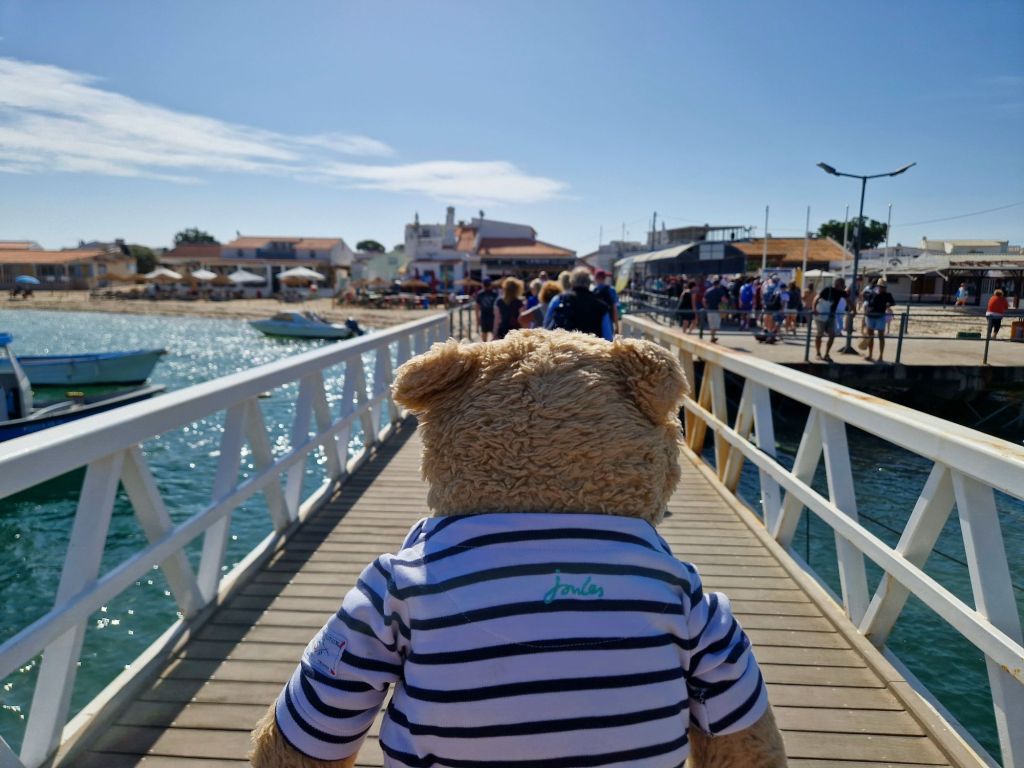
Tuesday’s adventure was visiting the island of Culatra using the ferry boat. Culatra is a beautiful barrier island at the edge of the Ria Formosa where there are no cars. The journey to the little fishing harbour surrounded by fishing huts took about 20 minutes. After following a paved path, then a boardwalk across the dunes we reached a idyllic beach. It was possible to hire a sunbed and shade from a small beach cafe but we had brought our beach shelter for shade. I spent an hour dozing in the shelter while watching the humans swimming.
Wednesday’s adventure involved a train journey. Trains go from Olhao station to Tavira and Faro and beyond, which is very convenient.
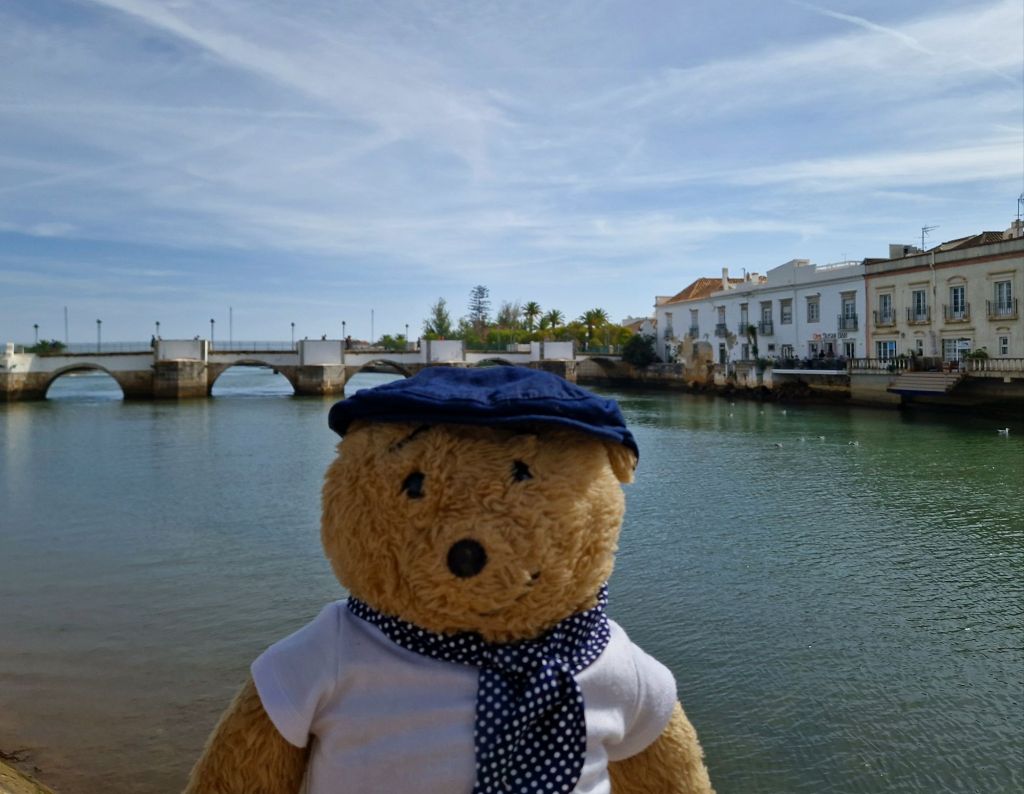
On the way to Tavira the train passed many pomegranite trees, with pomegranites right next to the track. On arrival at Tavira we spent a while wandering around the town.
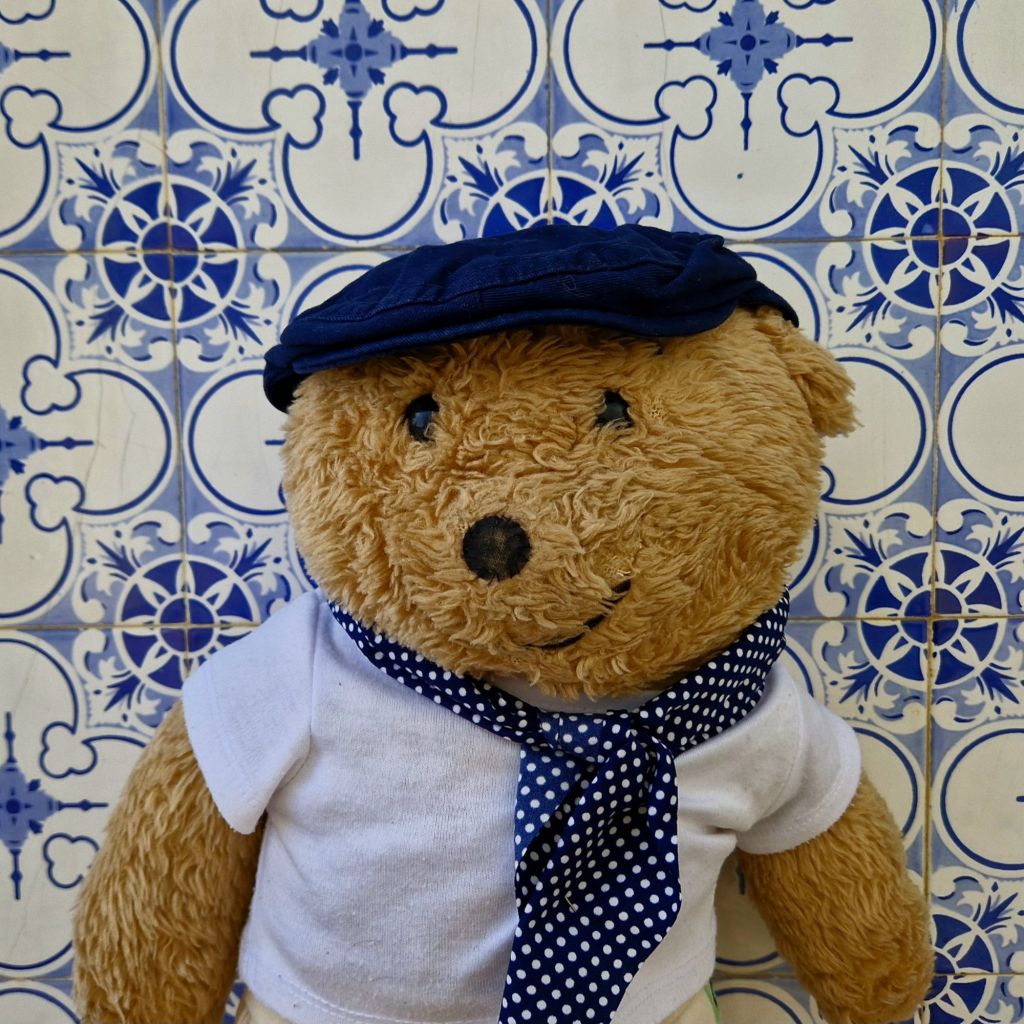
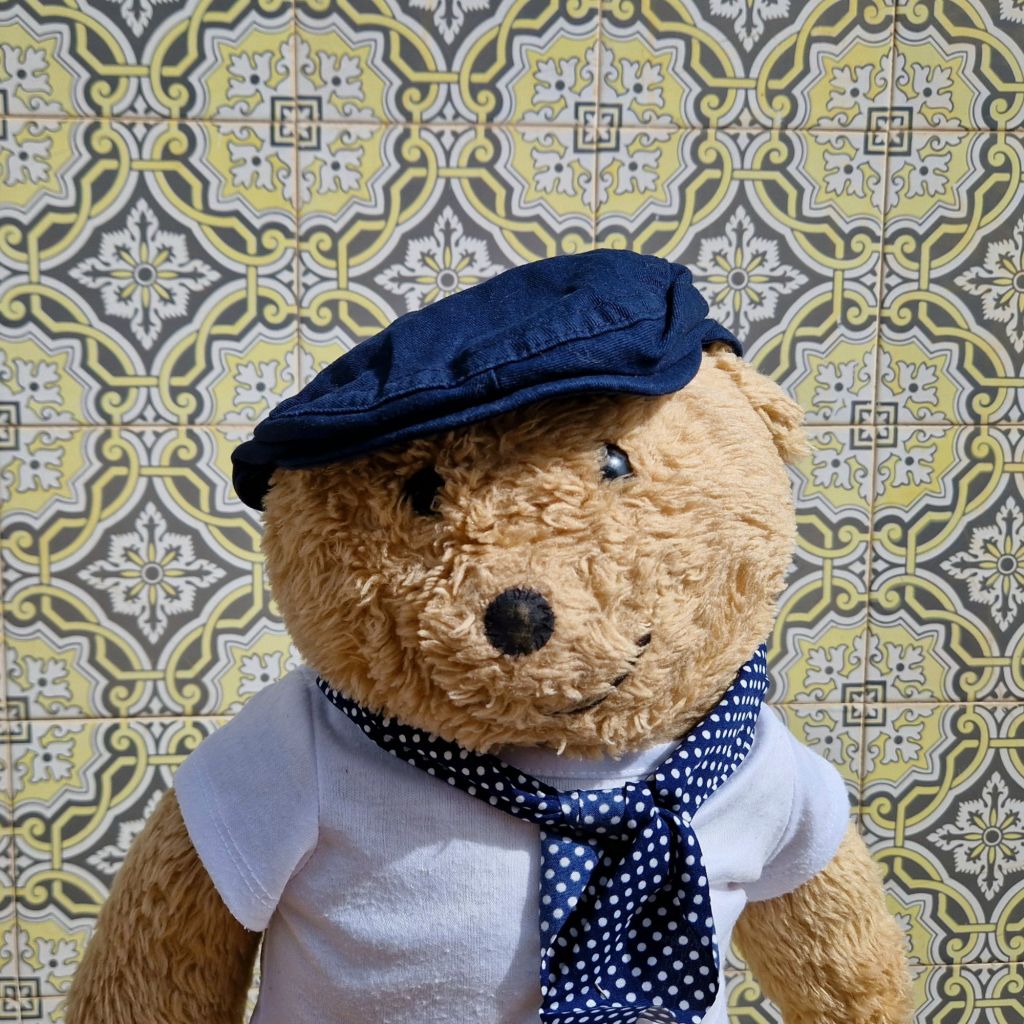
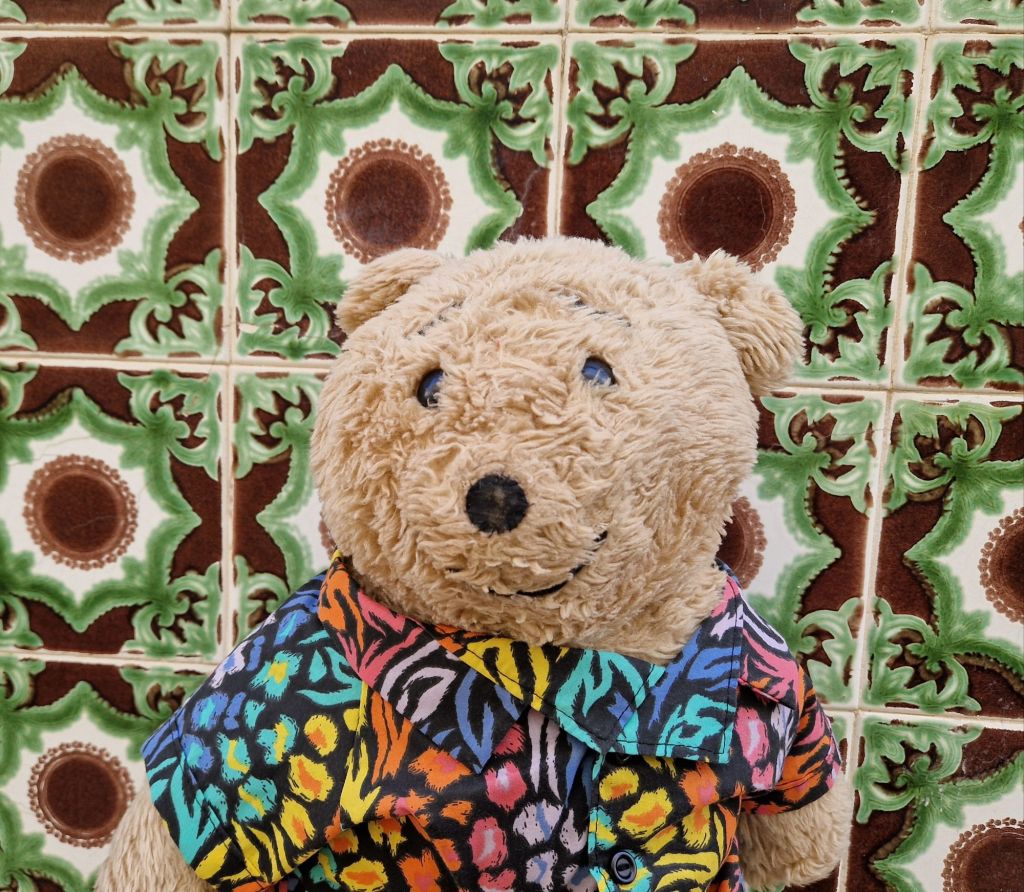
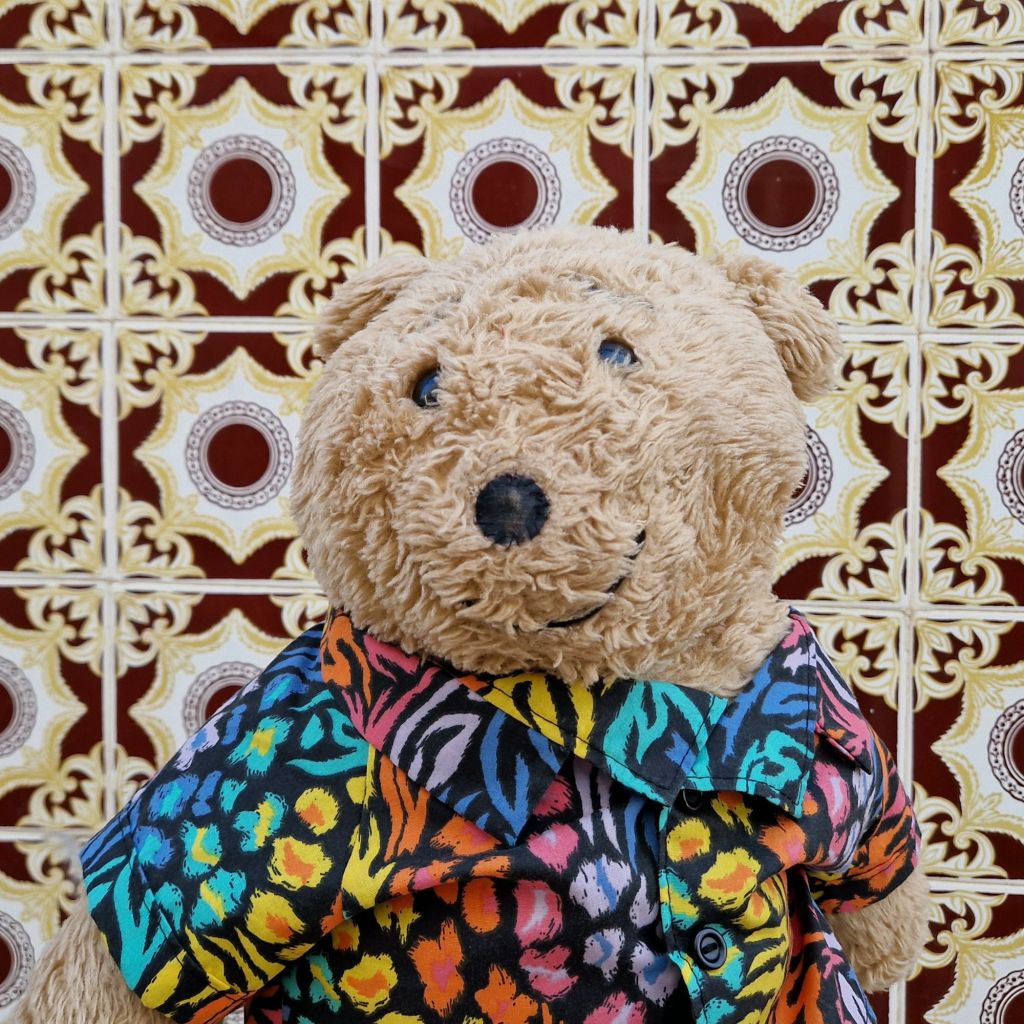
In Portugal many properties are decorated with very attractive tiles. Here I am posing in front of a few found in Tavira.
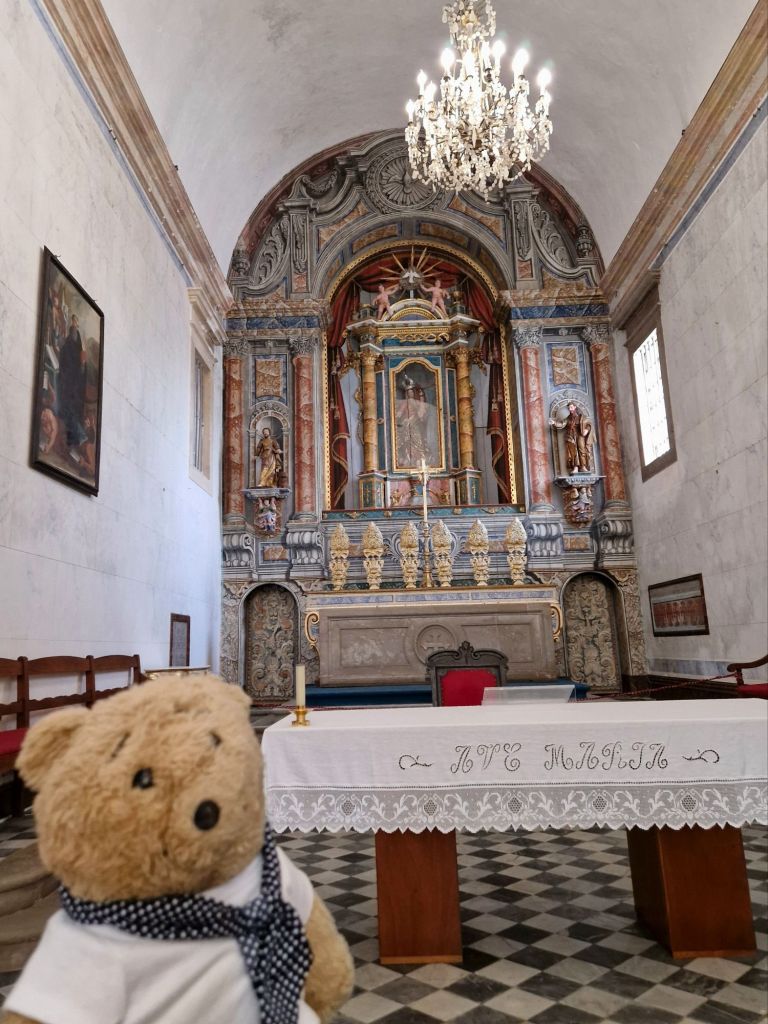
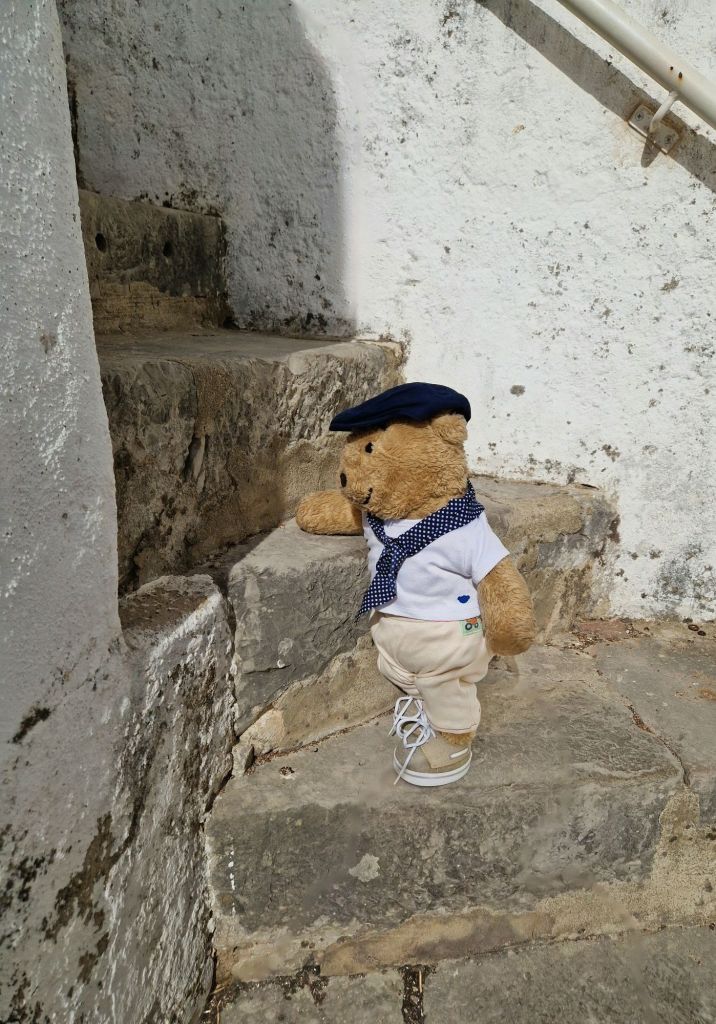
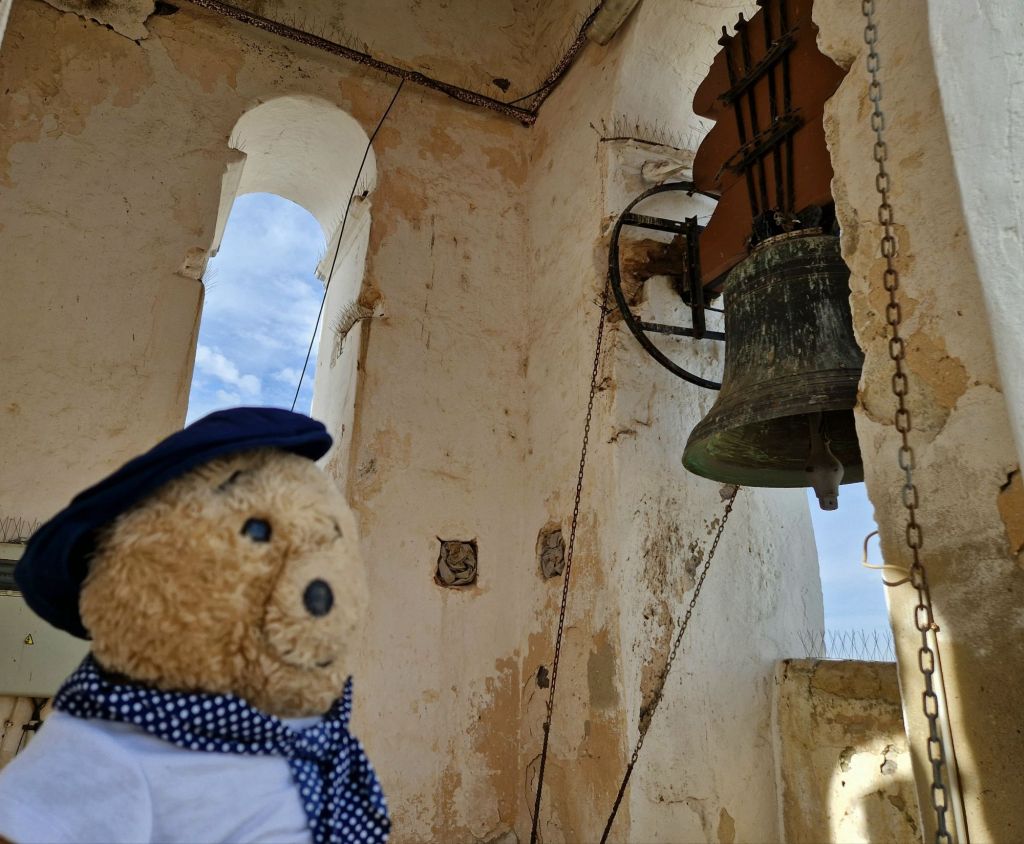
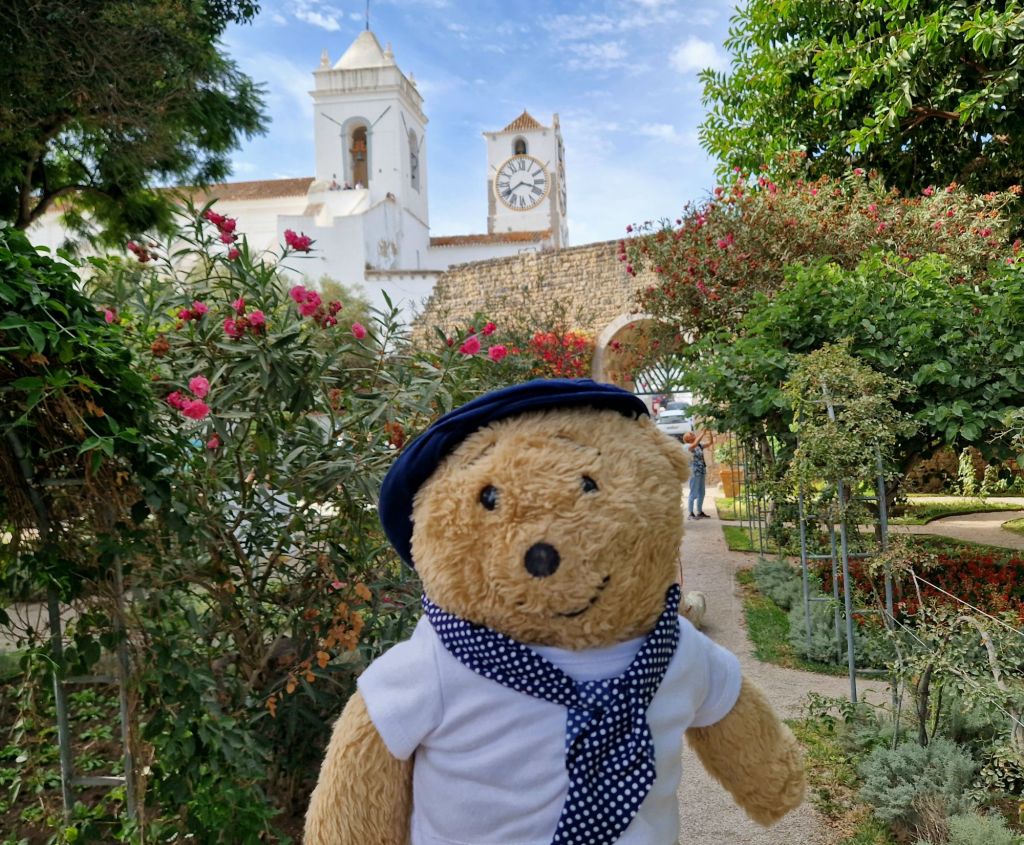
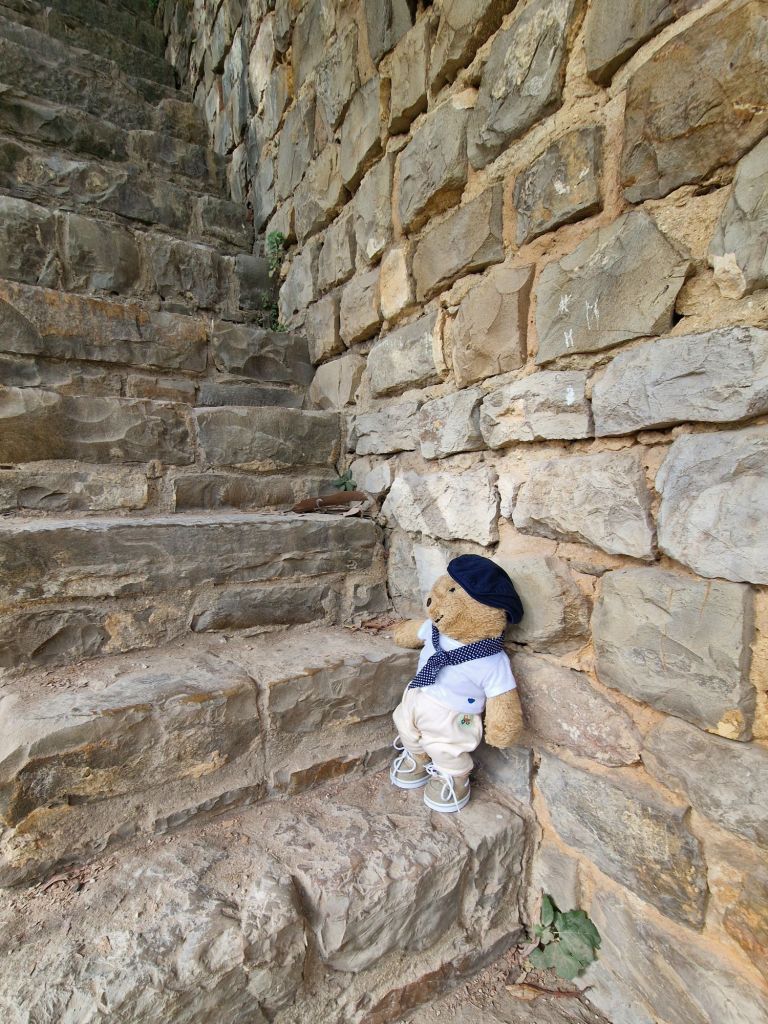
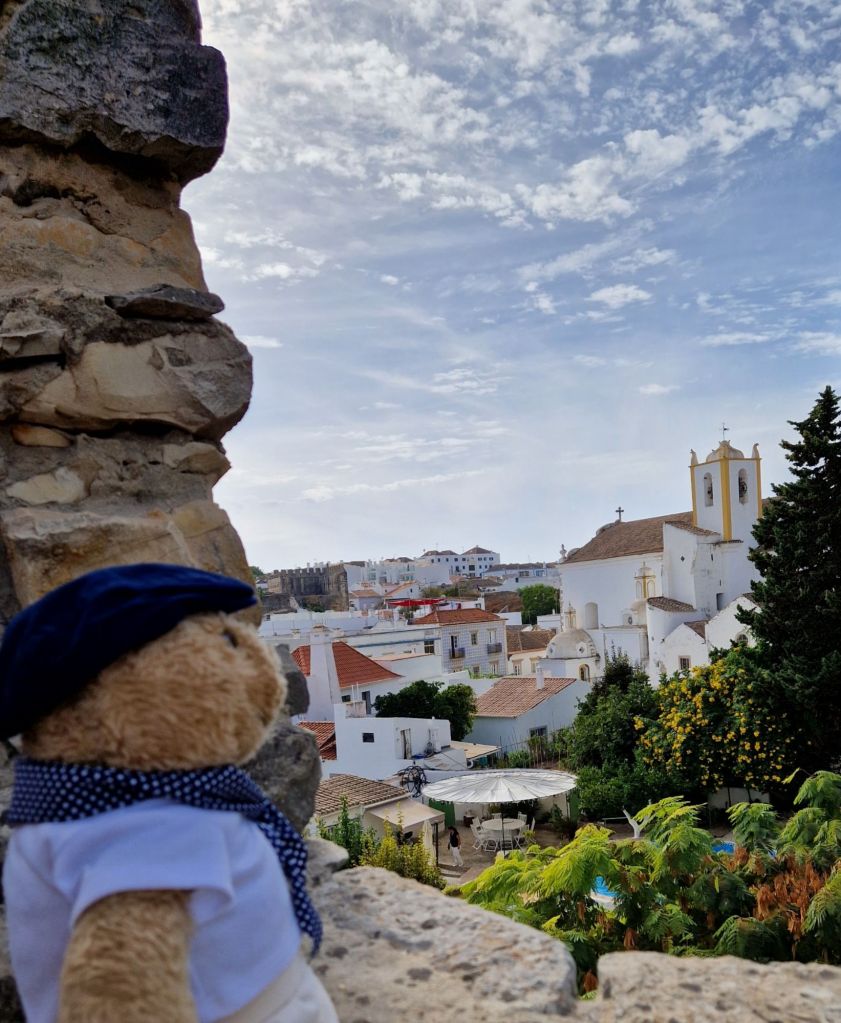
We visited a very old 13th Century Church of Santa Maria, which is thought to have been built on the site of a former Mosque. It has changed since then as had to be rebuilt following an earthquake in 1755 but the clock tower dates back to the original building. I climbed up lots of steps to have a look at the big bell and was very pleased it didn’t chime while I was at the top, but I did stay long enough to admire the view of the town.
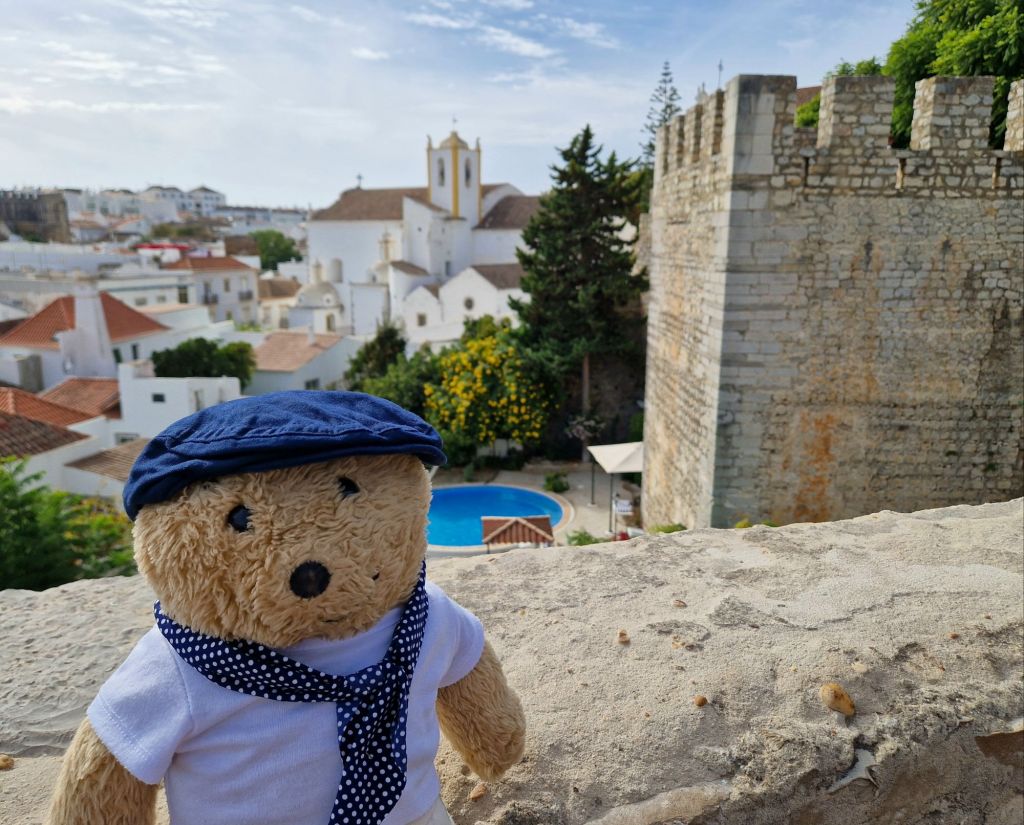
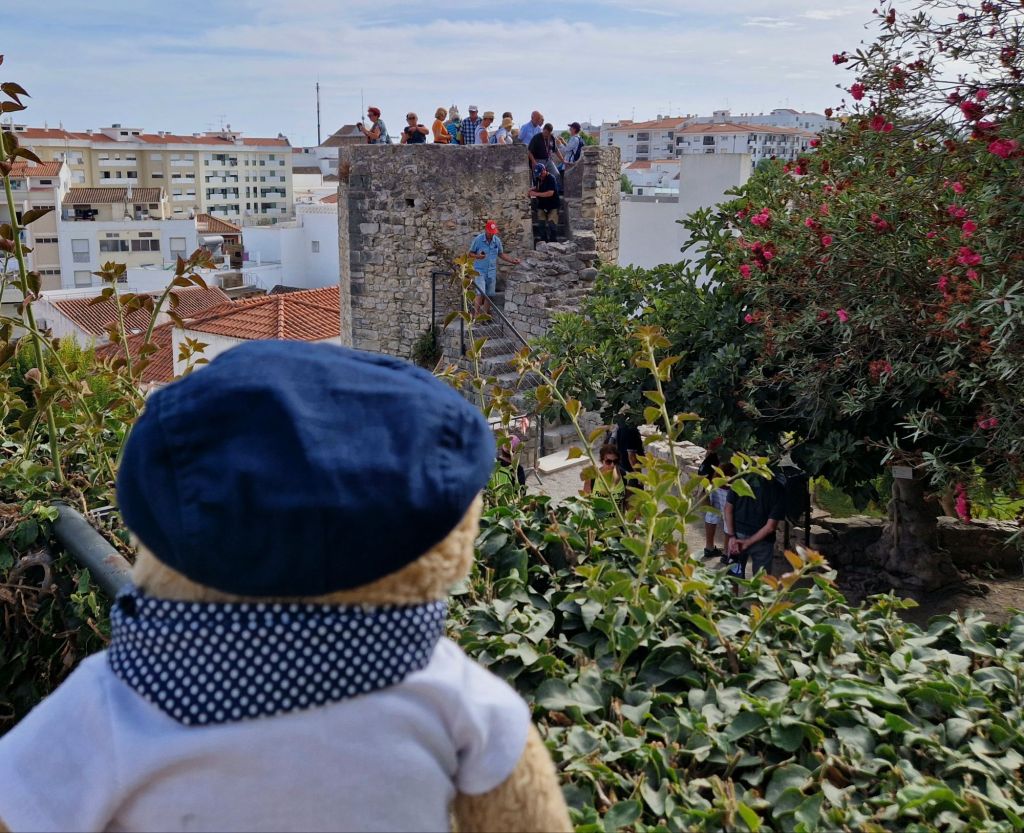
Tavira Castle is very close to the church. There isn’t much of it left but it is very old and with some parts found to date back to the 8th Century (Source Wikipedia). I climbed up one of the towers and could see a group of tourists looking out from the top of another!
The day out on the train was quite tiring so after a cake and camomile tea I had an early night.
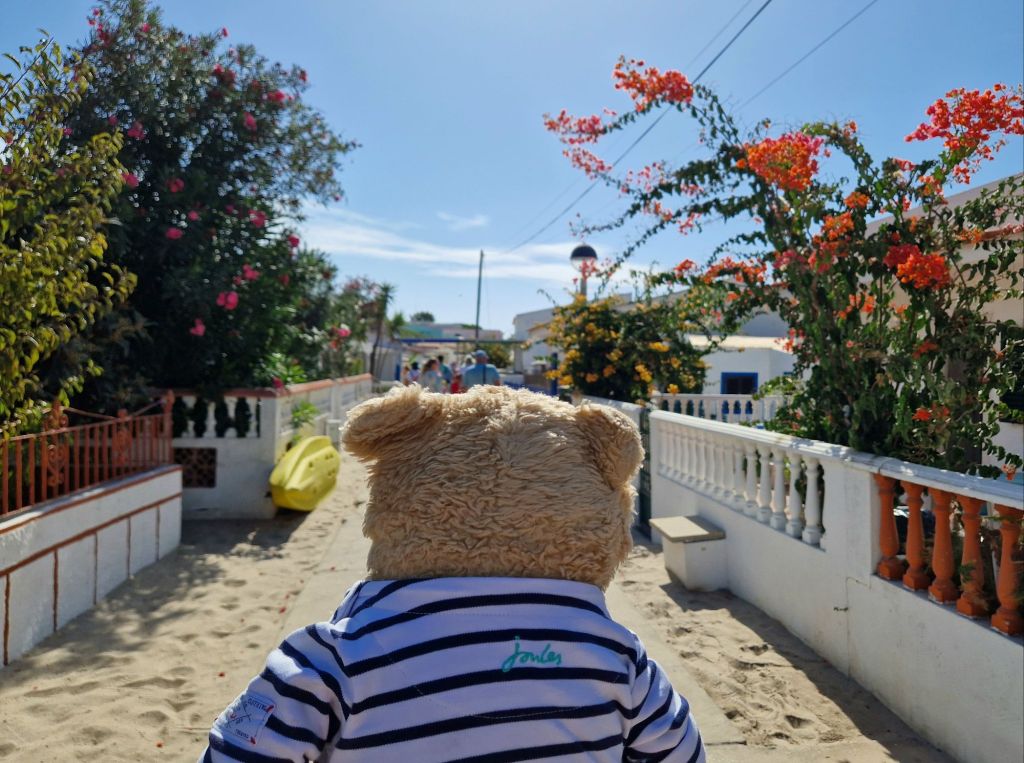
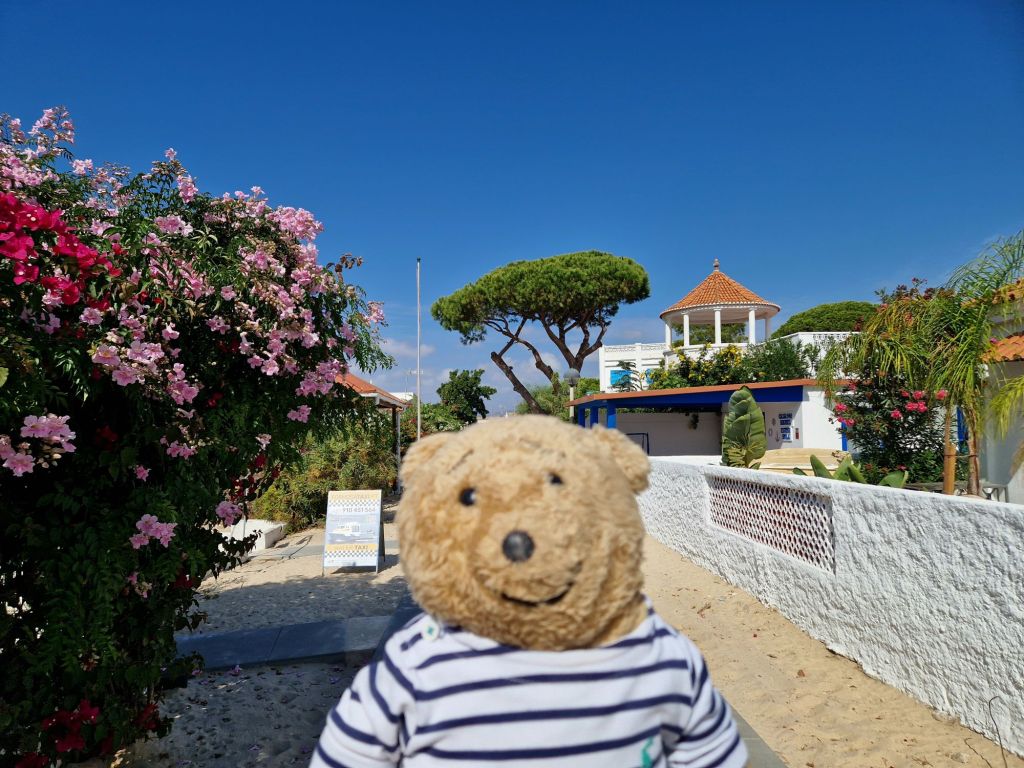
On Thursday we were back on a ferry boat again, this time going to the Island of Armona, another beautiful island in the Ria Formosa. After walking through the village of pretty houses, then across the boardwalk over the dunes we arrived at another gorgeous beach. Everything on the island has to arrive by boat and there are no cars which makes it really very special. Once again the humans put up their beach shelter, and I stayed out of the sun while they swam in the Atlantic Ocean.
It is very important to make a note of the ferry times when visiting the islands. When we were there in October there weren’t so many as they had started operating on a winter schedule. While waiting for the ferry back to Olhao I enjoyed an ice cream at the beach cafe next to the ferry landing stage.
There are many restaurants in Olhao and everywhere that we ate served up delicious freshly prepared food. I especially enjoyed eating pumpkin rissotto followed by a pear tarte tatin at Galo Barreta.
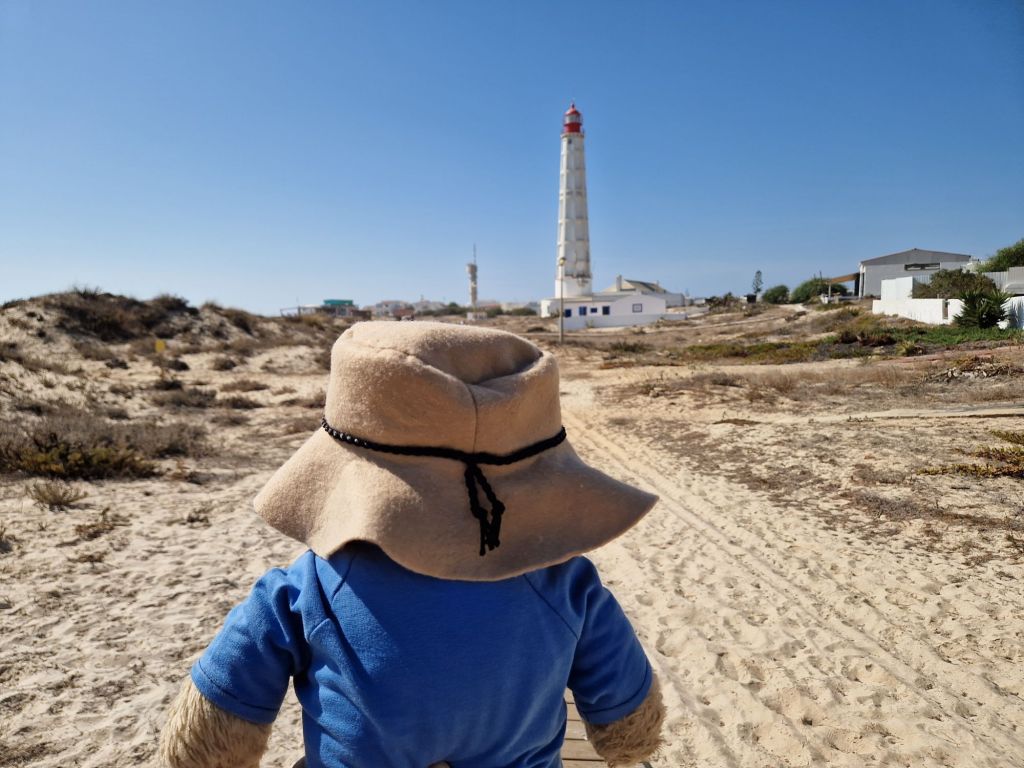
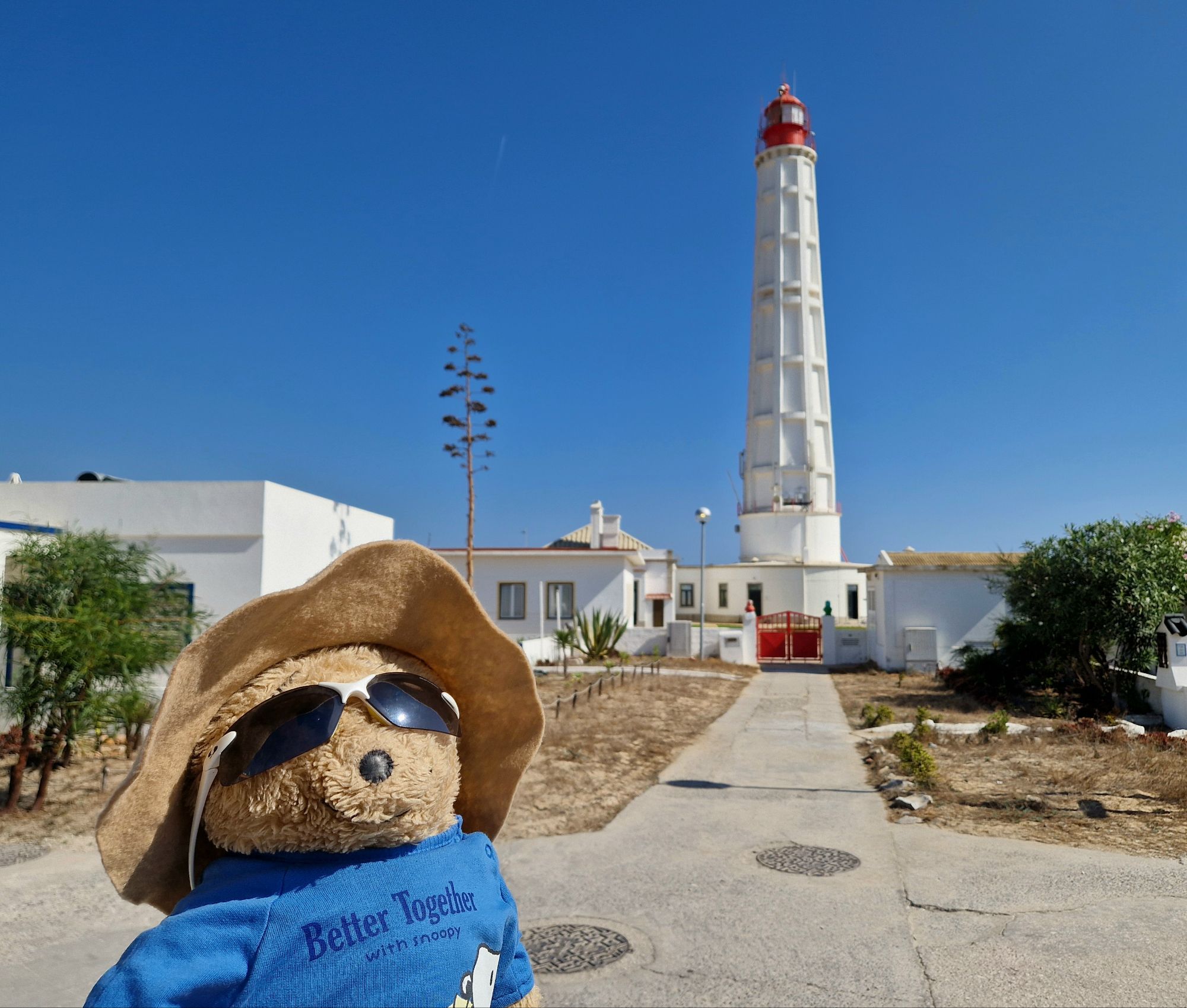
I find lighthouses interesting so on Friday we again took the ferry to Culatra and walked along the island on a sand track to Farol to see the lighthouse that we could see flashing from our hotel balcony. Farol is the Portugese word for lighthouse and also the name of the village. It is sometimes called the Island of Farol but it is on the Island of Culatra.
Farol do Cabo de Santa Maria lighthouse has been in operation since the 1840s but was rebuilt in 1949. Apparently it is possible to go inside and climb to the top on Wednesday afternoons in the high season, but it wasn’t open when we visited.
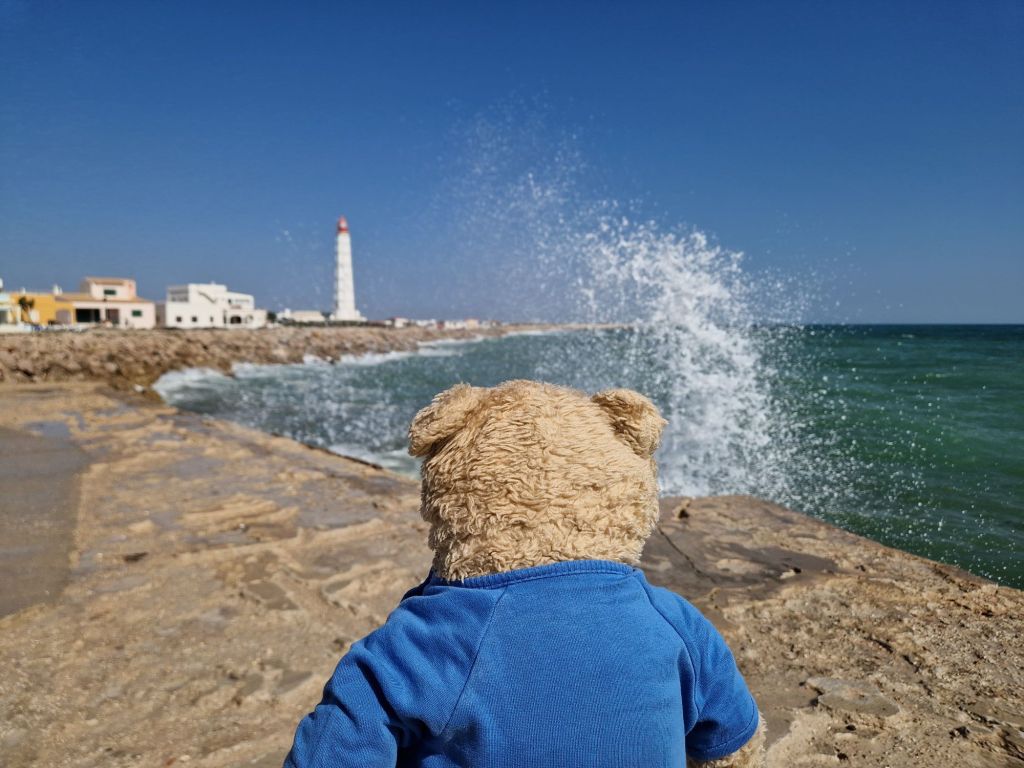
The waves were splashing over the breakwater further along from the light house. I stopped for a little rest on a bench next to a toilet housed in a rustic beach hut, then wandered on down to Faro Beach to watch the waves for a little while. The humans didn’t go swimming!
Our last day in Olhao was a Saturday, which is market day
Some very colourful produce was for sale along with giant jars of honey. I wanted to buy a jar of the honey but the humans said they didn’t want to risk packing it in a suitcase for the flight home. Instead I bought some Folar de Olhao (cake that looks like a giant pork pie & a cake with almonds decorating the top.
The plant stall looked very pretty with the sea glistening in the sunlight behind.
I stopped for a while to watch a traditional live band. Markets are always more atmospheric with music.
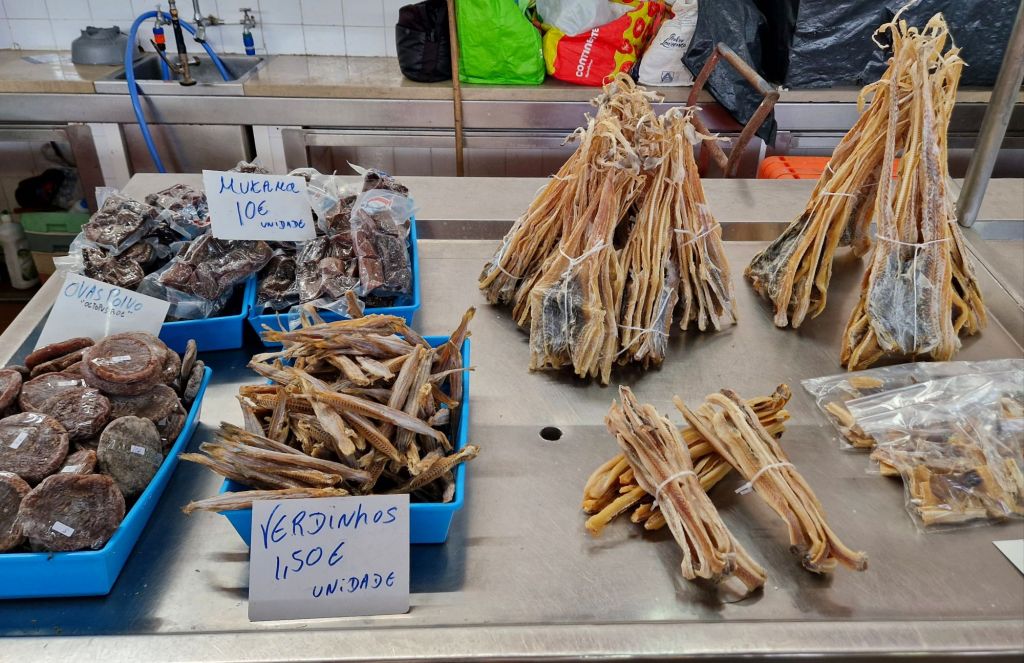
The fish market happens in the big red building every day and people visit Olhao from surrounding areas to buy fresh fish. Lots of fish had already been sold when we went in to have a look around.
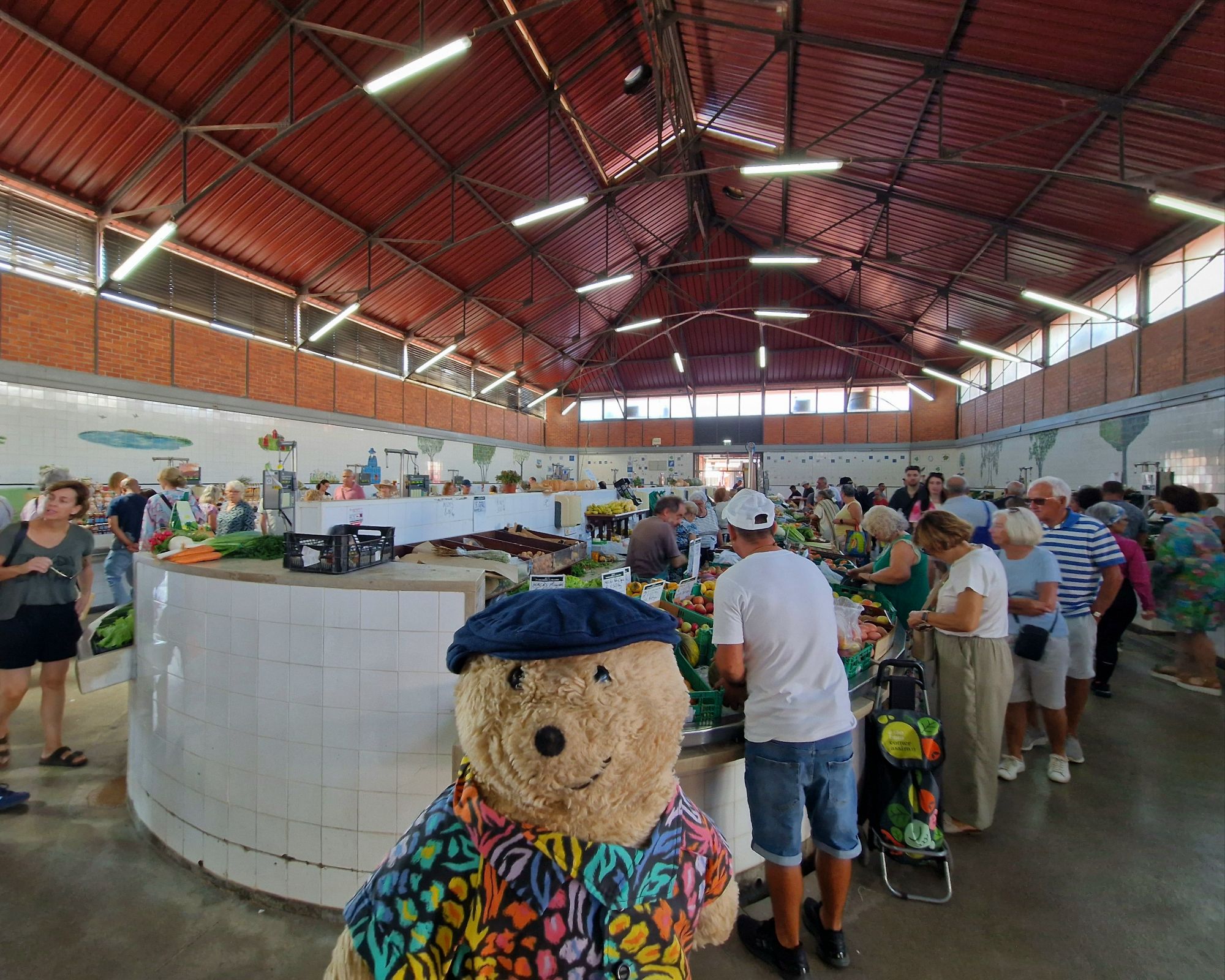
In the other red building there is an indoor produce market
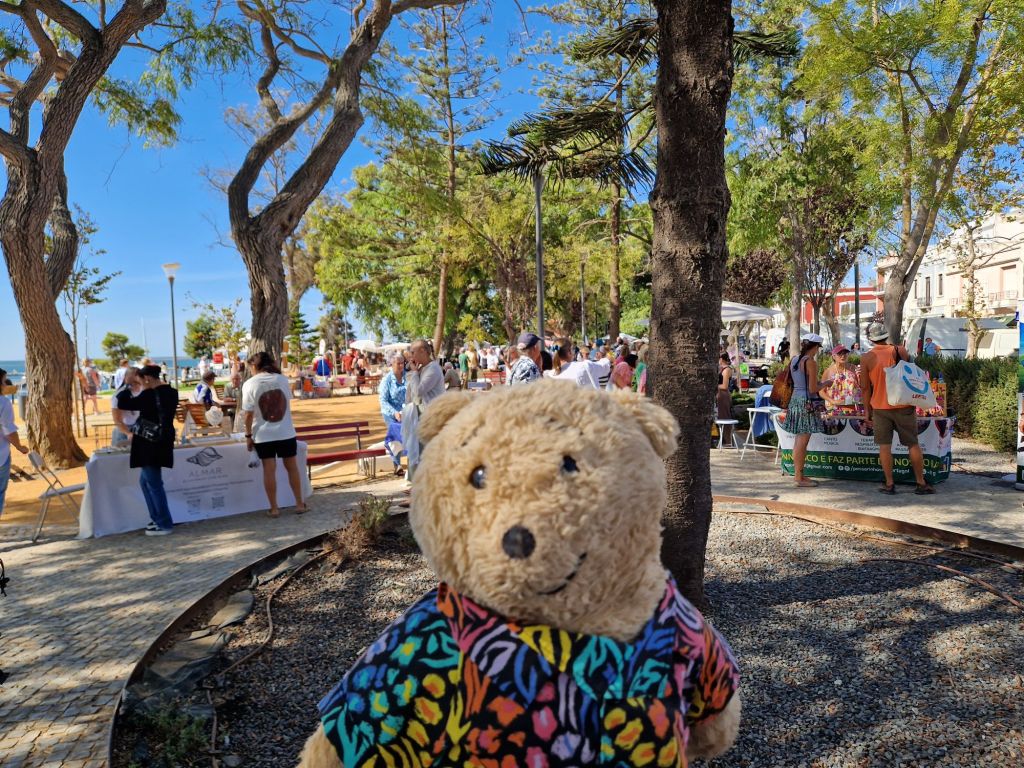
Further along the promenade there were more stalls. After watching a garlic grinding dish being demonstrated I bought a couple as they looked so much easier to wash up than traditional garlic presses! It has turned out to be very useful.
I tried on some hats, which made the stall holder smile; she even tried to find me one in the right size. Unfortunately they were all too big .
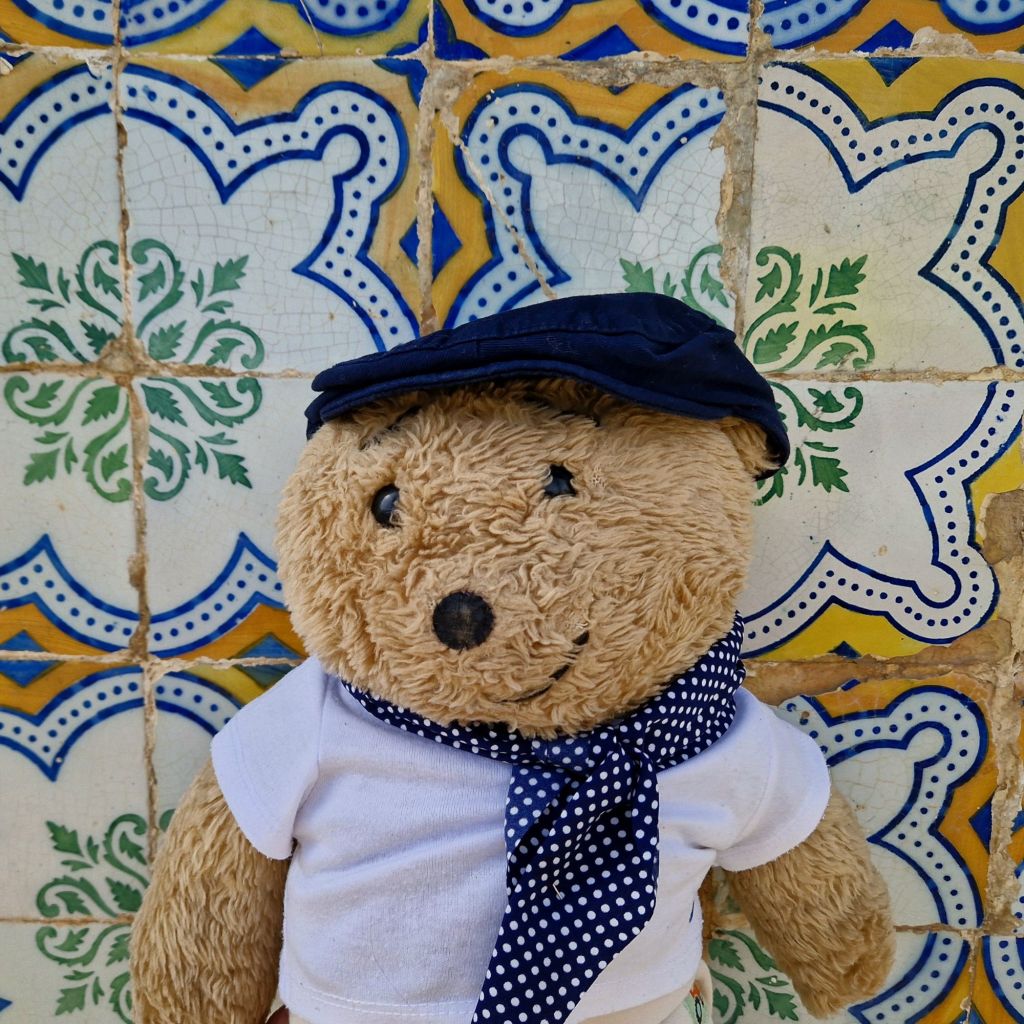
Some more selfies this time with tiles on buildings in Olhao.
We bought another useful souvenir, some tile coasters to remind us of the lovely time spent in Olhao, Portugal,
The whole week was wonderful, with lovely weather, friendly people, beautiful beaches, interesting architecture and delicious food.
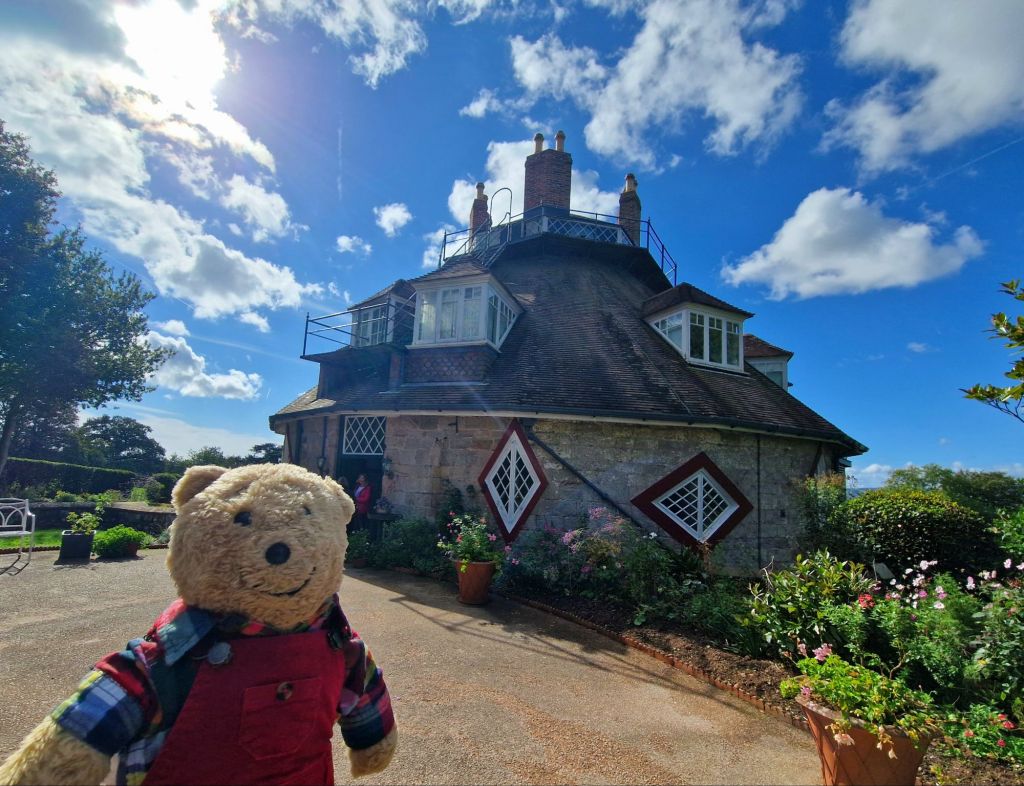
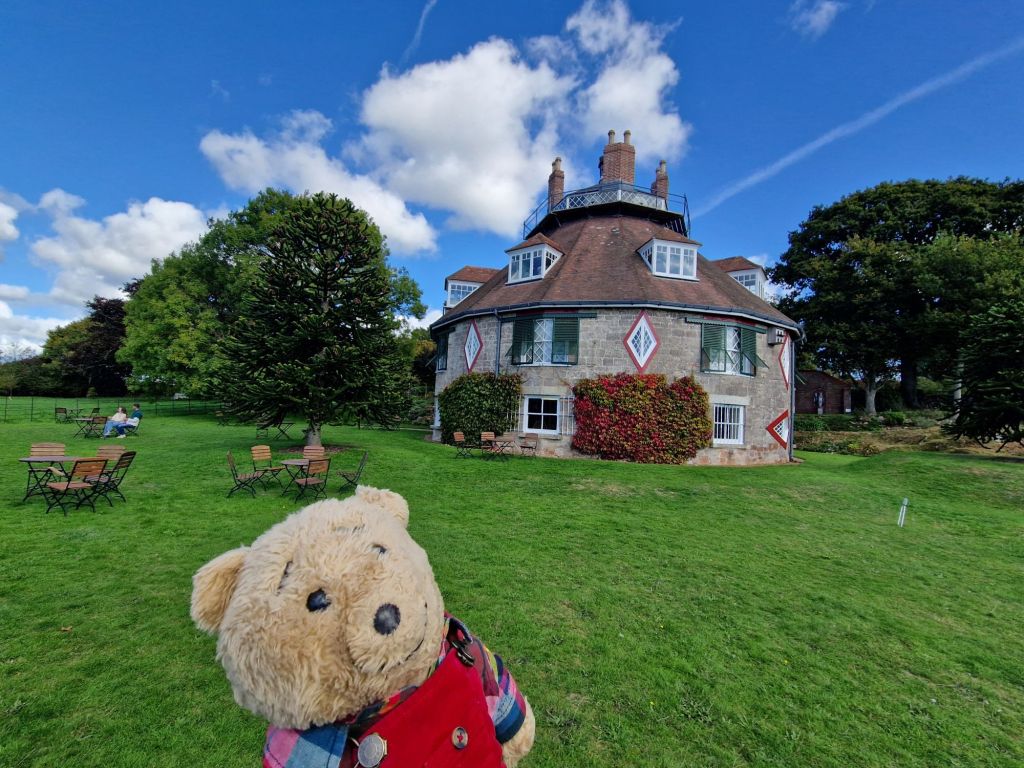
A La Ronde is an unusual 16 sided cottage built in the 18th Century for two women, Mary & Jane Parminter, who were cousins.
I had a stroll around to have a look at the outside. The very top of A La Ronde houses the shell gallery. There were originally 20 rooms inside, but throughout history changes have been made.
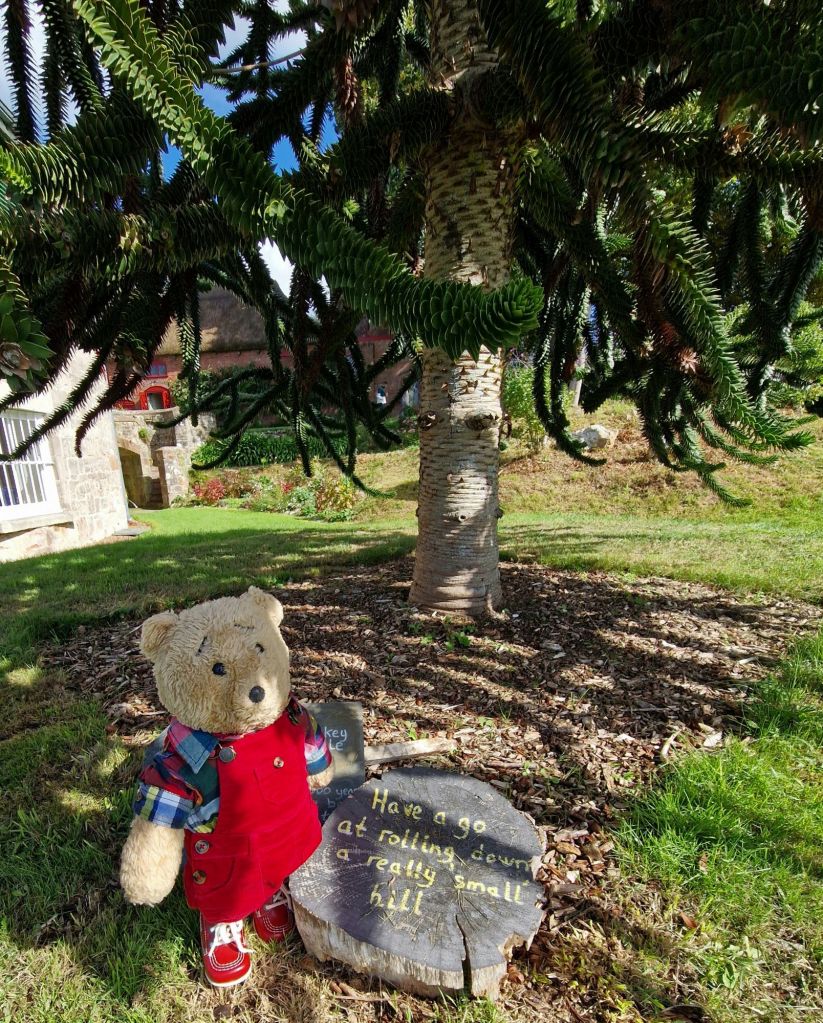
The interesting cone on the monkey puzzle caught my eye.
There was a sign underneath it suggesting a rolypoly down the little hill.
I am fond of rolling down hills so I had a go…
It was though as the sign said, a small hill, so I didn’t roll very far!
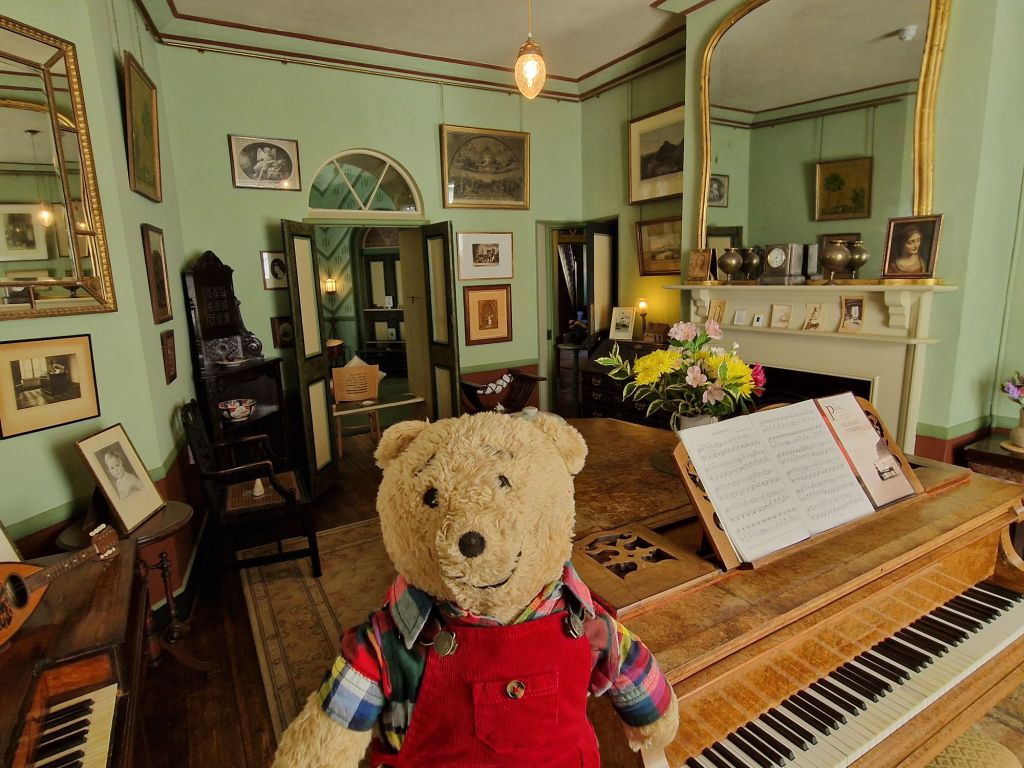
In the centre of the house there is a room with lots of doors leading to the other rooms.
The cousins went on a ‘Grand Tour’ of Europe prior to having A La Ronde built, collecting various items as souveniers. the house is thought to be inspired by some of the buildings they saw during their travels. They were from a wealthy family but it was unusual at that time for women to go travelling alone. Here I am in one of the rooms.
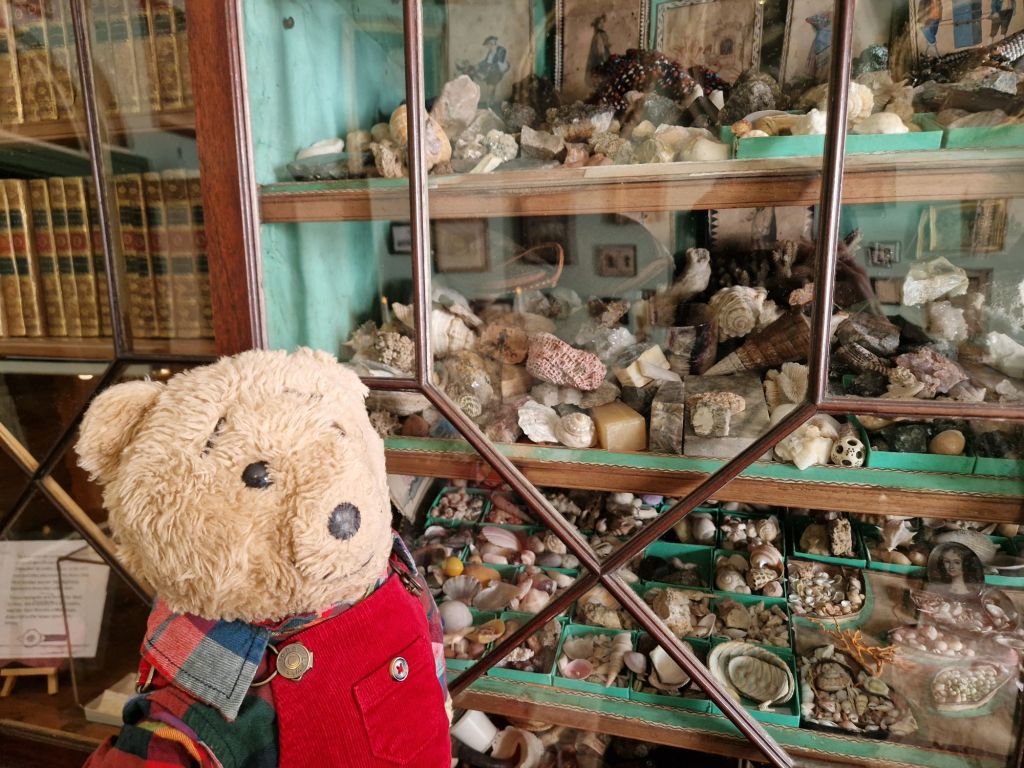
The Parminter cousins like to collect shells, though these particular shells were donated to the National Trust.
A very small library in a cupboard between the rooms!
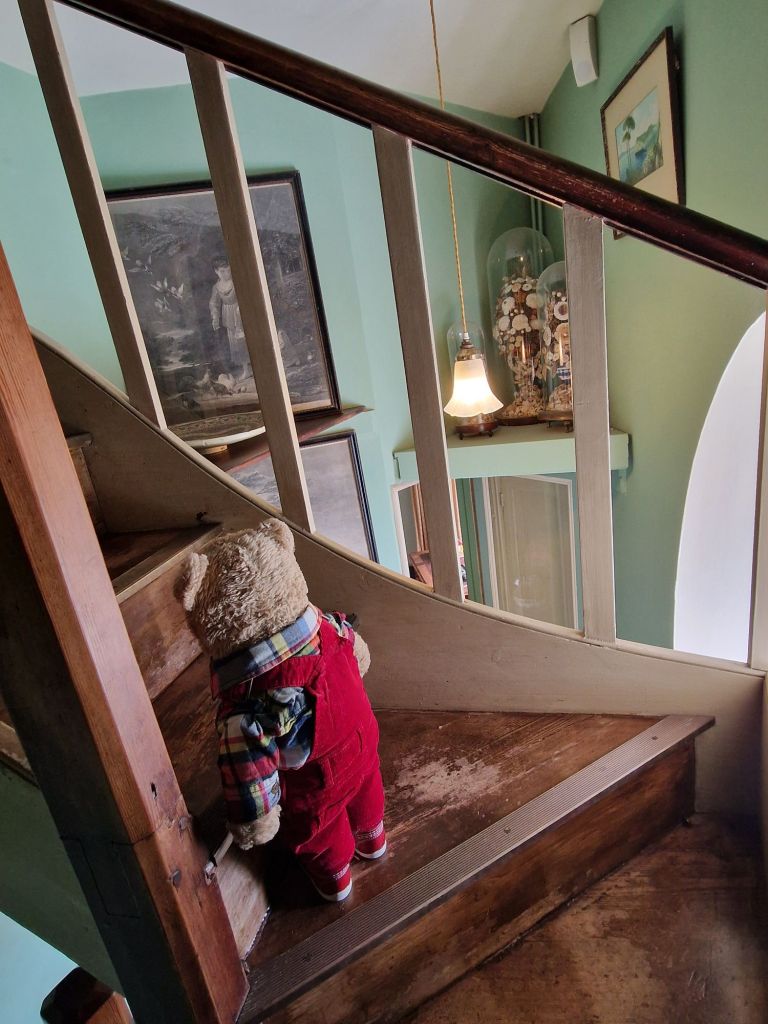
I headed upstairs towards the shell gallery at the top.
This is a ‘dumb waiter’ which was used to transport items up and down without having to carry them up the stairs.
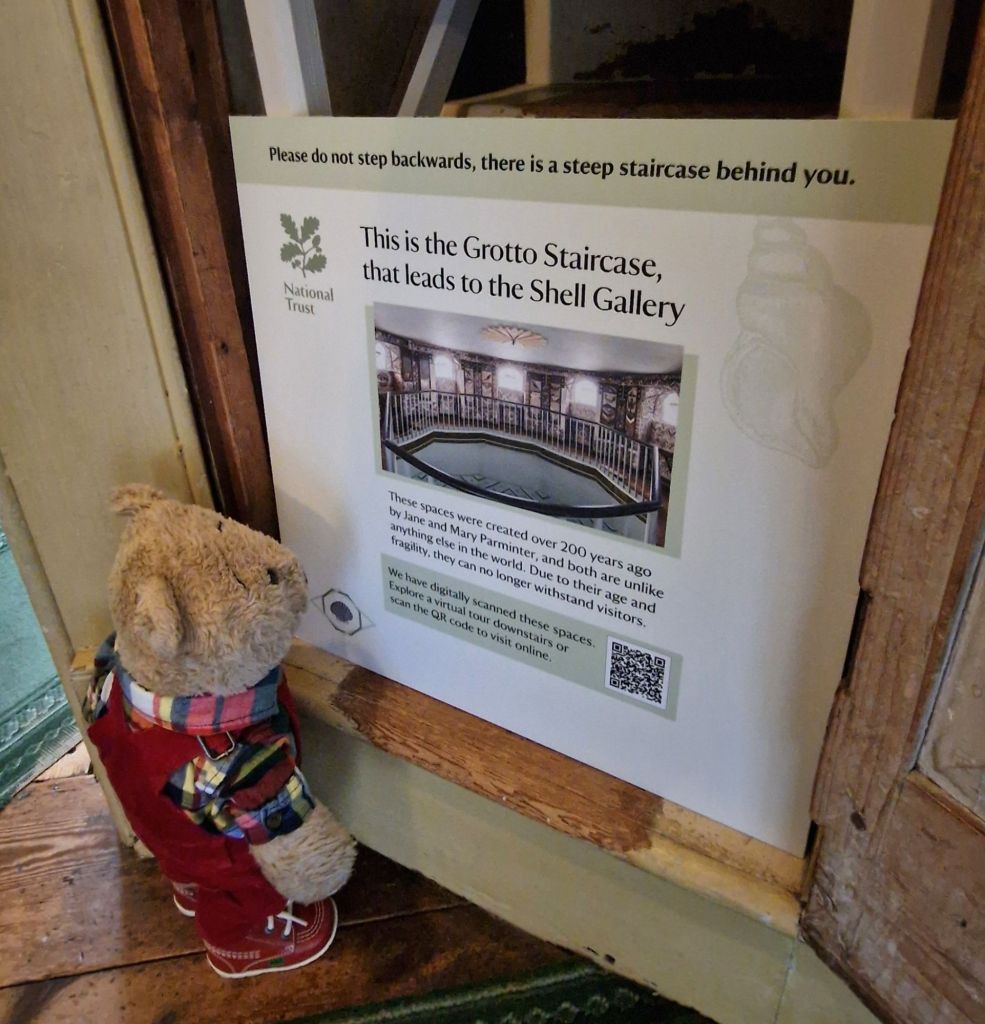
Unfortunately visitors are not allowed to visit the shell gallery as it is very fragile, which was a tad disappointing but understandable.
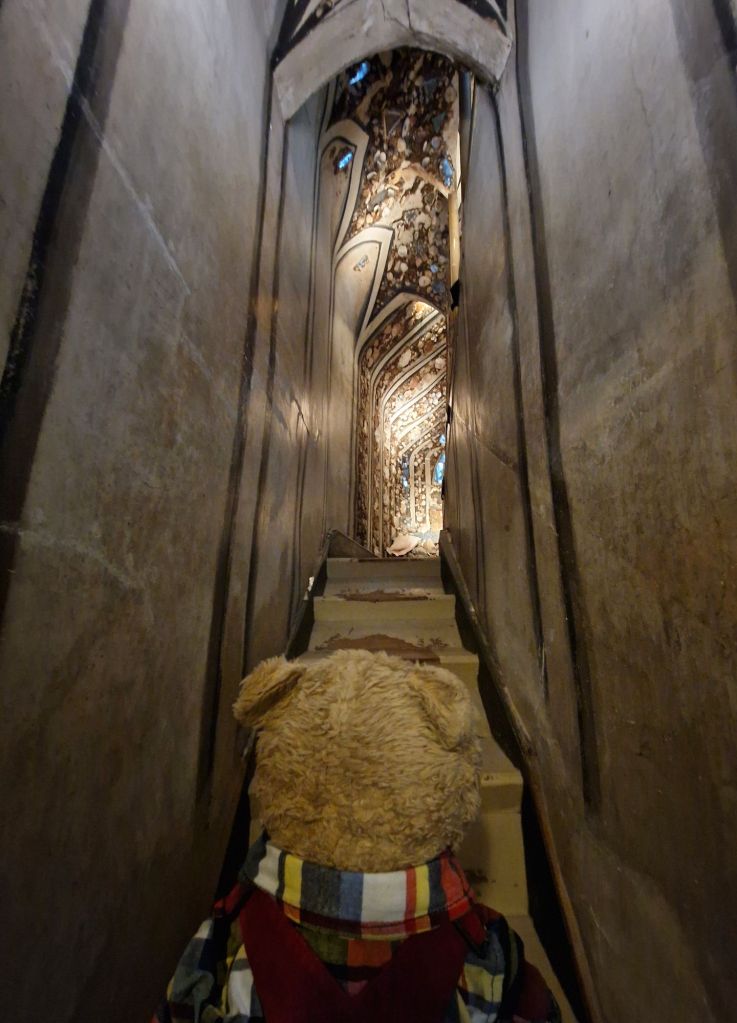
I managed to peer up the narrow stairway to see some of it.
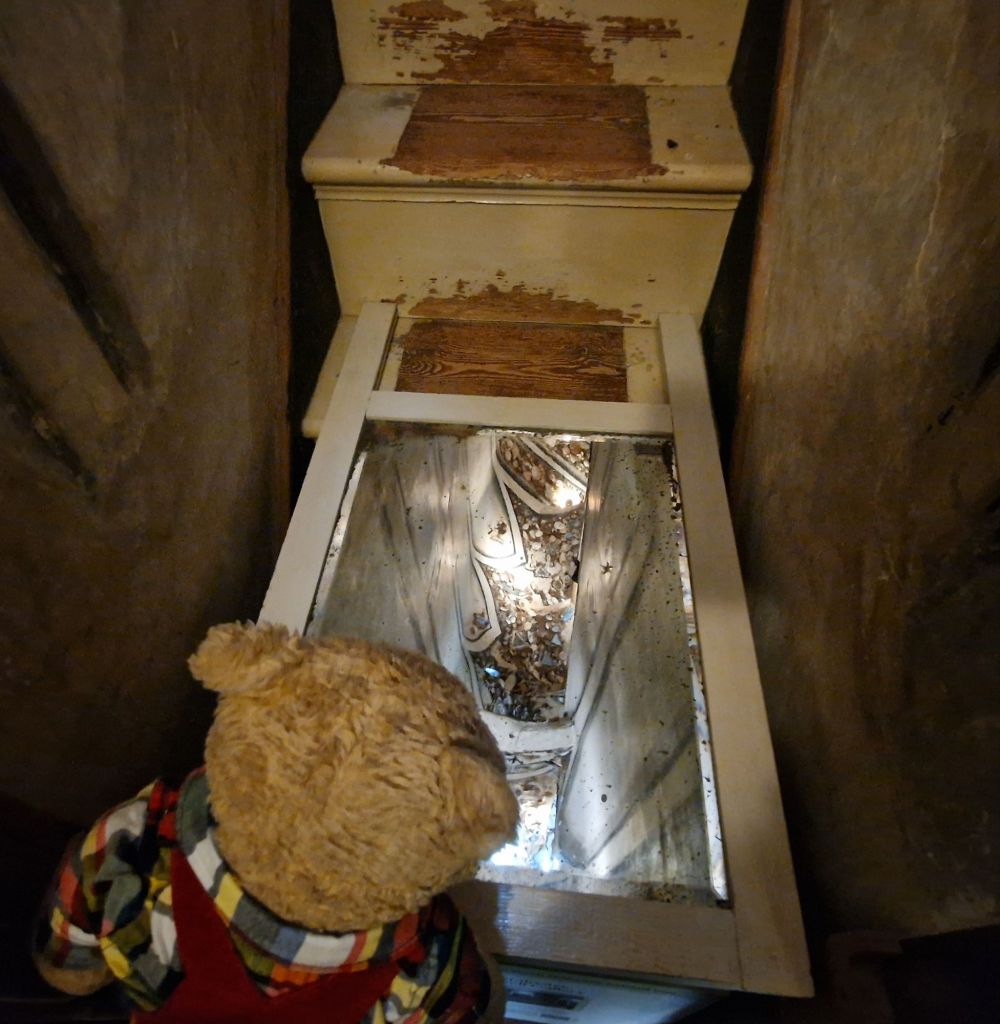
There is also a miror that some of the shells can be seen.
I continued having a look at some of the rooms. This is a gas light which was used before electic lighting became available.
The bathroom was interesting as the sink didn’t have any taps; it would have been filled from one of the jugs. The bath was installed later and has some taps.
A closer look at the sink…
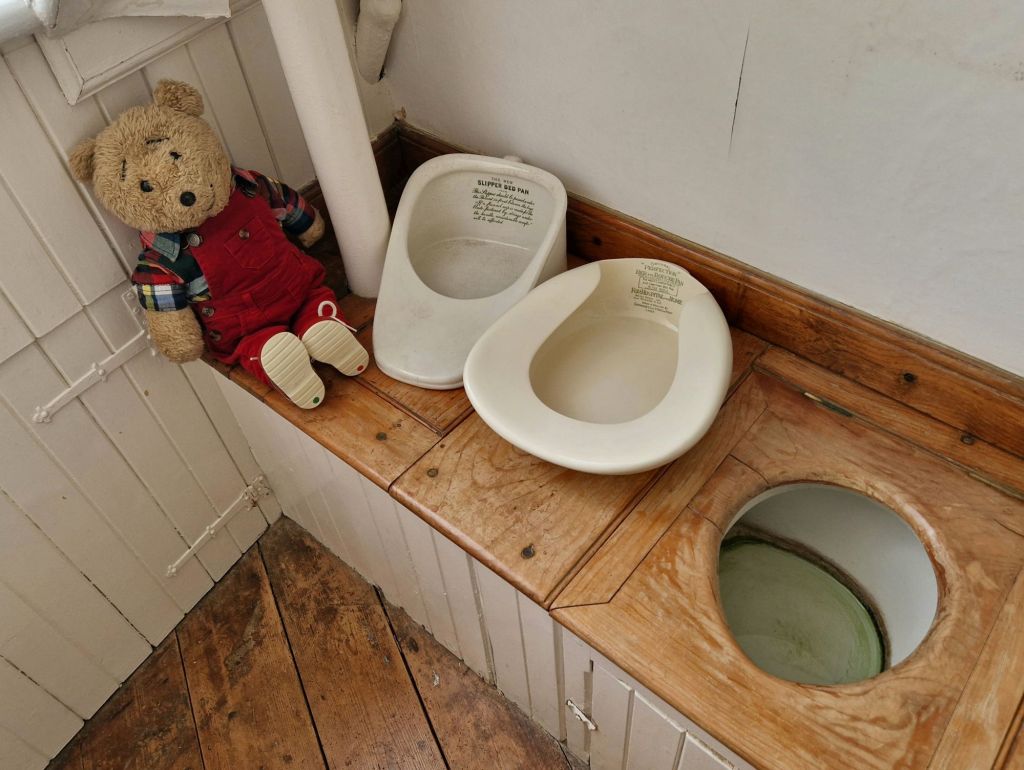
In the toilet there were some very old ceramic bed pans.
The view from the window at A La Ronder is beautiful with the Exe estuary in the distance.
The Parminter cousins created the freize on the walls in this room using feathers.
Feathers and shells surround the fireplace. The big shells in the fireplace have been added recently.
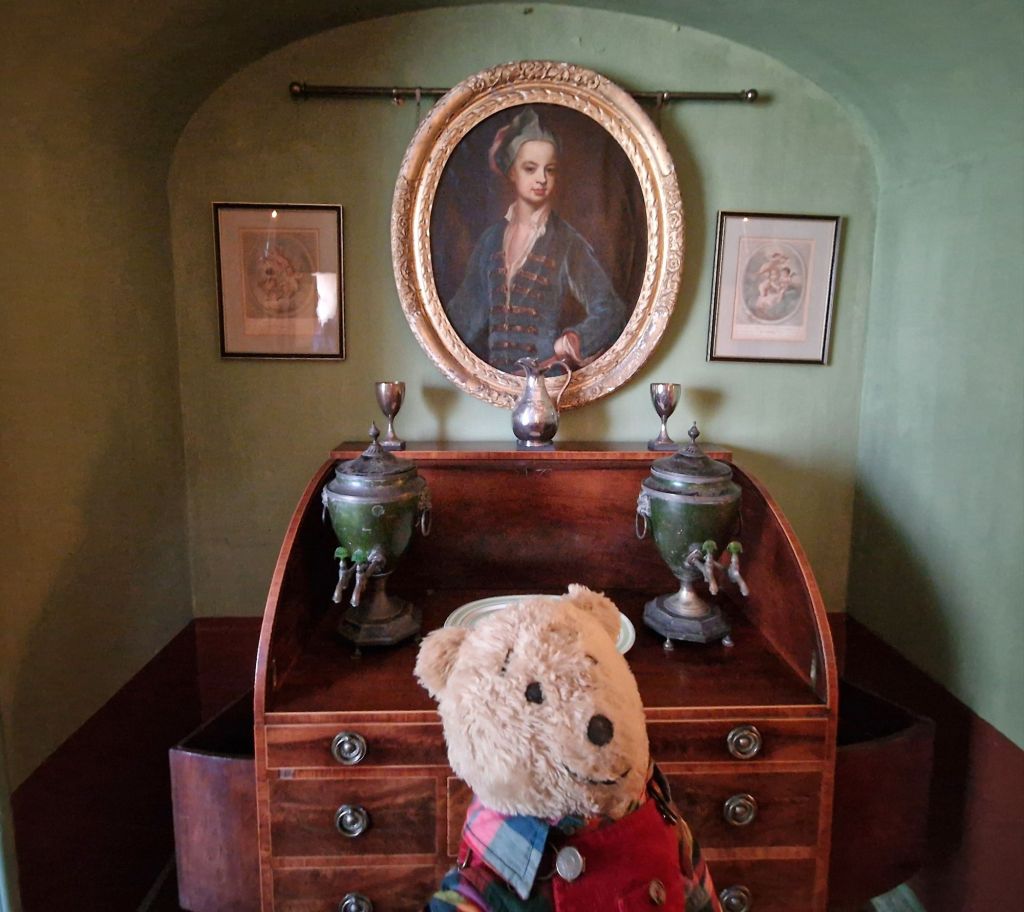
In the dining room I found some very interesting urns on top of a special drinks cabinet.
Each urn has two taps, one for tea, and one for hot water. I would have loved to take the lid off and look inside, but the guide said even she wasn’t allowed to do that! Apparently there are two chambers inside and some iron bars that would have been heated up to help keep the tea and hot water warm.
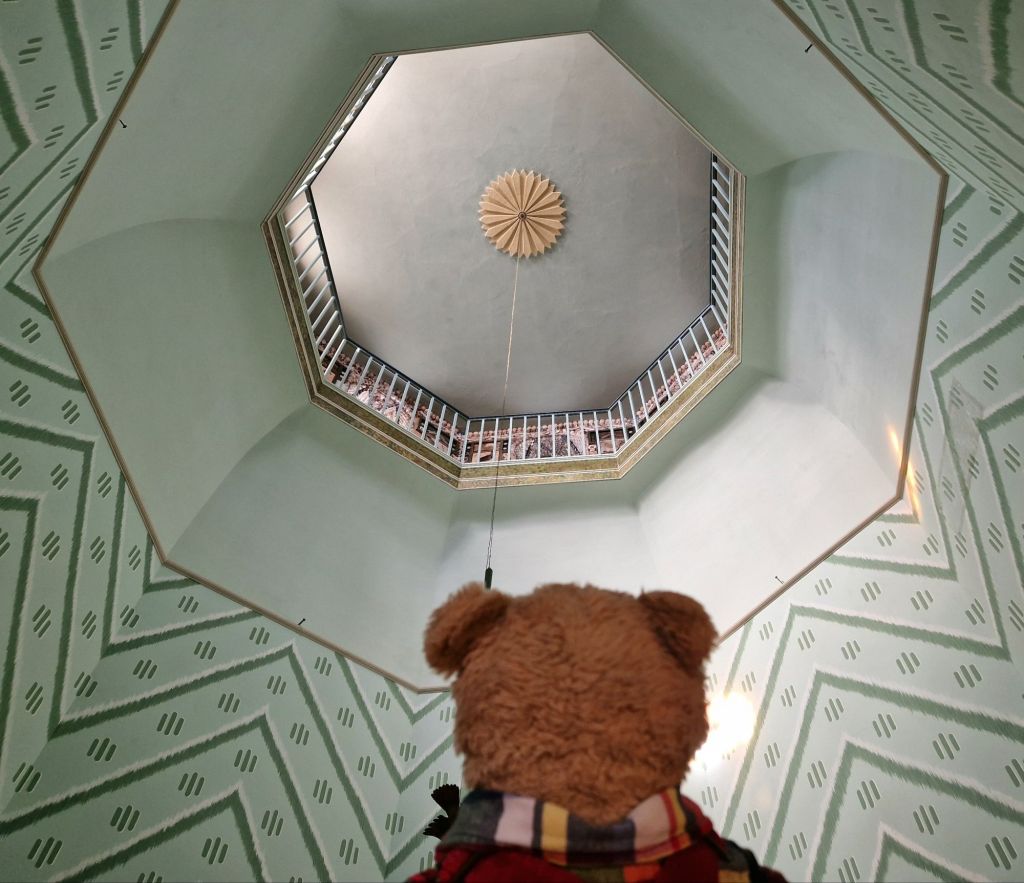
Back in the middle room I had a good peer up at the shell gallery, which was created from shells collected by the Parminter cousins.
The National Trust have created a replica of the shell gallery in the basement which can be viewed. It is also possible to put on a headset and have a virtual tour but I decided against that as I wanted to get out in the sunshine!
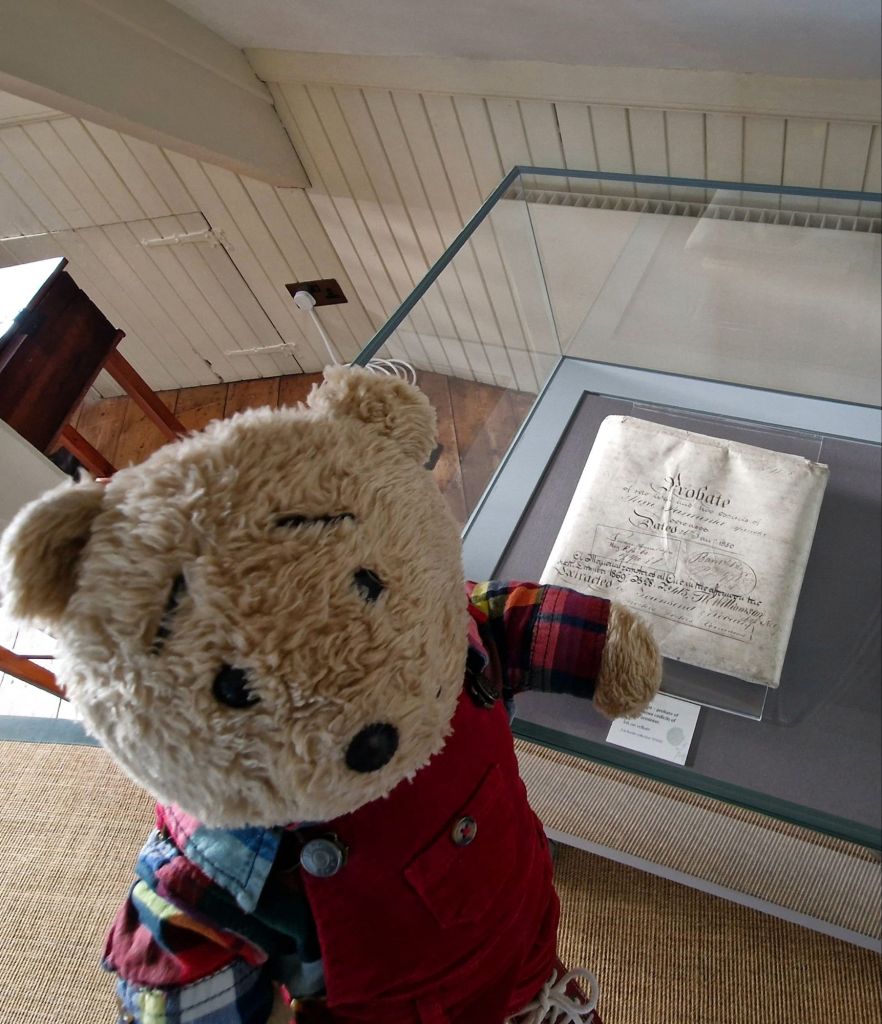
The Parminter cousins stipulated in their will that only single females relations could inherit the property from them when they died. The National Trust bought the property in 1991
There is lots more history about the house but too much for a small bear to explain here. It is a fascinating place and worth a visit if you are in the Exmouth area of the UK.
The cafe wagon next to A La Ronde that isn’t run by the National Trust does a jolly good cream tea!
We visit quite a few stately homes where very rich humans lived, so as a direct contrast we decided to visit a workhouse, where some of the poorest humans used to live.
Very poor humans used to be known as ‘paupers’. There have always been humans that find it difficult to support themselves, some ending up homeless. Workhouses date back to the 17th Century. Southwell was built in 1824. Following the introduction of the New Poor Law, poor humans that applied for relief were supposed to only be offered the option of the workhouse (though in practice many were also helped outside the workhouse).
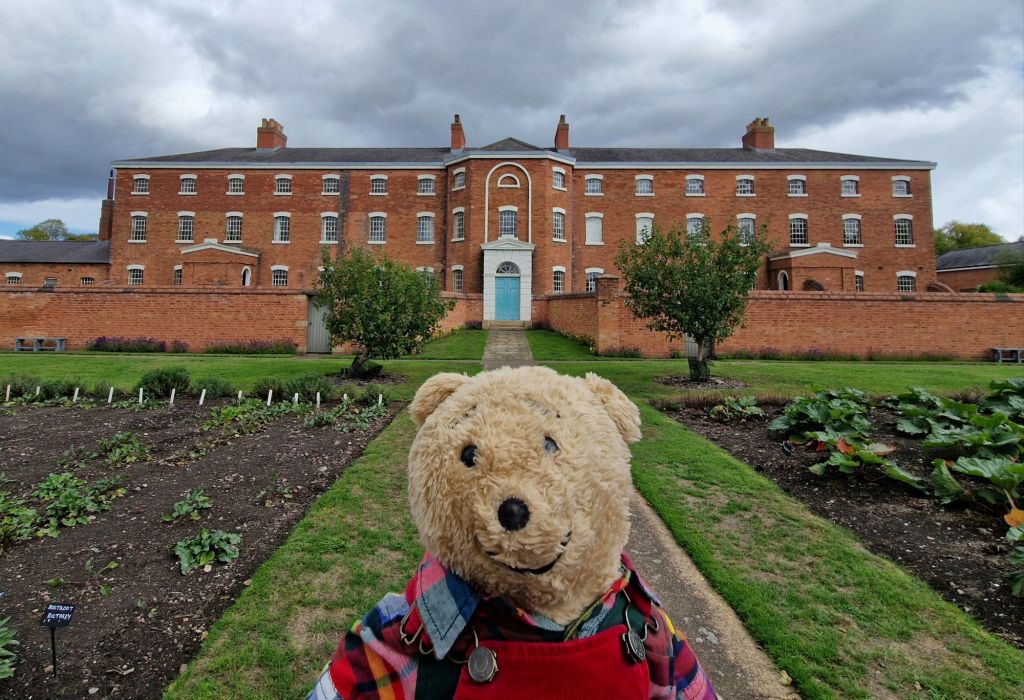
Inhabitants of the workhouse entered of their own free will and were free to leave but if they did so they had to take their whole family with them. While in the workhouse humans had to work all day on various tasks. Some of them would be working on the vegetable plot growing food.
The idea of the workhouse system was that they had to be worse than being poor living outside, so harsh rules were applied. On entry families were split up, with children being separated from their parents. It must have been terrifying to have to go to such a place, but the alternative of no food and sleeping on the streets equally awful.
Before we started to look round I did have a tasty chocolate brownie, served on a plate listing categories of poor people that entered the workhouse.
When new arrivals entered the workhouse they had to give up any possession and clothes (which were often rags) which would be cleaned then stored away to be returned to them should they leave again. They then had to have bath.
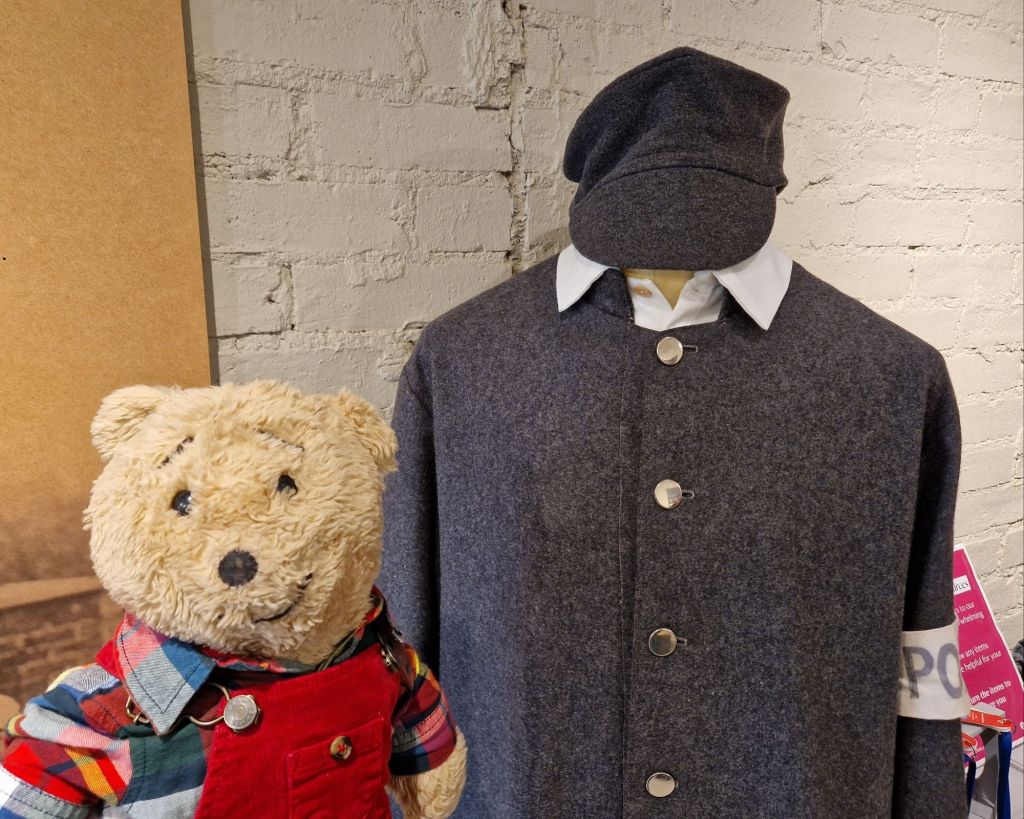
After bathing they were issued with workhouse clothes. Below is an example of the sort of clothes given to a man. All inmates had the same clothes. Clothes were numbered so that they could be returned to the right person after being laundered.
At Southwell workhouse for a while the inhabitants had red shirts. It is thought that a reasonably priced amount of red fabric must have become available! The shoes issued to them were clogs, which must have been quite uncomfortable to those not used to wearing them.
I headed across the yard towards the laundry.
Women would have worked in the laundry.
There was also a bakery. Bread was the main diet of the workhouse dwellers. Men would have 12 slices of bread per day and women 10.5; those outside of the workhouse would also mostly eat bread.
The list of rules and regulations. Anyone not conforming could be sanctioned and have punishments such ‘no meat at dinner’ applied to them.
The walls of the workhouse were kept freshly painted. During the restoration of Southwell the National Trust found that there are about 30 layers of paint on the walls. Painting was one of the work activities assigned to the men, and they painted the walls often in order to keep the men occupied.
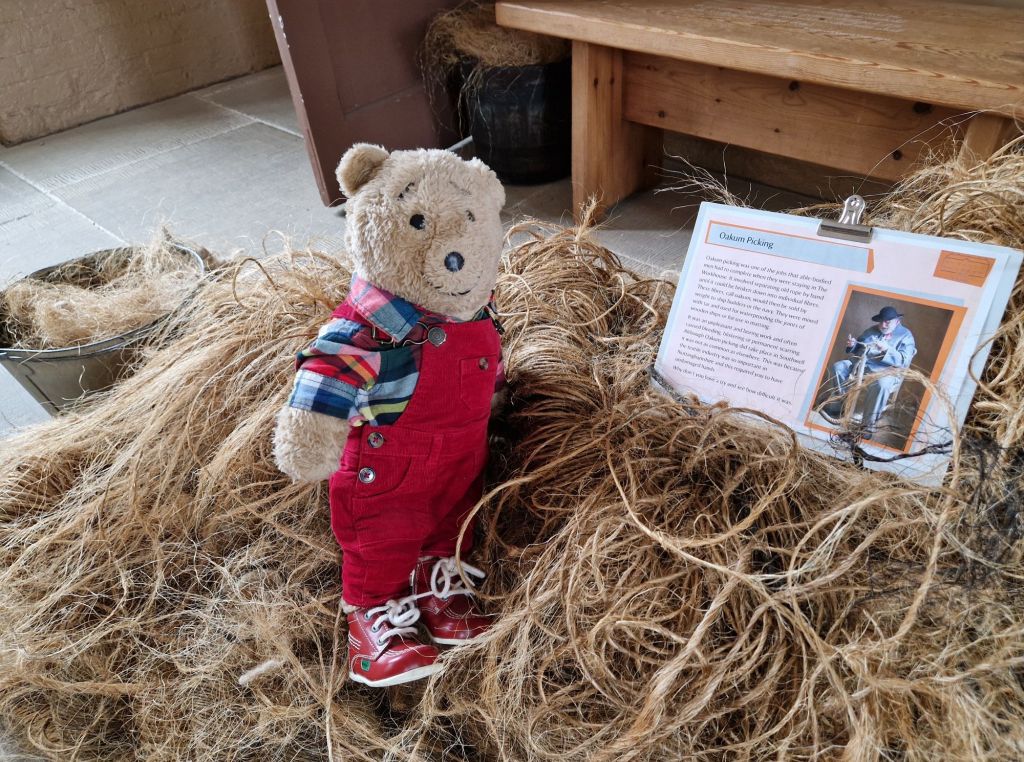
Another very boring repetitive job was picking oakum (old rope) which went on to be used for caulking ships. The work was very tedious and hard on the fingers.
Elderly, children and ill humans didn’t have to do any work, and there was an infirmary to look after very sick people. Here I am in the men’s exercise court, which has been restored by the National Trust. The walls are high and they wouldn’t have been able to see over them.
The outside latrines didn’t have a roof.
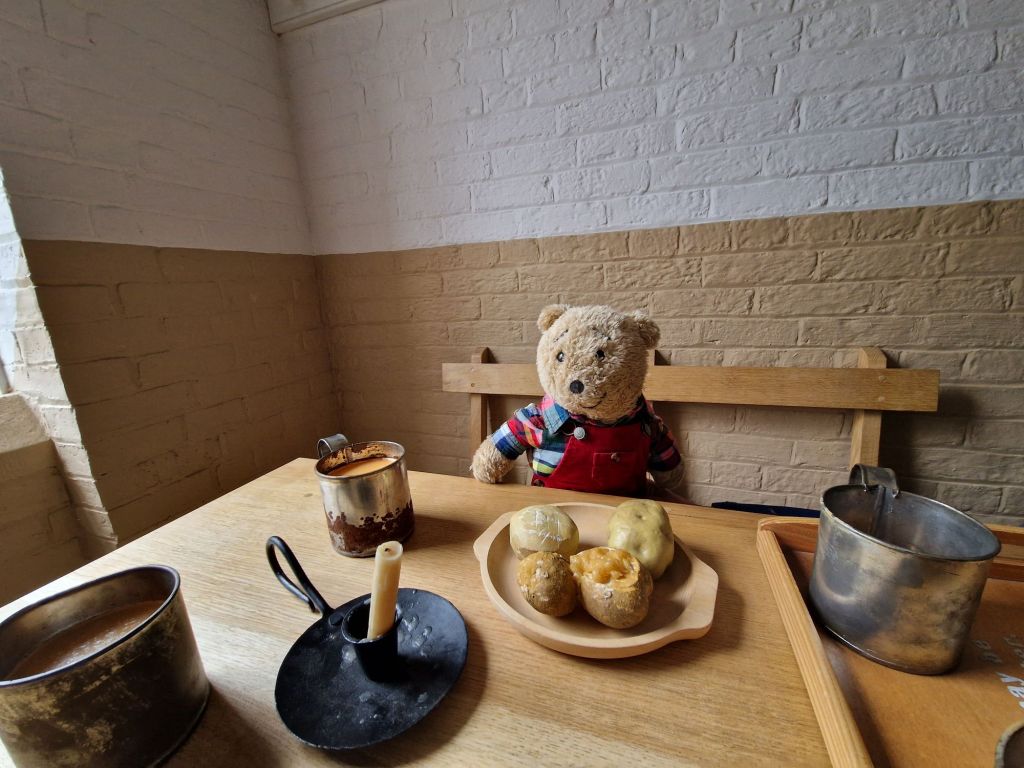
Workhouse inmates were given an hour for dinner after a morning of work. On three days a week boiled meat was served with peas and potatoes, soup on the other days. On a Saturday they were given suet pudding. The food was bland but was often better than many had experienced at home. After an afternoon of work, supper would be served, which would’ve been gruel, the same as breakfast.
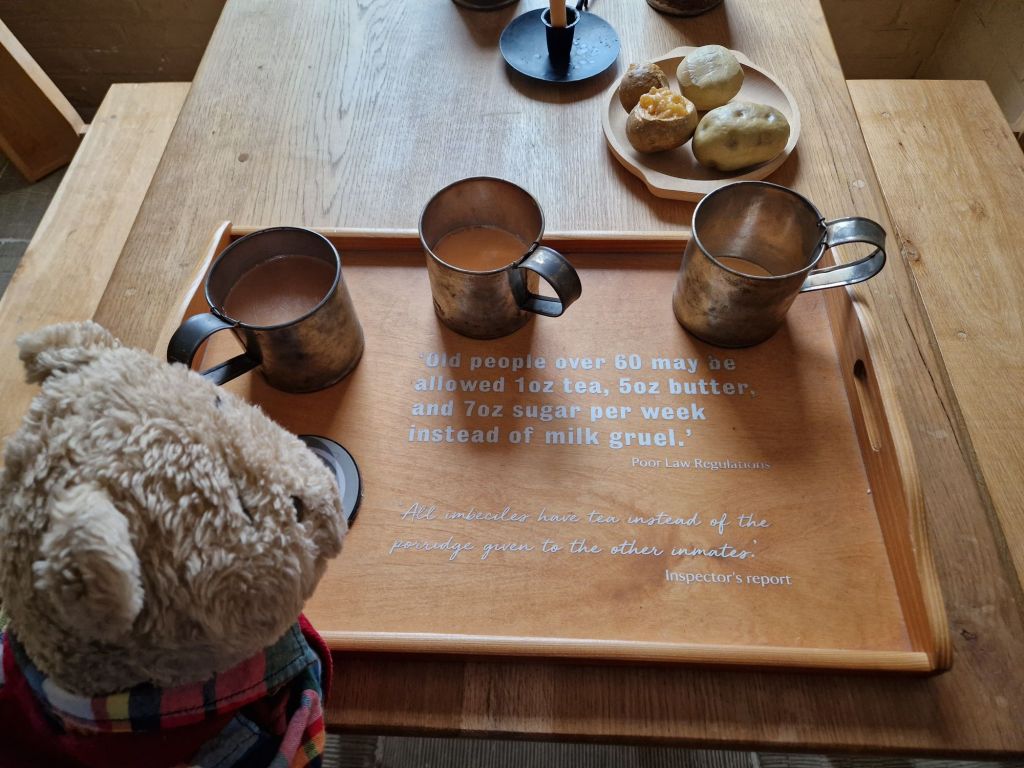
There were some different rules for ‘old’ people as seen on this tray.
This is the kitchen where food would have been prepared by the women inmates. The workhouse didn’t have many staff. A Master & Matron were in charge, but they were responsible to a board of guardians elected by local people.
The water that meat was cooked in was used to make soup.
The gruel that was served was very diluted porridge. My human makes porridge with 40g of oats and 400ml of milk.
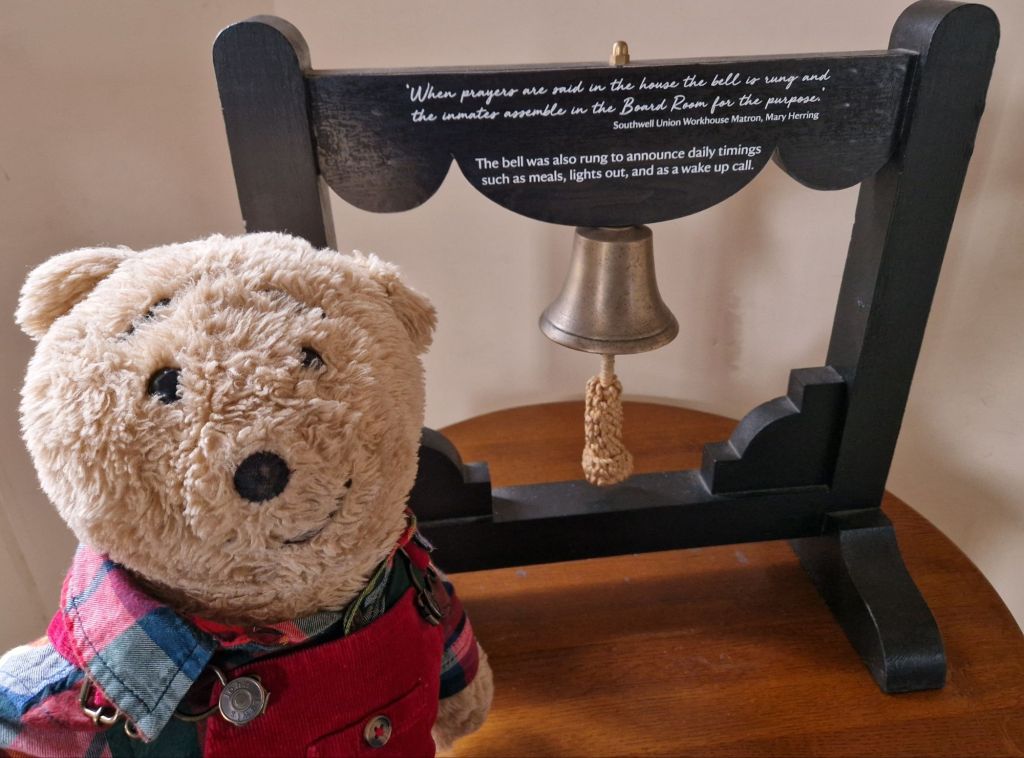
A bell was used to announce daily timings as none of the inhabitants had watches.
A school teacher was employed at the workhouse, but the work was not paid well and had a low status in society. The female schoolmistress had to live in a the workhouse and had to supervise the children throughout the day as well as teaching them in the classroom. In 1870 the education act ensured schooling for everyone and in 1885 the workhouse school was abolished and the children were sent to local schools instead.
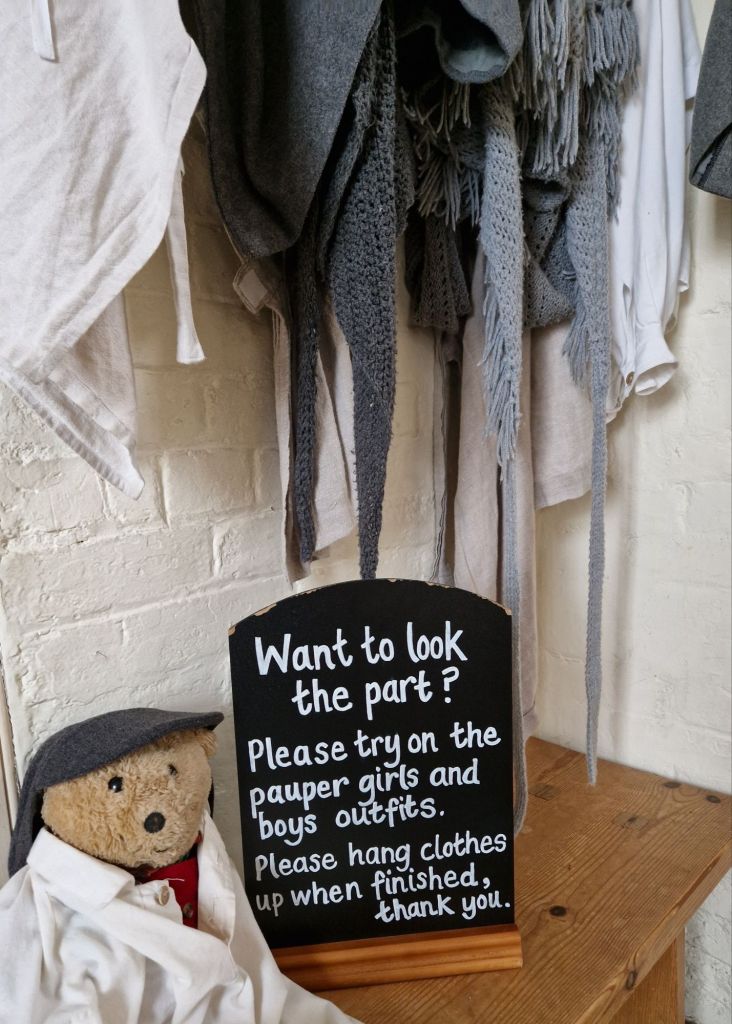
The National Trust often has some clothes for children to dress up in to ‘look the part’. They are always too big for me but I put some on anyway.
I felt a little bit sad as I posed in the classroom for this photo. The children that ended up in the workhouse had a miserable life, separated from their parents without even a teddy bear for comfort. There were however some toys and games available for them, such as hoops, often donated by the local community.
The stairs throughout the building looked very gloomy and depressing.
This room would have been the men’s dormitory, but would have had lots more beds when in use. Inmates had to get up at 6am (7am in winter) and then weren’t allowed to return to the bedroom until bedtime at 8pm.
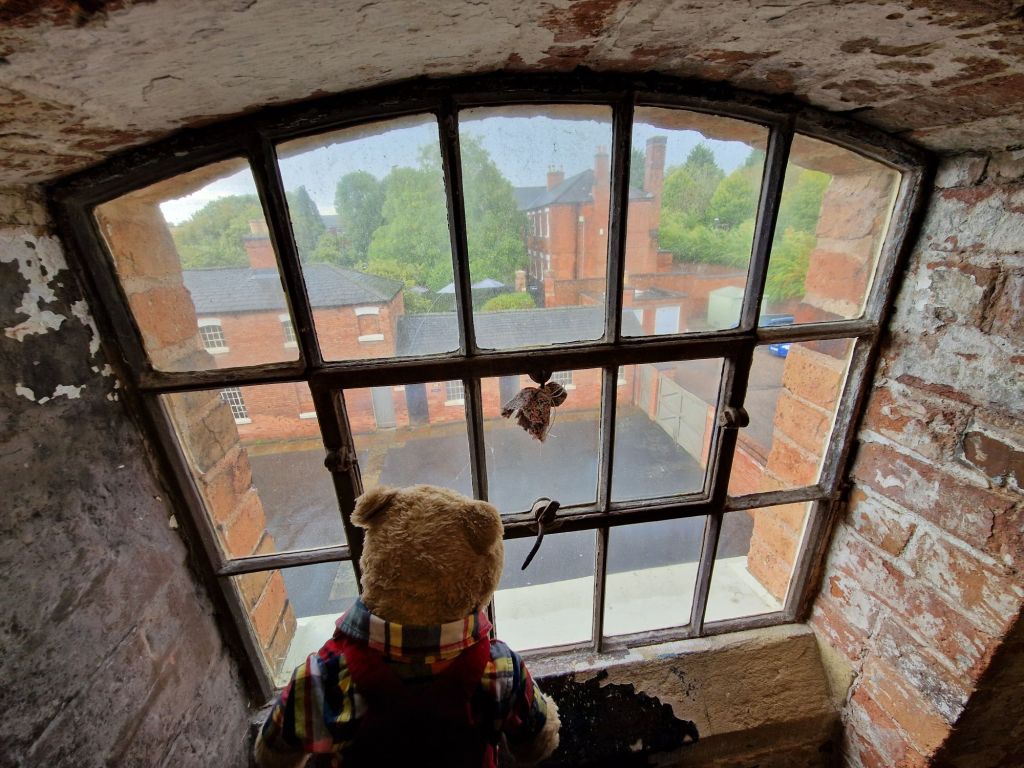
The view out of the window shows the bakery and laundry opposite and infirmary in the distance.
I think this was the women’s dormitory.
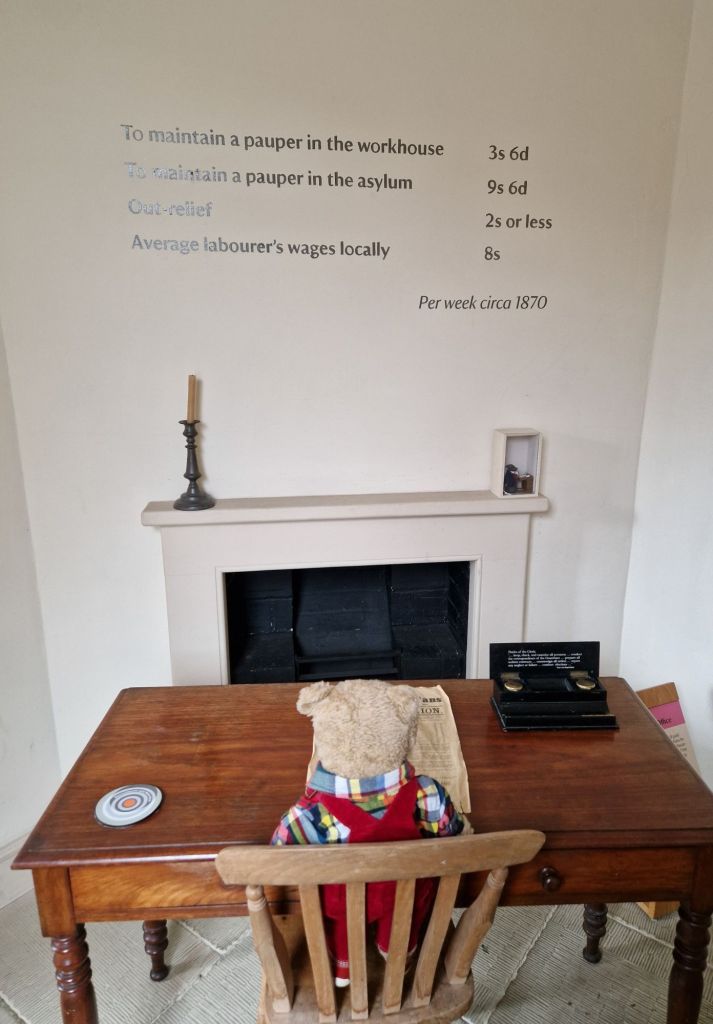
Another member of staff was the guardian’s clerk. This was a well paid position. The clerk wasn’t resident but had an office in the building. He kept records and took minutes of the meetings of the board of guardians.
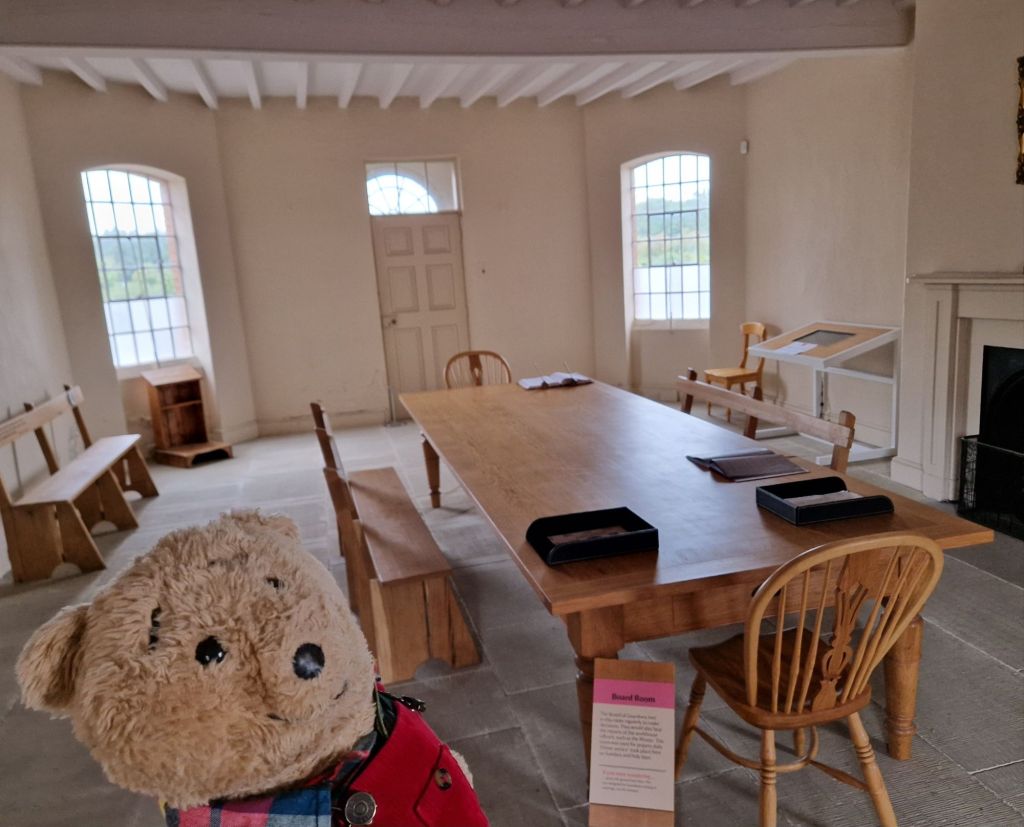
The board of guardians met in this room.
In 1913 workhouses were renamed institutions, and due to the introduction of the state pension fewer elderly people ended up there. Southwell was renamed Greet House and went on to provide care for chronically sick humans. In the 1970’s some of the dormitories were used as ‘bed sitting rooms’ to house homeless families. The National Trust has preserved a room used that way…
It all looks very old fashioned but this was nearly 60 years ago…
The infirmary was next door to the workhouse, sick inmates were given healthcare there. A local doctor would visit once a week and could prescribe remedies, but back in 1836 antibiotics had not been invented. The doctor would sometimes prescribe an extra portion of meat or extra food of some sort to help ill patients. The Matron was responsible for nursing but would not have had any formal qualifications and would have been assisted by workhouse women.
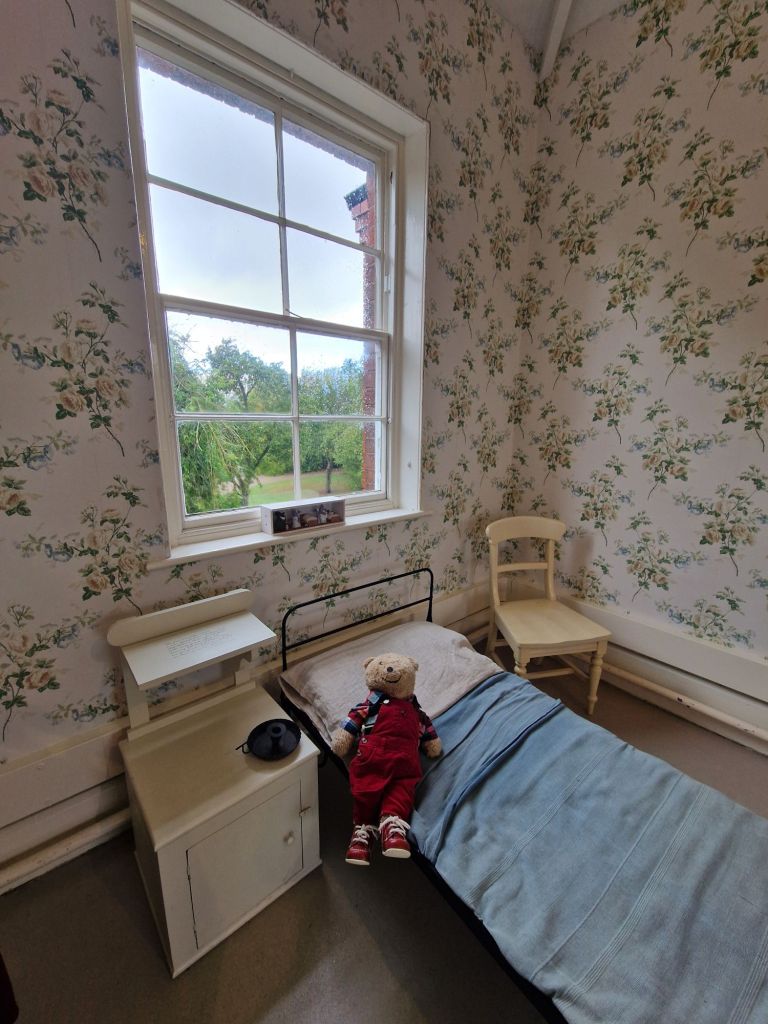
The wall paper in the room shown below is of the type that would have been there in 1948 when former elderly residents were moved into the infirmary for their care. The main workhouse building continued to be used for staff accomodation and housed kitchens, and the west wing (pictured above) was used to house homeless families until 1977.
I decided against trying to dress as a nurse!
Before leaving I decided to buy a little mouse dressed as a nurse. One of the volunteers makes them and the donations go towards the cost of the upkeep of the workhouse buildings.
It was certainly a very interesting experience visiting the workhouse and it is good that he National Trust has preserved the building as a museum.
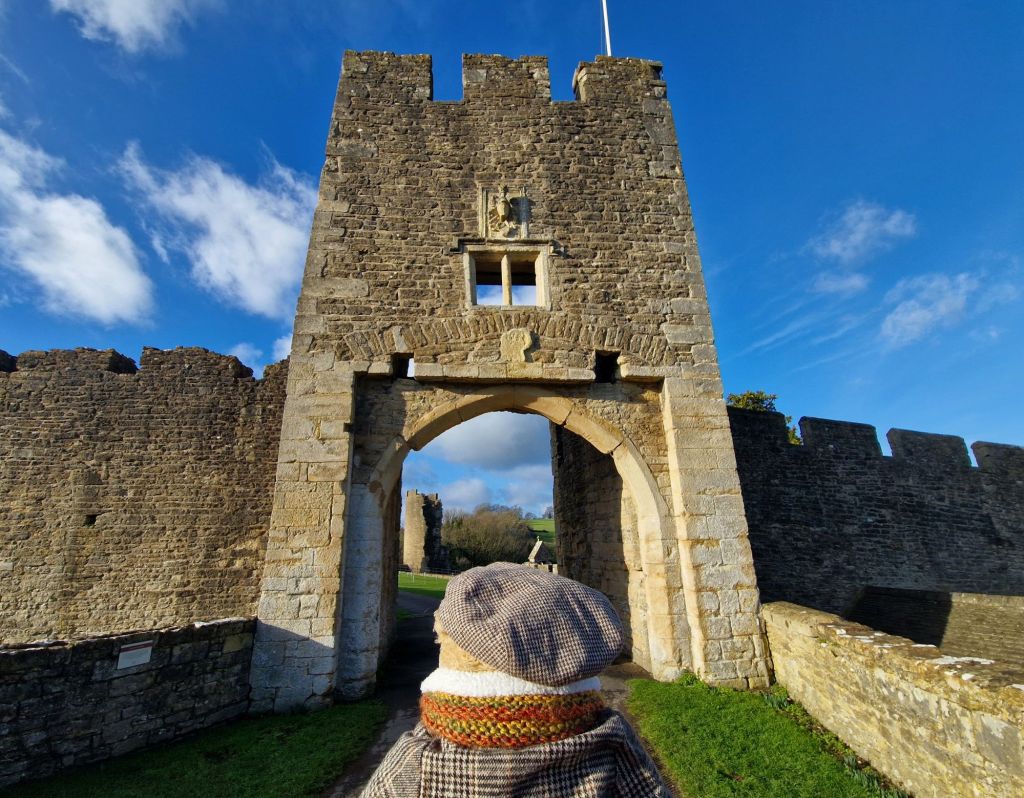
Oxburgh Hall was built in 1482 by Sir Edmund Bedingfield so it is over 800 years old!
We walked through the kitchen garden on our way to the big house.
Oxburgh Hall was given to The National Trust by the Bedingfield family in 1952 following the threat of demolition as it had fallen into disrepair.
A moat surrounds the whole of Oxburgh Hall so we went across a bridge to go inside.
There is a very precious glass goblet there which was made in 1750.
As I looked at the Jacobite glass I thought about how awful if would be if a human accidentally dropped it and broke it!
There were lots of books and bright patterned wallpaper in the library.
I found a wonderful little bear sized chair in a bedroom but bears aren’t allowed to sit on antique furniture!
We had a rest on a bench that humans and bears were allowed to sit on!
Oxburgh has a tapestry that was sewn by Mary Queen of Scots while she was imprisoned there between 1569 and 1585.
Maurice and Alf managed to climb up the stairs though their legs aren’t good at holding up their well stuffed bodies!
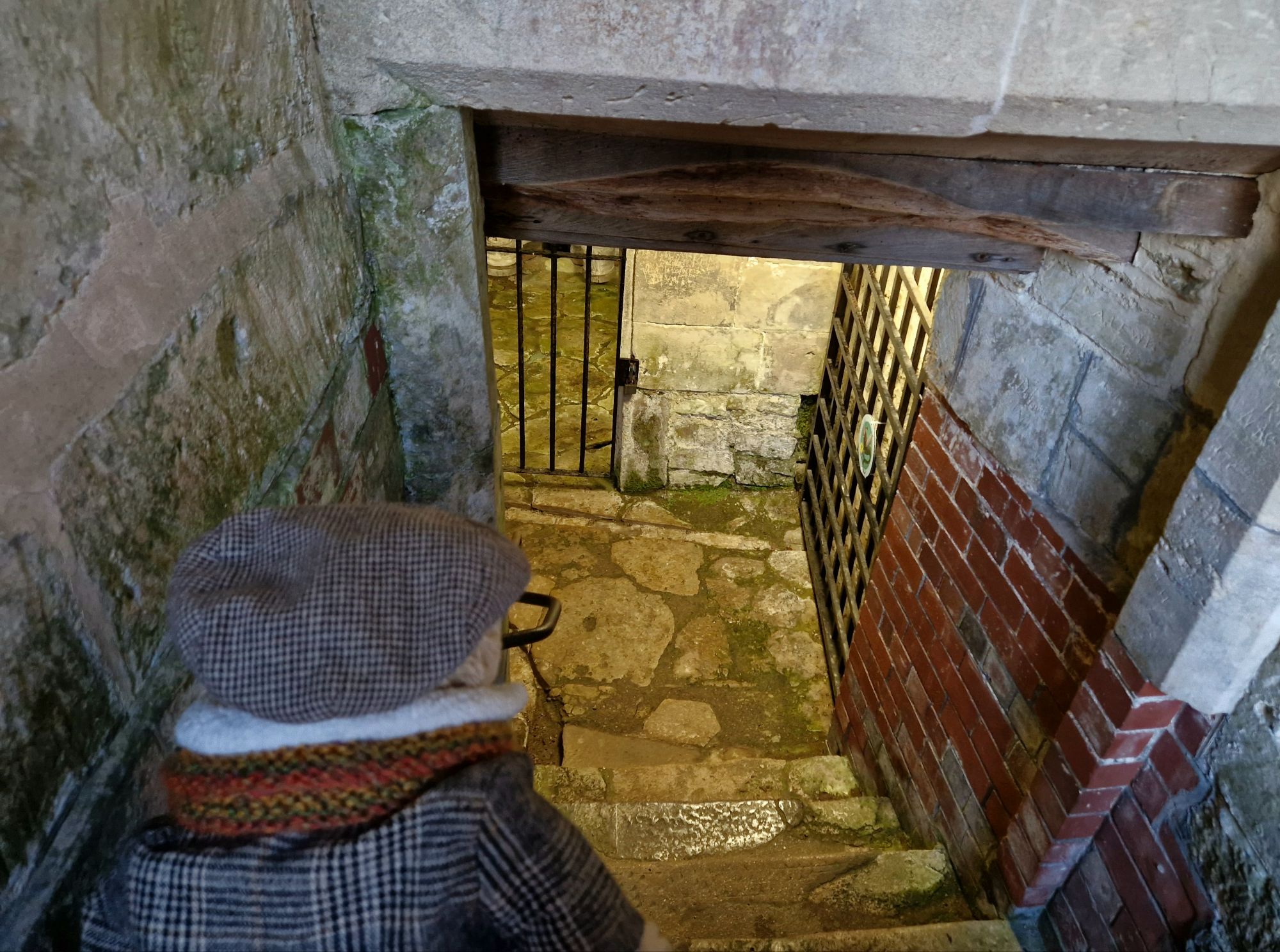
Upstairs we found a priest hole. During the reign of Elizabeth I the Catholic religion was not allowed. Catholic families with stately homes such as the Bedingfields built hiding places for Catholic priests to protect them. This hole was very well hidden with a stone slab above it.
We didn’t take many photos as the house is quite dark inside.
There is an excellent National Trust cafe at Oxburgh where we very much enjoyed lunch!
If you are in Norfolk do call in at Oxburgh; we found it all very interesting.
We travelled to Tattershall from our holiday accommodation by bicycle.
I locked up my helmet with the bikes as I didn’t want to wear it while exploring, then headed towards the castle.
A human dressed as a 16th century peasant was doing tours so we decided to join him.
The first castle was built in 1231, but the castle that remains today was built by Ralph Cromwell between 1434 and 1447.
Cromwell had gained an important position in government as Lord Treasurer to King Henry V and wanted a grand castle to show off his status. He did this by commissioning one built of bricks made from clay, instead of the usual stone. Cromwell built it in the moat of the older castle as there wasn’t room in the middle. The older stone built castle was later destroyed during battles but the brick one has survived. Cannon balls could not bring down the 12ft thick brick walls.
We went down to the basement to start the tour
Beer was stored in the basement. The Lords had full strength beer to drink but it was watered down with 50% water added for the staff to drink. In those times children would have drunk the weak beer from a young age as the water wasn’t pure enough to drink.
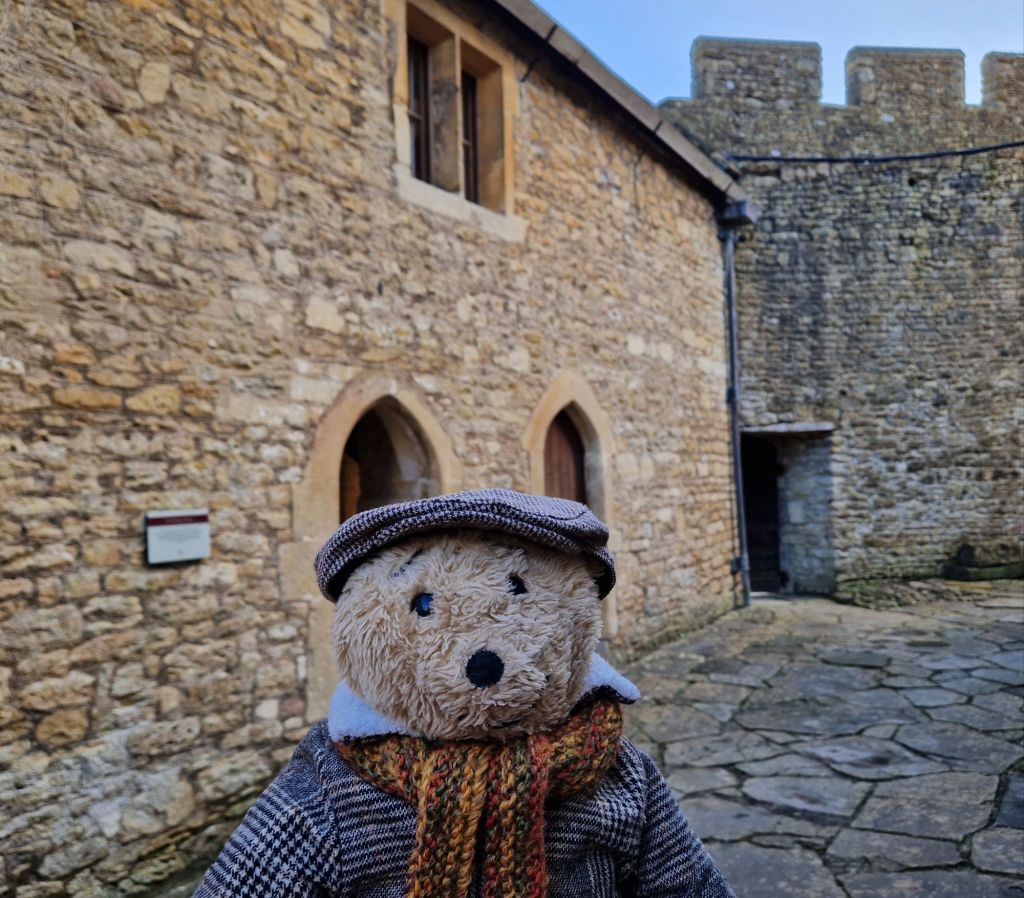
There were some little rooms at the side of the main basement hall. Small nooks in the walls would have had locking doors to store precious spices. Here I am in one!
We went up a spiral staircase to the first floor which housed the great hall. Ralph Cromwell had a rabbit and a cabbage sculpted into the fireplace. R for rabbit & Ralph and C for cabbage & Cromwell.
We all went up more stairs to the next floor with the guide…
The hall on 2nd floor was known as The Audience Hall where meetings of noblemen would have been held. There would have been tapestries on the wall but not the ones here. These were put up by Lord Curzon who bought the castle in 1910 after it had been neglected for many years and he started to restore it.
There is a dovecote on the 2nd floor which was installed during a period in history when peasant farmers took over the building.
The models behind me are wearing the sort of clothes worn by wealthy Tudor women, the one in white is wearing petticoats that were worn underneath dresses.
Hundreds of years ago the floors of rooms were covered in rush and straw commonly known as thresh. The raised step in doorways was there to hold the thresh and stop it coming out of the room. Hence the name ‘threshold strip’ that we use today.
The walls of Tattershall Castle are made of clay bricks that were produced by hand. The tour guide pointed out a brick with human finger prints in it. The clay bricks were removed from moulds by hand and occasionally the brick maker grasped them a bit too firmly and left finger marks in them.
Up on the roof of the castle there are three big chimneys. Ralph Cromwell had them built this way to show everyone around that he was wealthy!
There are wonderful views of the flatlands of Lincolnshire all around.
The tour guide asked if I would like a photo with him. He told me that sometimes they have teddy bear picnics at Tattershall and have done teddy zip wire descents from the tower!
I climbed up to the walkway around the very top of the castle.
The appearance is rather like cloisters found in old abbeys.
On my way back down to the bottom I found acroom with dress up clothes for small humans.
Here I am as Lors Horace of Tattershall!
I sat and read the information about ‘Gong Farmers’ who were young boys employed to empty out latrine pits. They were only able to do it at night due to the smell.
The original toilet seat hole has been covered over but this was a loo.
In 1925 Tattershall Castle was bequeathed to the National Trust by Lord Curzon in his will.
It is a very interesting place with lots history. I do recommend a visit if you are in the area.
There is some confusion on the Internet about me and the sort of bear that I am. Some eBay sellers advertise bears like me as ‘Horace’ bears. I was not sold as a ‘Horace’ bear, my human named me Horace. I am a 1970’s Alresford Crafts Smiling Honey Bear.
Next to me in the photo is a W H Smith Horace Bear, and these bears were sold as ‘Horace’ Bears in the 1980s and were made in China.. Actually he is a really nice chap and worth rescuing if you see one in a charity shop.
Just to confuse things next to Horace is another Horace! This one was made by The Dean’s Rag Book Company in Pontypridd, Wales in 1997. He is a limited edition bear. This Horace has mohair fur and is fully jointed; another lovely little bear.
Google AI is very confused as if you search for information about a WH Smith Horace you will get information stating that Alresford Crafts made them which is not true and an indication not to rely on AI for anything.
Just a short blog to tell you all about my calendar, which you may have seen already if you also follow me on Facebook.
My 2026 calendar is available to buy (UK only) on eBay. A PDF will be available for overseas followers sometime in the autumn.
It features 12 delightful photos of me and I have had excellent feedback for all of the 200 copies sold so far. Buyers have commented on the excellent photography, the cuteness of the images and the quality of the printing and packaging.
10% of the sale price goes to RSPCA.
Here are a couple of pages:
These are being sold through eBay in order to simplify the process.